Starter kit · Public land
What to Pack for a Public-Land Day Hunt
A day pack is not a survival kit and it is not a garage. It is eight things that get you a mile from the truck, keep you there until dark, and get you back — plus the kill kit you hope you need.
Disclosure: Creek Cover is reader-supported. If you buy through our links we may earn a commission, at no extra cost to you. It never changes which pick we tell a beginner to start with. Full disclosure.
Quick picks at a glance
Tap a pick to read the full write-up, or the price button to check it on Amazon.
- 1
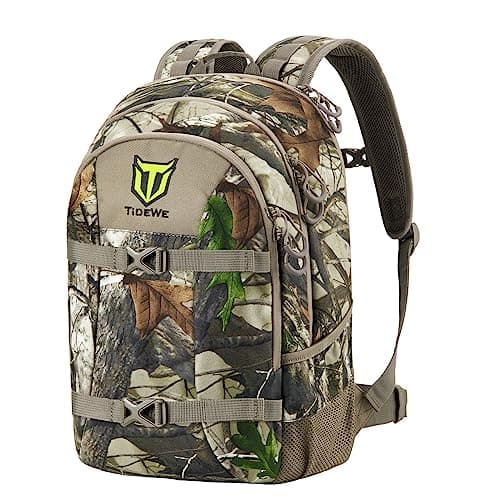
Twenty-five liters holds everything on this page and nothing more, which is the point. A bigger pack is not more capable, it is just heavier by the time you have filled it.
Best for: The right size for a day, and no bigger8.6 - 2
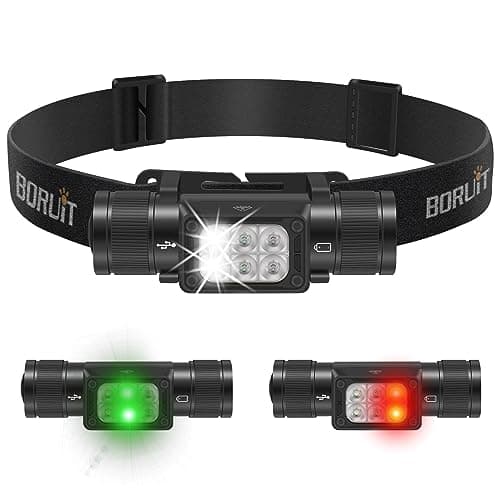
White light destroys your night vision and announces you to every animal in the drainage. A red mode lets you read a map, find a trail marker and get settled without any of that.
Best for: The red mode is the whole reason8.9 - 3
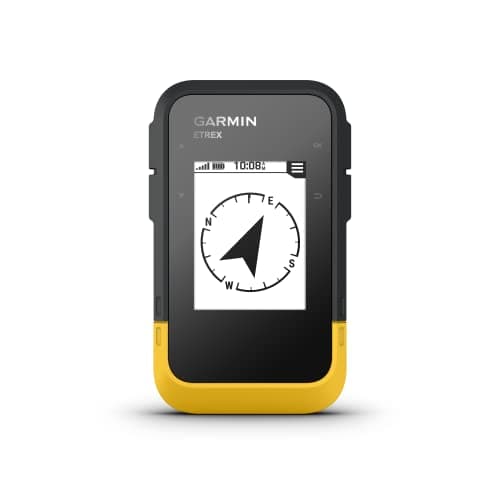
Public land navigation is not mainly about getting lost, it is about knowing exactly where the private boundary runs. A dedicated handheld does that on battery life a phone cannot approach.
Best for: Knowing where the boundary is9.0 - 4
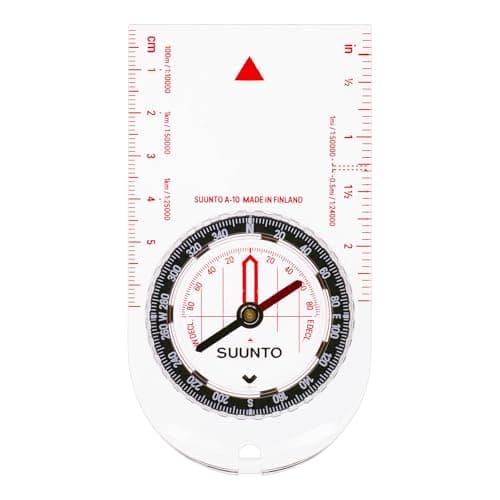
Batteries die and screens crack. A baseplate compass and a rough sense of which way the road runs will always get you out, and it weighs almost nothing.
Best for: The backup that never needs charging8.8 - 5
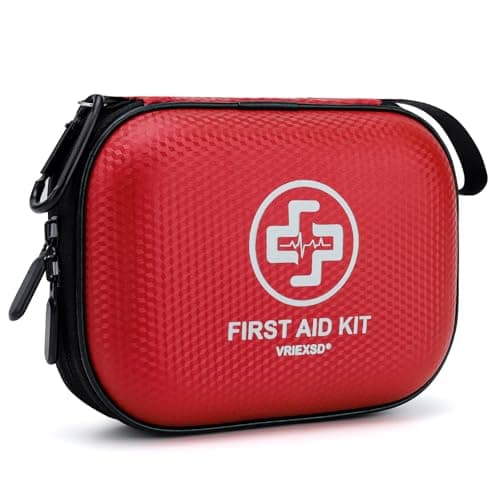
The best first aid kit is the one that lives in the pack permanently. Hard shell, small footprint, and it covers the injury you are actually most likely to have — a knife cut with cold hands.
Best for: The kit small enough to actually be there8.3 - 6
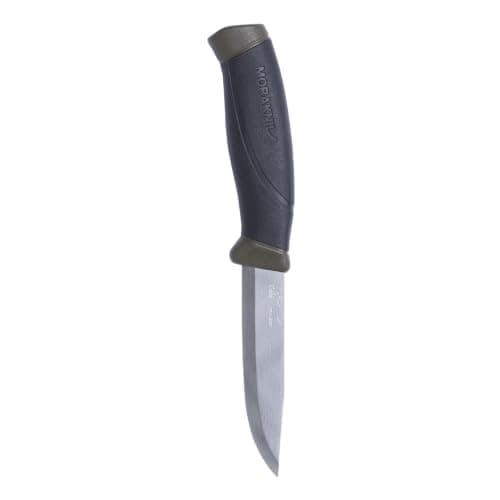
A simple, sharp fixed blade that arrives ready to work. On a day hunt the knife is not for survival tasks, it is for the twenty minutes after a successful shot.
Best for: The kill kit starts here9.0 - 7
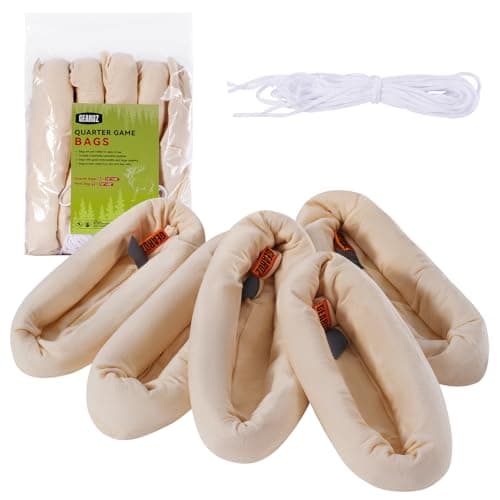
If you kill something a mile from the truck you are not dragging it whole. Bags let you quarter it, keep the meat clean, and make two manageable trips instead of one impossible one.
Best for: The half of the day nobody packs for8.7 - 8
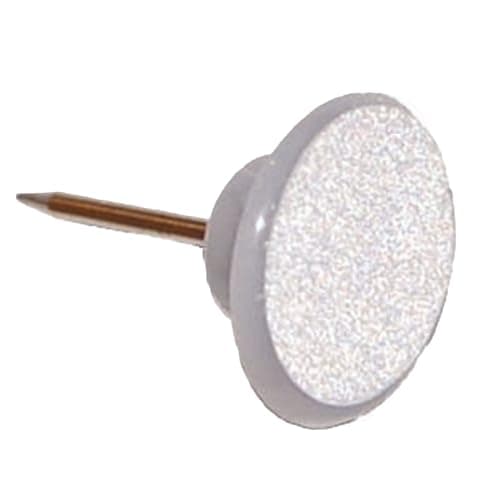
Reflective tacks turn a headlamp beam into a breadcrumb trail. Walking in at 5 a.m. to a spot you scouted in daylight is much harder than it sounds, and this is the four-dollar fix.
Best for: Finding your spot in the dark8.4
| # | Product | Best for | Score | Price |
|---|---|---|---|---|
| 1 | TIDEWE 25L Lightweight Camo Daypack Twenty-five liters holds everything on this page and nothing more, which is the point. A bigger pack is not more capable, it is just heavier by the time you have filled it. | The right size for a day, and no bigger | 8.6 | $34.99View on Amazon#ad |
| 2 | BORUIT HP360 White/Green/Red Headlamp White light destroys your night vision and announces you to every animal in the drainage. A red mode lets you read a map, find a trail marker and get settled without any of that. | The red mode is the whole reason | 8.9 | $32.48View on Amazon#ad |
| 3 | Garmin eTrex SE Handheld GPS Public land navigation is not mainly about getting lost, it is about knowing exactly where the private boundary runs. A dedicated handheld does that on battery life a phone cannot approach. | Knowing where the boundary is | 9.0 | $129.99View on Amazon#ad |
| 4 | SUUNTO A-10 Baseplate Compass Batteries die and screens crack. A baseplate compass and a rough sense of which way the road runs will always get you out, and it weighs almost nothing. | The backup that never needs charging | 8.8 | $24.00View on Amazon#ad |
| 5 | Mini First Aid Kit, 150 Piece Waterproof Hard Shell The best first aid kit is the one that lives in the pack permanently. Hard shell, small footprint, and it covers the injury you are actually most likely to have — a knife cut with cold hands. | The kit small enough to actually be there | 8.3 | $8.99View on Amazon#ad |
| 6 | Morakniv Companion Fixed Blade Knife A simple, sharp fixed blade that arrives ready to work. On a day hunt the knife is not for survival tasks, it is for the twenty minutes after a successful shot. | The kill kit starts here | 9.0 | $19.99View on Amazon#ad |
| 7 | GearOZ Game Bags, 5-Pack Reusable Quarter Bags If you kill something a mile from the truck you are not dragging it whole. Bags let you quarter it, keep the meat clean, and make two manageable trips instead of one impossible one. | The half of the day nobody packs for | 8.7 | $23.99View on Amazon#ad |
| 8 | HME Reflective Trail Marking Tacks, 50-Pack Reflective tacks turn a headlamp beam into a breadcrumb trail. Walking in at 5 a.m. to a spot you scouted in daylight is much harder than it sounds, and this is the four-dollar fix. | Finding your spot in the dark | 8.4 | $3.99View on Amazon#ad |
A public-land day hunt has a specific shape that private land does not: you park in a lot with other trucks, you walk further than you want to in the dark, you hunt ground you do not know as well as you would like, and you come out after legal light with a headlamp. Every item on this list exists because of one of those four facts.
The one principle: weight is the enemy
The most common public-land packing mistake is not forgetting something. It is carrying so much that you do not walk far enough. The single biggest advantage available to a public-land hunter is distance from the parking lot — most pressure concentrates in the first half mile, and public land hunting for beginners makes that case in detail. A heavy pack quietly talks you out of the extra ridge, and the extra ridge is the whole strategy.
So the discipline is: pack for the day you are actually having, not for a wilderness emergency you are not. This is a day hunt within a few miles of a road, in a country with roads. It is not an expedition, and packing like it is one makes you a worse hunter.
The eight items, and why each earns its place
Each of these solves a problem that specifically belongs to public ground. The pack sizes the day. The headlamp handles both ends of it, and its red mode handles the part where you do not want to announce yourself to a drainage full of other people’s deer. The GPS answers the question that private land never asks — where exactly does this property end? — and the compass answers it when the GPS is dead.
The first aid kit covers the one injury that is actually likely. The knife and the game bags are the kill kit. The trail tacks solve a problem that sounds trivial and is not: finding, in the dark, a specific tree you picked out in daylight three weeks ago.
| Item | The public-land problem it solves | Skippable? |
|---|---|---|
| 25L pack | Sizes the day and stops you overpacking | No — but any 20-30L pack works |
| Headlamp with red mode | Dark walk-in and walk-out without wrecking night vision | No |
| GPS | Knowing where the private boundary is | A phone with offline maps covers most of it |
| Baseplate compass | Getting out when the battery is dead | No — it weighs nothing |
| First aid kit | Knife cuts, the realistic injury | No |
| Knife | The twenty minutes after a shot | No |
| Game bags | A kill a mile from the truck | Only if you hunt within sight of it |
| Trail tacks | Finding your tree at 5 a.m. | Yes — and check unit rules first |
Three things are not on the list because they are assumed: water, food and a spare insulating layer. Carry all three every time. The layer especially — you walk in warm and sit still for four hours, and the jacket you did not bring is the reason you leave at nine. What to wear hunting covers the layering logic that makes that work.
Navigation: carry two systems
This is the one place we will argue for redundancy, because the failure mode is genuinely serious and the second system weighs about an ounce. Carry something electronic and something that is not.
The electronic one does the real work. Public-land navigation is much less about being lost than it is about boundaries — the ground is a patchwork, the private parcels are often unmarked or badly marked, and stepping across a line you cannot see is a trespass whether you meant it or not. A handheld with current boundary data, or a phone with a mapping app and offline maps downloaded, is how you avoid that. Mark the truck as a waypoint before you walk away from it, every single time.
The non-electronic one is your out. A baseplate compass plus one piece of knowledge — which direction the nearest road runs — will always walk you out of a drainage. Learn to take and follow a bearing in a park on a Sunday afternoon rather than in the dark on the day it matters. Cold kills phone batteries fast, and a cracked screen ends a GPS.
Tell someone where you will be
How to actually load the pack
Where things sit inside the pack matters more than most beginners expect, and it is the difference between a load that rides on your hips and one that pulls you backward for a mile. The short version: heavy and dense items go high and close to your spine, bulky light things go at the bottom, and the handful of things you need without stopping — headlamp, gloves, a snack, the compass — live in outer pockets where you can reach them without taking the pack off.
If you want the longer version, Steve’s Outpost — a sister site in the same family of review sites — has a good companion piece on a three-zone method for loading a hunting pack that walks through zone-by-zone placement and pack fitting in more detail than we go into here. It is a useful read before your first long walk in with a loaded pack.
Two habits worth building from day one. First, everything lives in the same pocket every time — you will eventually be looking for the knife in the dark with cold hands. Second, repack the night before rather than the morning of, because the tag left on the kitchen counter is a real and common way to end a hunt before it starts.
The kill kit, and the mile-in problem
Here is the scenario public-land beginners genuinely do not plan for: it is 4:30 in the afternoon, you are a mile and a half from the truck, and you have just killed a deer. You are not dragging that animal out whole, in the dark, uphill, alone.
The answer is to quarter it and make two trips, which means the knife and the bags are not optional equipment on public ground the way they might be on a farm with a truck at the field edge. It also means learning the job before you need it — how to field dress a deer is the page to read in September, not at dusk in November with your phone at eight percent.
Know before you walk in whether your unit requires evidence of sex or species to remain attached during transport, because that rule changes how you can break an animal down. And have a plan for getting the meat cool once it is at the truck; the chain from there runs through a cooler and eventually the freezer.
What to leave in the truck
Leave the cooler, the spare boots, the extra water and the change of clothes — all genuinely useful, all useful at the truck. Leave the folding saw, the paracord and the firestarter unless you are hunting somewhere genuinely remote. Leave the second knife. Leave the rangefinder if you are hunting timber inside a hundred yards.
The one thing people leave in the truck that they should carry: the spare layer. It is the item most often abandoned because the walk in is warm, and it is the item most often missed two hours later. Carrying it is the difference between hunting the last hour of light and driving home during it.
Public land rules that affect what you carry
Rules vary enormously between a national forest, a BLM parcel and a state wildlife management area, and some of them directly change your packing list. Many areas restrict marking trees, which affects the trail tacks. Many prohibit leaving stands or blinds overnight, which means anything you carry in comes out the same day. Some WMAs require check-in at a kiosk or a daily permit. Some restrict access hours, which changes how early you can start walking.
None of that is knowable from a page like this one — the only correct source is the current regulations for the specific unit you are hunting. Read them before you buy anything on this list, and read them again the week before the season, because they change. Public land hunting for beginners covers how to find and interpret them, and the first deer hunt kit covers the clothing and safety side of the same day.
The picks in detail
TIDEWE 25L Lightweight Camo Daypack
8.6/10Best for: The right size for a day, and no bigger
Twenty-five liters holds everything on this page and nothing more, which is the point. A bigger pack is not more capable, it is just heavier by the time you have filled it.
- Capacity
- 25 L
- Use
- Day hunt
- Weight
- Lightweight
- 25 L is genuinely the right day volume — the constraint does the discipline for you
- Light enough that you wear it on the walk in rather than leaving it behind
- Costs a fraction of a framed hunting pack that does the identical day job
- No meat-hauling frame — a deer a mile in is a multi-trip problem with this pack
- Budget suspension is comfortable at day weight and not beyond it
- Zippers are the usual failure point at this price; treat them gently when loaded
BORUIT HP360 White/Green/Red Headlamp
8.9/10Best for: The red mode is the whole reason
White light destroys your night vision and announces you to every animal in the drainage. A red mode lets you read a map, find a trail marker and get settled without any of that.
- Modes
- White, green, red
- Type
- Head-mounted
- Hands
- Both free
- Red preserves night vision, which white light wipes out for twenty minutes
- Green is the useful compromise for blood trailing in the dark
- Multiple modes mean you can walk in bright and sit in red without swapping lights
- More modes means more clicking through them, usually in the wrong order in the cold
- Battery life on the bright white setting is much shorter than the headline figure
- Red light makes reading a printed map genuinely difficult — it hides red ink entirely
Garmin eTrex SE Handheld GPS
9.0/10Best for: Knowing where the boundary is
Public land navigation is not mainly about getting lost, it is about knowing exactly where the private boundary runs. A dedicated handheld does that on battery life a phone cannot approach.
- Type
- Handheld GPS
- Power
- Replaceable batteries
- Use
- Waypoints, tracks, boundaries
- Runs for days on batteries you can carry spares of, unlike a phone in the cold
- Marks the truck, your stand and the boundary as waypoints you can walk back to
- Survives rain and being dropped in a way a phone does not
- The most expensive item on this page, and a phone with offline maps covers most of it
- Boundary data still needs to come from a mapping service you trust and keep current
- Menu-driven interface takes a session at home to learn — do not learn it in the dark
SUUNTO A-10 Baseplate Compass
8.8/10Best for: The backup that never needs charging
Batteries die and screens crack. A baseplate compass and a rough sense of which way the road runs will always get you out, and it weighs almost nothing.
- Type
- Baseplate compass
- Power
- None required
- Weight
- Negligible
- Works with dead batteries, no signal and wet hands
- Weighs and costs almost nothing, so there is no reason not to carry it
- A bearing back to a road you know runs north-south is a genuinely complete escape plan
- Useless if you never learn to take and follow a bearing — practice in a park first
- No map means limited value; carry a paper map or know the road layout
- Baseplate compasses are easy to misread near metal, including your own gear
Mini First Aid Kit, 150 Piece Waterproof Hard Shell
8.3/10Best for: The kit small enough to actually be there
The best first aid kit is the one that lives in the pack permanently. Hard shell, small footprint, and it covers the injury you are actually most likely to have — a knife cut with cold hands.
- Pieces
- 150
- Case
- Waterproof hard shell
- Footprint
- Small enough to leave in the pack
- Small enough that it stays in the pack rather than getting unpacked and forgotten
- Hard shell keeps the contents dry and usable
- Covers cuts, which is the realistic hunting injury
- Mostly adhesive bandages — check what is in it before you rely on it
- No trauma capability; add a pressure dressing if you hunt alone or well off the road
- A kit is not training — know how to use what is in it
Morakniv Companion Fixed Blade Knife
9.0/10Best for: The kill kit starts here
A simple, sharp fixed blade that arrives ready to work. On a day hunt the knife is not for survival tasks, it is for the twenty minutes after a successful shot.
- Type
- Fixed blade
- Grind
- Scandi
- Includes
- Sheath
- Arrives genuinely sharp, which most knives at this price do not
- Scandi grind is the easiest bevel for a beginner to maintain
- Cheap enough that carrying it in a pack you might set down is not stressful
- You have to sharpen it yourself — no replaceable blade shortcut
- Basic plastic sheath with basic retention
- No finger guard on the standard model; wet hands need care
GearOZ Game Bags, 5-Pack Reusable Quarter Bags
8.7/10Best for: The half of the day nobody packs for
If you kill something a mile from the truck you are not dragging it whole. Bags let you quarter it, keep the meat clean, and make two manageable trips instead of one impossible one.
- Count
- 5 bags
- Material
- Breathable, reusable
- Packed size
- Fits a pack pocket
- Turns a mile-in kill from a crisis into a two-trip job
- Breathable fabric lets meat cool rather than sweat on the pack out
- Pack down to nothing, so there is no cost to carrying them every day
- Assumes you know how to quarter an animal — learn that before you need to
- Not refrigeration; the meat still has to get cool quickly
- Need washing promptly after use
HME Reflective Trail Marking Tacks, 50-Pack
8.4/10Best for: Finding your spot in the dark
Reflective tacks turn a headlamp beam into a breadcrumb trail. Walking in at 5 a.m. to a spot you scouted in daylight is much harder than it sounds, and this is the four-dollar fix.
- Count
- 50 tacks
- Type
- Reflective push tacks
- Visible
- Under a headlamp beam
- Turns an unfamiliar dark walk-in into a followable line
- Costs almost nothing and takes no room in the pack
- Also marks a blood-trail line if you have to back out and return at first light
- Many public areas restrict or ban marking trees — check the rules for your unit first
- They mark your spot for every other hunter with a headlamp, too
- Leaving them behind is littering; pull them on the way out at the end of the season
Prices shown are from Amazon as of Sep 6, 2026 and change often — the button always goes to the current listing. Some links may earn us a commission at no extra cost to you. How this works.
Frequently asked questions
What should I pack for a day hunt on public land?
A 20-30 liter pack, a headlamp with a red mode, navigation you trust plus a compass as backup, a small first aid kit, a knife, game bags, and water, food and a spare insulating layer. Trail markers are useful where they are permitted. That is the whole list - the failure mode on public land is carrying too much, not too little.
Do I need a GPS for public land hunting, or is my phone enough?
A phone with a mapping app and offline maps downloaded covers most of it, and is what many hunters use. A dedicated handheld wins on battery life in the cold, on durability, and on running for days on batteries you can carry spares of. Whichever you choose, carry a baseplate compass as well - it weighs nothing and works when the battery does not.
Why do you need a red light for hunting?
White light wipes out your night vision for around twenty minutes and is visible a long way off, which announces you to both animals and other hunters on your walk in. Red preserves night vision and is far less conspicuous. Green is the usual compromise for blood trailing. One headlamp with all three modes covers every job.
How do you get a deer out on public land?
Usually by quartering it and making two trips, because dragging a whole animal a mile in the dark alone is not realistic. That means carrying a knife and breathable game bags every day, and learning to break an animal down before the season rather than during it. Check whether your unit requires evidence of sex or species to stay attached during transport.
How far from the parking lot should you hunt on public land?
Further than most people go, which is the entire public-land advantage - pressure concentrates in the first half mile. But the honest answer is: as far as you can go while still being able to get an animal back out. A pack you can carry all day is what makes that distance possible, which is why weight discipline matters more than gear count.
Sources
Keep reading
Not sure where to start?
The beginner gear checklist walks you through exactly what a first-season hunter needs — essentials first, nice-to-haves later, with one safe-default pick per category.