Packs, Vests & Nets · Comparison
Fly Fishing Vest vs Pack
A vest spreads your gear across your chest in a dozen small pockets. A pack puts it in one bag you swing around when you need it. The choice is not about capacity — both carry plenty — it is about how hot you get, how much you wade, and whether you like hunting for things.
Disclosure: Creek Cover is reader-supported. If you buy through our links we may earn a commission, at no extra cost to you. It never changes which pick we tell a new angler to start with. Full disclosure.
Quick picks at a glance
Tap a pick to read the full write-up, or the price button to check it on Amazon.
- 1
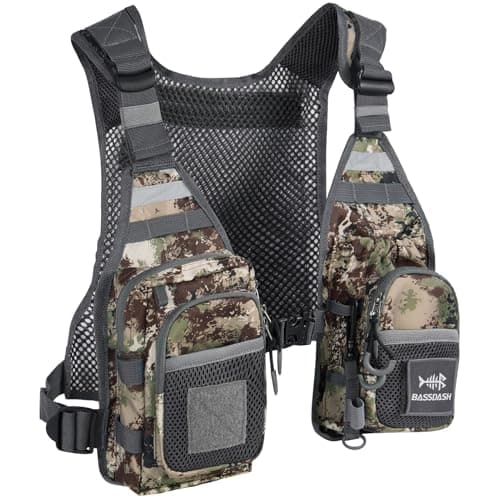
The vest side of this argument, done lightly. Pockets across the chest mean tippet, nippers and a fly box are all reachable without taking anything off, and there is no bag to swing around or drag in the water when you kneel. It is a mesh-backed summer build rather than a heavy traditional vest.
Best for: Best vest — everything in front of you, nothing to swing9.0 - 2
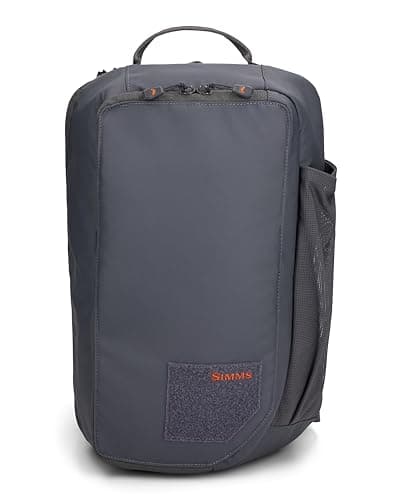
The pack side, and the style most anglers switch to after a few seasons in a vest. It rides on your back out of the sun, swings to the front in one motion, and swallows a rain shell and a water bottle that no vest pocket would take. The cost is that your gear is in a bag rather than in front of you.
Best for: Best sling pack — one bag, cooler back, more capacity9.2 - 3
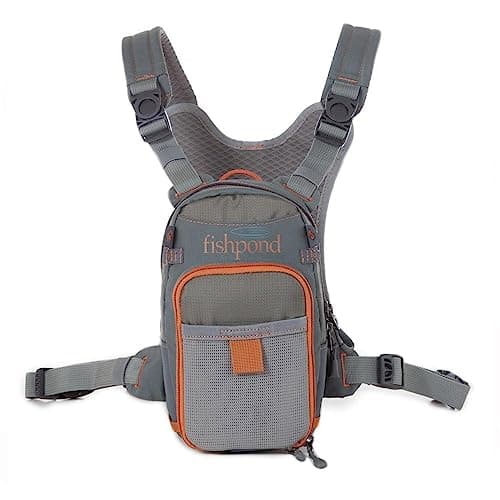
A chest pack is the middle answer: a single small bag worn high on the chest, with the working surface right under your chin. It carries less than a sling and far less than a vest, and it is the only style here that never dips in the water no matter how deep you wade. Minimalists and deep waders pick this.
Best for: Best chest pack — the compromise that wades deepest9.0 - 4
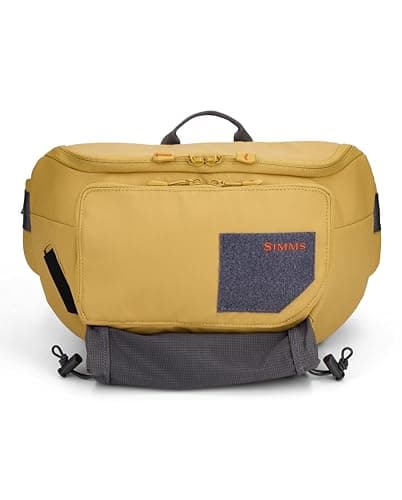
The coolest option and the one casting arm never notices. A hip pack sits on your waist, rotates to the front to work out of, and keeps your whole upper body clear. The catch is obvious: on small water you wade thigh-deep, and a hip pack is the first thing to get wet.
Best for: Best hip pack — nothing on your chest or shoulders at all8.8
| # | Product | Best for | Score | Price |
|---|---|---|---|---|
| 1 | BASSDASH FV08 Ultra-Lightweight Fly Fishing Vest / Chest Pack The vest side of this argument, done lightly. Pockets across the chest mean tippet, nippers and a fly box are all reachable without taking anything off, and there is no bag to swing around or drag in the water when you kneel. It is a mesh-backed summer build rather than a heavy traditional vest. | Best vest — everything in front of you, nothing to swing | 9.0 | $29.98View on Amazon#ad |
| 2 | Simms Tributary Sling Pack The pack side, and the style most anglers switch to after a few seasons in a vest. It rides on your back out of the sun, swings to the front in one motion, and swallows a rain shell and a water bottle that no vest pocket would take. The cost is that your gear is in a bag rather than in front of you. | Best sling pack — one bag, cooler back, more capacity | 9.2 | $116.29View on Amazon#ad |
| 3 | Fishpond Canyon Creek Chest Pack A chest pack is the middle answer: a single small bag worn high on the chest, with the working surface right under your chin. It carries less than a sling and far less than a vest, and it is the only style here that never dips in the water no matter how deep you wade. Minimalists and deep waders pick this. | Best chest pack — the compromise that wades deepest | 9.0 | $89.95View on Amazon#ad |
| 4 | Simms Tributary Hip Pack The coolest option and the one casting arm never notices. A hip pack sits on your waist, rotates to the front to work out of, and keeps your whole upper body clear. The catch is obvious: on small water you wade thigh-deep, and a hip pack is the first thing to get wet. | Best hip pack — nothing on your chest or shoulders at all | 8.8 | $116.29View on Amazon#ad |
Buy a vest if you are starting out or you fish deep; buy a sling pack if you run hot, walk far, or want a rain jacket with you. That is the whole fly fishing vest vs pack question. A vest keeps every item in front of you and never swings, which is why it is still the easiest system to learn. A sling keeps your back uncovered and carries real volume, which is why most anglers end up there.
The two in-between answers are worth knowing. A chest pack is the minimalist option that stays dry in the deepest water, and a hip pack is the coolest option as long as you do not wade past your thighs.
The verdict, in one paragraph
Nobody regrets a vest; plenty of people outgrow one. The vest is the system that teaches you what you carry. After a season you will know you use four flies, two spools of tippet and a pair of nippers, and at that point either a chest pack (carry less) or a sling (carry a jacket too) fits you better than a dozen small pockets. If you only ever buy one, the sling pack is the most versatile thing on this page — and if you are buying for somebody else, buy the vest, because sling fit is personal.
Vest vs pack, side by side
| Vest | Sling pack | Chest pack | Hip pack | |
|---|---|---|---|---|
| Where it sits | Both shoulders, chest + back panel | One shoulder, rides on back | High on the chest | On the waist |
| Access | Pockets already in front | Swing to the front | Straight down, one zip | Rotate to the front |
| Capacity | Many small pockets | Largest — jacket, water, boxes | Smallest — two boxes | Medium |
| Heat | Warmest | Cooler — back is open | Warm on the chest | Coolest |
| Deep wading | Good — nothing hangs low | Hangs low, gets wet | Best — stays high and dry | Worst — first to get wet |
| Casting arm | Clear | Strap can cross the shoulder | Clear | Completely clear |
| Learning curve | None | You will re-pack it twice | None | None |
Buy a vest if...
You are buying your first one. A vest is self-explanatory. Flies in the chest pockets, tippet on the D-ring, nippers on a zinger, and nothing to re-learn. No system makes a beginner faster on the water than a vest does, and the gear list it implies is in the fly fishing vest roundup.
You wade deep, or you fish in the rain. Nothing on a vest hangs below your chest, so there is nothing to float, drag or soak when you are in thigh-deep water or crouching behind a rock. A sling swung forward in the rain becomes a bucket; a vest does not.
You carry a lot of small things. Six fly boxes, three spools, floatant, a thermometer and a camera distribute better across a dozen pockets than they do in one bag where everything settles to the bottom.
The vest objection that is real: heat
Buy a sling pack if...
You walk a long way between pools. A sling carries like a small daypack on the walk and becomes a work surface when you stop. On creek fishing, where a day is mostly walking, that is a real advantage — and it is why the sling pack roundup is the most-read page in this hub.
You want a rain jacket with you. No vest pocket takes a packable shell. A sling takes a shell, a liter of water and a sandwich, which turns a three-hour trip into an all-day one. The jackets themselves are in the wading jacket roundup.
You run hot. Your whole back is uncovered except for one strap. That is the single biggest comfort difference between the two styles in summer.
Vest vs chest pack
A chest pack is a vest that gave up on pockets. One small bag, high on your chest, with the lid as your working surface. It carries two boxes and your tools and nothing else, which is either a limitation or the entire point depending on how you fish.
It is the best choice for deep water and for minimalists. Nothing sits below your sternum, so nothing gets wet, and a short walk-and-wade creek session rarely needs more than it holds. The field is ranked in the fishing chest pack roundup. If you want both, note that several vests — including the FV08 — detach into a chest pack, which is the cheapest way to own the two systems.
What small water changes
Brush decides more than capacity does. On a tight creek you are pushing through willow and alder, and anything that catches branches is a problem. A trim vest and a chest pack snag least; a sling worn on the back is fine until you crawl. A hip pack is the worst in brush and the best in heat.
You carry less on a creek than you think. Small-stream fishing is a handful of patterns, one spool of 5X and a pair of nippers. That argues for the smallest system you can live with — the whole kit is listed in the fly fishing accessories guide, and if you also want hands free for a net, see the landing net roundup.
And if you are carrying gear for two, neither answer is right.A fishing backpack is — one bag, rod tubes, a lunch and a kid's tackle. Those are in the fishing backpack roundup.
The picks in detail
BASSDASH FV08 Ultra-Lightweight Fly Fishing Vest / Chest Pack
9.0/10Best for: Best vest — everything in front of you, nothing to swing
The vest side of this argument, done lightly. Pockets across the chest mean tippet, nippers and a fly box are all reachable without taking anything off, and there is no bag to swing around or drag in the water when you kneel. It is a mesh-backed summer build rather than a heavy traditional vest.
- Style
- Vest / chest pack hybrid
- Access
- Front pockets, no swing
- Build
- Ultra-light, mesh back
- Everything reachable without moving the bag
- Weight sits on both shoulders, not one
- Nothing hangs below chest height when you wade deep
- Hotter than a sling on a still summer day
- Small pockets limit what fits — no rain jacket
Simms Tributary Sling Pack
9.2/10Best for: Best sling pack — one bag, cooler back, more capacity
The pack side, and the style most anglers switch to after a few seasons in a vest. It rides on your back out of the sun, swings to the front in one motion, and swallows a rain shell and a water bottle that no vest pocket would take. The cost is that your gear is in a bag rather than in front of you.
- Style
- Sling, single strap
- Access
- Swing to front
- Capacity
- Rain shell plus boxes
- Back is uncovered, so you stay cooler
- Real capacity — jacket, water, several boxes
- One strap, one motion to open
- Hangs low if you wade deep
- All the weight on one shoulder
Fishpond Canyon Creek Chest Pack
9.0/10Best for: Best chest pack — the compromise that wades deepest
A chest pack is the middle answer: a single small bag worn high on the chest, with the working surface right under your chin. It carries less than a sling and far less than a vest, and it is the only style here that never dips in the water no matter how deep you wade. Minimalists and deep waders pick this.
- Style
- Chest pack
- Access
- Straight down, one zip
- Capacity
- Two boxes plus tools
- Stays dry in deep water
- Working surface right in front of you
- Forces you to carry only what you use
- Smallest capacity of the four
- Rides against your chest on hot days
Simms Tributary Hip Pack
8.8/10Best for: Best hip pack — nothing on your chest or shoulders at all
The coolest option and the one casting arm never notices. A hip pack sits on your waist, rotates to the front to work out of, and keeps your whole upper body clear. The catch is obvious: on small water you wade thigh-deep, and a hip pack is the first thing to get wet.
- Style
- Hip / waist pack
- Access
- Rotate to front
- Capacity
- Boxes plus tools
- Nothing on your shoulders or chest
- Coolest of the four
- Out of the way of the cast
- Gets wet first in any real wading
- Slides around unless the belt is tight
Prices shown are from Amazon as of October 20, 2026 and change often — the button always goes to the current listing. Some links may earn us a commission at no extra cost to you. How this works.
Frequently asked questions
Is a fly fishing vest or pack better?
A vest is better if you are starting out, wade deep, or carry many small items, because everything is in front of you and nothing hangs low enough to get wet. A sling pack is better if you run hot, walk a long way, or want a rain jacket and water with you - its back is open and it carries far more.
What is the difference between a fly fishing sling pack and a vest?
A sling pack is one bag on a single strap that rides on your back and swings to the front to work out of; a vest spreads the same gear across a dozen pockets already in front of you. The sling is cooler and carries more, the vest is faster to use and never dips in the water.
Should I buy a fly fishing chest pack or a vest?
Buy the chest pack if you fish minimally or wade deep - it holds two boxes and your tools, sits high and dry on your sternum, and gives you a working surface right under your chin. Buy the vest if you carry several boxes, spools and extras that need their own pockets.
Do fly fishing vests go out of style?
The traditional heavy vest has largely been replaced by lighter mesh-backed versions and by sling packs, but the format has not gone anywhere - it is still the easiest system to learn and the best one for deep wading and rain, because nothing hangs below your chest.
Is a hip pack good for fly fishing?
On shallow water, yes - it keeps your chest and shoulders completely clear and runs coolest of any option. On creeks and streams where you wade past the thigh it is the wrong choice, because a hip pack is the first thing to go under.
Sources
Keep reading
Not sure where to start?
The beginner gear guide walks you through exactly what a new stream angler needs — the six essentials first, nice-to-haves later, with one safe-default pick per category.