Packs & Nets · Roundup
The Best Fly Fishing Vests & Chest Packs
The vest was declared obsolete and then quietly refused to die, because it still does one thing better than anything else: everything at chest height, nothing to unclip.
Disclosure: Creek Cover is reader-supported. If you buy through our links we may earn a commission, at no extra cost to you. It never changes which pick we tell a new angler to start with. Full disclosure.
Quick picks at a glance
Tap a pick to read the full write-up, or the price button to check it on Amazon.
- 1
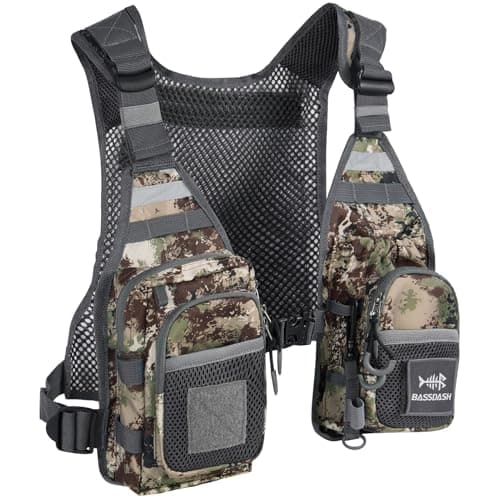
Mesh construction keeps it cool, the one-size fit works over waders or a shirt, and it functions as either a vest or a chest pack. At this price it is the obvious way to try the format.
Best for: Best fly fishing vest overall9.0 - 2
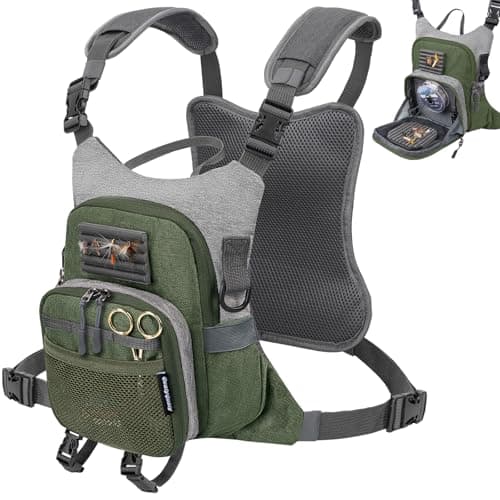
More structured than a mesh vest, with compartments sized for fly boxes rather than generic pockets. The pick if you like knowing exactly which pocket each item lives in.
Best for: Best chest pack with real organization8.8 - 3
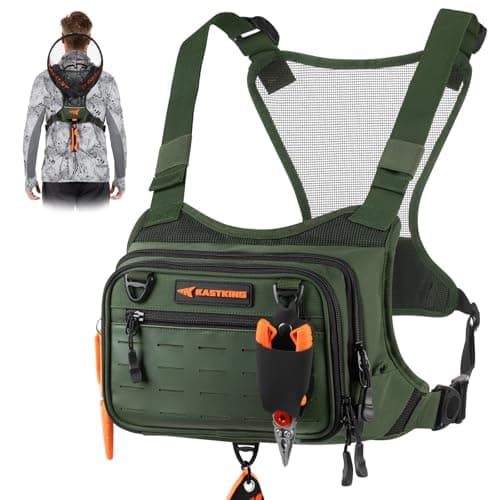
Water-resistant fabric on a chest pack matters more than on a sling, because a chest pack sits at the waterline when you wade deep. The sensible pick if you fish above the thigh.
Best for: Best water-resistant chest pack8.7 - 4
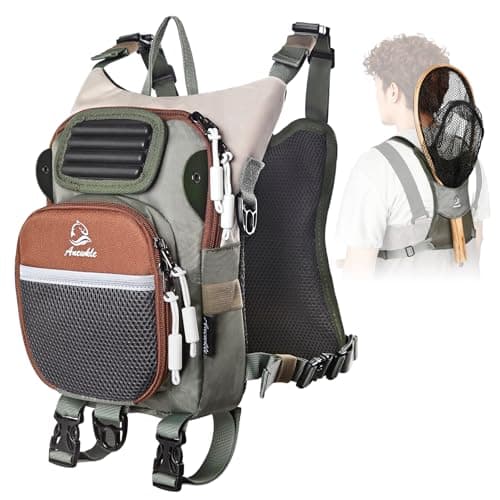
Waterproof construction plus compartments, which is the combination you want if you wade deep and carry a phone. The honest answer to the one real weakness of chest packs.
Best for: Best waterproof chest pack8.8 - 5
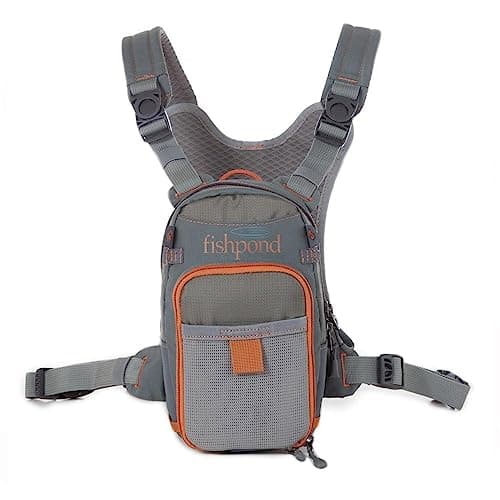
The one the guides wear. Better fabric, better zips, a harness that stays comfortable all day and a company that sells spares — and the fold-down work surface is genuinely useful.
Best for: Best premium chest pack9.1
| # | Product | Best for | Score | Price |
|---|---|---|---|---|
| 1 | BASSDASH FV08 Ultra-Lightweight Fly Fishing Vest / Chest Pack Mesh construction keeps it cool, the one-size fit works over waders or a shirt, and it functions as either a vest or a chest pack. At this price it is the obvious way to try the format. | Best fly fishing vest overall | 9.0 | $29.98View on Amazon#ad |
| 2 | QulayQualy Fly Fishing Chest Pack Vest More structured than a mesh vest, with compartments sized for fly boxes rather than generic pockets. The pick if you like knowing exactly which pocket each item lives in. | Best chest pack with real organization | 8.8 | $39.99View on Amazon#ad |
| 3 | KastKing BaitBoss Water-Resistant Fishing Chest Pack Water-resistant fabric on a chest pack matters more than on a sling, because a chest pack sits at the waterline when you wade deep. The sensible pick if you fish above the thigh. | Best water-resistant chest pack | 8.7 | $43.99View on Amazon#ad |
| 4 | Anewkle Fly Fishing Chest Pack, Waterproof with Multiple Compartments Waterproof construction plus compartments, which is the combination you want if you wade deep and carry a phone. The honest answer to the one real weakness of chest packs. | Best waterproof chest pack | 8.8 | $39.99View on Amazon#ad |
| 5 | Fishpond Canyon Creek Chest Pack The one the guides wear. Better fabric, better zips, a harness that stays comfortable all day and a company that sells spares — and the fold-down work surface is genuinely useful. | Best premium chest pack | 9.1 | $89.95View on Amazon#ad |
Buy the BASSDASH FV08 mesh vest if you want to try the format cheaply, or the waterproof chest pack if you wade deep and carry a phone. If you have not yet decided between a vest and a sling pack, read the comparison below first — the honest answer for most creek anglers is the sling, and a vest is the better choice for a specific and real set of reasons.
How we picked these
We compared published construction, pocket layout and count, water resistance, breathability and fit adjustment against a day of stream fishing: standing in moving water with both hands busy, changing flies repeatedly, and needing to reach things without looking. We weighted chest-height access and breathability above total capacity, since capacity is what a vest deliberately does not have. We do not stress-test zips; our method is on the how we research and pick page, and prices are live and dated.
Vest, chest pack or sling
| Mesh vest | Chest pack | Sling pack | |
|---|---|---|---|
| Access speed | Instant — no motion | Instant | Swing round, ~2 seconds |
| Weight while casting | Spread across torso | On your chest | On your back — clear |
| Capacity | Moderate, spread out | Minimal | Good — a full day |
| Layers, lunch, water | No | No | Yes |
| Heat in summer | Cool if mesh, hot if solid | Cool | Cool — one strap |
| Deep wading | Good — pockets stay high | Good | Pack dips near waterline |
| Working surface | None | Small tray | Good — flat at chest |
| Best for | Fixed places for everything | Minimalists | Most stream anglers |
The sling is the better default and we say so in the sling pack roundup: it carries a real day of gear, keeps weight off your front while casting, and gives you a work surface when swung round.
But the vest wins on one axis decisively: zero-motion access. Everything is already in front of you at chest height. There is nothing to swing, unclip or reposition. When you are changing flies every few minutes — which is what nymphing a creek actually involves — that difference accumulates.
When a vest is genuinely the right answer
You wade deep. This is the strongest case. A sling swung to the front while you are thigh- or waist-deep sits at or below the waterline. A vest keeps every pocket at chest height, permanently above the water. Anyone fishing water they wade above the hip should take vests seriously.
You change flies constantly. Euro-style nymphing, matching a hatch, or any session where you are swapping patterns every few casts. The seconds saved per change are real over a day.
You like fixed places for things. Some people work better with one item per pocket, always the same pocket, reachable blind. A sling is one compartment you rummage in; a vest is a filing system.
You already carry a backpack.If lunch, water and layers are on your back anyway, the sling’s capacity advantage disappears and a vest or chest pack over a daypack is a genuinely good system.
The vest's real weakness is heat
What goes in the pockets
A vest has more pockets than you need, and the trap is filling them because they exist. Every pocket you fill is weight you carry all day and an extra place to search.
Front chest pockets (the prime real estate): one or two fly boxes. These are what you open most, so they get the easiest pockets.
Small upper pockets: tippet spools and a spare tapered leader. Floatant if you fish dries.
Lower pockets: sunscreen, a few strike indicators, split shot. Things you need occasionally rather than constantly.
Zipped internal or back pocket: phone in a waterproof pouch, keys, license.
Clipped to the outside: nippers on a zinger, forceps, and the net on a magnetic release. Never inside — these are the items you reach for dozens of times a day. See the nets guide for how the magnetic release works.
And a drying patch — foam or wool on the front — where used flies go to dry instead of straight back into a closed box. It is the habit that stops hooks rusting.
Fit over waders
A fishing vest is worn over chest waders and often over a fleece, which makes sizing different from ordinary clothing.
Size for the bulkiest combination you will wear. Many vests, including our top pick, are one-size with adjustment, which sidesteps this entirely — check that the adjustment range covers both a summer shirt and a winter fleece-plus-waders setup.
Check it sits high. A vest that rides low puts its bottom pockets at the waterline when you wade, which defeats the main reason to choose one. Shorten the shoulder adjustment so the lowest pocket sits well above your wading belt.
Make sure it does not foul your casting arm. Raise your rod arm through a full casting stroke with the vest loaded. If a pocket or strap catches your elbow, adjust or choose differently — you will notice it a thousand times a day.
What to skip
Skip solid-fabric vests unless you only fish in cold weather. Mesh is cooler and lighter for no real loss.
Skip high pocket counts. Twenty pockets is a liability, not a feature — you will forget which one has the tippet in it.
Skip built-in rod holders. They sound useful and in practice tangle your line.
Skip inflatable PFD vests for creek fishing. They are genuine safety equipment for boats and big rivers, and overkill on water you can stand up in. A wading belt and a wading staff are the proportionate precautions on a creek.
Next: a rubber-mesh net, fly boxes to fill the pockets, and the beginner gear guide for where carry systems sit in the buying order — which is last, after the rod, flies and waders.
If neither a vest nor a sling suits how you fish — because you walk in, settle on a bank and want tackle boxes rather than fly patches — the third option is a pack: the best fishing backpack covers the rod-holder packs that carry boxes properly, and when each style actually wins.
If what you actually want is a dedicated chest pack rather than a vest, the best fishing chest packs ranks them on their own terms, with the chest-pack-versus-sling-versus-vest comparison in full.
If you need the vest to float you as well, that is a different product with different priorities — USCG-approved options are in the best fishing vests with a life jacket, along with what wading anglers should wear instead of a boat vest.
Not sure a vest is the right format at all? Fly fishing vest vs pack puts the vest next to slings, chest packs and hip packs on heat, capacity and wading depth, and Umpqua fishing packs covers the brand whose snag-free layout is built for stripping line by hand.
The picks in detail
BASSDASH FV08 Ultra-Lightweight Fly Fishing Vest / Chest Pack
9.0/10Best for: Best fly fishing vest overall
Mesh construction keeps it cool, the one-size fit works over waders or a shirt, and it functions as either a vest or a chest pack. At this price it is the obvious way to try the format.
- Type
- Mesh vest / chest pack
- Fit
- One size, adjustable
- Construction
- Ultra-lightweight mesh
- Best for
- Warm weather, wading deep
- Mesh is genuinely cool in summer
- Everything at chest height, nothing to unclip
- Cheapest serious option here
- No capacity for layers, lunch or water
- Thin fabric — treat the zips gently
QulayQualy Fly Fishing Chest Pack Vest
8.8/10Best for: Best chest pack with real organization
More structured than a mesh vest, with compartments sized for fly boxes rather than generic pockets. The pick if you like knowing exactly which pocket each item lives in.
- Type
- Chest pack / vest hybrid
- Compartments
- Multiple, fly-box sized
- Best for
- Organized minimalists
- Compartments actually fit standard fly boxes
- More structure than a mesh vest
- Still cool and low-bulk
- Less breathable than open mesh
- Fixed layout — no flexibility
KastKing BaitBoss Water-Resistant Fishing Chest Pack
8.7/10Best for: Best water-resistant chest pack
Water-resistant fabric on a chest pack matters more than on a sling, because a chest pack sits at the waterline when you wade deep. The sensible pick if you fish above the thigh.
- Type
- Chest pack
- Fabric
- Water-resistant
- Best for
- Deep wading
- Water-resistant where it matters most
- Solid build from an established brand
- Comfortable harness
- Bulkier than a mesh vest
- Water-resistant, not fully waterproof
Anewkle Fly Fishing Chest Pack, Waterproof with Multiple Compartments
8.8/10Best for: Best waterproof chest pack
Waterproof construction plus compartments, which is the combination you want if you wade deep and carry a phone. The honest answer to the one real weakness of chest packs.
- Type
- Chest pack
- Waterproof
- Yes
- Compartments
- Multiple
- Properly waterproof at chest height
- Organized compartments
- Protects a phone without a separate pouch
- Stiffer and warmer than mesh
- Lesser-known brand with limited support
Fishpond Canyon Creek Chest Pack
9.1/10Best for: Best premium chest pack
The one the guides wear. Better fabric, better zips, a harness that stays comfortable all day and a company that sells spares — and the fold-down work surface is genuinely useful.
- Type
- Chest pack
- Best for
- Anglers who fish a lot
- Brand support
- Spares and warranty available
- Noticeably better harness and materials
- Work surface for tying on
- Durable enough to outlast several cheap packs
- Three to four times the budget picks
- Still limited capacity by design
Prices shown are from Amazon as of October 20, 2026 and change often — the button always goes to the current listing. Some links may earn us a commission at no extra cost to you. How this works.
Frequently asked questions
Is a fly fishing vest better than a sling pack?
A sling is the better default for most stream anglers because it carries more and keeps weight off your front while casting. A vest is better if you wade deep - its pockets stay at chest height, permanently above the waterline - or if you change flies constantly and want zero-motion access.
Are mesh fly fishing vests worth it?
Yes, and they fix the vest's main historic weakness. A traditional solid-fabric vest is a hot layer across your torso in summer, which is most of why slings took over. A mesh vest is barely more than webbing and pockets, so it stays cool while keeping everything at chest height.
What should I put in a fly fishing vest?
Fly boxes in the front chest pockets, tippet and a spare leader in the small upper pockets, sunscreen and indicators lower down, and your phone in a waterproof pouch in a zipped pocket. Keep nippers, forceps and the net clipped outside - you use those dozens of times a day.
What size fly fishing vest should I buy over waders?
Size for the bulkiest combination you will wear, which is usually chest waders plus a fleece. Many vests are one-size with adjustment, which solves this - just check the range covers both a summer shirt and a winter layered setup, and that the lowest pocket sits above your wading belt.
Sources
Keep reading
Not sure where to start?
The beginner gear guide walks you through exactly what a new stream angler needs — the six essentials first, nice-to-haves later, with one safe-default pick per category.