Flies & Lures · Comparison
Flies vs Lures for Creek Trout
Two questions settle it: how much brush is on your creek, and how clear is the water. Lures cover water fast and catch fish on your first afternoon. Flies win in low, clear conditions and imitate what trout are actually eating. On a small stream there are days for each, and most anglers only own one.
Disclosure: Creek Cover is reader-supported. If you buy through our links we may earn a commission, at no extra cost to you. It never changes which pick we tell a new angler to start with. Full disclosure.
Quick picks at a glance
Tap a pick to read the full write-up, or the price button to check it on Amazon.
- 1
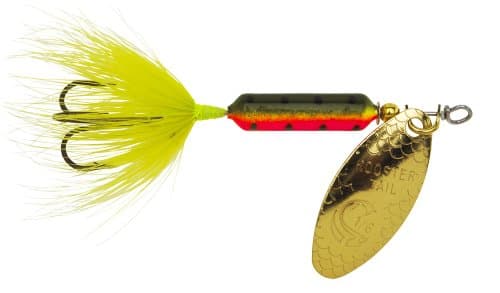
The lure that settles the argument for most beginners. A Rooster Tail produces flash, vibration and a hackle tail that pulses in current, and a trout investigates it in clear water, stained water, fast chutes and slow pools alike. It needs no presentation skill beyond casting upstream and reeling steadily, which is exactly what a first-time trout angler needs. The treble hook is the real cost: it does more damage than a fly, so pinch the barbs if you release your fish.
Best for: Best lure overall — the fish-catching default on any creek - 2
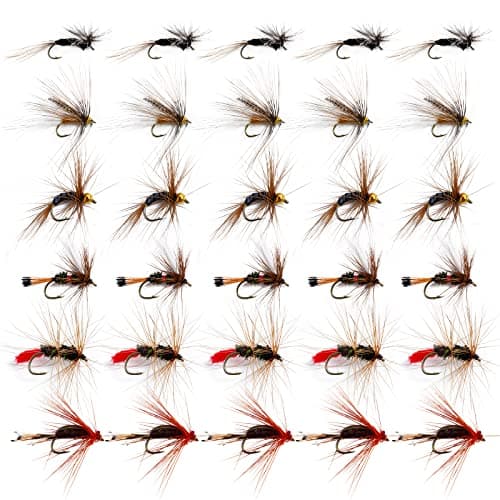
The cheapest way to find out whether the fly side is for you. Thirty flies across dries, wets and nymphs costs less than a few lures and covers a whole season of creek fishing, because flies only get lost in trees and on the bottom rather than wearing out. The construction is assortment-grade and the hackle will soften faster than a hand-tied fly from a shop, but at this money the right response to a tired fly is to tie on another.
Best for: Best fly-side starting point — the cheapest honest test of fly fishing - 3
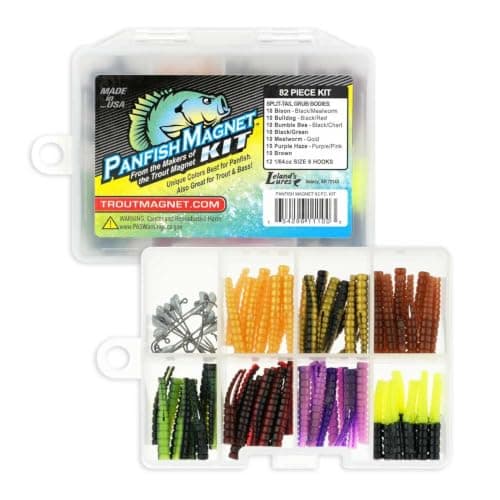
The honest compromise on this page, and the pick most creek anglers overlook. A 1/64 oz jig head with a small soft-plastic grub is, functionally, a nymph you can cast on spinning tackle: it drifts, it is small enough for clear water, and it rides a single hook rather than a treble. Eighty-two pieces is a season of fishing. It will not cast far on anything heavier than a true ultralight rod, which is the catch.
Best for: Best middle ground — a tiny single-hook lure that fishes like a fly - 4
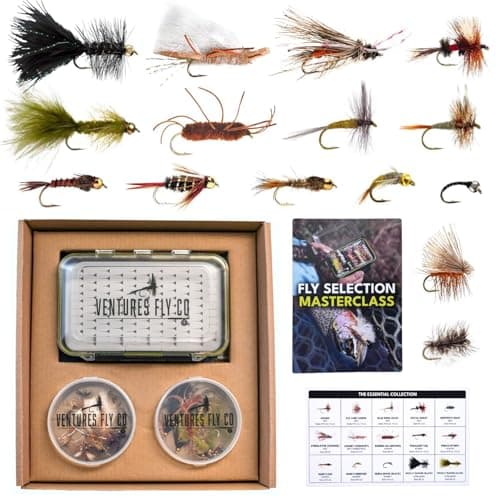
If the fly side wins you over, this is the next purchase rather than another bulk kit. Hand-tied flies hold hackle and body shape through several fish where assortment flies go soft after one, and that matters most on dry flies, which float on stiff hackle tips and nothing else. Forty flies across dries, nymphs, streamers and terrestrials with a box included is a complete creek selection. It costs several times a bulk kit, which is the whole trade.
Best for: Best if you commit to flies — hackle that survives fish - 5
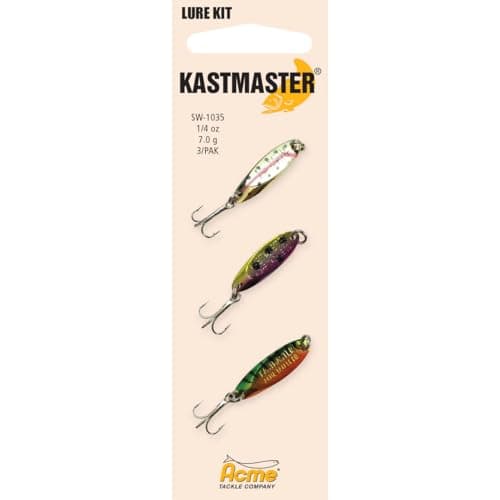
The lure for the days when flies are genuinely the wrong tool. After heavy rain a creek runs high and the color of tea, fish cannot see far, and a dense 1/4 oz spoon that flashes and casts into wind finds them when a size 16 nymph never will. It is too heavy for low summer flow on a small stream, so this is a conditions lure rather than an everyday one — which is exactly the honest case for owning both kinds of tackle.
Best for: Best for high, colored water — weight and flash when visibility is gone
| # | Product | Best for | Score | Price |
|---|---|---|---|---|
| 1 | Yakima Bait Wordens Original Rooster Tail Spinner, 1/8 oz The lure that settles the argument for most beginners. A Rooster Tail produces flash, vibration and a hackle tail that pulses in current, and a trout investigates it in clear water, stained water, fast chutes and slow pools alike. It needs no presentation skill beyond casting upstream and reeling steadily, which is exactly what a first-time trout angler needs. The treble hook is the real cost: it does more damage than a fly, so pinch the barbs if you release your fish. | Best lure overall — the fish-catching default on any creek | — | $14.99View on Amazon#ad |
| 2 | Goture 30-Piece Hand-Tied Dry, Wet and Nymph Fly Assortment Kit The cheapest way to find out whether the fly side is for you. Thirty flies across dries, wets and nymphs costs less than a few lures and covers a whole season of creek fishing, because flies only get lost in trees and on the bottom rather than wearing out. The construction is assortment-grade and the hackle will soften faster than a hand-tied fly from a shop, but at this money the right response to a tired fly is to tie on another. | Best fly-side starting point — the cheapest honest test of fly fishing | — | $9.99View on Amazon#ad |
| 3 | Trout Magnet 82-Piece Panfish Magnet Kit, 70 Grub Bodies and 12 Jig Heads The honest compromise on this page, and the pick most creek anglers overlook. A 1/64 oz jig head with a small soft-plastic grub is, functionally, a nymph you can cast on spinning tackle: it drifts, it is small enough for clear water, and it rides a single hook rather than a treble. Eighty-two pieces is a season of fishing. It will not cast far on anything heavier than a true ultralight rod, which is the catch. | Best middle ground — a tiny single-hook lure that fishes like a fly | — | $14.99View on Amazon#ad |
| 4 | Ventures Fly Co. 40 Premium Hand-Tied Flies with Fly Box If the fly side wins you over, this is the next purchase rather than another bulk kit. Hand-tied flies hold hackle and body shape through several fish where assortment flies go soft after one, and that matters most on dry flies, which float on stiff hackle tips and nothing else. Forty flies across dries, nymphs, streamers and terrestrials with a box included is a complete creek selection. It costs several times a bulk kit, which is the whole trade. | Best if you commit to flies — hackle that survives fish | — | $74.99View on Amazon#ad |
| 5 | Acme Tackle Kastmaster Trout Spoon, 1/4 oz, 3 Pack The lure for the days when flies are genuinely the wrong tool. After heavy rain a creek runs high and the color of tea, fish cannot see far, and a dense 1/4 oz spoon that flashes and casts into wind finds them when a size 16 nymph never will. It is too heavy for low summer flow on a small stream, so this is a conditions lure rather than an everyday one — which is exactly the honest case for owning both kinds of tackle. | Best for high, colored water — weight and flash when visibility is gone | — | $14.99View on Amazon#ad |
Lures win when the water is high, colored or cold and the banks are tight; flies win when the water is low and clear and the fish have time to look. If you have never caught a trout, start with a 1/8 oz inline spinner — it catches fish on the first afternoon. If you fish a clear spring creek in summer, a cheap fly assortment will out-fish anything with a treble hook on it. The genuinely clever answer is the micro jig, which behaves like a nymph but casts on spinning gear.
This is a comparison about what you tie on the end, not about rods. If the question you are really asking is which rod to buy, fly rod vs spinning rod for trout covers that decision, and the two choices are connected: a fly only fishes properly on a fly line, and most lures need the weight of a spinning setup to cast. Choosing your terminal tackle is choosing your rod, which is why it is worth getting straight before you spend anything.
The question that decides it
How much room do you have behind you? A fly cast needs a back cast, which needs clear air. On a creek with trees meeting overhead you can roll cast, bow-and-arrow cast and flick under branches — all real techniques, all learnable — but a spinning rod needs none of that. It needs a gap the width of your shoulders. On genuinely tunnel-like water, lures are not a compromise; they are the practical tool.
And how clear is the water, most of the time? In clear low flow a trout sees a spinner as an object: metal, moving in a way nothing in the creek moves. Some fish eat it anyway, out of aggression or curiosity, and the rest spook. The same fish will eat a size 16 nymph without hesitating, because that is what is drifting past them every minute of the day. Clear water is where the fly side stops being a hobby and starts being a measurable advantage.
The honest short answer
Brush and cover
Lures are easier to deliver in tight water, up to a point. A spinning rod casts with a flick of the wrist and a lure travels under branches on a flat trajectory. The point where that stops being true is in very short range work: a spinning rod needs a few yards for the lure to load the tip, so at ten feet you are lobbing. A fly rod at ten feet is at its best.
Snags cost differently on each side. A lure in a tree is three to fifteen dollars; a fly in a tree is often less than fifty cents. On brushy water you will lose tackle constantly, and the arithmetic over a season quietly favors flies even though the entry cost does not.
Rod length matters more than tackle type in cover. Whichever side you pick, the equipment mistake that ruins creek fishing is a rod built for open water. Five and a half to six and a half feet for ultralight spinning, seven to eight feet for a small-stream fly rod. The reasoning for both is in the small-stream rod guide and the ultralight spinning rod roundup.
Water clarity and flow
| Conditions | Better tool | Why |
|---|---|---|
| Low and clear, summer | Flies | Fish inspect everything; a drifting insect is the only credible offer |
| High and stained after rain | Lures | Flash and vibration find fish that cannot see two feet |
| Cold water, winter and early spring | Either, fished slow | Lures worked slowly, or small midge nymphs drifted deep |
| Fast pocket water | Both work | Spinners swim across seams; attractor dries ride the foam |
| Flat pools with rising fish | Flies, no contest | A rising trout is eating insects off the surface |
| Stocked fish, recently released | Lures | Hatchery fish chase moving objects before they learn to feed naturally |
Stocked water is lure water, early on. Hatchery trout have spent their lives eating pellets and chasing movement, so for the first weeks after a stocking they hit spinners hard. The same fish, three months later, is eating drifting insects like a wild trout and becomes much more of a fly proposition. If your creek is stocked, this explains why the spinner that worked in April fails in July — flies for rainbow trout covers the switch.
Rising fish end the debate on the spot. Rings on the surface mean trout are taking insects off the top, and no lure imitates that. If you see rises and you are holding a spinning rod, the best move is a small dry fly under a clear float or a bubble, which is a legitimate technique and not a confession — the dry fly roundup covers which patterns are worth having for it.
What each side really costs
| Item | Lure side | Fly side |
|---|---|---|
| Rod and reel to start | Ultralight spinning combo — the cheaper entry | Fly combo kit with line fitted |
| Line | One spool of 4 lb mono, lasts a season | Fly line, leader and tippet — three items |
| Terminal tackle | A handful of lures, a few dollars each | A 30-fly assortment, cents per fly |
| Replacing losses | Expensive per snag | Cheap per snag |
| Learning cost | An afternoon | A few trips, or a lesson |
The entry cost favors spinning; the running cost favors flies. An ultralight spinning combo plus a handful of lures is the cheapest route to a caught trout, full stop. But lures are the expensive consumable: snag three spinners on a brushy creek and you have spent more than a whole fly assortment costs. Over a season of small-stream fishing the two sides converge, and on heavily wooded water flies come out ahead.
The fly side's real cost is the line, not the flies. A fly rod cannot cast a fly without a matched fly line, which means the purchase is a system rather than a stick. A matched combo kit bundles it correctly, which is why the combo kit roundup is where most beginners should start, and how much fly fishing costs breaks the whole figure down honestly.
Learning curve, honestly
Spinning is a one-afternoon skill. Cast, retrieve, feel the bite, set the hook. A beginner can be effective on a creek within an hour, and nobody has ever hooked themselves in the ear learning to use a spinning reel. That is a real advantage, particularly for someone taking a child fishing or deciding whether they like the sport at all.
Fly casting takes a few trips, and then stops being the problem. The first session is frustrating: the line piles up, the fly catches the grass, and twenty feet feels impossible. By the third or fourth trip, short accurate casts come naturally — and on a creek, short accurate casts are the entire requirement. The difficulty is front-loaded. How to set up a fly rod removes the other half of the early confusion, which is rigging rather than casting.
What takes longest on the fly side is not casting at all. It is drift: keeping the fly moving at exactly the speed of the current, with no drag from the line. That is the skill that separates the angler catching fish from the one making pretty casts, and it is why fly fishing stays interesting for decades. If that sounds appealing rather than tedious, you already know which side you belong on.
Catch and release
Hook type is the clearest difference between the two. Most trout lures carry a treble hook, which can catch in the gill plate or the eye and takes longer to remove. A fly has a single hook, usually smaller, and a barbless single comes out in one movement. If you release most of what you catch — and on small creeks with modest wild populations, you should — the fly side is measurably gentler.
That gap closes if you adapt your lures. Pinch the barbs with pliers, or swap the treble for a single siwash hook, and a spinner becomes much easier on fish. It costs nothing and barely affects your hookup rate once you keep steady pressure on. Anyone fishing lures on a wild trout creek should do it as a matter of course.
Deep hooking is a bait problem more than a lure problem. Trout tend to take natural bait fully into the mouth, which is why bait is the hardest of the three on released fish — covered in the trout bait roundup, including where it remains the right choice. Lures and flies are both taken in the front of the mouth most of the time.
And carry a net with soft rubber mesh. It matters more than hook choice: knotted nylon strips the protective slime layer and damages fins, while rubber mesh does not. Options are in the landing net roundup.
The verdict, by angler
Never caught a trout: lures. Buy an ultralight spinning combo and a 1/8 oz spinner. You will catch fish this month, learn to read water, and find out whether you enjoy standing in a creek before spending money on a fly system.
Fishing a clear spring creek in summer: flies. Low clear water is where spinners spook fish and insects get eaten. Start with a cheap mixed assortment and a 3-weight or 4-weight outfit, and read the summer fly roundup before you buy patterns.
Fishing a tight, overgrown creek: lures first, then short-rod flies. Where there is no room for a back cast a spinning rod is simply easier. If you want to fish flies in that water, the answer is a short rod and the bow-and-arrow cast rather than a longer rod and frustration.
Fishing stocked water in spring: lures. Recently stocked trout chase movement and have not learned to feed on drifting insects yet. A spinner or a micro jig is the most productive thing you can tie on, and lures for rainbow trout covers the specifics.
Releasing everything you catch: flies, or de-barbed lures. Single small hooks do less damage, full stop. If you prefer spinning tackle, pinch the barbs and fish single-hook micro jigs instead of trebles — you lose very little and the fish you put back have a much better day.
Wanting one setup for everything: an ultralight spinning rod. It handles lures, micro jigs, bait and even a fly under a float, in every water condition a creek produces. Fly tackle is better at the thing it is better at, and worse at everything else. That is the trade, and it is a perfectly reasonable one to decline — the trout rod and reel combo roundup covers the sensible options.
The picks in detail
Yakima Bait Wordens Original Rooster Tail Spinner, 1/8 oz
Best for: Best lure overall — the fish-catching default on any creek
The lure that settles the argument for most beginners. A Rooster Tail produces flash, vibration and a hackle tail that pulses in current, and a trout investigates it in clear water, stained water, fast chutes and slow pools alike. It needs no presentation skill beyond casting upstream and reeling steadily, which is exactly what a first-time trout angler needs. The treble hook is the real cost: it does more damage than a fly, so pinch the barbs if you release your fish.
- Weight
- 1/8 oz
- Type
- Inline spinner
- Best in
- Current, from clear to stained
- Catches trout on the first outing with no technique to learn
- Works across the whole range of creek water conditions
- Casts accurately on ultralight spinning gear in tight cover
- Treble hooks are hard on fish you intend to release
- Spinners twist line unless you add a swivel
Goture 30-Piece Hand-Tied Dry, Wet and Nymph Fly Assortment Kit
Best for: Best fly-side starting point — the cheapest honest test of fly fishing
The cheapest way to find out whether the fly side is for you. Thirty flies across dries, wets and nymphs costs less than a few lures and covers a whole season of creek fishing, because flies only get lost in trees and on the bottom rather than wearing out. The construction is assortment-grade and the hackle will soften faster than a hand-tied fly from a shop, but at this money the right response to a tired fly is to tie on another.
- Count
- 30 flies
- Mix
- Dry, wet and nymph
- Use
- Fly rod, or under a float on spinning gear
- Lowest-cost entry to the fly side by a wide margin
- Covers surface and subsurface in one purchase
- Single barbless-able hooks are kinder on released fish
- Assortment-grade tying — hackle goes soft after a few fish
- Needs a fly rod and line to fish properly, which is the real cost
Trout Magnet 82-Piece Panfish Magnet Kit, 70 Grub Bodies and 12 Jig Heads
Best for: Best middle ground — a tiny single-hook lure that fishes like a fly
The honest compromise on this page, and the pick most creek anglers overlook. A 1/64 oz jig head with a small soft-plastic grub is, functionally, a nymph you can cast on spinning tackle: it drifts, it is small enough for clear water, and it rides a single hook rather than a treble. Eighty-two pieces is a season of fishing. It will not cast far on anything heavier than a true ultralight rod, which is the catch.
- Count
- 70 bodies, 12 jig heads
- Weight class
- Micro jig
- Hook
- Single
- Small profile that works in the clear water where spinners fail
- Single hook is far kinder than a treble
- Cheapest cost per fishable lure here
- Needs genuinely light line and an ultralight rod to cast
- Soft plastic bodies tear and need replacing
Ventures Fly Co. 40 Premium Hand-Tied Flies with Fly Box
Best for: Best if you commit to flies — hackle that survives fish
If the fly side wins you over, this is the next purchase rather than another bulk kit. Hand-tied flies hold hackle and body shape through several fish where assortment flies go soft after one, and that matters most on dry flies, which float on stiff hackle tips and nothing else. Forty flies across dries, nymphs, streamers and terrestrials with a box included is a complete creek selection. It costs several times a bulk kit, which is the whole trade.
- Count
- 40 hand-tied flies
- Mix
- Dries, nymphs, streamers, terrestrials
- Box
- Included
- Holds shape after fish, unlike bulk assortments
- Covers every water type a creek presents
- Box included
- Much higher outlay than any lure on this page
- Still needs rod, reel, line and leader to fish
Acme Tackle Kastmaster Trout Spoon, 1/4 oz, 3 Pack
Best for: Best for high, colored water — weight and flash when visibility is gone
The lure for the days when flies are genuinely the wrong tool. After heavy rain a creek runs high and the color of tea, fish cannot see far, and a dense 1/4 oz spoon that flashes and casts into wind finds them when a size 16 nymph never will. It is too heavy for low summer flow on a small stream, so this is a conditions lure rather than an everyday one — which is exactly the honest case for owning both kinds of tackle.
- Weight
- 1/4 oz
- Count
- 3 spoons
- Best in
- High, stained or windy water
- Casts far and sinks fast in pushy water
- Heavy flash that fish find in low visibility
- Three lures per pack, so losing one is not an event
- Too heavy for low, clear creek water
- Treble hook, again — swap or pinch for release
Prices shown are from Amazon as of October 20, 2026 and change often — the button always goes to the current listing. Some links may earn us a commission at no extra cost to you. How this works.
Frequently asked questions
Are flies or lures better for creek trout?
It depends on the water. In low, clear conditions flies are better, because trout have time to inspect what they eat and a drifting insect is the only credible offer. In high, colored or cold water, lures are better, because flash and vibration find fish that cannot see far. On a small stream you will meet both conditions in the same season.
Can you use flies on a spinning rod?
Yes. A fly fished a few feet beneath a clear bubble float or a casting bubble gives the spinning rod the weight it needs to cast, and the fly drifts naturally. It is a legitimate and effective technique on creeks, particularly when fish are rising and you do not own fly tackle. Check your state regulations, since a few fly-only waters restrict it.
What is the best lure for creek trout?
A 1/16 or 1/8 oz inline spinner such as a Rooster Tail, cast slightly upstream and retrieved just faster than the current. It produces flash and vibration that trout investigate in almost any water condition, and it needs no presentation skill to fish. Carry silver, gold and one dark finish.
Is fly fishing harder than spin fishing?
It is harder to start and not harder to continue. Fly casting takes a few trips to become usable, while a spinning rod takes about an hour. After that the difficulty on the fly side is drift control rather than casting, and on a creek most casts are under twenty feet, so the skill ceiling you need is lower than it looks.
Do lures hurt trout more than flies?
Usually yes, because most trout lures carry treble hooks that are harder to remove and can catch in the gill plate or eye. The gap narrows considerably if you pinch the barbs or swap the treble for a single hook. Natural bait is harder on released fish than either, because trout tend to swallow it.
Sources
Keep reading
Not sure where to start?
The beginner gear guide walks you through exactly what a new stream angler needs — the six essentials first, nice-to-haves later, with one safe-default pick per category.