Waders · Comparison
Stockingfoot vs Bootfoot Waders
One is two purchases, better fitting and safer to walk in. The other is one purchase, warmer and far quicker at the truck. The right answer depends on how much you walk.
Disclosure: Creek Cover is reader-supported. If you buy through our links we may earn a commission, at no extra cost to you. It never changes which pick we tell a new angler to start with. Full disclosure.
Quick picks at a glance
Tap a pick to read the full write-up, or the price button to check it on Amazon.
- 1
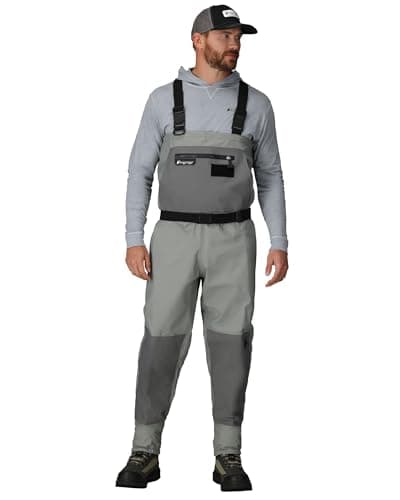
Breathable, chest-high, stockingfoot, in the PRO version currently in the Frogg Toggs range. Pair it with laced wading boots and you have the configuration that walks well, fits properly and supports an ankle on slippery rock.
Best for: The stockingfoot pick — most stream anglers9.1 - 2
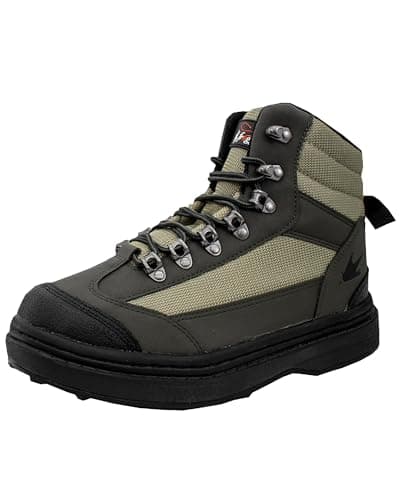
The other half of a stockingfoot purchase. A laced boot with a cleated rubber sole, legal in every state, sized one to one and a half above your normal shoe size to fit over the bootie.
Best for: The boots stockingfoot requires9.0 - 3
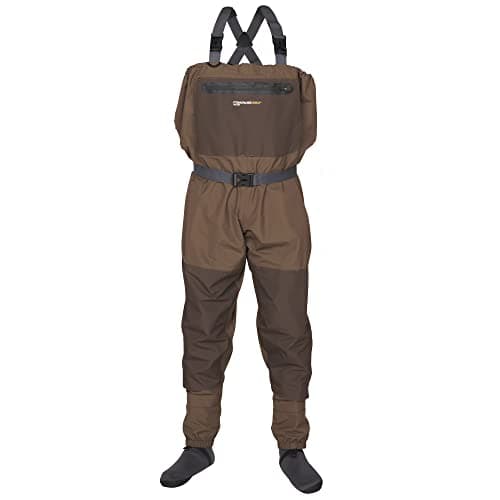
Breathable fabric with the boot already attached: nothing to lace, nothing else to buy, warmer around the foot, and far faster on and off at the truck.
Best for: The bootfoot pick — one purchase, warmer feet8.5
| # | Product | Best for | Score | Price |
|---|---|---|---|---|
| 1 | Frogg Toggs Hellbender PRO Breathable Stockingfoot Chest Wader Breathable, chest-high, stockingfoot, in the PRO version currently in the Frogg Toggs range. Pair it with laced wading boots and you have the configuration that walks well, fits properly and supports an ankle on slippery rock. | The stockingfoot pick — most stream anglers | 9.1 | $169.99View on Amazon#ad |
| 2 | Frogg Toggs Hellbender Wading Boot, Cleated The other half of a stockingfoot purchase. A laced boot with a cleated rubber sole, legal in every state, sized one to one and a half above your normal shoe size to fit over the bootie. | The boots stockingfoot requires | 9.0 | $89.95View on Amazon#ad |
| 3 | Compass 360 Deadfall Breathable STFT Chest Wader, Bootfoot Breathable fabric with the boot already attached: nothing to lace, nothing else to buy, warmer around the foot, and far faster on and off at the truck. | The bootfoot pick — one purchase, warmer feet | 8.5 | $127.41View on Amazon#ad |
Buy stockingfoot if you walk, bootfoot if you stand. Creek and stream fishing is walking — you fish a pool, get out, cover fifty yards of bank, get back in — and over a day that means a laced boot with real ankle support on rounded, invisible, slippery rock. That is the stockingfoot case, and it is why nearly every guide and serious trout angler wears it.
Bootfoot is not a worse product, though. It is warmer, it is one purchase instead of two, and it is dramatically faster to get into and out of. For cold still water, for short walks, for anyone with limited mobility, and for anyone who values simplicity over the last ten percent of performance, it is the right call — and the fishing press tends to be unfairly dismissive of it.
What the two actually are
Stockingfoot wadersend just above the ankle in a snug neoprene sock — the “bootie”. It is not footwear; you cannot walk in it. You buy wading boots separately and wear them over the bootie, sized up to accommodate it.
Bootfoot waders have a complete rubber boot molded permanently to the leg. It is one garment, finished, ready to walk in out of the bag.
Head to head
| Stockingfoot | Bootfoot | |
|---|---|---|
| Ankle support | Good to excellent | Poor to fair |
| Fit of the foot | Your real shoe size, laced | Whatever the maker molded |
| Warmth of the foot | Cooler — compressed in a wet sock | Warmer — air space around the foot |
| Time to get on | Minutes — lacing, gravel guards | Seconds |
| Purchases needed | Two (waders + boots) | One |
| Walking distance | Comfortable over miles | Tiring after a mile |
| Packability | Good — boots pack separately | Bulky, awkward shape |
| Cleaning between waters | Boots must be scrubbed and dried | Simpler — smooth rubber |
| Best for | Stream and creek fishing | Cold still water, short walks |
Support: the reason guides wear stockingfoot
Wading injuries are ankle injuries. You are standing on rock you cannot see, rounded by decades of current, coated in algae, with water pushing at your legs. The thing that stops a roll is a boot that holds your heel locked and your ankle braced — and that requires lacing, which a molded bootfoot does not have.
A bootfoot wader’s boot is also sized in whole sizes at best, shaped for an average foot, and cannot be tightened. You slide around inside it. On flat sand that is irrelevant. On a cobble streambed, that slide is exactly what you do not want.
There is a secondary benefit people underrate: stockingfoot boots can be replaced independently. Boots wear out faster than waders — soles abrade, laces fail, uppers scuff. With stockingfoot you buy a new pair of boots and keep the waders. With bootfoot, a worn-out sole means replacing the entire garment.
Add a wading staff either way
Warmth: the reason bootfoot still exists
This is the genuine advantage and it is a physical one. In a stockingfoot setup, your foot is inside a thin neoprene sock, inside socks, inside a laced boot that is pulled tight around all of it and full of cold water. Compressed materials do not insulate.
In a bootfoot wader there is an air space around your foot inside the rubber boot, and air is the insulator. Add an insulated bootfoot design and you get warmth no stockingfoot system matches. If you have ever had cold feet in waders in October, this is why, and it is why winter and still-water anglers stay loyal to bootfoot.
If you want the warmth without giving up boots, the partial fix is a hybrid wader with neoprene in the lower legs — see the fly fishing waders roundup. The other fix is simply sizing your boots generously so nothing compresses, which costs nothing.
The real total cost of each
This is where people get caught out. A stockingfoot wader is advertised as a complete-looking product, and it is half a purchase. Boots typically cost about as much again, and you may need gravel guards if they are not included.
So the honest comparison is: bootfoot waders at one price, versus stockingfoot waders plus boots at roughly double the wader price. Compared that way, bootfoot is often the cheaper route to being in the water — which is a legitimate reason to choose it if budget is the constraint.
The counter-argument is lifetime cost. Replace worn boots on a stockingfoot system and you have spent a boot. Wear out a bootfoot sole and you have spent a whole wader. Over several seasons the stockingfoot route usually comes out ahead — but only if you fish enough to get there.
How to choose
Choose stockingfoot if: you fish creeks and streams; you walk between spots; you wade moving water; you want boots in your actual size; you expect to fish for years and want to replace components rather than the whole thing.
Choose bootfoot if: you fish cold or deep still water; you fish from one spot; your walk from the vehicle is short; you want a single purchase at a single price; you get cold feet badly; or getting in and out quickly and easily matters to you more than the last measure of support.
One last practical note for the stockingfoot route: order your boots one to one and a half US sizes above your normal shoe size to fit over the bootie and socks. A boot sized to your bare foot compresses everything and gives you cold feet in mild water — the single most common complaint about stockingfoot setups, and entirely a sizing error.
Next: the waders roundup for the full ranked list, the boots guide if you are going stockingfoot, and the sizing guide, which is the page that prevents a return. Putting a whole kit together? Start at the beginner gear guide.
Two follow-ups. The stockingfoot advantage is largest for anyone whose body size and foot size do not pair the way manufacturers assume, which is why the best waders for women are almost all stockingfoot. And for a concrete look at the bootfoot compromise at the cheap end, our TIDEWE waders review works through what a molded-on boot costs you in fit and walking comfort.
If you land on stockingfoot, boot weight becomes your next decision. A stockingfoot setup means you choose the boot, and a lighter boot is the single cheapest way to make a long day easier — the lightweight wading boot roundup covers what you can safely lighten and what you cannot.
Height is the other half of this decision. Types of waders explained sets out chest, waist and hip side by side, and the best hip waders covers the one height where bootfoot is almost always the right answer.
The picks in detail
Frogg Toggs Hellbender PRO Breathable Stockingfoot Chest Wader
9.1/10Best for: The stockingfoot pick — most stream anglers
Breathable, chest-high, stockingfoot, in the PRO version currently in the Frogg Toggs range. Pair it with laced wading boots and you have the configuration that walks well, fits properly and supports an ankle on slippery rock.
- Foot
- Stockingfoot (4mm neoprene bootie)
- Construction
- Breathable 4-ply nylon upper
- Height
- Chest
- Boots
- Sold separately
- Real boots in your actual shoe size
- Genuine ankle support while wading
- Breathable — comfortable walking the bank
- Boots are a second purchase
- Slower to get on and off
Frogg Toggs Hellbender Wading Boot, Cleated
9.0/10Best for: The boots stockingfoot requires
The other half of a stockingfoot purchase. A laced boot with a cleated rubber sole, legal in every state, sized one to one and a half above your normal shoe size to fit over the bootie.
- Sole
- Cleated rubber
- Closure
- Laced
- Sizing
- Order 1-1.5 sizes up
- Legal sole everywhere in the US
- Takes carbide studs for slick bedrock
- Laced fit locks the heel down
- Doubles the cost of going stockingfoot
- Must be cleaned and dried between waters
Compass 360 Deadfall Breathable STFT Chest Wader, Bootfoot
8.5/10Best for: The bootfoot pick — one purchase, warmer feet
Breathable fabric with the boot already attached: nothing to lace, nothing else to buy, warmer around the foot, and far faster on and off at the truck.
- Foot
- Bootfoot (attached)
- Construction
- Breathable STFT
- Height
- Chest
- Boots
- Included
- One item, one price, nothing to match
- Warmer — air circulates around the foot
- On and off in seconds
- Boot fit is whatever the maker chose
- Weak ankle support for walking on cobble
Prices shown are from Amazon as of October 20, 2026 and change often — the button always goes to the current listing. Some links may earn us a commission at no extra cost to you. How this works.
Frequently asked questions
Are stockingfoot or bootfoot waders better?
Stockingfoot for creek and stream fishing, where you walk between pools and wade moving water - a laced boot in your real shoe size gives genuine ankle support on slick, rounded rock. Bootfoot is better for cold or deep still water, short walks from the vehicle, and anyone who wants one purchase and warmer feet.
Why are bootfoot waders warmer?
Because there is an air space around your foot inside the molded rubber boot, and trapped air is what insulates. In a stockingfoot setup your foot is compressed inside a neoprene bootie, socks and a tightly laced boot, and compressed material insulates poorly - which is why cold feet are the common stockingfoot complaint.
Do stockingfoot waders come with boots?
No. Stockingfoot waders end in a neoprene sock you cannot walk in, so wading boots are a separate purchase that typically costs about as much again as the waders. Budget for both together, and check whether gravel guards are included or need buying as well.
What size wading boots do I need for stockingfoot waders?
One to one and a half US sizes above your normal shoe size. The boot has to fit over the neoprene bootie plus socks, which adds real bulk. Sizing to your bare foot compresses everything, restricts circulation and causes cold feet even in mild water.
Sources
Keep reading
Not sure where to start?
The beginner gear guide walks you through exactly what a new stream angler needs — the six essentials first, nice-to-haves later, with one safe-default pick per category.