Waders · Brand Review
TIDEWE Waders Review
TIDEWE sells chest waders for about forty dollars, which sounds impossible. It is not impossible — it is bootfoot PVC, and that comes with a specific set of trade-offs worth understanding before you order.
Disclosure: Creek Cover is reader-supported. If you buy through our links we may earn a commission, at no extra cost to you. It never changes which pick we tell a new angler to start with. Full disclosure.
Quick picks at a glance
Tap a pick to read the full write-up, or the price button to check it on Amazon.
- 1
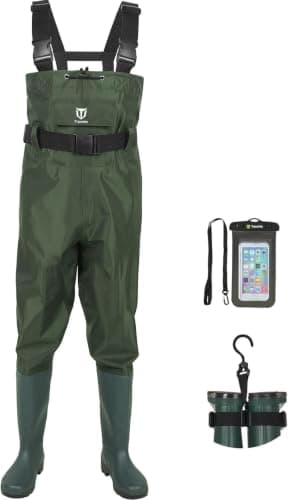
The product that built TIDEWE's reputation: a complete bootfoot chest wader with boots attached for around forty dollars. Waterproof, unbreathable, and extraordinary value for occasional cold-water use.
Best for: Best value chest wader8.8 - 2
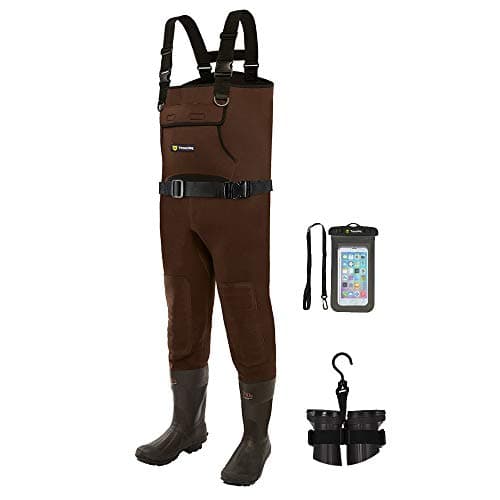
Neoprene rather than PVC, which means actual insulation. This is the pick for winter and early-spring wading, where a breathable wader needs layers underneath and this one does not.
Best for: Best for cold water9.0 - 3
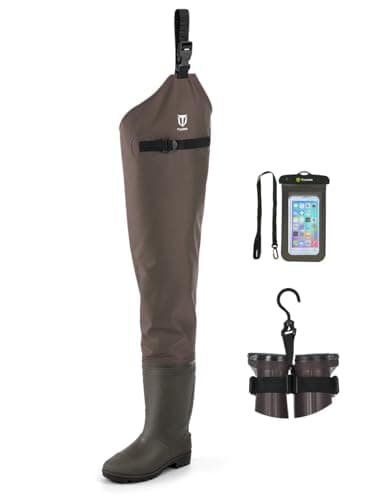
Thigh-high rather than chest-high, which on a small creek is all the height you need and considerably less to carry. The TIDEWE product that fits this site's water best.
Best for: Best for small creeks8.9
| # | Product | Best for | Score | Price |
|---|---|---|---|---|
| 1 | TIDEWE Chest Waders for Men and Women, Waterproof Fishing Waders The product that built TIDEWE's reputation: a complete bootfoot chest wader with boots attached for around forty dollars. Waterproof, unbreathable, and extraordinary value for occasional cold-water use. | Best value chest wader | 8.8 | $51.99View on Amazon#ad |
| 2 | TIDEWE Neoprene Waders, Cleated Bootfoot Chest Waders Neoprene rather than PVC, which means actual insulation. This is the pick for winter and early-spring wading, where a breathable wader needs layers underneath and this one does not. | Best for cold water | 9.0 | $119.99View on Amazon#ad |
| 3 | TIDEWE Fishing Hip Waders, Lightweight Hip Boots Thigh-high rather than chest-high, which on a small creek is all the height you need and considerably less to carry. The TIDEWE product that fits this site's water best. | Best for small creeks | 8.9 | $40.49View on Amazon#ad |
TIDEWE waders are genuinely good value and genuinely limited, and the limit is the same one in every model: they are bootfoot and non-breathable. If you wade a handful of times a year in cold water, the forty-dollar chest waderis the most sensible purchase in the entire wader category. If you wade most weekends, or in anything above about 60 °F, you will be unhappy with it — and the next section explains exactly why.
For small creeks specifically, the pick is the hip waders: cooler, lighter, and tall enough for water you can see the bottom of. For winter, the neoprene bootfoot is insulated in a way breathable waders are not.
The verdict on TIDEWE
TIDEWE is an Amazon-native budget brand, and it is honest about what it is. The company is not pretending to compete with Simms or Orvis; it sells complete waterproof waders at prices the established brands cannot approach, and it does that by using PVC and neoprene instead of breathable laminates, and by molding the boots on instead of selling you a bootie and letting you buy boots.
That is a real engineering trade, not a con. A bootfoot PVC wader is waterproof, cheap and durable against abrasion. What it is not is comfortable in warm weather or adjustable in fit. Whether TIDEWE is the right brand for you comes down entirely to whether those two costs matter for your fishing.
How we assessed the brand
We looked at TIDEWE's fishing range only. The company also sells a large line of camo hunting waders, which are a different product for a different activity and are outside what this site covers.
Within the fishing line-up we assessed published fabric and construction, boot attachment and sole type, sizing system, and the structural consequences of each choice. We do not run submersion or seam-strength tests and we do not claim field hours we have not logged — what we can do is read the specification honestly and tell you what the design implies. The method is on the how we research and pick page, and every price here is read live and carries a date.
The three fishing waders compared
| Model | Fabric | Height | Best season | Roughly |
|---|---|---|---|---|
| Chest wader | PVC / nylon | Chest | Cool weather, spring and autumn | $41 |
| Neoprene bootfoot | Neoprene | Chest | Late autumn to early spring | $105 |
| Hip waders | PVC / nylon | Thigh | Spring through autumn | $43-$47 |
What TIDEWE does not make for fishing:a breathable stockingfoot wader, a women's-specific fishing cut, or wading boots sold separately. All three are the things a regular wading angler eventually wants, and all three are reasons the brand is a starting point rather than a destination. For breathables see the fly fishing waders roundup; for a women's cut see the women's waders page.
The bootfoot problem nobody mentions
Every TIDEWE fishing wader has the boots molded on. That is how the price works, and it creates one consequence that listings never spell out: one body size is locked to one foot size.
A chest wader is sized by inseam and chest. A boot is sized by your foot. In a bootfoot wader, the manufacturer decides which pairing you get. If you have a long inseam and small feet — or the reverse — one of those two will fit and the other will not, and there is nothing you can do about it.
The practical workaroundis to size by the foot and accept a slightly baggy body, because a boot that is too small is unwearable while a loose chest panel is merely inelegant. TIDEWE lists paired men's and women's sizes (M10/W12 and so on), which helps, but it does not remove the constraint.
The other bootfoot trade-off is walking. A molded-on boot has less ankle support and a less refined sole than a dedicated wading boot, so a long walk in to water is noticeably harder work. On a creek you can park next to, that does not matter. On a mile hike it does. Stockingfoot vs bootfoot covers the full comparison.
The one genuine bootfoot advantage
Non-breathable: what that actually feels like
This is the complaint behind most negative reviews of any budget wader, and it is usually framed as a defect when it is a specification.
A breathable wader uses a laminate that lets water vapor out while keeping liquid water out. PVC and neoprene do not. So every bit of moisture your legs produce stays inside, and above roughly 60 °F you will finish a session with wet trousers — not from a leak, from condensation. People then report the waders as leaking, and they are not.
What to do about it. Wear a synthetic base layer that moves moisture off your skin, never cotton. Fish early and late in warm months. And in genuinely hot weather, do not wear waders at all — wade wet in quick-dry trousers and old trainers, which is more comfortable than any wader and costs nothing.
When it genuinely does not matter:cold water. At 45 °F your legs are not producing much moisture and the insulation is welcome. TIDEWE demand peaks in November for exactly this reason — these are cold-season waders and that is when they are actually pleasant to wear.
How long they last
Realistically, one to three seasons of regular use, and the failure points are predictable.
The boot-to-leg join is the commonest failure, because it flexes with every step and it is where two materials meet. Fold lines are next: PVC creases and eventually cracks, so storing these folded in a bag over winter is how they die. Seat and knees wear from sitting on banks and kneeling.
Three habits roughly double the life. Hang them full length — never folded, never compressed in a stuff sack. Dry them inside out at room temperature, away from radiators, hot cars and direct sun, because heat is what makes PVC brittle. Rinse them after fishing, especially if the water was silty.
When a pinhole appears, a wader patch kit fixes it in ten minutes and the surrounding material is usually fine. At this price there is a reasonable argument for just replacing them — but a patch costs four dollars, so try that first.
When to spend more instead
Three clear signals that TIDEWE is the wrong purchase for you.
You wade most weekends. At that frequency the non-breathability becomes a constant annoyance and the one-to-three-season life becomes a recurring cost. Buy a breathable stockingfoot wader instead — our main waders roundupstarts at a price that is only twice TIDEWE's and lasts several times as long.
You fish in warm weather.Above 60 °F, breathable waders are a different experience, not a marginal upgrade. And above 70 °F you should be wading wet regardless of what you own.
Your body and feet are mismatched in size, or you want a women's cut. Bootfoot construction cannot solve this, and a stockingfoot wader plus separate boots can — see women's waders and women's wading boots.
And one signal that TIDEWE is exactly right: you need waders for a handful of cold-weather trips a year, or you want a spare pair in the truck for a guest. At forty dollars, nothing else in the category competes, and buying premium waders to use six times a season is simply a worse decision. If you are still working out whether you need waders at all, how to size waders and the beginner kit guide cover where they sit in the buying order — which is later than most people assume.
For the wider budget picture, the best cheap waders ranks TIDEWE against the other options under $110, including the breathable ones — and a wading staff is the cheapest safety upgrade you can add to any bootfoot setup.
Where TIDEWE sits against the brands either side of it. A step up at the same end of the market is BASSDASH, which adds pockets and better fabric for a little more. Several steps up, and sold direct rather than on Amazon, is DRYFT — worth reading if you have decided to buy once rather than twice.
The closest brand comparison is HISEA. It sells the same cleated neoprene bootfoot format at the same price with a much narrower fishing range — the detail is in the HISEA waders review.
The picks in detail
TIDEWE Chest Waders for Men and Women, Waterproof Fishing Waders
8.8/10Best for: Best value chest wader
The product that built TIDEWE's reputation: a complete bootfoot chest wader with boots attached for around forty dollars. Waterproof, unbreathable, and extraordinary value for occasional cold-water use.
- Type
- Bootfoot chest wader
- Fabric
- PVC / nylon, non-breathable
- Boots
- Attached, cleated
- Sizing
- Unisex, men's and women's size pairs
- Cheapest complete wader setup available
- Boots attached — nothing else to buy
- Genuinely waterproof out of the box
- Not breathable — you will sweat heavily above 60°F
- Attached boots mean one body size locked to one foot size
TIDEWE Neoprene Waders, Cleated Bootfoot Chest Waders
9.0/10Best for: Best for cold water
Neoprene rather than PVC, which means actual insulation. This is the pick for winter and early-spring wading, where a breathable wader needs layers underneath and this one does not.
- Type
- Neoprene bootfoot chest wader
- Insulation
- Neoprene body
- Boots
- Attached, cleated
- Best season
- Late autumn through early spring
- Insulated, so fewer layers needed underneath
- Cleated boots grip better than plain rubber
- A quarter the price of insulated premium waders
- Unwearable in warm weather — neoprene does not breathe at all
- Heavy and bulky to walk any distance in
TIDEWE Fishing Hip Waders, Lightweight Hip Boots
8.9/10Best for: Best for small creeks
Thigh-high rather than chest-high, which on a small creek is all the height you need and considerably less to carry. The TIDEWE product that fits this site's water best.
- Type
- Bootfoot hip wader
- Height
- Thigh
- Boots
- Attached
- Best for
- Creeks and shallow streams
- Far cooler and lighter than a chest wader
- Easier to walk and climb banks in
- Right height for most small creeks
- One deep step and you have water in them
- No use on a river you need to wade waist-deep
Prices shown are from Amazon as of October 20, 2026 and change often — the button always goes to the current listing. Some links may earn us a commission at no extra cost to you. How this works.
Frequently asked questions
Are TIDEWE waders any good?
For occasional cold-water use, yes — a complete bootfoot chest wader at around forty dollars is remarkable value and genuinely waterproof. The limits are that they are non-breathable, so uncomfortable above about 60°F, and bootfoot, so one body size is locked to one foot size. If you wade most weekends, buy a breathable stockingfoot wader instead.
How long do TIDEWE waders last?
One to three seasons of regular use. The boot-to-leg join fails first because it flexes with every step, then fold lines crack, then the seat and knees wear. Hanging them full length rather than folded, drying them inside out away from heat, and rinsing after fishing roughly doubles their life.
Are TIDEWE waders breathable?
No. The fishing range is PVC/nylon or neoprene, neither of which passes water vapor. Above about 60°F you will finish a session with damp trousers from condensation rather than from a leak, which is the cause of most negative reviews. Wear a synthetic base layer, never cotton, and wade wet in genuinely hot weather.
Which TIDEWE wader should I buy?
The hip waders for small creeks — cooler, lighter and tall enough for water you can see the bottom of. The PVC chest wader for cool-weather river wading at the lowest possible price. The neoprene bootfoot for winter, because it is genuinely insulated in a way breathable waders are not.
What size TIDEWE waders should I order?
Size by your foot, not your body. Because the boots are molded on, one body size is paired with one foot size by the manufacturer, and a boot that is too small is unwearable while a loose chest panel is merely inelegant. TIDEWE lists paired men's and women's sizes, which helps narrow it.
Does TIDEWE make breathable stockingfoot waders for fishing?
Not in its fishing range. TIDEWE's fishing waders are all bootfoot and non-breathable, and the brand does not sell wading boots separately or offer a women's-specific fishing cut. Those are the three things regular wading anglers eventually want, which makes TIDEWE a starting point rather than a destination.
Sources
Keep reading
Not sure where to start?
The beginner gear guide walks you through exactly what a new stream angler needs — the six essentials first, nice-to-haves later, with one safe-default pick per category.