Guides · Buying guide
What Gear to Use for Trout Fishing
Rod size, reel size, line size and the knots between them — the whole trout setup in plain numbers, written for somebody buying their first one.
Disclosure: Creek Cover is reader-supported. If you buy through our links we may earn a commission, at no extra cost to you. It never changes which pick we tell a new angler to start with. Full disclosure.
Quick picks at a glance
Tap a pick to read the full write-up, or the price button to check it on Amazon.
- 1
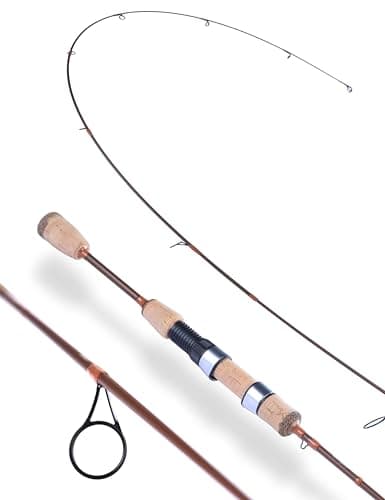
This is the size question answered: ultralight power, 7 feet, 2-piece, rated for the small lures trout actually eat. A medium-power bass rod cannot cast a 1/16 oz spinner, which is why rod power matters more than brand at this end.
Best for: The rod: ultralight, 6-7 ft - 2No image
A size 25 (1000-class) reel is the correct size for a trout rod, and the President is the one that has been the sensible answer for twenty years. Smooth enough that light line survives a fish pulling against the drag.
Best for: The reel: size 1000-2500 - 3
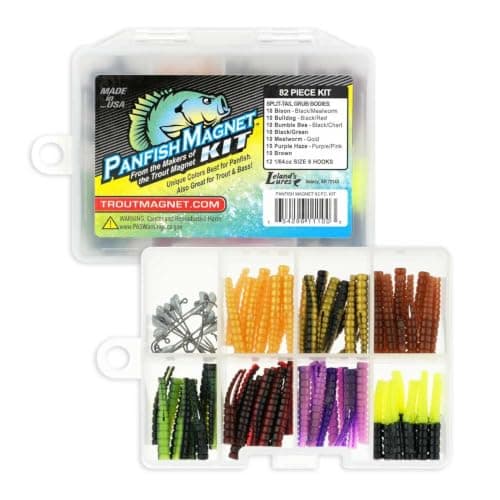
Small jigs and the tiny floats to fish them under, which is the most consistently effective way for a beginner to catch stream trout. Eighty-odd pieces means you can lose some in trees and keep fishing.
Best for: What to put on the end - 4
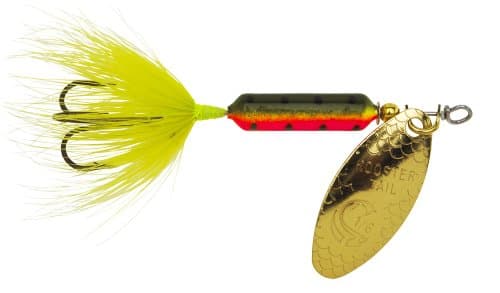
If you buy one trout lure, buy this in 1/16 oz. It has caught more stream trout than any other lure made, it works in moving water from the first cast, and it tells you immediately whether fish are in a pool.
Best for: The one lure to start with
| # | Product | Best for | Score | Price |
|---|---|---|---|---|
| 1 | LITTMA Trout & Panfish Ultralight Spinning Rod, 7' 2-Piece This is the size question answered: ultralight power, 7 feet, 2-piece, rated for the small lures trout actually eat. A medium-power bass rod cannot cast a 1/16 oz spinner, which is why rod power matters more than brand at this end. | The rod: ultralight, 6-7 ft | — | $41.03View on Amazon#ad |
| 2 | No image Pflueger President Spinning Reel, Size 25 A size 25 (1000-class) reel is the correct size for a trout rod, and the President is the one that has been the sensible answer for twenty years. Smooth enough that light line survives a fish pulling against the drag. | The reel: size 1000-2500 | — | Check price on Amazon#ad |
| 3 | Trout Magnet Panfish Magnet Kit, 82-Piece Small jigs and the tiny floats to fish them under, which is the most consistently effective way for a beginner to catch stream trout. Eighty-odd pieces means you can lose some in trees and keep fishing. | What to put on the end | — | $14.99View on Amazon#ad |
| 4 | Wordens Original Rooster Tail Spinner, 1/16 oz If you buy one trout lure, buy this in 1/16 oz. It has caught more stream trout than any other lure made, it works in moving water from the first cast, and it tells you immediately whether fish are in a pool. | The one lure to start with | — | $14.99View on Amazon#ad |
For stream trout: an ultralight spinning rod 6 to 7 feet long, a 1000-size reel, and 4-pound monofilament line. On the end, a 1/16 oz inline spinner or a small jig. That setup costs under $120 complete, catches trout from the first afternoon, and is the right answer for the great majority of people asking this question. The fly alternative is good but slower to learn — the honest comparison is at the bottom of this page.
The short answer, in numbers
| Part | What to buy | Why |
|---|---|---|
| Rod | Ultralight power, 6-7 ft, 2-piece | Casts 1/16-1/4 oz lures; fits small water |
| Reel | Size 1000 (also sold as 10 or 25) | Balances an ultralight rod; holds 4-6 lb line |
| Line | 4 lb monofilament | Thin enough to cast light lures, strong enough for creek trout |
| Leader | Optional — 4 lb fluorocarbon, 2-3 ft | Less visible in clear water |
| Lures | 1/16 oz spinners, small jigs, 1/8 oz spoons | The sizes stream trout actually eat |
| Hooks (bait) | Size 10-14 | Small enough for a trout's mouth |
What size rod for trout
Power: ultralight. Rod power — ultralight, light, medium, heavy — describes how much force it takes to bend the rod, and it determines the lure weight the rod can cast. A medium rod simply cannot load with a 1/16 oz spinner, so the lure goes nowhere. Ultralight is the power class built for the lures trout eat.
Length: 6 to 7 feet. Longer rods cast further and control line better at distance; shorter rods fit under branches and are more accurate close in. On creeks, 6 feet is ideal. On small rivers and stocked ponds, 7 feet gives you more reach. Over 7 feet you are buying a rod for water you do not fish.
Action matters less than power. Fast, moderate or slow describes where the rod bends. For trout on light line, a moderate action is more forgiving — it cushions a lunging fish instead of transmitting the shock to a 4-pound knot. Our trout rod roundup and ultralight rod guide go deeper.
What size reel for trout
Size 1000. Spinning reels are numbered by spool size — 500, 1000, 2500, 4000 and up — and some brands write the same thing as 10 or 25. For an ultralight trout rod you want a 1000: it holds plenty of 4-pound line and, crucially, it weighs little enough to balance the rod.
Why balance matters. An ultralight rod weighs a few ounces. Hang a 4000-size bass reel under it and the whole thing feels like a hammer — tiring within an hour and less accurate on every cast. This is the most common mistake in a first trout setup.
What to look for beyond size. A smooth drag that starts without a jerk, because 4-pound line breaks on jerks rather than on steady pressure. Bearing counts matter far less than the marketing suggests. Our ultralight reel guide compares the options, and the combo guide covers buying both matched in one box, which is cheaper and removes the balance question.
What size line for trout
4-pound monofilament is the default. It is thin enough that a 1/16 oz lure pulls it off the spool properly, strong enough for any creek trout, cheap, and forgiving — mono stretches, which cushions a fish surging at the net.
Go to 6-pound if you fish around heavy wood, snag often and want to pull lures free, or expect bigger fish. Go to 2-pound only in very clear, hard- fished water where you know line visibility is the problem.
Fluorocarbon as a leader, not as a main line. Fluorocarbon is less visible underwater and more abrasion resistant, but it is stiff and has coil memory that fights a light spinning reel. The usual compromise is mono on the spool with a two- to three-foot fluorocarbon leader tied on with a double uni or surgeon's knot.
Braid is for other fishing. It has no stretch, which transmits every twitch — excellent for feeling bites, bad for protecting light hooks and knots on a thrashing trout. Skip it on your first trout setup.
How to set up trout fishing line
1. Spool the reel correctly. Mount the reel on the rod, run the line through the guides, tie it to the spool with an arbor knot, then wind with light tension, keeping the line coming off the filler spool in the same direction the reel spool turns. Fill to about 1/8 inch below the spool lip — overfilled spools throw loops.
2. Add a leader if you want one. Two to three feet of 4-pound fluorocarbon joined to the mono with a double uni knot. On a fly rod the equivalent step is the leader and tippet — see how to tie tippet to leader.
3. Tie on the lure with a clinch knot. Pass the line through the eye, wrap it five times around the standing line, back through the loop by the eye, wet it and pull tight. A swivel is worth adding above an inline spinner, which otherwise twists your line into corkscrews within an hour.
4. Set the drag by hand. Pull line off the reel with the rod tip up. It should come steadily with firm resistance, not lock. On 4-pound line, set it light — the drag is what stops the line snapping when a fish turns.
Replace mono more often than you think
If you would rather fly fish
The equivalent numbers are short: a 5-weight rod for mixed water or a 3-weight for small creeks, a reel in the matching 3/4 or 5/6 size, a weight-forward floating line in the rod's weight, a 9-foot 4X or 5X tapered leader, and a small box of flies.
Fly fishing is not harder, it is differently hard. Casting takes an hour on grass to become functional and a season to become good; spinning takes ten minutes. Where fly gear wins is on fish that are feeding on insects at the surface, which on small trout streams is a lot of the time. The honest head-to-head is fly fishing vs spinning.
If you want the fly version of this page, the fly fishing starter kit guide lists what belongs in the box and the beginner gear guide puts the whole kit in buying order with a running total. Either way, add a rubber-mesh net before you add anything else — it is the cheapest piece of gear that improves the fish's odds of swimming away.
The small stuff is what actually ruins days. Nobody's fishing is spoiled by the wrong rod; it is spoiled by having no nippers or a leader that broke. The seven items worth owning, in buying order, are in the fly fishing accessories guide.
The picks in detail
LITTMA Trout & Panfish Ultralight Spinning Rod, 7' 2-Piece
Best for: The rod: ultralight, 6-7 ft
This is the size question answered: ultralight power, 7 feet, 2-piece, rated for the small lures trout actually eat. A medium-power bass rod cannot cast a 1/16 oz spinner, which is why rod power matters more than brand at this end.
- Power
- Ultralight
- Length
- 7 ft, 2-piece
- Suits
- 1/16 to 1/4 oz lures
- Casts genuinely light lures
- Length suits creeks and small rivers
- Cheap enough to learn on
- Too light for anything over a few pounds
- 2-piece does not pack small
Pflueger President Spinning Reel, Size 25
Best for: The reel: size 1000-2500
A size 25 (1000-class) reel is the correct size for a trout rod, and the President is the one that has been the sensible answer for twenty years. Smooth enough that light line survives a fish pulling against the drag.
- Size
- 25 (1000-class)
- Suits
- 4-6 lb line, ultralight rods
- Drag
- Smooth enough for 4 lb line
- Correct size for a trout rod
- Reputation for lasting
- Drag that protects light line
- More than a budget reel costs
- Spool capacity is small by design
Trout Magnet Panfish Magnet Kit, 82-Piece
Best for: What to put on the end
Small jigs and the tiny floats to fish them under, which is the most consistently effective way for a beginner to catch stream trout. Eighty-odd pieces means you can lose some in trees and keep fishing.
- Contents
- 82 pieces, jigs and floats
- Suits
- Stream and stocked trout
- Works when spinners do not
- Enough pieces to learn with
- Very cheap per fish
- Small jigs are fiddly in cold hands
- Not a lure for big water
Wordens Original Rooster Tail Spinner, 1/16 oz
Best for: The one lure to start with
If you buy one trout lure, buy this in 1/16 oz. It has caught more stream trout than any other lure made, it works in moving water from the first cast, and it tells you immediately whether fish are in a pool.
- Weight
- 1/16 oz
- Type
- Inline spinner
- Suits
- Creeks and small rivers
- Proven beyond argument
- Right weight for an ultralight rod
- Costs a few dollars
- Gets lost in brush
- Hooks need checking for sharpness
Prices shown are from Amazon as of October 20, 2026 and change often — the button always goes to the current listing. Some links may earn us a commission at no extra cost to you. How this works.
Frequently asked questions
What size rod is best for trout fishing?
An ultralight power rod, 6 to 7 feet long. Ultralight is the power class rated for the 1/16 to 1/4 oz lures stream trout eat - heavier rods cannot load with lures that light. Six feet suits brushy creeks, seven gives more reach on small rivers and ponds.
What size reel should I use for trout?
A size 1000 spinning reel, sometimes written as 10 or 25 depending on the brand. It holds plenty of 4-pound line and weighs little enough to balance an ultralight rod. A larger reel makes the whole setup feel heavy and casts less accurately.
What pound line is best for trout?
Four-pound monofilament for most stream trout fishing. It is thin enough to cast light lures properly, strong enough for creek fish, and it stretches, which protects small hooks and knots. Step up to 6-pound around heavy wood, and use fluorocarbon as a short leader rather than a main line.
What is the best lure for trout fishing?
A 1/16 oz inline spinner such as a Rooster Tail, or a small jig fished under a float. Both work in moving water from the first cast and cover a pool quickly, which is how you find out whether trout are present. Spoons in 1/8 oz are the next addition.
Sources
Keep reading
Not sure where to start?
The beginner gear guide walks you through exactly what a new stream angler needs — the six essentials first, nice-to-haves later, with one safe-default pick per category.