Guides · Problem guide
How to Tie Tippet to Leader
Two lines, one knot, and the single most common place a beginner's rig fails. Here is the knot to learn first, the one to learn second, and the three-dollar fix that skips both.
Disclosure: Creek Cover is reader-supported. If you buy through our links we may earn a commission, at no extra cost to you. It never changes which pick we tell a new angler to start with. Full disclosure.
Quick picks at a glance
Tap a pick to read the full write-up, or the price button to check it on Amazon.
- 1
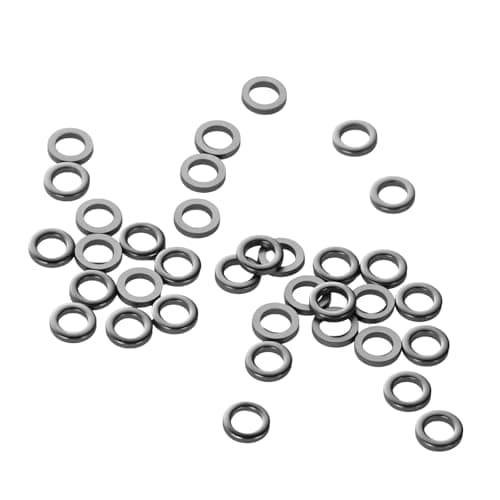
A tiny welded steel ring that goes on the end of your leader. From then on you tie tippet to the ring with a clinch knot — the first knot every angler learns — and the leader stops getting shorter every time you change.
Best for: Skipping the leader-to-tippet knot entirely - 2
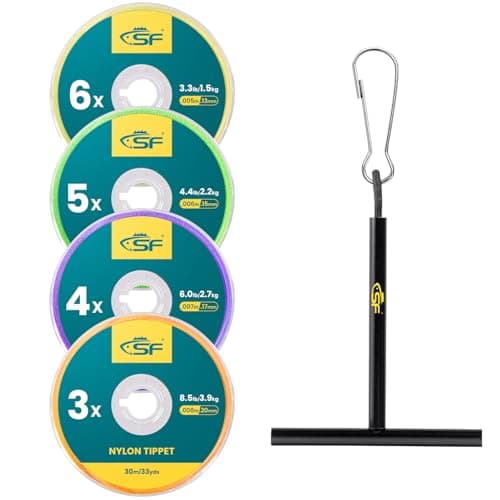
A multi-spool set covering the sizes a trout angler actually uses. Having 4X and 5X on hand is what makes the knot a thirty-second job at the water instead of a reason to keep fishing a leader that is too short.
Best for: The tippet to practice and fish with - 3
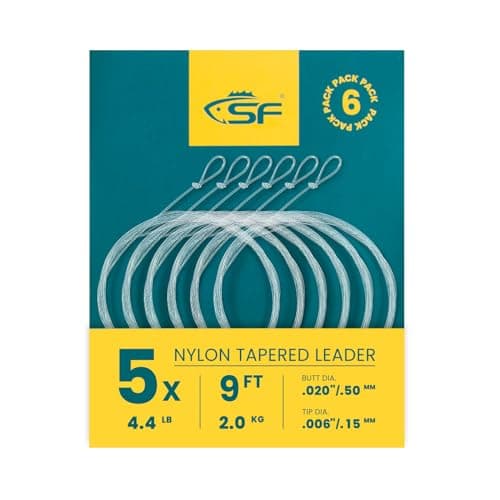
A standard 9-foot 5X tapered leader, which is the default for trout on small water. The taper is what transfers energy from the fly line down to the fly, and no amount of straight tippet replaces it.
Best for: The leader this knot attaches to - 4
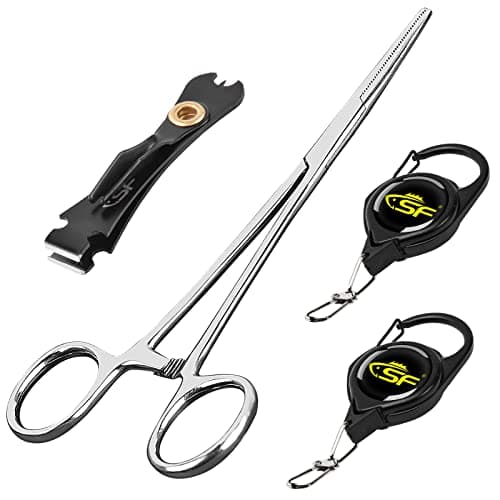
A knot is only as good as the trim. Real nippers cut mono flush against the knot; teeth and nail clippers leave a tag that catches weed and tells on you. The zinger means they are hanging there when you need them.
Best for: Cutting the tags off cleanly
| # | Product | Best for | Score | Price |
|---|---|---|---|---|
| 1 | 50 Pack Fly Fishing Tippet Rings, 2mm Stainless Steel A tiny welded steel ring that goes on the end of your leader. From then on you tie tippet to the ring with a clinch knot — the first knot every angler learns — and the leader stops getting shorter every time you change. | Skipping the leader-to-tippet knot entirely | — | $6.99View on Amazon#ad |
| 2 | SF Nylon Fly Fishing Tippet, 3X-6X 30m Spools A multi-spool set covering the sizes a trout angler actually uses. Having 4X and 5X on hand is what makes the knot a thirty-second job at the water instead of a reason to keep fishing a leader that is too short. | The tippet to practice and fish with | — | $9.99View on Amazon#ad |
| 3 | SF Fly Fishing Tapered Leader, 9FT 5X A standard 9-foot 5X tapered leader, which is the default for trout on small water. The taper is what transfers energy from the fly line down to the fly, and no amount of straight tippet replaces it. | The leader this knot attaches to | — | $7.99View on Amazon#ad |
| 4 | SF Fly Fishing Tools Kit: Nipper, Zinger & Forceps A knot is only as good as the trim. Real nippers cut mono flush against the knot; teeth and nail clippers leave a tag that catches weed and tells on you. The zinger means they are hanging there when you need them. | Cutting the tags off cleanly | — | $9.99View on Amazon#ad |
Tie tippet to leader with a double surgeon's knot: hold the two ends alongside each other, tie a loose overhand loop with both, pass both ends through the loop twice, wet it, pull all four strands tight, and trim the tags flush. It takes about twenty seconds, holds close to the full strength of the line, and works with cold hands in bad light — which is why it is the knot to learn first. If you would rather not tie a knot at all, put a tippet ring on the end of your leader and use a clinch knot from then on.
The short answer
You are joining two pieces of clear line of slightly different thickness. The leader is tapered — thick at the butt where it meets the fly line, fine at the tip. The tippet is a level piece of fine line that extends it. You join them so that changing flies eats the cheap tippet instead of shortening the expensive leader.
| Method | Difficulty | Strength | When to use it |
|---|---|---|---|
| Double surgeon's knot | Easy | Very good | Learn this first; use it always |
| Blood knot | Moderate | Very good | Neater, straighter, slips through guides better |
| Tippet ring | No knot to learn | Very good | If knots are stopping you fishing |
The double surgeon's knot, step by step
1. Overlap the two ends. Lay the end of the leader and the end of the tippet alongside each other, pointing in opposite directions, overlapping by about six inches. Hold them together between finger and thumb.
2. Make a loop. Treating the two overlapped strands as one piece of line, tie a simple overhand loop — the first move of tying a shoelace. Keep it loose.
3. Pass both ends through the loop. Twice.Take the whole bundle — the tippet tag and the leader tag together — through the loop, then through the same loop a second time. That second pass is the “double” and it is what stops the knot slipping.
4. Wet it. Saliva or river water. Pulling a dry knot tight generates enough friction to burn and weaken monofilament, and this is the step beginners skip.
5. Pull all four strands. Both standing lines and both tags, evenly, until the knot seats into a tidy barrel. If it goes lopsided, cut it off and start again — a badly-seated knot is the one that fails on the fish you actually wanted.
6. Trim both tags flush. Right up against the knot with real nippers. A tag left standing collects weed and catches your fly line on the cast.
Practice this at the kitchen table
The blood knot, and when to bother
The blood knot — also called a barrel knot — wraps each line around the other four or five times and passes both tags back through the middle in opposite directions. It makes a straighter, slimmer join than a surgeon's knot, which means it slides through the rod guides more cleanly and hinges less.
Learn it second, not first. It takes two hands and good light, which is exactly what you do not have standing in moving water at dusk. Most stream anglers tie blood knots at home when building leaders and surgeon's knots at the water when fishing. If you are building your own tapered leaders from scratch, the blood knot is the right tool; for adding a length of tippet on the stream, it is a solution to a problem you do not have.
Tippet rings: skipping the knot
A tippet ring is a 2mm welded steel ring, light enough that it does not sink a dry fly. You tie it to the end of your leader once, with a clinch knot, and leave it there. Every tippet change after that is a clinch knot to the ring.
What it fixes. Two things. The hardest knot leaves your routine. And your leader stops getting shorter — normally, each change trims a little off the leader tip, and after a dozen flies your nine-foot 5X leader is a seven-foot 3X leader that no longer turns over properly.
What it costs. A tiny bit of weight and one more component. Purists fishing tiny dries on 7X will leave the ring off; everyone fishing nymphs and streamers on small water can use one with no downside. At a few dollars for fifty, it is the cheapest problem-solver in fly fishing.
What tippet size goes on what leader
Tippet is sized in the X system, where bigger X means thinner line: 3X is thicker than 6X. The practical rule for a 9-foot leader on stream trout:
| Leader tip | Tippet to add | Fly sizes it suits |
|---|---|---|
| 3X | 3X or 4X | Streamers, big nymphs, size 6-10 |
| 4X | 4X or 5X | General nymphs and dries, size 10-16 |
| 5X | 5X or 6X | Small dries and nymphs, size 14-20 |
Never step down more than one size at a time. A surgeon's knot joining very different diameters — 3X to 6X, say — grips unevenly and slips. If you need to get from a thick leader tip to fine tippet, do it in two steps, or use a ring.
And do not go finer than you need. On small creeks, 5X covers almost everything. 6X and 7X exist for clear spring creeks and very small flies, and they break on fish that 5X would have landed. More on how this fits the rest of the rig in our fly line guide and the starter kit guide.
Why your knot slipped
You tied it dry. Friction burn weakens mono measurably. Wet every knot.
You only passed through once. A single surgeon's knot slips. The second pass is not optional.
You pulled on two strands instead of four. Seating the knot means tightening all four ends together. Pull the standing lines only and the knot closes crooked.
You joined wildly different diameters. One X size apart, two at most.
Your tippet is old. Nylon degrades in UV and gets brittle over a couple of seasons on a sunny shelf. If the spool has been in a car window since 2024, replace it — new tippet is a few dollars and old tippet costs fish.
Once the knot is reliable, the rest of the rig is simple: leader to fly line with a loop-to-loop, tippet to leader with this knot, fly to tippet with a clinch. If you are still assembling your first setup, the beginner gear guide covers the whole chain in order, and what gear to use for trout covers the sizes to buy.
If the rod itself is not built yet, this knot is step seven of seven — the whole sequence from a box of parts to a first cast is in how to set up a fly rod. And if you are not yet sure which part is which, fly line, leader and tippet explained covers all three in plain language.
The picks in detail
50 Pack Fly Fishing Tippet Rings, 2mm Stainless Steel
Best for: Skipping the leader-to-tippet knot entirely
A tiny welded steel ring that goes on the end of your leader. From then on you tie tippet to the ring with a clinch knot — the first knot every angler learns — and the leader stops getting shorter every time you change.
- Size
- 2 mm
- Material
- Stainless steel
- Quantity
- 50 pack
- Removes the hardest beginner knot
- Leader stops shortening with every change
- A few dollars for a season or more
- One more thing on the rig
- Not for the lightest 7X dry-fly work
SF Nylon Fly Fishing Tippet, 3X-6X 30m Spools
Best for: The tippet to practice and fish with
A multi-spool set covering the sizes a trout angler actually uses. Having 4X and 5X on hand is what makes the knot a thirty-second job at the water instead of a reason to keep fishing a leader that is too short.
- Sizes
- 3X to 6X
- Material
- Nylon monofilament
- Length
- 30 m spools
- Covers the whole trout range
- Nylon is forgiving to knot
- Cheap enough to practice with
- Nylon weakens with age in sunlight
- Not fluorocarbon
SF Fly Fishing Tapered Leader, 9FT 5X
Best for: The leader this knot attaches to
A standard 9-foot 5X tapered leader, which is the default for trout on small water. The taper is what transfers energy from the fly line down to the fly, and no amount of straight tippet replaces it.
- Length
- 9 ft
- Tip
- 5X
- Type
- Knotless tapered
- The right default for stream trout
- Knotless taper turns a fly over
- Cheap to keep spares of
- Gets shorter with every fly change
- 5X is too fine for big streamers
SF Fly Fishing Tools Kit: Nipper, Zinger & Forceps
Best for: Cutting the tags off cleanly
A knot is only as good as the trim. Real nippers cut mono flush against the knot; teeth and nail clippers leave a tag that catches weed and tells on you. The zinger means they are hanging there when you need them.
- Includes
- Nipper, zinger, forceps
- Use here
- Trimming knot tags flush
- Flush cuts, no tags
- Always to hand on a zinger
- Forceps for hook removal too
- Nippers dull eventually
- Easy to lose if not clipped on
Prices shown are from Amazon as of October 20, 2026 and change often — the button always goes to the current listing. Some links may earn us a commission at no extra cost to you. How this works.
Frequently asked questions
What is the best knot for tying tippet to leader?
The double surgeon's knot. It is quick, holds close to full line strength, and can be tied with cold hands in poor light. The blood knot makes a slimmer, straighter join that passes through rod guides better, but it needs two hands and good light, so most anglers tie it at home rather than on the water.
How do you tie a double surgeon's knot?
Overlap the leader and tippet ends by about six inches, tie a loose overhand loop in both strands together, pass both ends through that loop twice, wet the knot, then pull all four strands tight evenly and trim both tags flush against the knot.
Do tippet rings weaken your leader?
No. A 2mm welded steel tippet ring is rated well above trout tippet strength, and the clinch knots to it are strong. The ring adds a small amount of weight, which is why anglers fishing very small dries on 7X sometimes leave it off, but for general stream fishing there is no practical downside.
What size tippet should I use for trout?
5X covers most small-stream trout fishing, with 4X for bigger nymphs and streamers and 6X for small dries in very clear water. Stay within one X size of your leader tip when joining them - a knot between widely different diameters grips unevenly and slips.
Sources
Keep reading
Not sure where to start?
The beginner gear guide walks you through exactly what a new stream angler needs — the six essentials first, nice-to-haves later, with one safe-default pick per category.