Packs, Vests & Nets · Roundup
The Best Fly Fishing Hip Packs
A hip pack sits on your waist, swivels round when you need it, and stays out of your casting arm entirely. On a creek where you are constantly ducking under branches, that is the quietest pack there is — and the shortest list, because almost nobody makes a cheap one.
Disclosure: Creek Cover is reader-supported. If you buy through our links we may earn a commission, at no extra cost to you. It never changes which pick we tell a new angler to start with. Full disclosure.
Quick picks at a glance
Tap a pick to read the full write-up, or the price button to check it on Amazon.
- 1
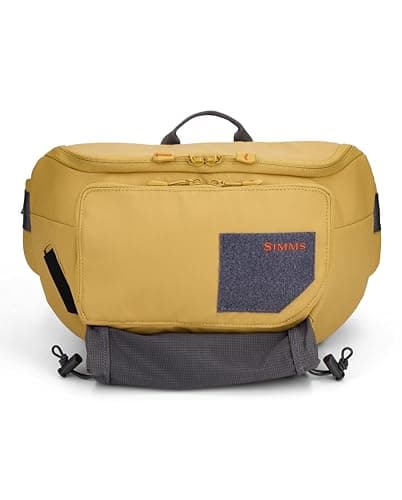
The cheapest dedicated fly fishing hip pack here and the one most creek anglers should buy. Tributary is Simms' entry line, so you are getting a pack specified by a company that exists to make wading equipment, without paying for their flagship. For a small-stream day — a box of flies, tippet, nippers, floatant, a bar and a phone — the capacity is right and the hardware is the part you notice three seasons in.
Best for: Best overall and best value — the entry pack from a wading-gear company - 2
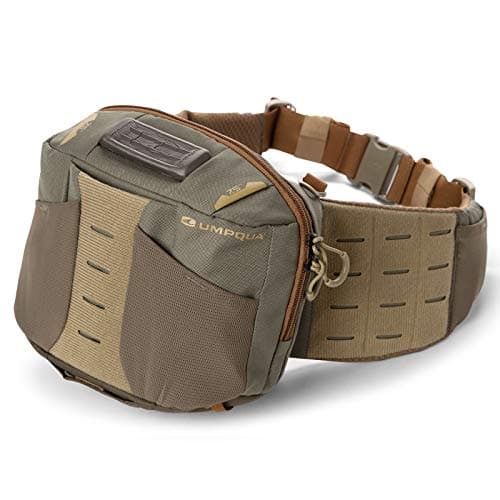
Umpqua's ZS2 packs are built around a specific problem: external loops, cords and tabs catch fly line, and a caught line ruins casts and loses fish. The Zero Sweep design tucks the attachment points away so there is nothing for a line to find. The 500 is the compact size, which on a creek is the right one — a bigger pack gets filled with things you carry and never use. This is the pick if you want your kit sorted into compartments rather than in a bag.
Best for: Best organised — the Zero Sweep layout in the smaller size - 3
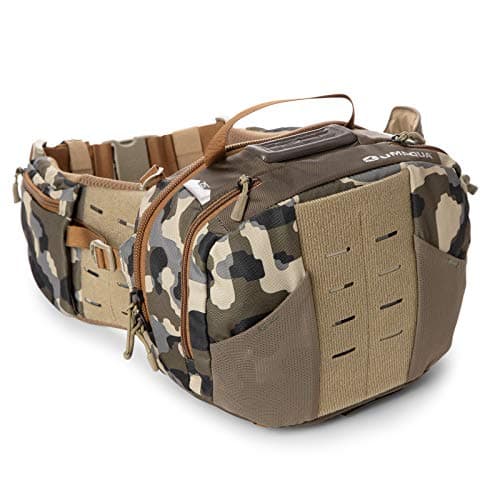
The larger of the two Ledges packs, and the one to buy if your day includes a rain jacket, a water bottle and lunch rather than just tackle. Same Zero Sweep exterior, same compartment logic, more volume. The honest warning is the one that applies to every bigger pack: capacity gets used. If you buy the 650 you will carry more, and on a creek where you are climbing over deadfall all afternoon, weight on your hips is felt.
Best for: Best for a long day — the same pack with room for a rain shell
| # | Product | Best for | Score | Price |
|---|---|---|---|---|
| 1 | Simms Tributary Hip Pack The cheapest dedicated fly fishing hip pack here and the one most creek anglers should buy. Tributary is Simms' entry line, so you are getting a pack specified by a company that exists to make wading equipment, without paying for their flagship. For a small-stream day — a box of flies, tippet, nippers, floatant, a bar and a phone — the capacity is right and the hardware is the part you notice three seasons in. | Best overall and best value — the entry pack from a wading-gear company | — | $116.29View on Amazon#ad |
| 2 | Umpqua Ledges ZS2 500 Waist Pack Umpqua's ZS2 packs are built around a specific problem: external loops, cords and tabs catch fly line, and a caught line ruins casts and loses fish. The Zero Sweep design tucks the attachment points away so there is nothing for a line to find. The 500 is the compact size, which on a creek is the right one — a bigger pack gets filled with things you carry and never use. This is the pick if you want your kit sorted into compartments rather than in a bag. | Best organised — the Zero Sweep layout in the smaller size | — | Check price on Amazon#ad |
| 3 | Umpqua Ledges ZS2 650 Waist Pack The larger of the two Ledges packs, and the one to buy if your day includes a rain jacket, a water bottle and lunch rather than just tackle. Same Zero Sweep exterior, same compartment logic, more volume. The honest warning is the one that applies to every bigger pack: capacity gets used. If you buy the 650 you will carry more, and on a creek where you are climbing over deadfall all afternoon, weight on your hips is felt. | Best for a long day — the same pack with room for a rain shell | — | Check price on Amazon#ad |
The best fly fishing hip pack for most creek anglers is the Simms Tributary Hip Pack — the least expensive dedicated hip pack in this field, specified by a company that only makes wading gear, and sized for a day on small water rather than an expedition. If you want your kit in proper compartments and a snag-free exterior, take the Umpqua Ledges ZS2 500. There is no budget pick on this page and we are not going to pretend otherwise — see why this list is short below for the honest alternative under $100. Prices come from our live feed, with the as-of date under the comparison table.
A hip pack — the same object as a waist pack, and what an older generation would call a fanny pack — is a single compartment on a webbing belt that rides on your hips or the small of your back. You rotate it to the front to open it, then push it back round. Nothing sits on your chest, nothing crosses your casting shoulder, and nothing swings.
Why a hip pack at all
It is the only pack that stays out of your casting arm completely. A sling crosses one shoulder and sits at your lower back, which is close — but it still has a strap over the shoulder you cast with, and on a tight creek where you are making sidearm and bow-and-arrow casts under branches, that strap is something you feel. A hip belt has nothing above your waist.
It keeps weight on your hips instead of your shoulders. Hips carry load better than shoulders do; that is why every hiking pack transfers weight to a hip belt. For a full day of walking a creek, a few pounds on a waist belt is less tiring than the same few pounds hanging off one shoulder.
And it does not fill with water when you kneel. This is the practical thing nobody mentions until it has happened. A chest pack is above the waterline and fine; a sling rides at the small of your back and is usually fine; a hip pack sits at belt height, which means in water above your waist it is in the river. On a creek that rarely matters. On a thigh-deep wade it does, and it is the one genuine argument against this style — see fly fishing vest vs pack for the full comparison.
The deep-water rule
Hip pack vs sling vs chest pack
| Style | Where it sits | Best for | Weakness |
|---|---|---|---|
| Hip / waist pack | On the hip belt, rotates to front | Shallow creek wading, long walks, unobstructed casting | In the water on a deep wade |
| Sling pack | One shoulder, rides at lower back | The all-round default; swings to the front in one motion | A strap across your casting shoulder |
| Chest pack | On the chest, above the waterline | Deep wading, instant access, minimal kit | Sits in your line of sight and your casting space |
| Vest | Worn like a garment | Carrying the most, organised into many pockets | Hot, bulky, and encourages carrying too much |
If you are buying your first pack and your water varies, buy a sling. It is the honest answer and we say it on the sling pack roundup too. A hip pack is the better tool for a specific case — shallow water, lots of walking, tight casting — and it is worth owning when that case is your fishing.
How much capacity you need
Less than you want to buy. A creek day needs one or two fly boxes, three spools of tippet, a spare leader, nippers, forceps, floatant, a phone, keys and something to eat. That is a small volume. A pack sized generously gets filled with a second rain layer, a second reel spool and a thermos, and then you are carrying four pounds on your hips over deadfall for no return.
Buy the compact size unless you have a specific reason not to. Between the two Umpqua packs here, the 500 is the creek pack and the 650 is the all-day hike pack. The test is simple: if your fishing involves driving to a bridge, walking a quarter mile and fishing back, buy small. If it involves a mile in with a rain shell and lunch, buy the larger one.
Then carry a net separately. No hip pack holds a landing net; it attaches to the belt or to a magnetic release clipped to the pack. The nets are in the best fly fishing nets, and the magnets and retractors that hang them off a pack are in the net magnet roundup.
The three compared
| Pack | Size | Buy it if |
|---|---|---|
| Simms Tributary Hip Pack | Day capacity | You want the best value and a wading brand's hardware |
| Umpqua Ledges ZS2 500 | Compact | You want snag-free and properly organised |
| Umpqua Ledges ZS2 650 | Larger | Your day includes a rain shell, bottle and lunch |
Why this list is short
Three picks, and that is the honest size of this market. Dedicated fly fishing hip packs are made almost exclusively by the specialist wading brands, and the specialist wading brands do not make budget products. The cheap end of the pack market — and there is a large, genuinely good cheap end — has gone almost entirely to slings and chest packs, because that is what sells.
So if your budget is under $100, buy a sling, not a bad hip pack. A well-made sling at a third of the price of the packs on this page is a better object than a poorly made waist pack, and it does almost the same job. The ranked list is in the best fly fishing sling packs, and the chest-pack field — which also has strong cheap options — is in the best fishing chest packs.
We would rather list three than pad the page. A roundup that ranks six products where four of them are generic tactical waist bags with a fishing photo on the listing is not useful to anyone. These three are the dedicated fly fishing hip packs we can stand behind, each with a live price you can check on the row above.
Wearing one properly
Belt on top of the wader belt, not instead of it. Your wading belt is a safety item — it stops a wader filling with water if you go in — and a pack belt does not replace it. Cinch the wading belt first, then the pack belt over it. Never fish in chest waders without the wading belt, whatever else you are carrying.
Ride it at the back and rotate, do not wear it at the front. A hip pack worn over your stomach is in the way of your rod hand and your line. Push it round to the small of your back, then spin it forward when you need to change flies. That motion is the whole ergonomics of the style, and it takes about one trip to become automatic.
Hang the small stuff outside, in the right order. Nippers on a zinger on the belt where your dominant hand falls, forceps next to them, floatant in the easiest pocket, fly boxes deepest. The point of a small pack is that everything has one place; if you are searching, it is packed wrong. The short list of what actually belongs in there is in the fly fishing accessories guide, and the tool combinations in the fly fishing tool kits roundup.
The picks in detail
Simms Tributary Hip Pack
Best for: Best overall and best value — the entry pack from a wading-gear company
The cheapest dedicated fly fishing hip pack here and the one most creek anglers should buy. Tributary is Simms' entry line, so you are getting a pack specified by a company that exists to make wading equipment, without paying for their flagship. For a small-stream day — a box of flies, tippet, nippers, floatant, a bar and a phone — the capacity is right and the hardware is the part you notice three seasons in.
- Carry
- Waist / hip
- Line
- Simms Tributary (entry tier)
- Suits
- A creek day's tackle
- Lowest price of the three and the easiest recommendation
- Hardware and zips from a dedicated wading brand
- Sized for a day, not for an expedition
- Still a three-figure pack — nobody makes a cheap one
- Less organisation than the larger Umpqua packs
Umpqua Ledges ZS2 500 Waist Pack
Best for: Best organised — the Zero Sweep layout in the smaller size
Umpqua's ZS2 packs are built around a specific problem: external loops, cords and tabs catch fly line, and a caught line ruins casts and loses fish. The Zero Sweep design tucks the attachment points away so there is nothing for a line to find. The 500 is the compact size, which on a creek is the right one — a bigger pack gets filled with things you carry and never use. This is the pick if you want your kit sorted into compartments rather than in a bag.
- Carry
- Waist / hip
- Design
- Zero Sweep — snag-free exterior
- Size
- 500 (compact)
- Snag-free exterior genuinely stops line catching
- Properly organised interior with dedicated compartments
- Compact size resists being over-packed
- More expensive than the Simms
- Tucked-away attachment points take a day to get used to
Umpqua Ledges ZS2 650 Waist Pack
Best for: Best for a long day — the same pack with room for a rain shell
The larger of the two Ledges packs, and the one to buy if your day includes a rain jacket, a water bottle and lunch rather than just tackle. Same Zero Sweep exterior, same compartment logic, more volume. The honest warning is the one that applies to every bigger pack: capacity gets used. If you buy the 650 you will carry more, and on a creek where you are climbing over deadfall all afternoon, weight on your hips is felt.
- Carry
- Waist / hip
- Design
- Zero Sweep — snag-free exterior
- Size
- 650 (larger)
- Fits a packable rain shell, bottle and lunch
- Same snag-free design as the 500
- The best choice for a full-day hike-and-fish
- Most expensive pick here
- Easy to overload, which defeats the point of a hip pack
Prices shown are from Amazon as of November 20, 2026 and change often — the button always goes to the current listing. Some links may earn us a commission at no extra cost to you. How this works.
Frequently asked questions
Is a hip pack better than a sling pack for fly fishing?
For shallow creek wading and long walks, yes — a hip pack keeps weight on your hips and nothing across your casting shoulder. For mixed or deep water a sling is the better all-rounder, because it rides at the lower back above the waterline and swings to the front in one motion.
Will a hip pack get wet when wading?
Yes, if you wade deeper than your waist, because that is where it sits. Hip packs suit creeks, small streams and bank fishing. If you routinely wade thigh- or chest-deep, buy a chest pack or a sling you can ride high instead.
What size fly fishing hip pack do I need?
A compact one. A creek day needs one or two fly boxes, tippet spools, a spare leader, nippers, forceps, floatant, a phone and food — a small volume. A larger pack gets filled with gear you carry all day and never use, and the weight is felt climbing over deadfall.
Why are there so few fly fishing hip packs?
Because the style is made almost exclusively by specialist wading brands, and those brands do not make budget products. The affordable end of the pack market has gone to slings and chest packs. If your budget is under $100, a good sling is a better object than a cheap waist pack.
Can you wear a hip pack with chest waders?
Yes, but put it over your wading belt, not instead of it. The wading belt is a safety item that stops waders filling with water if you fall in. Cinch the wading belt first, then wear the pack belt on top of it.
Sources
Keep reading
Not sure where to start?
The beginner gear guide walks you through exactly what a new stream angler needs — the six essentials first, nice-to-haves later, with one safe-default pick per category.