Packs, Vests & Nets · Roundup
The Best Net Magnets and Retractors
A landing net is the most awkward object you carry and the easiest to lose. Two dollars of hardware fixes both problems: a magnet that holds it behind your shoulder, and a cord that keeps it attached when the magnet lets go.
Disclosure: Creek Cover is reader-supported. If you buy through our links we may earn a commission, at no extra cost to you. It never changes which pick we tell a new angler to start with. Full disclosure.
Quick picks at a glance
Tap a pick to read the full write-up, or the price button to check it on Amazon.
- 1
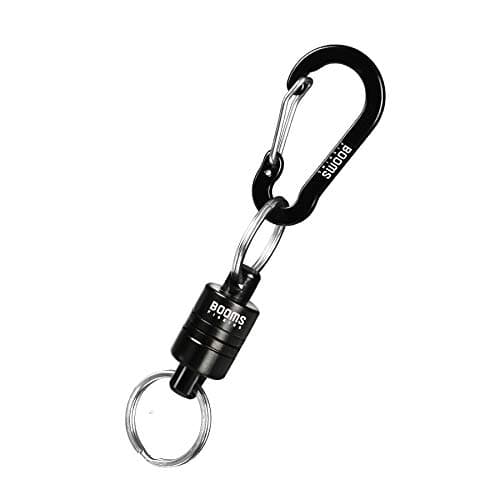
The default pick and the cheapest sensible one. Two halves: one clips to your pack strap, the other to the net handle, and the magnet holds them together until you pull the net free with one hand. That is the entire mechanism and there is very little to go wrong with it. What you are not getting at this price is a published pull rating or a premium housing, so treat the magnet as a convenience and always run the net's own lanyard as the backup — which is the right practice on any of these.
Best for: Best overall — the whole job, for pocket money - 2
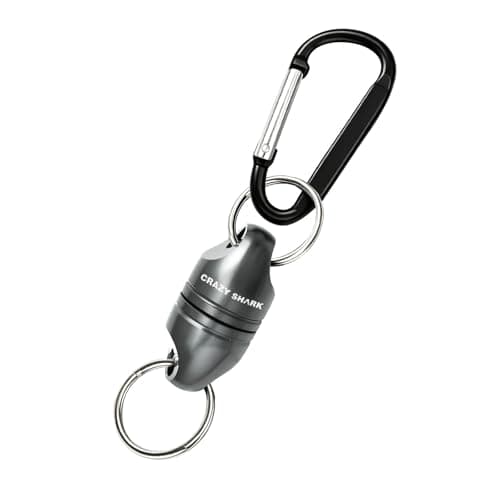
The sensible middle, because it bundles the backup into the product. You get the magnetic release plus an aluminum retractor and a carabiner, so the net is magnetically held and physically tethered by the same piece of hardware. That is exactly the two-layer setup this page recommends, and buying it as one unit removes the step most anglers skip. The aluminum housing is a genuine upgrade over molded plastic at the clip, which is where cheap retractors crack.
Best for: Best combined unit — magnet and retractor in one - 3
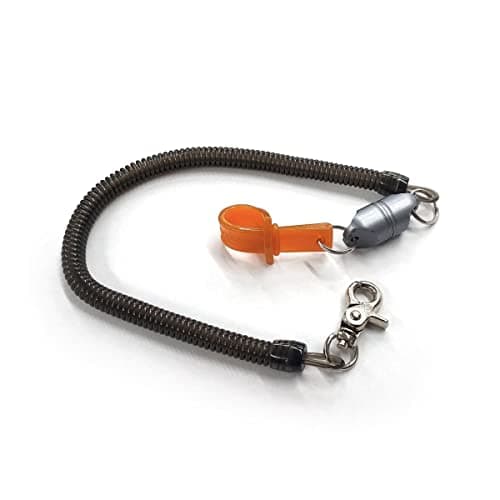
Several times the price of the budget magnets, and the case for it is simple: a stronger, better-housed release that holds a heavier net through a mile of brush. If you fish a wooden-framed net or you have already left one in a river, the arithmetic works out quickly. Fishpond also builds the packs a lot of these magnets clip to, so the fit on a Fishpond strap is considered rather than assumed. It is still a magnet, so the lanyard rule applies here too.
Best for: Best premium — the one to buy if you have lost a net before - 4
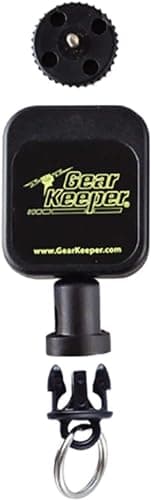
Not a net magnet at all, and the best piece of hardware on this page. A retractor's job is to let a tool out to arm's length and pull it back without you looking, and the cheap ones fail at the cord and the clip. This one uses a threaded stud mount and a quick-connect split ring, which means it attaches firmly and the tool can be swapped without re-threading anything. It is made in the USA, which is unusual in this category and worth the premium if you are tired of replacing zingers.
Best for: Best retractor — the one that outlives the pack it is on - 5
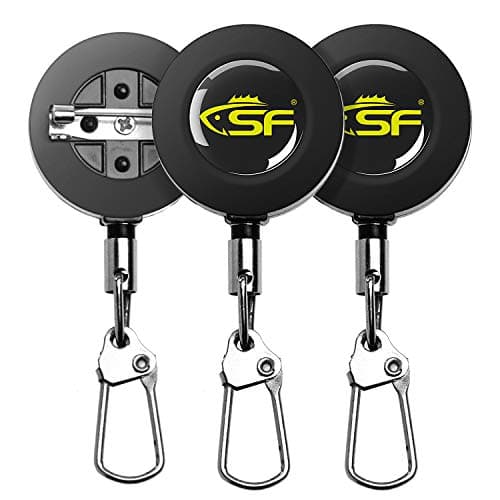
Three retractors for the price of one good one, which is the right buy if you are kitting out a vest from scratch. A steel cord in a stainless casing is the simple version of this device and it does the job: nippers on one, forceps on another, the third spare or on the net. Pin-on mounting suits a woven vest better than a modern pack with D-rings, so check what you are attaching to first. Expect a shorter life than the machined units, and buy them as consumables.
Best for: Cheapest way to tether everything at once
| # | Product | Best for | Score | Price |
|---|---|---|---|---|
| 1 | Booms Fishing MN2 Magnetic Net Release Holder The default pick and the cheapest sensible one. Two halves: one clips to your pack strap, the other to the net handle, and the magnet holds them together until you pull the net free with one hand. That is the entire mechanism and there is very little to go wrong with it. What you are not getting at this price is a published pull rating or a premium housing, so treat the magnet as a convenience and always run the net's own lanyard as the backup — which is the right practice on any of these. | Best overall — the whole job, for pocket money | — | $7.19View on Amazon#ad |
| 2 | CRAZY SHARK Magnetic Net Release with Aluminum Retractor and Carabiner The sensible middle, because it bundles the backup into the product. You get the magnetic release plus an aluminum retractor and a carabiner, so the net is magnetically held and physically tethered by the same piece of hardware. That is exactly the two-layer setup this page recommends, and buying it as one unit removes the step most anglers skip. The aluminum housing is a genuine upgrade over molded plastic at the clip, which is where cheap retractors crack. | Best combined unit — magnet and retractor in one | — | $9.49View on Amazon#ad |
| 3 | Fishpond Confluence Net Release 2.0 Several times the price of the budget magnets, and the case for it is simple: a stronger, better-housed release that holds a heavier net through a mile of brush. If you fish a wooden-framed net or you have already left one in a river, the arithmetic works out quickly. Fishpond also builds the packs a lot of these magnets clip to, so the fit on a Fishpond strap is considered rather than assumed. It is still a magnet, so the lanyard rule applies here too. | Best premium — the one to buy if you have lost a net before | — | $34.95View on Amazon#ad |
| 4 | Gear Keeper Micro Retractor Super Zinger, Threaded Stud Mount Not a net magnet at all, and the best piece of hardware on this page. A retractor's job is to let a tool out to arm's length and pull it back without you looking, and the cheap ones fail at the cord and the clip. This one uses a threaded stud mount and a quick-connect split ring, which means it attaches firmly and the tool can be swapped without re-threading anything. It is made in the USA, which is unusual in this category and worth the premium if you are tired of replacing zingers. | Best retractor — the one that outlives the pack it is on | — | $14.99View on Amazon#ad |
| 5 | SF Fly Fishing Zinger Retractor, Pin-On Steel Cord, 3-Pack Three retractors for the price of one good one, which is the right buy if you are kitting out a vest from scratch. A steel cord in a stainless casing is the simple version of this device and it does the job: nippers on one, forceps on another, the third spare or on the net. Pin-on mounting suits a woven vest better than a modern pack with D-rings, so check what you are attaching to first. Expect a shorter life than the machined units, and buy them as consumables. | Cheapest way to tether everything at once | — | $9.99View on Amazon#ad |
Buy the cheap two-part magnetand use your net’s lanyard as the backup. That combination is what works, and it costs less than two flies. If you would rather buy it as one object, the magnet-plus-retractor unit bundles both layers. If you have already lost a net, the premium release is the upgrade that pays for itself, and the machined retractor is the best piece of hardware here for tools rather than nets.
A landing net is the most awkward thing a creek angler carries. It is wider than the gaps you walk through, it catches every branch, and it needs to be instantly available for about ten seconds per fish and completely out of the way the rest of the time. Carrying it in your hand costs you a hand; hanging it from your belt drags it in the water and snags it in brush. The hardware on this page is the answer, and it is the cheapest category on the site.
Why a net needs hardware at all
Because netting a fish is a two-handed job you do one-handed. One hand holds a bent rod with a fish on it. The other has to produce a net, get it in the water ahead of the fish, and lead the fish in. A net you have to unclip, unbuckle or dig out does not get used, and a net that does not get used means fish handled by hand — which is the thing a net exists to avoid. The welfare case for netting at all is in the landing net roundup.
And because nets get left behind. A net clipped only by a magnet will eventually be knocked free by a branch, and you will walk a quarter mile before you notice. Nets are the single most commonly lost item in fly fishing, which is why every recommendation here is magnet plus tether rather than magnet alone.
How a magnetic release works
Two halves, one on the pack, one on the net.The pack half clips to a shoulder strap, a D-ring or a loop. The net half attaches to the net’s handle loop. They snap together magnetically, so the net hangs behind your shoulder, framed by your own back rather than swinging in front of you.
Releasing it is a pull, not a fiddle. Reach back, grab the handle, pull. The magnet lets go and you are holding a net, with no catch to find and no buckle to open with wet cold fingers. Re-attaching is the same movement in reverse, and after an afternoon it stops being something you think about.
The net’s lanyard stays on. Almost every net ships with a cord or bungee. Keep it clipped to your pack as well, so the magnet handles the carrying and the cord handles the losing. This is the part people skip and the reason nets end up in rivers.
Two layers, one net
Magnet strength, honestly
None of the budget units publish a pull rating, so nobody can compare them honestly. You will see large numbers quoted in reviews and marketing copy; they are not in the manufacturer specifications for the listings on this page, so we are not repeating them. What is verifiable is the construction — housing material, whether a retractor is included, what it mounts to — and that is what the picks above are judged on.
What actually determines whether the magnet holds. Three things, in order: the weight of your net, how clean the magnet faces are, and how much the net swings. A light rubber-mesh creek net on a clean magnet barely tests it. A heavy wood-framed net on a strap that bounces as you climb a bank is a different proposition, and that is the case for paying for a premium release.
Grit is the quiet killer. Magnet faces collect sand, and a layer of grit holds the two halves apart just enough to halve the grip. Wipe both faces with a thumb when you clip the net back on. It takes a second and it is the single most useful maintenance habit in this category.
Where to mount it
| Mount point | Works with | Why | Watch out for |
|---|---|---|---|
| Rear shoulder strap, between the shoulder blades | Sling packs, backpacks | Net sits behind you, out of the casting arc | Reaching it takes practice at first |
| Front shoulder D-ring | Chest packs, vests | Fastest access, fully visible | Net swings into your line on a cast |
| Pack side or hip | Hip packs, waist belts | Low profile while walking | Net drags in the water when you wade deep |
| Vest back D-ring | Traditional vests | Classic placement, keeps the net high | Needs a long reach behind you |
Behind the shoulder is the right default on small water. A creek means tight casting lanes, and a net hanging on your chest will catch your fly line. The rear strap keeps it out of the way, and the reach becomes automatic within a trip. Which pack you hang it on changes the answer slightly — fly fishing vest vs pack compares the four formats, and the sling pack roundup covers the one most creek anglers end up with.
Mind the shoulder you cast over. Put the net on the opposite side to your rod hand. It sounds obvious and almost everybody gets it wrong on the first setup, then spends a season lifting a rod into a net handle.
Retractors: the other half
A retractor is a spring-loaded cord that lets a tool out and reels it back. Nippers, forceps, a thermometer: anything you use fifty times a day and set down fifty times. The retractor means you never set it down at all, which is why tools on zingers do not get left on rocks.
Cord material is the difference between one season and five. Nylon cords fray where they enter the housing; steel cords and Kevlar-cored cords last much longer. Both of the retractors on this page use steel cord or a machined housing for exactly this reason.
Pin-on versus clip-on versus stud mount. A pin suits a woven vest, a clip suits a D-ring or zipper pull, and a threaded stud mount is the most secure of the three if your pack has a compatible point. Check what your pack actually offers before buying — a pin-on retractor on a modern laminate sling pack has nothing to pin to.
Two short retractors beat one long one. Sharing a single retractor between nippers and forceps means unclipping one to use the other, which defeats the point. One per tool, on opposite sides of your chest, is the setup that works — and which tools belong on them is covered in the nipper and tool kit roundup.
The five compared
| Product | What it is | Tether included | Buy it if |
|---|---|---|---|
| Booms MN2 | Magnetic net release | No — use the net lanyard | You want the cheapest thing that works |
| CRAZY SHARK combo | Magnet + aluminum retractor | Yes | You want both layers in one purchase |
| Fishpond Confluence 2.0 | Premium magnetic release | No | You carry a heavy net, or have lost one |
| Gear Keeper Super Zinger | Machined retractor | n/a — it is the tether | You want one retractor that lasts |
| SF pin-on zinger 3-pack | Three basic retractors | n/a | You are kitting out a vest from scratch |
The honest shape of this category: spend almost nothing, buy both layers. A budget magnet plus the lanyard your net came with covers the problem completely for most creek anglers. The premium release is for heavy nets and bad luck; the machined retractor is for tools rather than nets and is the one item here worth paying up for.
What fails, and what to skip
Plastic clips crack in cold weather. It is the most common failure in this whole category, and it happens at the moment of least attention — you clip the net back on, the clip is already split, and the net goes into the river. Aluminum and machined housings exist because of this.
Coiled lanyards grab branches. A coiled cord on a creek bank is a snare, and a stretchy tether lets the net swing further than a fixed one. On brushy water a short fixed cord is less trouble than a long coil.
Skip net holsters and belt loops for small water. They hold the net low, which means it drags when you wade and catches when you climb. They make more sense on a boat deck than in a stream.
Skip magnets entirely if your net is tiny. A net that fits in a sling pocket or clips flat against your back does not need hardware. Spend the money on something higher up the accessories list instead — the whole point of this category is that it is a two-dollar fix, not a project.
And fit it before you need it. Set the magnet up at home, clip the net on, walk around the garden, and reach for it five times. Thirty seconds of that is the difference between a net you use on the first fish and a net you fumble while a trout tires itself out on your line. The rest of the small-water setup is in how to choose gear for small streams.
The picks in detail
Booms Fishing MN2 Magnetic Net Release Holder
Best for: Best overall — the whole job, for pocket money
The default pick and the cheapest sensible one. Two halves: one clips to your pack strap, the other to the net handle, and the magnet holds them together until you pull the net free with one hand. That is the entire mechanism and there is very little to go wrong with it. What you are not getting at this price is a published pull rating or a premium housing, so treat the magnet as a convenience and always run the net's own lanyard as the backup — which is the right practice on any of these.
- Type
- Two-part magnetic release
- Mounts
- Pack strap or vest D-ring
- Backup
- Use the net lanyard as well
- Keeps the net off your hand and out of the casting arc
- One-handed release and re-attach
- Cheap enough to fit every pack you own
- No published magnet strength to compare against
- Grit and sand in the faces weaken the hold
CRAZY SHARK Magnetic Net Release with Aluminum Retractor and Carabiner
Best for: Best combined unit — magnet and retractor in one
The sensible middle, because it bundles the backup into the product. You get the magnetic release plus an aluminum retractor and a carabiner, so the net is magnetically held and physically tethered by the same piece of hardware. That is exactly the two-layer setup this page recommends, and buying it as one unit removes the step most anglers skip. The aluminum housing is a genuine upgrade over molded plastic at the clip, which is where cheap retractors crack.
- Includes
- Magnet release, retractor, carabiner
- Housing
- Aluminum
- Use
- Net, or any tool you want tethered
- Magnet and tether in one purchase
- Aluminum housing resists the cracking plastic clips suffer
- Doubles as a tool retractor if you re-purpose it
- Retractor cord adds a little drag on the net
- Slightly bulkier on the strap than a bare magnet
Fishpond Confluence Net Release 2.0
Best for: Best premium — the one to buy if you have lost a net before
Several times the price of the budget magnets, and the case for it is simple: a stronger, better-housed release that holds a heavier net through a mile of brush. If you fish a wooden-framed net or you have already left one in a river, the arithmetic works out quickly. Fishpond also builds the packs a lot of these magnets clip to, so the fit on a Fishpond strap is considered rather than assumed. It is still a magnet, so the lanyard rule applies here too.
- Type
- Magnetic net release
- Build
- Machined housing
- Suits
- Heavier wood-framed nets
- Stronger, more durable release than the budget units
- Holds a heavy net securely on rough walks
- Built by a pack maker, so strap fit is sensible
- Three to four times the cost of a budget magnet
- Overkill for a light rubber-mesh creek net
Gear Keeper Micro Retractor Super Zinger, Threaded Stud Mount
Best for: Best retractor — the one that outlives the pack it is on
Not a net magnet at all, and the best piece of hardware on this page. A retractor's job is to let a tool out to arm's length and pull it back without you looking, and the cheap ones fail at the cord and the clip. This one uses a threaded stud mount and a quick-connect split ring, which means it attaches firmly and the tool can be swapped without re-threading anything. It is made in the USA, which is unusual in this category and worth the premium if you are tired of replacing zingers.
- Type
- Retractable tether / zinger
- Mount
- Threaded stud with QC split ring
- Holds
- Nippers, forceps, small tools
- Far more durable than budget retractors
- Quick-connect ring lets you swap tools in seconds
- Firm mount rather than a plastic clip
- Not a net release — different job
- Dearer than a three-pack of basic zingers
SF Fly Fishing Zinger Retractor, Pin-On Steel Cord, 3-Pack
Best for: Cheapest way to tether everything at once
Three retractors for the price of one good one, which is the right buy if you are kitting out a vest from scratch. A steel cord in a stainless casing is the simple version of this device and it does the job: nippers on one, forceps on another, the third spare or on the net. Pin-on mounting suits a woven vest better than a modern pack with D-rings, so check what you are attaching to first. Expect a shorter life than the machined units, and buy them as consumables.
- Count
- 3 retractors
- Cord
- Steel
- Mount
- Pin-on
- Lowest cost per retractor here
- Steel cord resists the fraying that kills nylon ones
- Enough units to tether every tool at once
- Pin mount suits vests more than D-ring packs
- Shorter service life than a machined retractor
Prices shown are from Amazon as of November 20, 2026 and change often — the button always goes to the current listing. Some links may earn us a commission at no extra cost to you. How this works.
Frequently asked questions
What is a magnetic net release and do I need one?
It is a two-part magnet: one half clips to your pack strap, the other to the net handle, so the net hangs behind your shoulder and comes free with a one-handed pull. You need one if you carry a landing net on moving water, because a net in your hand costs you a hand and a net on your belt drags and snags.
How strong does a fly fishing net magnet need to be?
Strong enough for the weight of your net, which for a light rubber-mesh creek net is not very strong at all. Most budget units do not publish a pull rating, so judge them on housing material and whether a tether is included, and always keep the net's own lanyard clipped on as the backup.
Where should I mount a net magnet?
On the rear shoulder strap, between the shoulder blades, and on the opposite side to your rod hand. That keeps the net out of the casting arc and out of your fly line on a tight creek. Front D-ring mounting is faster to reach but the net swings into your cast.
What is a zinger retractor used for?
It is a spring-loaded cord that lets a tool out to arm's length and pulls it back on its own, so nippers and forceps are always attached to you. Tools on a retractor do not get set down on rocks and left behind, which is how most of them are lost.
Why do net magnets stop holding?
Usually grit. Sand collects on the magnet faces and holds the two halves slightly apart, which can halve the grip. Wipe both faces with a thumb when you clip the net back on. The other common failure is a cracked plastic clip, which is why machined and aluminum housings are worth the extra dollars.
Sources
Keep reading
Not sure where to start?
The beginner gear guide walks you through exactly what a new stream angler needs — the six essentials first, nice-to-haves later, with one safe-default pick per category.