Guides · Buying Guide
How to Choose Gear for Small Streams
Not what to buy — which version of it. A brushy headwater, an open meadow creek and a steep pocket-water stream want different rod lengths, different nets and different ways of standing in the water. Read your creek first, then buy for it.
Disclosure: Creek Cover is reader-supported. If you buy through our links we may earn a commission, at no extra cost to you. It never changes which pick we tell a new angler to start with. Full disclosure.
Quick picks at a glance
Tap a pick to read the full write-up, or the price button to check it on Amazon.
- 1
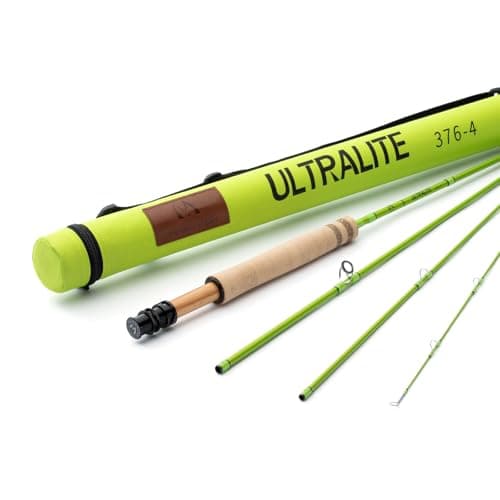
The rod that matches the brief on this page: short, light, and built for water you can jump across. On a creek the cast is fifteen to twenty feet and the limiting factor is the branch over your shoulder, so a shorter blank is not a compromise but the correct tool. A 1 to 3 weight line also lands softly on thin clear water, where a 5 weight slaps. The honest limit is that a rod this light stops being fun on open water and in wind, so if your creek opens into a river, size up.
Best for: Fly tackle — the short light rod a brushy creek wants - 2
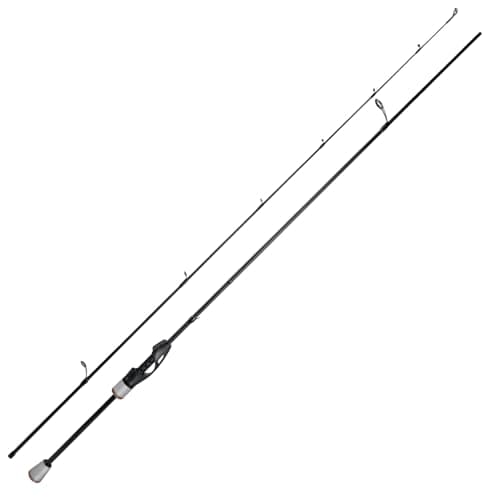
The other legitimate answer, and the faster one. An ultralight spinning rod casts a 1/16 oz spinner accurately with a flick of the wrist, needs no back cast and catches creek trout on the first afternoon. Seven feet is the right length if your water has open banks or you also fish small ponds; if you are pushing through alder tunnels, a six-foot rod is easier to carry and swing. Spinning gear also handles the high colored water after rain, when flies are the wrong tool entirely.
Best for: Spinning tackle — the creek alternative with no casting lesson - 3
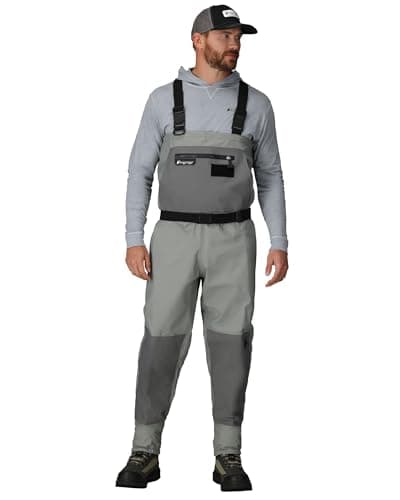
Creek fishing is walking fishing, and that single fact decides the wader. Breathable fabric lets the sweat of a mile of bank-bashing out; neoprene traps it and then you cool down standing in the water. Chest height is the versatile choice even on shallow creeks, because you can roll it down to the waist in summer and you cannot roll a waist-high pair up. Stockingfoot means separate boots, which is a second purchase and also the reason the boots fit properly.
Best for: Standing in it — breathable chest waders for walk-and-wade creeks - 4
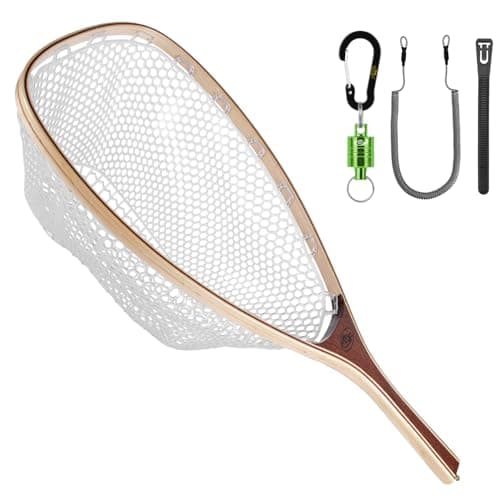
The piece of gear with the clearest effect on the fish you put back. Soft rubber mesh does not strip the protective slime layer or catch fins the way knotted nylon does, and it does not tangle your flies, so unhooking is faster and the trout spends less time out of water. Size matters in the other direction here: a creek net should be small enough to carry through brush on a magnetic release, because the biggest fish in a small stream is still a modest fish.
Best for: Landing them — a small rubber-mesh net, which is a conservation tool - 5
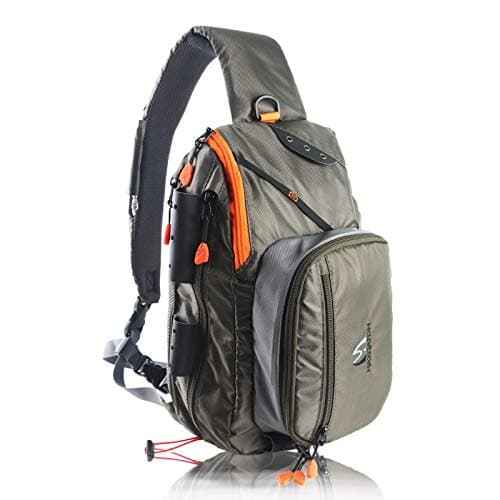
On a creek you cover ground, so the pack question is really a walking question. A sling carries the day's gear on your back while you move and swings to the front as a work surface when you need tippet, which beats a backpack you have to take off and a vest you cook in. The limit is capacity: a sling is right for a box of flies, tippet, tools and a sandwich, and wrong if you want to carry lunch for three and a camera.
Best for: Carrying it — a sling, because small water means walking
| # | Product | Best for | Score | Price |
|---|---|---|---|---|
| 1 | Maxcatch Ultralite-X Fly Fishing Rod for Small Streams, 1/2/3wt The rod that matches the brief on this page: short, light, and built for water you can jump across. On a creek the cast is fifteen to twenty feet and the limiting factor is the branch over your shoulder, so a shorter blank is not a compromise but the correct tool. A 1 to 3 weight line also lands softly on thin clear water, where a 5 weight slaps. The honest limit is that a rod this light stops being fun on open water and in wind, so if your creek opens into a river, size up. | Fly tackle — the short light rod a brushy creek wants | — | $84.95View on Amazon#ad |
| 2 | HANDING Pioneer Ultralight Spinning Rod, 7' 2-Piece The other legitimate answer, and the faster one. An ultralight spinning rod casts a 1/16 oz spinner accurately with a flick of the wrist, needs no back cast and catches creek trout on the first afternoon. Seven feet is the right length if your water has open banks or you also fish small ponds; if you are pushing through alder tunnels, a six-foot rod is easier to carry and swing. Spinning gear also handles the high colored water after rain, when flies are the wrong tool entirely. | Spinning tackle — the creek alternative with no casting lesson | — | $34.67View on Amazon#ad |
| 3 | Frogg Toggs Hellbender PRO Breathable Stockingfoot Chest Wader Creek fishing is walking fishing, and that single fact decides the wader. Breathable fabric lets the sweat of a mile of bank-bashing out; neoprene traps it and then you cool down standing in the water. Chest height is the versatile choice even on shallow creeks, because you can roll it down to the waist in summer and you cannot roll a waist-high pair up. Stockingfoot means separate boots, which is a second purchase and also the reason the boots fit properly. | Standing in it — breathable chest waders for walk-and-wade creeks | — | $157.56View on Amazon#ad |
| 4 | SF Fly Fishing Landing Net, Rubber Mesh with Magnetic Release The piece of gear with the clearest effect on the fish you put back. Soft rubber mesh does not strip the protective slime layer or catch fins the way knotted nylon does, and it does not tangle your flies, so unhooking is faster and the trout spends less time out of water. Size matters in the other direction here: a creek net should be small enough to carry through brush on a magnetic release, because the biggest fish in a small stream is still a modest fish. | Landing them — a small rubber-mesh net, which is a conservation tool | — | $23.68View on Amazon#ad |
| 5 | Maxcatch Fly Fishing Sling Pack On a creek you cover ground, so the pack question is really a walking question. A sling carries the day's gear on your back while you move and swings to the front as a work surface when you need tippet, which beats a backpack you have to take off and a vest you cook in. The limit is capacity: a sling is right for a box of flies, tippet, tools and a sandwich, and wrong if you want to carry lunch for three and a camera. | Carrying it — a sling, because small water means walking | — | $33.84View on Amazon#ad |
This is not another list of what to buy. It is the fit guide: which version of each item your particular creek wants. If you want the kit list first, start with fly fishing gear for beginners or, for spinning tackle, what gear to use for trout fishing. Come back here when you know what the items are and need to choose between the variants.
Almost every piece of fishing gear sold is designed around a river: nine-foot rods, five-weight lines, nets the size of a tennis racket, packs built to carry a day on big water. Small streams invert most of those defaults. The gear that works on a creek is shorter, lighter, smaller and cheaper, and knowing which direction to go on each item is worth more than any brand decision you will make.
Read your creek first
Four questions decide almost everything. Answer them about the water you actually fish most, not the water you hope to fish next summer, and the kit follows.
| Question | Why it matters | What it decides |
|---|---|---|
| How much room is there behind you? | A fly cast needs clear air; a spinning rod needs a shoulder-width gap | Rod length, and fly versus spinning tackle |
| How steep is it? | Gradient means pocket water, chutes and plunge pools instead of long glides | Fly choice, lure weight, and whether you need to wade at all |
| How deep do you have to get? | Many creeks are fishable from the bank in sneakers | Waders, wading boots, or wet wading |
| Wild or stocked? | Hatchery fish chase movement; wild fish inspect drifting food | Lures versus flies, and how careful your approach has to be |
The canopy question is the big one. Overhanging trees are the defining feature of most small trout water and the reason river gear fails on it. Twenty feet of casting room behind you is a different sport from four feet, and no amount of money fixes a rod that is too long for the gap.
Four creek types, four kits
| Creek type | Rod | Wading | Net | What to carry |
|---|---|---|---|---|
| Brushy headwater — narrow, closed canopy | 7 ft to 7 ft 6 in fly rod, 2-3wt, or a 6 ft ultralight | Often none — wet wade or fish from the bank | Small, on a magnetic release | One fly box, tippet, nippers, forceps |
| Meadow creek — open banks, grass, undercut edges | 8 ft to 8 ft 6 in fly rod, 3-4wt | Hip or waist waders, or wet wade in summer | Small to medium | Terrestrials, a spare leader, floatant |
| Pocket-water mountain stream — steep, fast, boulders | 7 ft 6 in to 8 ft, 3-4wt, or ultralight spinning | Breathable chest waders and studded boots | Small, deep bag for fast water | Attractor dries, heavy nymphs, a wading staff |
| Stocked put-and-take creek — easy access, planted fish | Ultralight spinning, 6 ft to 7 ft | Boots or waders depending on access | Any; fish often kept | Spinners, micro jigs, 4 lb mono |
Most people fish two of these. If your water changes character along its length — brushy at the top, meadow in the middle — buy for the stretch you fish most and accept a compromise on the other. The usual sensible compromise is a 7 ft 6 in 3-weight, which is short enough for cover and long enough for an open bank.
Rod: length before everything
Choose length first, then line weight, then action. That order matters because length is the one thing your creek physically dictates. If the gap in the canopy is four feet wide, a nine-foot rod is unusable regardless of how good it is. The full decision sequence is in how to choose a fly rod, and the short rods themselves are ranked in the best fly rod for small streams.
Fly: 7 ft to 8 ft 6 in, 2 to 4 weight. A 3-weight around 7 ft 6 in is the single most useful small-stream fly rod. Go shorter and lighter for genuinely tunnel-like water, longer and up to a 4-weight if you are often in wind or throwing weighted nymphs and foam terrestrials.
Spinning: 5 ft 6 in to 7 ft, ultralight power. Shorter for brush, longer for open banks and small ponds. The power rating matters more than the length: ultralight handles 1/32 to 1/4 oz lures, which is the entire creek lure range. Where ultralight stops and light begins is covered in ultralight vs light power rods.
Moderate action beats fast on small water. A fast rod needs line speed and distance to load; a moderate blank bends with twenty feet of line out, which is the cast you are making. This is one place where the cheaper rod is often the better one — fast vs moderate action fly rod explains why.
One rod, two creeks
Line and leader
Fly: weight-forward floating, matched to the rod, and a 9 ft 5X leader. That is the default and it needs no thought on small water. The line does more for a short accurate cast than the rod does, which is why it is the upgrade worth making on a budget outfit — the fly line roundup covers the choice, and fly line, leader and tippet explained covers how the three parts fit together.
Spinning: 4 lb monofilament, and nothing clever. Diameter is what lets a 1/16 oz lure swim, and mono's stretch forgives a hard hookset on fifteen feet of line. Fluorocarbon belongs in a short leader for clear water, and braid only if you are fishing jigs deep — the trout line roundup has the spools.
Small water goes finer, not heavier. Low clear creek flow gives a trout a long look at your tippet, so 5X and 6X earn their place in summer. If you are losing fish to breakoffs rather than refusals, the problem is usually a knot that was cinched dry — fly fishing knots for beginners covers seating them properly.
Wading: waders, boots or neither
A lot of creek fishing needs no waders at all. If the water is shin-deep and you fish in July, old sneakers and quick-dry pants are a complete wading system. Wet wading is cooler, lighter and cheaper than anything in a catalog, and it is the right answer for summer on small water.
Breathable beats neoprene whenever you walk. Creek fishing is walking fishing: you cover a quarter mile of pools in an afternoon, and neoprene turns that walk into a sauna. Breathable chest waders with layers underneath cover spring and autumn, and roll down to the waist when it warms up. The full comparison is breathable vs neoprene waders, and waist-high wading pants are the format most small-stream anglers should own and almost nobody buys first.
Soles are a legal question as well as a grip question. Studded rubber grips slick rounded cobble well and is legal everywhere; felt grips slightly better and is banned in several states as an invasive-species vector. Check your state agency before buying felt — rubber vs felt soles covers the trade.
Add a wading staff before you think you need one. On steep pocket water a third point of contact turns an awkward crossing into a routine one, and it is among the cheapest safety items in fishing — the wading staff roundup has the collapsible ones that stay out of the way.
Net and pack
Net: small, rubber-mesh, on a magnetic release. Creek fish are modest and the brush is not, so a big net is an obstacle you carry all day. Rubber mesh matters for the fish; the magnet matters for you, because a net clipped behind your shoulder stays out of the casting arc. Options are in the landing net roundup and the releases themselves in net magnets and retractors.
Pack: sling for walking, chest pack for standing, vest for pockets. Small water favors the sling because you are moving constantly; a chest pack is the alternative if you like everything in front of you and above the waterline. A backpack is the wrong tool for wading upstream, because it has to come off every time you need tippet — fly fishing vest vs pack compares all four formats.
Tools hang outside the bag, high on the chest. Nippers, forceps and a zinger are used constantly and are underwater if you hang them at the hip. Which ones are worth owning is in the tool kit roundup.
What small water lets you skip
Distance gear. Shooting heads, long leaders built for presentation at fifty feet, double-haul practice, 9 ft 5wt rods. None of it applies at twenty feet, and buying it first is the most common way a creek angler ends up with a rod that does not suit the water outside the door.
Big nets, big packs, big boxes. A creek trout fits a small net; a creek day fits a sling. A hundred-fly box is a heavy way to carry the twelve flies you actually fish — a shirt-pocket box is the honest size.
A second reel, a drag you will never use, and most accessories. On a 3-weight the reel is a line holder and the drag never leaves its lightest setting. Spend the money on line and on waders, where it changes what happens — the order is set out in the accessories guide, and the whole budget line by line in how much fly fishing costs.
And polarized sunglasses are the one thing we do not cover. They do genuinely help you see fish and protect your eyes from a hook, and our sister site Polarized Club handles that category properly rather than us duplicating it badly.
Buying order and budget
| Order | Item | What small water changes | Skip it if |
|---|---|---|---|
| 1 | Rod (and matched line, if fly) | Shorter and lighter than the river default | Never — this is the decision |
| 2 | Flies or lures | Smaller sizes; terrestrials matter more | Never |
| 3 | Nippers, forceps, zinger | Same on any water | Never |
| 4 | Tippet and spare leaders | Finer: 5X and 6X in summer | Never |
| 5 | A way to stand in it | Wet wade in summer; breathable the rest of the year | Your creek is bank-fishable |
| 6 | Small rubber-mesh net | Smaller than the river version | You keep everything you catch |
| 7 | Sling or chest pack | Walk-friendly beats capacious | Your pockets already work |
The first four lines are most of the fishing and a small share of the money. A short rod with a matched line, a box of flies, nippers and tippet will catch creek trout every month of the season. Waders are the expensive item and the one you can defer longest if you start in summer.
Buy for the creek you have. That is the whole argument of this page. The gear that disappoints people is almost never cheap gear — it is gear bought for the water in the catalog photograph. A $60 rod chosen for your actual creek will out-fish a $400 rod chosen for somebody else's river, which is a cheerful thought to start from.
The picks in detail
Maxcatch Ultralite-X Fly Fishing Rod for Small Streams, 1/2/3wt
Best for: Fly tackle — the short light rod a brushy creek wants
The rod that matches the brief on this page: short, light, and built for water you can jump across. On a creek the cast is fifteen to twenty feet and the limiting factor is the branch over your shoulder, so a shorter blank is not a compromise but the correct tool. A 1 to 3 weight line also lands softly on thin clear water, where a 5 weight slaps. The honest limit is that a rod this light stops being fun on open water and in wind, so if your creek opens into a river, size up.
- Line weight
- 1, 2 or 3wt
- Built for
- Small streams, tight cover
- Trade-off
- Light for wind and open water
- Casts accurately at the short range creek fishing actually uses
- Light line presents gently on low clear water
- Fits between branches where a 9 ft rod cannot
- Underpowered in wind or on bigger rivers
- Light line weights are less forgiving of casting errors
HANDING Pioneer Ultralight Spinning Rod, 7' 2-Piece
Best for: Spinning tackle — the creek alternative with no casting lesson
The other legitimate answer, and the faster one. An ultralight spinning rod casts a 1/16 oz spinner accurately with a flick of the wrist, needs no back cast and catches creek trout on the first afternoon. Seven feet is the right length if your water has open banks or you also fish small ponds; if you are pushing through alder tunnels, a six-foot rod is easier to carry and swing. Spinning gear also handles the high colored water after rain, when flies are the wrong tool entirely.
- Power
- Ultralight
- Length
- 7 ft, 2-piece
- Pairs with
- 1000-size reel, 4 lb mono
- Usable within an hour, with no casting instruction
- Works in high, stained water where flies struggle
- Cheapest complete route to a caught trout
- 7 ft is long for tunnel-tight headwaters
- Treble-hooked lures are harder on released fish than flies
Frogg Toggs Hellbender PRO Breathable Stockingfoot Chest Wader
Best for: Standing in it — breathable chest waders for walk-and-wade creeks
Creek fishing is walking fishing, and that single fact decides the wader. Breathable fabric lets the sweat of a mile of bank-bashing out; neoprene traps it and then you cool down standing in the water. Chest height is the versatile choice even on shallow creeks, because you can roll it down to the waist in summer and you cannot roll a waist-high pair up. Stockingfoot means separate boots, which is a second purchase and also the reason the boots fit properly.
- Fabric
- Waterproof-breathable laminate
- Height
- Chest
- Foot
- Stockingfoot — boots separate
- Breathes on the walk in and the walk out
- Layer underneath to extend the season
- Roll-down waist conversion in warm weather
- Needs wading boots bought separately
- No insulation of its own in genuinely cold water
SF Fly Fishing Landing Net, Rubber Mesh with Magnetic Release
Best for: Landing them — a small rubber-mesh net, which is a conservation tool
The piece of gear with the clearest effect on the fish you put back. Soft rubber mesh does not strip the protective slime layer or catch fins the way knotted nylon does, and it does not tangle your flies, so unhooking is faster and the trout spends less time out of water. Size matters in the other direction here: a creek net should be small enough to carry through brush on a magnetic release, because the biggest fish in a small stream is still a modest fish.
- Mesh
- Soft rubber
- Carry
- Magnetic release
- Size
- Creek-scale, not river-scale
- Rubber mesh protects slime, fins and your flies
- Magnetic release keeps it out of the casting arc
- Small enough to carry through tight cover
- Too small for anything beyond creek-size fish
- Magnet strength depends on where you clip it
Maxcatch Fly Fishing Sling Pack
Best for: Carrying it — a sling, because small water means walking
On a creek you cover ground, so the pack question is really a walking question. A sling carries the day's gear on your back while you move and swings to the front as a work surface when you need tippet, which beats a backpack you have to take off and a vest you cook in. The limit is capacity: a sling is right for a box of flies, tippet, tools and a sandwich, and wrong if you want to carry lunch for three and a camera.
- Format
- Sling
- Carries
- Fly box, tippet, tools, water
- Access
- Swings to front
- Walk-friendly, which is what creek fishing is
- Front access without taking the pack off
- Cheap enough to be a first pack
- Limited capacity for a long day or extra layers
- One-shoulder load is less comfortable than a backpack over distance
Prices shown are from Amazon as of November 20, 2026 and change often — the button always goes to the current listing. Some links may earn us a commission at no extra cost to you. How this works.
Frequently asked questions
What gear do I need for creek fishing?
A short rod matched to the water (7 to 8 ft and 2 to 4 weight for fly, 5 ft 6 in to 7 ft ultralight for spinning), flies or small lures, nippers and forceps, tippet, and a way to stand in the water. On a shallow creek in summer that last item can be old sneakers and quick-dry pants rather than waders.
What size rod is best for small streams?
For fly tackle, 7 ft to 8 ft 6 in in a 2 to 4 weight, with a 7 ft 6 in 3-weight as the single most useful choice. For spinning, 5 ft 6 in to 7 ft in ultralight power. Length is dictated by how much casting room the canopy leaves you, which is why it is the first decision rather than the last.
Do I need waders for creek fishing?
Often not. Many small streams are fishable from the bank or by wet wading in quick-dry pants and old shoes, which is cooler and cheaper than waders in summer. Breathable chest waders become worth it for spring and autumn, for deeper pocket water, and anywhere you need to cross.
Is fly or spinning tackle better on a small creek?
Spinning is easier to start and better in high, colored or cold water and in tunnel-tight cover. Fly tackle wins in low clear water and whenever fish are feeding on insects. Both are legitimate on a creek, and the honest comparison by condition is on our flies versus lures page.
What is the biggest gear mistake on small streams?
Buying river gear. A 9 ft 5-weight fly rod or a 7 ft medium spinning rod cannot be cast properly in a canopy-covered creek, and no amount of money fixes the length. The second most common mistake is a net and pack sized for a day on big water, which you then carry through brush.
Sources
Keep reading
Not sure where to start?
The beginner gear guide walks you through exactly what a new stream angler needs — the six essentials first, nice-to-haves later, with one safe-default pick per category.