Trout & Ultralight · Roundup
The Best Ultralight Spinning Reels Under $50
A trout reel does three things: it holds line, it balances the rod, and its drag gives when a fish runs. All three are solved well under $50 — which is why spending more on the reel than the rod is the most common mistake in creek fishing.
Disclosure: Creek Cover is reader-supported. If you buy through our links we may earn a commission, at no extra cost to you. It never changes which pick we tell a new angler to start with. Full disclosure.
Quick picks at a glance
Tap a pick to read the full write-up, or the price button to check it on Amazon.
- 1
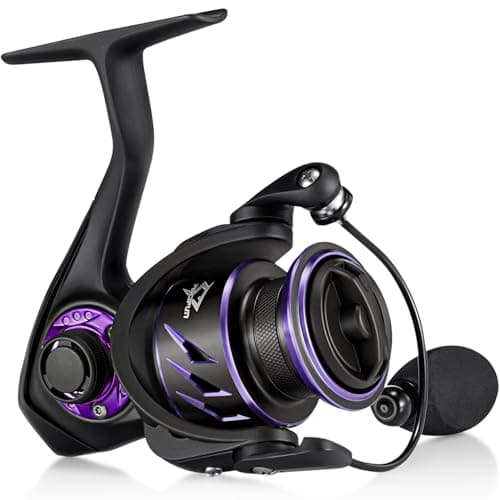
The reel to buy. Piscifun built its whole business in this price band and the Viper X is the model where that shows: a drag that releases progressively rather than in jerks, which is the single thing that decides whether 4 lb line holds when a fish turns downstream. At 1000 size it balances a 6 to 7 foot ultralight rod rather than hanging below it. Nothing here needs apologising for, which is unusual under $50.
Best for: Best overall under $50 — smooth drag at the size creek trout need - 2
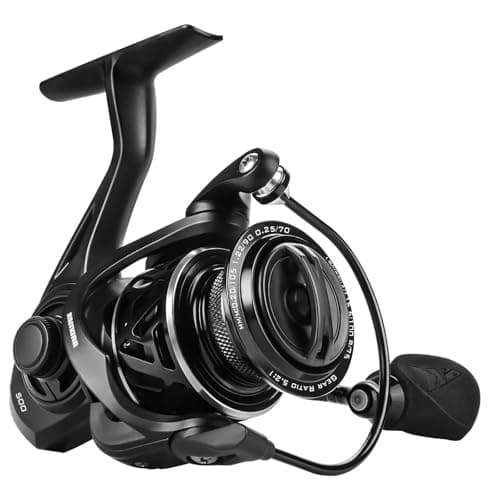
Pick this over the Viper X if your fishing is genuinely small: 1/32 oz jigs, micro soft plastics, size 18 flies on a spinning rod. A 500-size reel has a smaller spool and a lighter frame, which makes a short ultralight rod feel alive instead of nose-heavy, and lets very light lures pull line off the spool properly. The trade-off is line capacity you will never miss on a creek and a slightly less powerful drag you will not test.
Best for: Best for tiny lures — the smaller 500 body, lighter in the hand - 3
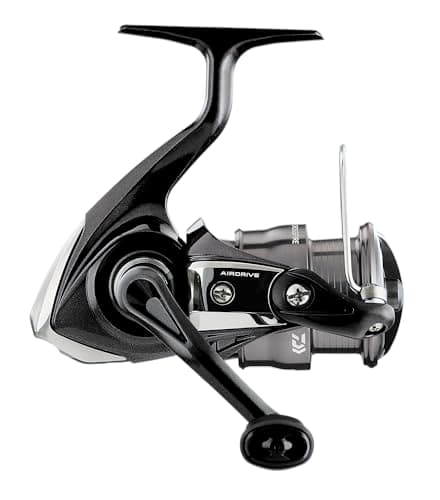
The pick for anyone who wants a reel from one of the two Japanese houses that define the category, at a price that does not require justifying. Crossfire is Daiwa's entry line and LT stands for their light-and-tough design programme, which in practice means a lighter body than the older equivalents. A Daiwa at this price will not be the smoothest reel you ever own, but the gear tolerances and the parts availability behind it are a different proposition from a house brand.
Best for: Best brand pedigree — a Daiwa, comfortably inside the band - 4
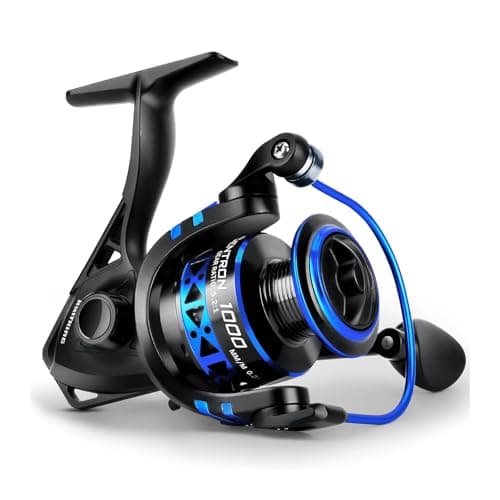
The Centron is the reel people buy when they want the correct size and nothing else, and on a creek that is a defensible position. A 1000-size body balances a 6 to 7 foot ultralight rod, which is the only thing a reel can get wrong at this scale; everything else — bearing count, body material, drag refinement — is a difference you will notice on your tenth season, not your first. Buy this, spend the saving on the rod, and you will fish better.
Best for: Best cheap 1000 — the right size for a quarter of the band - 5
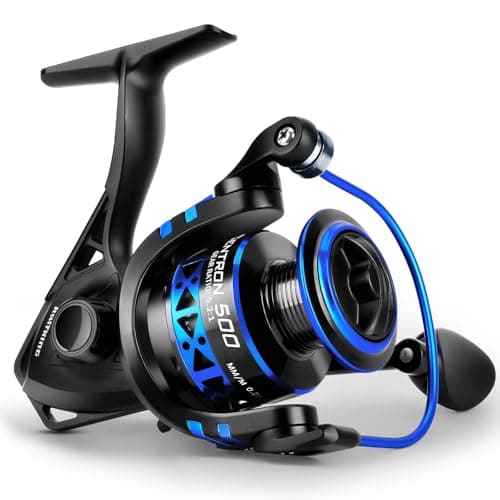
The cheapest reel on the page and the honest floor of this category. It is the same Centron as above in the smaller 500 body, which suits a short rod and very light lures. A reel at this price is not refined and the drag will feel stepped under load — but on a creek where a good trout is ten inches and your line is 4 lb, the drag is barely in the fight. If the choice is this reel plus a decent rod, or a better reel plus a bad rod, take this one every time.
Best for: Budget pick — the cheapest reel here that does the job
| # | Product | Best for | Score | Price |
|---|---|---|---|---|
| 1 | Piscifun Viper X Spinning Reel, 1000 Size The reel to buy. Piscifun built its whole business in this price band and the Viper X is the model where that shows: a drag that releases progressively rather than in jerks, which is the single thing that decides whether 4 lb line holds when a fish turns downstream. At 1000 size it balances a 6 to 7 foot ultralight rod rather than hanging below it. Nothing here needs apologising for, which is unusual under $50. | Best overall under $50 — smooth drag at the size creek trout need | — | $30.59View on Amazon#ad |
| 2 | KastKing Zephyr Spinning Reel, 500 Size Pick this over the Viper X if your fishing is genuinely small: 1/32 oz jigs, micro soft plastics, size 18 flies on a spinning rod. A 500-size reel has a smaller spool and a lighter frame, which makes a short ultralight rod feel alive instead of nose-heavy, and lets very light lures pull line off the spool properly. The trade-off is line capacity you will never miss on a creek and a slightly less powerful drag you will not test. | Best for tiny lures — the smaller 500 body, lighter in the hand | — | $35.19View on Amazon#ad |
| 3 | Daiwa Crossfire LT Spinning Reel The pick for anyone who wants a reel from one of the two Japanese houses that define the category, at a price that does not require justifying. Crossfire is Daiwa's entry line and LT stands for their light-and-tough design programme, which in practice means a lighter body than the older equivalents. A Daiwa at this price will not be the smoothest reel you ever own, but the gear tolerances and the parts availability behind it are a different proposition from a house brand. | Best brand pedigree — a Daiwa, comfortably inside the band | — | Check price on Amazon#ad |
| 4 | KastKing Centron Spinning Fishing Reels, 1000 Size The Centron is the reel people buy when they want the correct size and nothing else, and on a creek that is a defensible position. A 1000-size body balances a 6 to 7 foot ultralight rod, which is the only thing a reel can get wrong at this scale; everything else — bearing count, body material, drag refinement — is a difference you will notice on your tenth season, not your first. Buy this, spend the saving on the rod, and you will fish better. | Best cheap 1000 — the right size for a quarter of the band | — | $21.25View on Amazon#ad |
| 5 | KastKing Centron Spinning Fishing Reels, 500 Size The cheapest reel on the page and the honest floor of this category. It is the same Centron as above in the smaller 500 body, which suits a short rod and very light lures. A reel at this price is not refined and the drag will feel stepped under load — but on a creek where a good trout is ten inches and your line is 4 lb, the drag is barely in the fight. If the choice is this reel plus a decent rod, or a better reel plus a bad rod, take this one every time. | Budget pick — the cheapest reel here that does the job | — | $21.78View on Amazon#ad |
The best ultralight spinning reel under $50 is the Piscifun Viper X in 1000 size — a smooth progressive drag at the size that actually balances a creek rod, which is everything a trout reel needs to be. If you fish genuinely tiny lures on a short rod, take the KastKing Zephyr in 500 instead. The budget pick is the KastKing Centron 500, the cheapest reel here that holds line and balances a rod — and a far better use of money than a premium reel on a cheap blank. Every pick carried a live price under $50 at the as-of date shown beneath the comparison table.
This is the band where the whole category lives. Ultralight trout fishing uses 2 to 6 lb line and lures measured in fractions of an ounce; none of that stresses a reel. The expensive reels in the world exist for fish that run a hundred yards, and a creek does not contain one.
Reel size is the whole decision
Buy a 500 or a 1000. Nothing else. Spinning reel sizes run 500, 1000, 2000, 2500 and up, and the number is roughly a line-capacity class. For creek trout and panfish you want the two smallest, because a larger reel is heavier than the rod can balance and holds line you will never use.
| Size | Suits rod length | Line it holds | Use it for |
|---|---|---|---|
| 500 | 5 ft to 6 ft 6 in | 2 to 4 lb mono | Micro jigs, tiny spinners, small creeks and panfish |
| 1000 | 6 ft to 7 ft | 2 to 6 lb mono | The all-round creek trout size — start here |
| 2000 | 6 ft 6 in to 7 ft | 4 to 8 lb mono | Bigger streams, stocked lakes, occasional bass |
| 2500 and up | 7 ft and over | 6 to 12 lb mono | Not an ultralight reel — wrong tool for a creek |
If in doubt, 1000. It balances the most common creek rod length, takes 4 lb line comfortably, and is still light enough that the rod tip leads the way it should. The 500 is the specialist choice for very short rods and very small lures. Both sizes appear on this page for exactly that reason.
Beware listings that sell several sizes under one title. Three picks here are model families offered in multiple sizes, and the price can differ between them. Confirm the size in the cart before buying — a 3000 of the same reel is a different object and a poor match for an ultralight rod.
What $50 buys, and what it does not
Under $50 you get a working drag, an anodised or graphite body and enough bearings to feel smooth. That is the complete specification of a trout reel. Nothing in the above-$50 world changes whether you land a ten-inch brook trout.
What you do not get is sealing, long-term smoothness and weight savings. A premium reel has sealed bearings that survive being dunked, machined gears that stay smooth for a decade, and a carbon body that is noticeably lighter. Those are real differences — they are just differences that pay off over years of hard use, not on a creek in your first season. The step up is laid out in the best ultralight spinning reels, which covers the field without a price cap.
The mistake this page exists to prevent
The drag is the only moving part that matters
The drag is a friction brake on the spool that lets line out before it breaks. With 4 lb line and a trout that turns into the current, the drag is what stands between the fish and a snapped knot. What you want is a drag that starts giving smoothly rather than sticking and then letting go in a jerk — a stepped drag is how light line breaks.
Set it with your hand, not with the numbers. Pull line off the spool by hand with the rod bent: it should come away steadily with firm resistance, not require a yank. Roughly a quarter to a third of your line's breaking strength is the rule, which with 4 lb line is about a pound of pull. Nobody measures this; everybody feels it.
Then stop touching it. New anglers tighten the drag mid-fight, which is exactly when the line is already loaded. Set it before you cast and fight the fish with the rod. The honest summary is that on a creek you will rarely hear the drag at all — which is also why a budget reel is enough.
The five compared
| Reel | Size | Position in band | Buy it if |
|---|---|---|---|
| Piscifun Viper X | 1000 | Top of band | You want the smoothest drag under $50 |
| KastKing Zephyr | 500 | Top of band | You fish tiny lures on a short rod |
| Daiwa Crossfire LT | Small sizes | Mid-band | You want a Japanese brand and parts support |
| KastKing Centron | 1000 | Low in band | You want the right size for the least money |
| KastKing Centron | 500 | Cheapest here | The rod is where the budget should go |
Matching it to the rod
Balance is a real thing you can test in ten seconds. Mount the reel, hold the rod at the reel seat with one finger under it, and see where it tips. A balanced ultralight setup sits roughly level or tips very slightly toward the tip. A reel too heavy for the rod tips backward, and you spend all day fighting the rod to keep the tip up.
Rod power and reel size are two different specifications.A rod marked “ultralight” refers to its power — how much force it takes to bend — and a reel's 500 or 1000 refers to line capacity. They correlate but they are not the same, and brands label power inconsistently. The decode is in ultralight vs light power rods.
Or buy the pair together and skip the problem. A matched rod-and-reel combo is pre-balanced, usually cheaper than the two bought separately, and the reason most creek anglers start there — the ranked list is in the best trout rod and reel combos, and the budget field is in the best fishing rods for the money.
What line to spool it with
4 lb monofilament, and do not overthink it. Mono stretches, which forgives a hard hook-set on light line; it floats, which suits a small spinner or a float rig; and it is cheap enough to respool every season. On a creek with 4 lb mono you can land anything that lives there.
Fill the spool properly — most problems are a filling problem.Line should come to about an eighth of an inch below the spool lip. Underfilled and you lose casting distance; overfilled and loops jump off and tangle, which is what people mean when they say a cheap reel “birds-nests”. It is nearly always the spool fill, not the reel.
Add backing if the spool is deep. A 1000-size spool takes more 4 lb mono than you will ever cast, so put cheap line or electrical tape underneath and top it with fifty yards of good line. The full argument, including where fluorocarbon and braid earn their price, is in the best line for trout fishing.
The picks in detail
Piscifun Viper X Spinning Reel, 1000 Size
Best for: Best overall under $50 — smooth drag at the size creek trout need
The reel to buy. Piscifun built its whole business in this price band and the Viper X is the model where that shows: a drag that releases progressively rather than in jerks, which is the single thing that decides whether 4 lb line holds when a fish turns downstream. At 1000 size it balances a 6 to 7 foot ultralight rod rather than hanging below it. Nothing here needs apologising for, which is unusual under $50.
- Size
- 1000
- Suits
- 6 to 7 ft ultralight rods
- Line
- 2 to 6 lb mono
- Smooth progressive drag — the one thing that matters most
- Correct size to balance a creek ultralight rod
- Piscifun's warranty and parts support in this band is unusually good
- Near the top of the $50 band
- Heavier than a dedicated finesse reel
KastKing Zephyr Spinning Reel, 500 Size
Best for: Best for tiny lures — the smaller 500 body, lighter in the hand
Pick this over the Viper X if your fishing is genuinely small: 1/32 oz jigs, micro soft plastics, size 18 flies on a spinning rod. A 500-size reel has a smaller spool and a lighter frame, which makes a short ultralight rod feel alive instead of nose-heavy, and lets very light lures pull line off the spool properly. The trade-off is line capacity you will never miss on a creek and a slightly less powerful drag you will not test.
- Size
- 500
- Suits
- 5 to 6 ft 6 in ultralight rods
- Line
- 2 to 4 lb mono
- The lightest-feeling reel here on a short rod
- Small spool suits genuinely tiny lures
- KastKing's most-reviewed small reel line
- Low line capacity — not a reel for anything but small fish
- Also near the top of the band
Daiwa Crossfire LT Spinning Reel
Best for: Best brand pedigree — a Daiwa, comfortably inside the band
The pick for anyone who wants a reel from one of the two Japanese houses that define the category, at a price that does not require justifying. Crossfire is Daiwa's entry line and LT stands for their light-and-tough design programme, which in practice means a lighter body than the older equivalents. A Daiwa at this price will not be the smoothest reel you ever own, but the gear tolerances and the parts availability behind it are a different proposition from a house brand.
- Line
- Daiwa Crossfire (entry tier)
- Design
- LT — light and tough
- Suits
- Light and ultralight rods
- Daiwa engineering and parts support at a budget price
- Lighter body than earlier Crossfire generations
- Mid-band price, so it leaves money for the rod
- Entry line, so the drag is simpler than the Piscifun's
- Size options vary by listing — confirm you are buying a small one
KastKing Centron Spinning Fishing Reels, 1000 Size
Best for: Best cheap 1000 — the right size for a quarter of the band
The Centron is the reel people buy when they want the correct size and nothing else, and on a creek that is a defensible position. A 1000-size body balances a 6 to 7 foot ultralight rod, which is the only thing a reel can get wrong at this scale; everything else — bearing count, body material, drag refinement — is a difference you will notice on your tenth season, not your first. Buy this, spend the saving on the rod, and you will fish better.
- Size
- 1000
- Suits
- 6 to 7 ft ultralight rods
- Line
- 2 to 6 lb mono
- Correct size for creek trout at a quarter of the band
- KastKing's longest-running budget line
- Leaves the budget where it belongs — the rod
- Drag is serviceable rather than smooth
- Heavier than its price-peers in 500 size
KastKing Centron Spinning Fishing Reels, 500 Size
Best for: Budget pick — the cheapest reel here that does the job
The cheapest reel on the page and the honest floor of this category. It is the same Centron as above in the smaller 500 body, which suits a short rod and very light lures. A reel at this price is not refined and the drag will feel stepped under load — but on a creek where a good trout is ten inches and your line is 4 lb, the drag is barely in the fight. If the choice is this reel plus a decent rod, or a better reel plus a bad rod, take this one every time.
- Size
- 500
- Suits
- 5 to 6 ft 6 in ultralight rods
- Position
- Cheapest in band
- Lowest price here by a clear margin
- 500 body suits short creek rods
- Perfectly adequate for the fish a creek actually holds
- Stepped drag feel under load
- Lowest build quality on the page
Prices shown are from Amazon as of November 20, 2026 and change often — the button always goes to the current listing. Some links may earn us a commission at no extra cost to you. How this works.
Frequently asked questions
What size spinning reel is best for trout?
A 1000 for most creek fishing, or a 500 for very short rods and very light lures. The size number is roughly a line-capacity class; anything 2500 or larger is too heavy to balance an ultralight rod and holds line you will never use on a small stream.
Is a $50 spinning reel good enough for trout?
Yes, comfortably. Ultralight trout fishing uses 2 to 6 lb line and lures measured in fractions of an ounce, none of which stresses a reel. Above $50 you are buying sealed bearings, long-term smoothness and weight savings — real benefits that matter over years of hard use, not on a creek in a first season.
Should I spend more on the rod or the reel?
The rod. It is what casts, what transmits a take, and what decides whether a 1/32 oz lure is castable at all. A cheap reel on a good rod fishes better than a premium reel on a poor blank, which is the single most useful piece of advice in this category.
How tight should the drag be on an ultralight reel?
Roughly a quarter to a third of your line's breaking strength, which with 4 lb line is about a pound of pull. Set it by hand before you cast: with the rod bent, line should come off the spool steadily with firm resistance rather than needing a yank. Then leave it alone and fight the fish with the rod.
Why does my cheap spinning reel tangle?
Almost always the spool fill rather than the reel. Line should sit about an eighth of an inch below the spool lip. Overfilled, loops jump off and tangle; underfilled, you lose casting distance. Add cheap backing under fifty yards of good line on a deep spool.
Sources
Keep reading
Not sure where to start?
The beginner gear guide walks you through exactly what a new stream angler needs — the six essentials first, nice-to-haves later, with one safe-default pick per category.