Trout & Ultralight · Comparison
Ultralight vs Light Power Rods
One number settles it, and it is not the word on the blank. Ultralight and light overlap so heavily between brands that the only reliable guide is the printed lure rating just above the handle. Here is what each power is for, and how to read the label.
Disclosure: Creek Cover is reader-supported. If you buy through our links we may earn a commission, at no extra cost to you. It never changes which pick we tell a new angler to start with. Full disclosure.
Quick picks at a glance
Tap a pick to read the full write-up, or the price button to check it on Amazon.
- 1
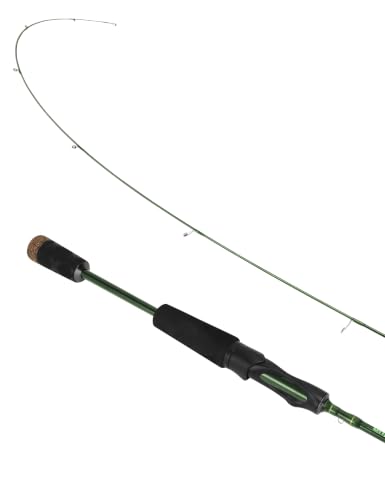
The configuration most creek anglers converge on: six feet, ultralight, two pieces. Six feet is short enough to swing between alders and long enough to flick a spinner across a pool, and ultralight power is what lets a 1/16 oz lure load the blank at all. The fast tip gives crisp hooksets at the short range creek fishing happens at. The trade is that a fast ultralight cushions light line less than a moderate one, so set the drag light and do not strike hard.
Best for: Best ultralight for creeks — the right length and power together - 2
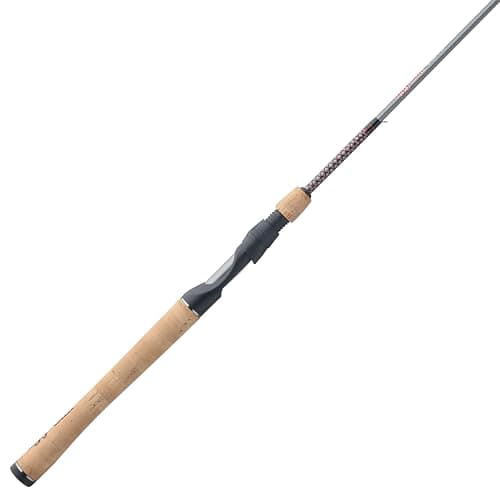
The rod to buy if you want the numbers on the box to mean something. Ultra light power, 2-6 lb line, 1/32 to 1/8 oz lures: that is the genuine creek-trout range, and the narrow lure rating tells you this blank really is built for tiny lures rather than labeled optimistically. Ugly Stik blanks have a long reputation for surviving car doors and rock, which matters more on a creek than a few grams of weight saving. It costs more than the budget ultralights, and at six foot six it is a touch long for the tightest cover.
Best for: Best labeled ultralight — the ratings are printed, and they are honest - 3
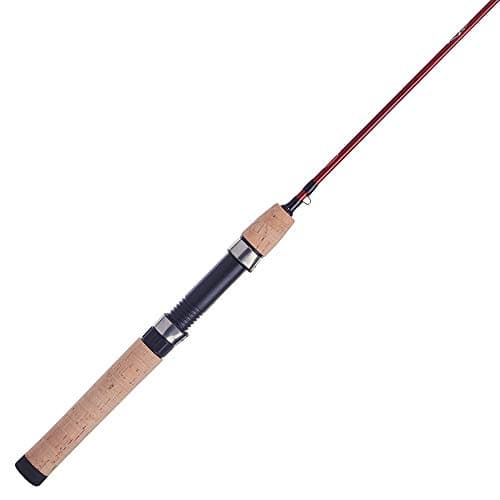
The most instructive rod on this page. It says Light power, and its line rating is 2-6 lb — identical to the ultralight above — with a lure rating of 1/16 to 1/4 oz. In other words this "light" rod overlaps an ultralight almost completely at the bottom and adds a little headroom at the top. If you fish 1/8 oz spinners and small spoons more than 1/32 oz jigs, it is arguably the better buy, and it is the cheapest rod here by a wide margin. At five foot six it is also genuinely short, which suits closed-canopy creeks.
Best for: Best light power — and proof that the labels overlap - 4
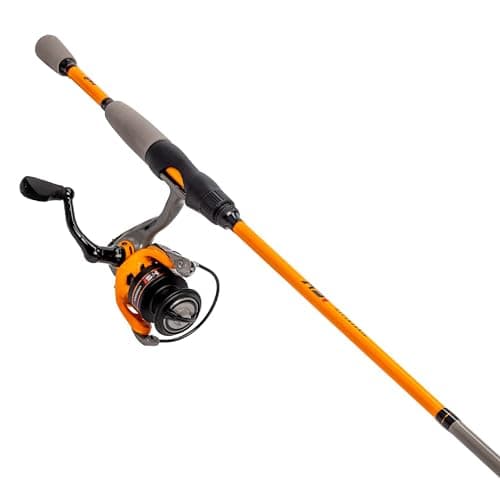
The practical route into light power, because the reel comes matched. A size 200 reel on a six-foot light blank is a balanced little outfit for 4 to 6 lb line, which is the sensible setup if your water holds the occasional heavier fish or you also throw 1/4 oz hardware. Buying a combo removes the most common way a trout setup gets ruined, which is bolting a bass-sized reel onto a light rod. The honest limit is that a combo reel is the economized half, so judge it as a rod with a serviceable reel attached.
Best for: Best light-power combo — matched rod and reel in one buy - 5
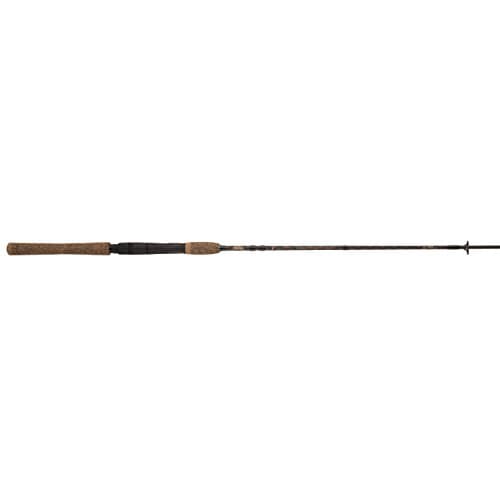
Included to mark the boundary rather than to be recommended for trout. Medium light power with a 6-12 lb line rating is a different rod: it will throw 3/8 oz hardware, handle bass and pike by-catch and fish a small river, but it is too stiff to load with a 1/16 oz spinner, which is the lure that catches most creek trout. If your water is bigger than a creek or you want one rod that also covers bass, this is the honest choice. For small-stream trout it is a size too far.
Best for: The step above — and where creek trout stop benefiting
| # | Product | Best for | Score | Price |
|---|---|---|---|---|
| 1 | LITTMA Whisper 6' Ultralight Spinning Rod, Fast Action 2-Piece The configuration most creek anglers converge on: six feet, ultralight, two pieces. Six feet is short enough to swing between alders and long enough to flick a spinner across a pool, and ultralight power is what lets a 1/16 oz lure load the blank at all. The fast tip gives crisp hooksets at the short range creek fishing happens at. The trade is that a fast ultralight cushions light line less than a moderate one, so set the drag light and do not strike hard. | Best ultralight for creeks — the right length and power together | — | $43.19View on Amazon#ad |
| 2 | Ugly Stik Elite Spinning Rod, 6'6", Ultra Light Power, 2-6 lb Line, 1/32-1/8 oz Lures The rod to buy if you want the numbers on the box to mean something. Ultra light power, 2-6 lb line, 1/32 to 1/8 oz lures: that is the genuine creek-trout range, and the narrow lure rating tells you this blank really is built for tiny lures rather than labeled optimistically. Ugly Stik blanks have a long reputation for surviving car doors and rock, which matters more on a creek than a few grams of weight saving. It costs more than the budget ultralights, and at six foot six it is a touch long for the tightest cover. | Best labeled ultralight — the ratings are printed, and they are honest | — | $84.95View on Amazon#ad |
| 3 | Berkley Cherrywood HD Spinning Rod, 5'6", Light Power, 2-6 lb Line, 1/16-1/4 oz Lures The most instructive rod on this page. It says Light power, and its line rating is 2-6 lb — identical to the ultralight above — with a lure rating of 1/16 to 1/4 oz. In other words this "light" rod overlaps an ultralight almost completely at the bottom and adds a little headroom at the top. If you fish 1/8 oz spinners and small spoons more than 1/32 oz jigs, it is arguably the better buy, and it is the cheapest rod here by a wide margin. At five foot six it is also genuinely short, which suits closed-canopy creeks. | Best light power — and proof that the labels overlap | — | $24.52View on Amazon#ad |
| 4 | Lew's Hypersonic Spinning Combo, 6 ft Light Power Fast Action Rod with Size 200 Reel The practical route into light power, because the reel comes matched. A size 200 reel on a six-foot light blank is a balanced little outfit for 4 to 6 lb line, which is the sensible setup if your water holds the occasional heavier fish or you also throw 1/4 oz hardware. Buying a combo removes the most common way a trout setup gets ruined, which is bolting a bass-sized reel onto a light rod. The honest limit is that a combo reel is the economized half, so judge it as a rod with a serviceable reel attached. | Best light-power combo — matched rod and reel in one buy | — | $59.99View on Amazon#ad |
| 5 | Berkley Lightning Rod, 6 ft, Medium Light Power, 6-12 lb Line, 1/16-3/8 oz Lures Included to mark the boundary rather than to be recommended for trout. Medium light power with a 6-12 lb line rating is a different rod: it will throw 3/8 oz hardware, handle bass and pike by-catch and fish a small river, but it is too stiff to load with a 1/16 oz spinner, which is the lure that catches most creek trout. If your water is bigger than a creek or you want one rod that also covers bass, this is the honest choice. For small-stream trout it is a size too far. | The step above — and where creek trout stop benefiting | — | $52.24View on Amazon#ad |
For creek and stream trout, buy ultralight. The lures weigh 1/32 to 1/8 of an ounce and only an ultralight blank loads with that little weight on the end. Light power earns its place if you fish 1/4 oz hardware, meet heavier fish, or want one rod that also covers panfish and the odd bass. But read the printed lure rating rather than the word: a rod labeled Light can be rated for exactly the same line as an ultralight.
Power is the most misunderstood spec on a spinning rod, partly because the names sound like a scale of quality and partly because no two manufacturers agree on where one class ends and the next begins. It is worth ten minutes of attention: power is the single spec that decides whether your lure will cast at all, and getting it wrong is the usual reason a new rod feels broken.
The question that decides it
What does the lure you fish most weigh? That is the whole decision. A rod bends under the weight of the lure during the cast and that bend is what throws it; too little weight and nothing loads, too much and the blank is overwhelmed. Everything else — length, action, brand, price — is secondary to that match.
| Your main lure | Power | Typical line | Example |
|---|---|---|---|
| 1/64 to 1/16 oz micro jigs | Ultralight | 2-4 lb | Jig under a float for stocked trout |
| 1/16 oz inline spinner | Ultralight | 4 lb | The default creek trout lure |
| 1/8 oz spinner or small spoon | Ultralight or light | 4-6 lb | Deeper pools, faster current |
| 1/4 oz casting spoon | Light | 6 lb | High water, wind, small rivers |
| 3/8 oz and up | Medium light or heavier | 8-12 lb | Bass, pike, big water |
On a creek the answer is almost always a 1/16 oz spinner, which puts you in ultralight territory without much argument. The lures themselves are ranked in the creek lure roundup, and the 1/16 versus 1/8 oz weight decision is taken apart in the trout spinner roundup.
What power actually means
Power is how much force it takes to bend the rod. Action is where it bends. Those two get mixed up constantly. A rod can be ultralight power and fast action — stiff overall for its class, bending mostly near the tip — or light power and moderate action, which bends further down into the blank. Power is set by the blank's resistance; action is the shape of the curve.
Manufacturers express power as two printed ratings. Just above the handle you will find a line rating in pounds and a lure rating in ounces. Those two numbers are the actual specification. The word — Ultra Light, Light, Medium Light — is a summary label, and it is the part that varies between brands.
Power is not strength, and it is not quality. An ultralight rod is not a weak rod; it is a rod tuned to light weights. It will land fish far heavier than its line rating, because the drag and the bend do that work. Choosing a heavier power to be "safe" is the most common mistake in this category and it costs you casting distance, accuracy and bites.
Why the labels overlap
There is no industry standard for power classes, and the picks on this page prove it. The Ugly Stik Elite is labeled Ultra Light and rated 2-6 lb line with 1/32-1/8 oz lures. The Berkley Cherrywood HD is labeled Light and rated 2-6 lb line with 1/16-1/4 oz lures. Same line rating, different words on the blank, with the real difference showing up in the lure range rather than the label.
So compare the numbers, not the names. If two rods you are considering carry the same line and lure ratings, they are the same class of rod whatever the label says. If one says Light but is rated 6-12 lb, it is two classes up from an ultralight and will not cast creek lures, whatever the marketing copy promises.
Length is a separate decision, and it is sold as if it were not. You can buy an ultralight at five feet or at seven, and the choice depends on your cover, not your lures. Five to six and a half feet for brushy creeks, seven for open banks and small ponds — which is the same logic the ultralight rod roundup works through, and part of the wider fit question in how to choose gear for small streams.
The one label to distrust
Ultralight vs light, head to head
| Ultralight | Light | |
|---|---|---|
| Typical lure rating | 1/32 to 1/4 oz | 1/16 to 3/8 oz |
| Typical line rating | 2-6 lb | 4-8 lb |
| Casting a 1/16 oz spinner | Loads and casts properly | Workable at the top end of the lure's weight |
| Casting a 1/4 oz spoon | Near the blank's limit | Comfortable |
| Bite detection on micro jigs | Better — a softer tip shows a take | Blunter with tiny lures |
| Soft-mouthed trout at close range | More forgiving bend | Pulls hooks more easily |
| Wind | Struggles | Better |
| Bass and pike by-catch | A fight, and a risk to the blank | Handles them |
| Right for creek trout | Yes, as the default | Yes, if you fish 1/8 to 1/4 oz |
The overlap is the real story. At the 1/8 oz lure weight that covers a lot of creek fishing, both classes work, and brand-to-brand variation is larger than the gap between the classes. The decision only becomes clear-cut at the extremes: 1/32 oz jigs need ultralight, 1/4 oz and up want light.
Fish size, hooksets and lost fish
Neither class is limited by the fish you will catch on a creek. A ten-inch wild trout cannot test either rod, and a surprise three-pounder is landed by the drag and the bend, not by the power rating. People buy up in power for fish and buy themselves a rod that cannot cast.
What does change is how fish come off. Trout have soft mouths and on a creek you are often fishing fifteen feet of line, with very little stretch between you and the hook. A softer blank cushions the strike; a stiffer one transmits all of it, and a treble hook tears free. That is why a fast-action rod of either power wants a light drag setting and a firm lift rather than a strike.
Line and power have to agree. Four pound monofilament on a medium light rod is a mismatch: the blank will break the line before it bends. Mono's stretch is doing some of the cushioning work here, which is one more reason it beats braid on small water — the trout line roundup covers the pairing.
And the reel has to match too. A 500 to 1000 size reel balances either class; the commonly sold 2500 is a bass reel and turns a light rod tip-light and tiring — the ultralight reel roundup covers sizing.
Wind, distance and by-catch
Wind is the strongest argument for light power. An ultralight casting a 1/16 oz lure into a breeze simply does not get there, and on exposed meadow creeks and small stillwater that is a real limitation. A light rod throwing a 1/4 oz spoon punches through wind and reaches across a pool that an ultralight cannot cover.
By-catch is the second argument. Smallmouth, pickerel and the occasional bass share a lot of creek water. An ultralight will land them, slowly; a light rod does it without drama. If your creek has mixed species, light power is the more versatile single rod — the panfish side of that overlap is covered in the panfish rod roundup.
Distance, though, is mostly a myth on a creek. Casts are fifteen to thirty feet and accuracy beats reach every time. If you are choosing a heavier power so you can cast further, check first whether the water you fish ever asks for it. On most small streams the answer is no.
The verdict, by angler
Creek and stream trout, spinners and micro jigs: ultralight. Buy a six-foot ultralight and 4 lb mono and stop thinking about it. This is the great majority of readers of this page.
Want the published numbers to be trustworthy: the labeled ultralight. The Ugly Stik Elite prints 2-6 lb and 1/32-1/8 oz, which is exactly the creek range, and its blank survives being treated like a tool.
Mostly 1/8 to 1/4 oz hardware, or windy open water: light. The short light rod is the cheapest way there, and its 2-6 lb line rating means you give up almost nothing at the bottom of the range.
Want one outfit and no decisions: a light-power combo. The matched combo removes the reel-sizing mistake, and light power covers more water types than ultralight does. The wider combo field is in the trout rod and reel combo roundup.
Creek trout plus bass on the same rod: medium light, and accept the cost. The medium light rod handles the bass and will not cast a 1/16 oz spinner properly. That is a real trade, not a free upgrade — and if trout are the priority, two cheap rods beat one compromised one. For what to spend where, see the best fishing rod for the money.
The picks in detail
LITTMA Whisper 6' Ultralight Spinning Rod, Fast Action 2-Piece
Best for: Best ultralight for creeks — the right length and power together
The configuration most creek anglers converge on: six feet, ultralight, two pieces. Six feet is short enough to swing between alders and long enough to flick a spinner across a pool, and ultralight power is what lets a 1/16 oz lure load the blank at all. The fast tip gives crisp hooksets at the short range creek fishing happens at. The trade is that a fast ultralight cushions light line less than a moderate one, so set the drag light and do not strike hard.
- Power
- Ultralight
- Length
- 6 ft, 2-piece
- Action
- Fast
- Loads properly with 1/16 oz lures
- Six feet suits brushy creek banks
- Light enough to fish one-handed all day
- Fast action cushions 2-4 lb line less than a moderate blank
- One length only
Ugly Stik Elite Spinning Rod, 6'6", Ultra Light Power, 2-6 lb Line, 1/32-1/8 oz Lures
Best for: Best labeled ultralight — the ratings are printed, and they are honest
The rod to buy if you want the numbers on the box to mean something. Ultra light power, 2-6 lb line, 1/32 to 1/8 oz lures: that is the genuine creek-trout range, and the narrow lure rating tells you this blank really is built for tiny lures rather than labeled optimistically. Ugly Stik blanks have a long reputation for surviving car doors and rock, which matters more on a creek than a few grams of weight saving. It costs more than the budget ultralights, and at six foot six it is a touch long for the tightest cover.
- Power
- Ultra light
- Line rating
- 2-6 lb
- Lure rating
- 1/32-1/8 oz
- Published ratings match genuine ultralight use
- Durable blank reputation — a real advantage in brush
- Narrow lure rating means it loads with micro jigs
- Dearest ultralight here
- 6 ft 6 in is long for tunnel-tight headwaters
Berkley Cherrywood HD Spinning Rod, 5'6", Light Power, 2-6 lb Line, 1/16-1/4 oz Lures
Best for: Best light power — and proof that the labels overlap
The most instructive rod on this page. It says Light power, and its line rating is 2-6 lb — identical to the ultralight above — with a lure rating of 1/16 to 1/4 oz. In other words this "light" rod overlaps an ultralight almost completely at the bottom and adds a little headroom at the top. If you fish 1/8 oz spinners and small spoons more than 1/32 oz jigs, it is arguably the better buy, and it is the cheapest rod here by a wide margin. At five foot six it is also genuinely short, which suits closed-canopy creeks.
- Power
- Light
- Line rating
- 2-6 lb
- Lure rating
- 1/16-1/4 oz
- Cheapest rod on the page, with published ratings
- 5 ft 6 in is a real tight-cover length
- Overlaps ultralight use while handling 1/4 oz lures
- Fast action on a short blank is unforgiving of a hard strike
- Will not load properly with 1/32 oz micro jigs
Lew's Hypersonic Spinning Combo, 6 ft Light Power Fast Action Rod with Size 200 Reel
Best for: Best light-power combo — matched rod and reel in one buy
The practical route into light power, because the reel comes matched. A size 200 reel on a six-foot light blank is a balanced little outfit for 4 to 6 lb line, which is the sensible setup if your water holds the occasional heavier fish or you also throw 1/4 oz hardware. Buying a combo removes the most common way a trout setup gets ruined, which is bolting a bass-sized reel onto a light rod. The honest limit is that a combo reel is the economized half, so judge it as a rod with a serviceable reel attached.
- Power
- Light
- Rod
- 6 ft, fast action, IM6 graphite
- Reel
- Size 200, 5.1:1
- Rod and reel already matched and balanced
- Light power covers 1/16 to 1/4 oz comfortably
- Six feet is still a creek-friendly length
- The reel is the economized part of any combo
- Size 200 spool is more line than creek fishing needs
Berkley Lightning Rod, 6 ft, Medium Light Power, 6-12 lb Line, 1/16-3/8 oz Lures
Best for: The step above — and where creek trout stop benefiting
Included to mark the boundary rather than to be recommended for trout. Medium light power with a 6-12 lb line rating is a different rod: it will throw 3/8 oz hardware, handle bass and pike by-catch and fish a small river, but it is too stiff to load with a 1/16 oz spinner, which is the lure that catches most creek trout. If your water is bigger than a creek or you want one rod that also covers bass, this is the honest choice. For small-stream trout it is a size too far.
- Power
- Medium light
- Line rating
- 6-12 lb
- Lure rating
- 1/16-3/8 oz
- Handles heavier lures and by-catch species
- One-piece blank transmits bites well
- Reasonable price for a do-most rod
- Too stiff to cast genuine creek-trout lures properly
- 6-12 lb line is heavier than small-stream water wants
Prices shown are from Amazon as of November 20, 2026 and change often — the button always goes to the current listing. Some links may earn us a commission at no extra cost to you. How this works.
Frequently asked questions
Is an ultralight or light rod better for trout?
Ultralight for creek and stream trout, because the lures weigh 1/32 to 1/8 of an ounce and only an ultralight blank loads with that little weight. Light power is the better choice if you mostly fish 1/4 oz hardware, fish windy open water, or want one rod that also handles bass and pike by-catch.
What is the difference between ultralight and light rod power?
Power is how much force it takes to bend the blank, and it is expressed as a printed line rating in pounds and lure rating in ounces. Ultralight typically covers 1/32 to 1/4 oz lures on 2-6 lb line; light typically covers 1/16 to 3/8 oz on 4-8 lb. The classes overlap heavily, and the printed numbers are more reliable than the label.
Can an ultralight rod handle a big fish?
Yes. The drag and the bend of the rod do that work, not the power rating, and ultralight rods land fish far heavier than their line rating every day. Choosing a heavier power to feel safe costs you casting distance and accuracy with the small lures that actually catch creek trout.
Is power the same as action on a fishing rod?
No. Power is how much force it takes to bend the rod; action is where along the blank it bends. A rod can be ultralight power with a fast action, meaning it is tuned for tiny lures but bends mostly near the tip. Both specs are usually printed above the handle.
What line should I use on an ultralight rod?
Four pound monofilament for creek trout, dropping to 2 lb on very clear water with tiny jigs. Mono's stretch cushions a hard strike at short range, which matters on a light blank. Stay within the rod's printed line rating - heavier line on a light rod means the blank breaks the line before it bends.
Sources
Keep reading
Not sure where to start?
The beginner gear guide walks you through exactly what a new stream angler needs — the six essentials first, nice-to-haves later, with one safe-default pick per category.