Trout & Ultralight · Roundup
The Best Line for Trout Fishing
Line is the cheapest part of a trout setup and the part that decides most of what happens. Too heavy and your lures will not swim; too visible and the fish will not come; too old and it breaks on the best fish of the day. Four pound test answers almost all of it.
Disclosure: Creek Cover is reader-supported. If you buy through our links we may earn a commission, at no extra cost to you. It never changes which pick we tell a new angler to start with. Full disclosure.
Quick picks at a glance
Tap a pick to read the full write-up, or the price button to check it on Amazon.
- 1
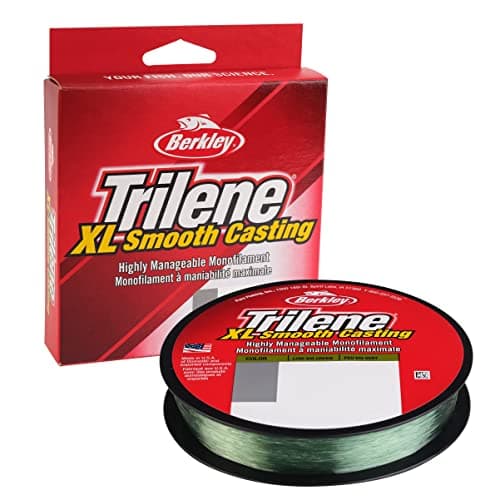
The line most creek anglers should have on the reel. Four pound test is light enough to let a 1/16 oz spinner swim naturally and heavy enough to land anything a small stream holds, and monofilament's stretch is a genuine advantage on trout: it cushions a hard hookset against a soft mouth and a short line. Trilene XL is the long-standing low-memory version, which matters because a coiled line on a tiny ultralight spool is the single most annoying tackle problem there is. Low-vis green is the right default on tea-stained creeks; in genuinely glass-clear water a clear line or a fluorocarbon leader is the better call.
Best for: Best overall — the default 4 lb mono for creek trout - 2
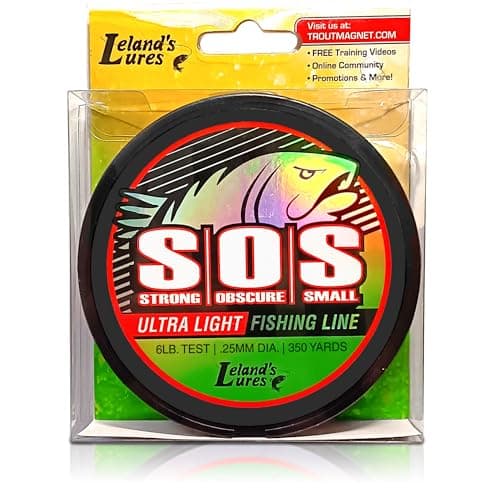
The line built for exactly the fishing this site is about: tiny jigs, light floats and stocked creek trout. A copolymer runs thinner than nylon of the same stated test, which means a 1/64 oz jig sinks and drifts the way it is supposed to instead of being dragged by the line. It is also softer, so it leaves the spool of a 500 or 1000 size reel without fighting you. The trade-off is less abrasion resistance than a thicker mono, so check for nicks after fishing rocky pockets.
Best for: Best for micro jigs and finesse — thin for its test - 3
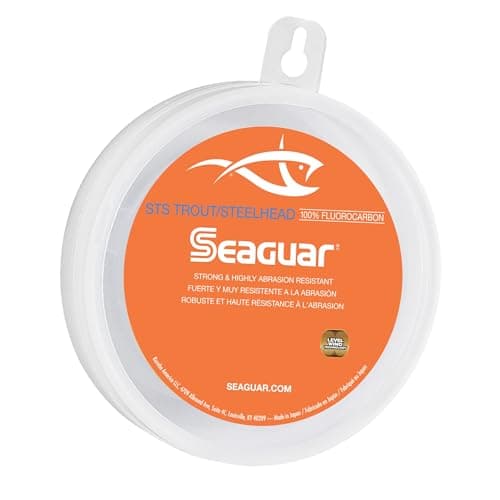
The one upgrade worth paying for, used as a leader rather than as a whole spool. Fluorocarbon's refractive index is closer to water than nylon's, which is why it is harder for a trout to pick out in flat, clear conditions, and it sinks rather than lying in the surface film. Two to three feet tied to the end of your main line gets you that advantage for a fraction of the cost of filling a reel. A hundred yards used as leader material is several seasons of fishing.
Best for: Best leader material — clear low water, spooky fish - 4
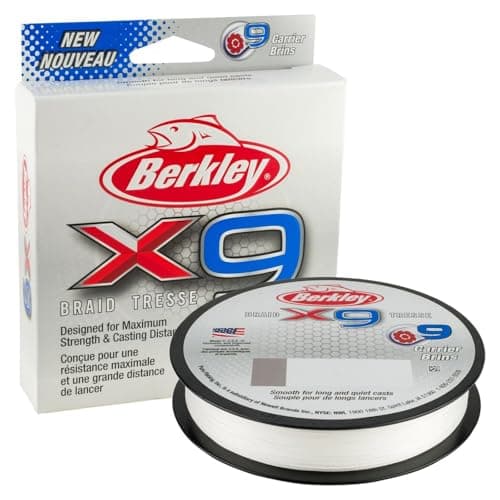
Braid is the right answer for one specific style: light jigs fished deep, where you need to feel a bite transmitted up a slack line. It has effectively no stretch, so a take registers instantly and a hookset arrives at the hook rather than being absorbed. A 10 lb braid is far thinner than 10 lb mono, which is why it casts light lures well on an ultralight. It is also highly visible in water and completely unforgiving of a hard hookset, so it wants a fluorocarbon leader and a softer rod tip.
Best for: Best braid — bite detection and hooksets at range - 5
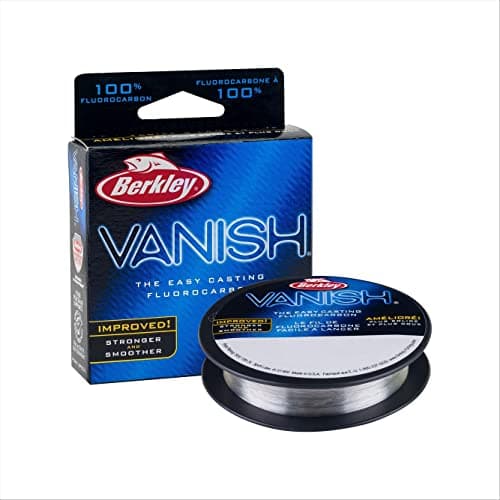
The budget route into fluorocarbon, and a sensible first purchase if you are not sure the clear-water advantage is real on your water. You get the sinking, low-visibility behavior at roughly half the cost per yard of a premium trout-specific line. The honest difference is handling: budget fluorocarbon is stiffer and more wiry, so knots want careful wetting and slow seating, and it is better used in short leader lengths than spooled on a reel.
Best for: Cheapest way to try fluorocarbon leaders
| # | Product | Best for | Score | Price |
|---|---|---|---|---|
| 1 | Berkley Trilene XL Monofilament, Low-Vis Green, 4 lb, 330 yd The line most creek anglers should have on the reel. Four pound test is light enough to let a 1/16 oz spinner swim naturally and heavy enough to land anything a small stream holds, and monofilament's stretch is a genuine advantage on trout: it cushions a hard hookset against a soft mouth and a short line. Trilene XL is the long-standing low-memory version, which matters because a coiled line on a tiny ultralight spool is the single most annoying tackle problem there is. Low-vis green is the right default on tea-stained creeks; in genuinely glass-clear water a clear line or a fluorocarbon leader is the better call. | Best overall — the default 4 lb mono for creek trout | — | $8.92View on Amazon#ad |
| 2 | Trout Magnet Trout S.O.S. Copolymer Fishing Line, 4 lb, 350 yd The line built for exactly the fishing this site is about: tiny jigs, light floats and stocked creek trout. A copolymer runs thinner than nylon of the same stated test, which means a 1/64 oz jig sinks and drifts the way it is supposed to instead of being dragged by the line. It is also softer, so it leaves the spool of a 500 or 1000 size reel without fighting you. The trade-off is less abrasion resistance than a thicker mono, so check for nicks after fishing rocky pockets. | Best for micro jigs and finesse — thin for its test | — | $6.95View on Amazon#ad |
| 3 | Seaguar STS Trout/Steelhead 100% Fluorocarbon, 6 lb, 100 yd The one upgrade worth paying for, used as a leader rather than as a whole spool. Fluorocarbon's refractive index is closer to water than nylon's, which is why it is harder for a trout to pick out in flat, clear conditions, and it sinks rather than lying in the surface film. Two to three feet tied to the end of your main line gets you that advantage for a fraction of the cost of filling a reel. A hundred yards used as leader material is several seasons of fishing. | Best leader material — clear low water, spooky fish | — | $10.95View on Amazon#ad |
| 4 | Berkley x9 Braided Line, 10 lb, 164 yd, Crystal Braid is the right answer for one specific style: light jigs fished deep, where you need to feel a bite transmitted up a slack line. It has effectively no stretch, so a take registers instantly and a hookset arrives at the hook rather than being absorbed. A 10 lb braid is far thinner than 10 lb mono, which is why it casts light lures well on an ultralight. It is also highly visible in water and completely unforgiving of a hard hookset, so it wants a fluorocarbon leader and a softer rod tip. | Best braid — bite detection and hooksets at range | — | $19.99View on Amazon#ad |
| 5 | Berkley Vanish Fluorocarbon, Clear, 6 lb, 110 yd The budget route into fluorocarbon, and a sensible first purchase if you are not sure the clear-water advantage is real on your water. You get the sinking, low-visibility behavior at roughly half the cost per yard of a premium trout-specific line. The honest difference is handling: budget fluorocarbon is stiffer and more wiry, so knots want careful wetting and slow seating, and it is better used in short leader lengths than spooled on a reel. | Cheapest way to try fluorocarbon leaders | — | $7.82View on Amazon#ad |
Buy 4 lb monofilament. For creek and stream trout on an ultralight spinning rod, the 4 lb low-memory mono is the right line and the decision is largely over. Add a short fluorocarbon leader if your water runs clear and low, use a thin copolymer if you fish micro jigs, and only reach for braid if you need to feel a bite at distance in deep water.
This page is about spinning line — the monofilament, fluorocarbon or braid that goes on a spinning reel. Fly fishing uses a completely different system, where a thick coated fly line carries the fly and a tapered leader connects the two; if that is what you are shopping for, go to the fly line roundup instead. The two categories share a word and almost nothing else.
The short answer
| If you fish... | Line | Test | Why |
|---|---|---|---|
| General creek and stream trout | Monofilament | 4 lb | Casts light lures, stretch forgives hard hooksets |
| Micro jigs under a float | Thin copolymer | 2-4 lb | Thinner line lets a 1/64 oz jig behave naturally |
| Flat, clear, low water | Mono or braid plus a fluoro leader | 4 lb / 6 lb leader | Fluorocarbon is the hardest line for a trout to see |
| Deep pools, jigs on the bottom | Braid plus fluoro leader | 10 lb braid | No stretch, so bites and bottom come straight to your hand |
| Stocked ponds, bigger fish | Monofilament | 6 lb | A little more abrasion margin, still castable |
| Brush-choked small creeks | Monofilament | 4-6 lb | Cheap to break off and retie all day |
Notice how often the answer is mono. That is not nostalgia. Monofilament is the only one of the three types that is cheap, supple on tiny reels, stretchy enough to protect a soft-mouthed fish at close range, and almost invisible enough. Fluorocarbon and braid each beat it on one axis and lose on two.
Why 4 lb is the default
The line has to be light enough for the lure to work. Creek trout lures weigh between 1/64 and 1/8 of an ounce, and a thick line simply will not let something that light swim, sink or drift properly — the line's own drag in the current overwhelms the lure. Four pound test is about the heaviest line that leaves a 1/16 oz spinner behaving the way it was designed to.
And light enough to cast at all. Diameter is what loads a spinning reel's cast. Heavy line on an ultralight rod comes off the spool in stiff coils, kills distance and accuracy, and sends your lure nowhere. If you have ever found an ultralight rod oddly hard to cast, the line was the most likely culprit, not the rod — see the ultralight rod roundup for how the rod's lure rating and the line work together.
Four pounds is also plenty strong. A ten-inch wild creek trout cannot break 4 lb line, and neither can most stocked fish, because a rod and a drag absorb the load. Line breaks come from nicks, old line and knots, not from the stated test being too low. If you fish bigger stillwater where a three-pound trout is possible, 6 lb is a reasonable step up.
Where 2 lb belongs. On genuinely tiny, glass-clear spring creeks with small fish and very small jigs, 2 lb test casts a 1/64 oz lure beautifully and disappears. It is also unforgiving: you will break off on snags and lose fish to clumsy hooksets. Treat it as a specialist choice rather than a default.
The reel matters as much as the test
Mono, fluorocarbon and braid
| Monofilament | Fluorocarbon | Braid | |
|---|---|---|---|
| Stretch | High — cushions hooksets | Low | Effectively none |
| Visibility in water | Low | Lowest | High |
| Sinks or floats | Near neutral | Sinks | Floats |
| Memory / coiling | Some | Most | None |
| Abrasion resistance | Moderate | Good | Poor against rock, good against teeth |
| Sunlight degradation | Yes — respool yearly | Minimal | Minimal |
| Cost per yard | Lowest | Highest | High |
| Best role on a creek | Main line | Leader | Main line for deep jigging |
Monofilament is a single nylon strand, and its stretch is a feature. On a creek you are often fishing fifteen feet of line, where there is nothing to absorb a startled hookset except the line itself. Mono gives, a trout's soft mouth survives, and the hook stays in. Its weaknesses are real but manageable: it holds coils, and it genuinely does weaken from sunlight and water absorption over a season.
Fluorocarbon is denser, stiffer and harder to see. Its refractive index sits closer to water's than nylon's does, which is the physical basis for the low-visibility claim, and it sinks instead of resting in the surface film. Those two properties are worth real money in clear water. As a main line on a tiny spool it is a poor fit — stiff, wiry, high memory — which is why almost everyone uses it in two or three foot leader lengths.
Braid is many fibers woven together: thin, strong and completely inelastic. That gives you instant bite detection and direct contact with a jig on the bottom, which is a genuine advantage in deep pools and in wind. The costs are equally plain: it is visible, so it needs a leader; it has no give, so it pulls hooks from soft mouths at short range; and it needs properly hardened cutters, since soft nipper blades just fray it — the tool kit roundup covers which nippers manage it.
Color and visibility
Clear line for clear water, low-vis green for stained water. That is the whole rule, and it is worth following because creek trout in low summer flow do inspect what is attached to a lure. Tea-colored water from leaf tannins hides a green line better than a clear one; glass-clear spring creek water hides clear line and fluorocarbon best.
High-visibility line is for you, not the fish. Fluorescent yellow and orange lines exist so the angler can watch the line for twitches, which is a legitimate technique when drifting a bait or a jig with no float. If you use one, add a fluorocarbon leader so the last three feet in front of the lure is invisible — that combination gets you both.
Do not overthink it. Line visibility matters, but it ranks behind lure size, presentation speed and whether you spooked the pool walking up to it. The most productive changes on a bright clear day are a longer cast, a smaller lure and a lower profile on the bank, in that order — the broader case is made in flies vs lures for creek trout.
The five compared
| Line | Type | Test | Buy it for |
|---|---|---|---|
| Berkley Trilene XL | Monofilament | 4 lb | Your main line, almost always |
| Trout Magnet Trout S.O.S. | Copolymer | 4 lb | Micro jigs and float fishing |
| Seaguar STS Trout/Steelhead | Fluorocarbon | 6 lb | Leaders in clear, low water |
| Berkley x9 | Braid | 10 lb | Deep jigging and bite detection |
| Berkley Vanish | Fluorocarbon | 6 lb | Trying fluorocarbon cheaply |
Two spools is a complete kit. A bulk spool of 4 lb mono and a small spool of 6 lb fluorocarbon for leaders covers creek fishing from April to October, costs less than a single hard lure, and will last two seasons. The braid is a third purchase for a specific style of fishing, not an upgrade path.
Spooling and replacing it
Fill the spool to about an eighth of an inch below the lip. Underfilled spools cast badly because the line has to climb the lip; overfilled spools throw loose coils off in a tangle. That gap is the target, and it is the most common spooling mistake on small reels.
Spool under tension, and let the line come off the filler spool the right way. Lay the filler spool on the floor label-up and watch the first few turns: if the line starts twisting, flip the spool over. Pinch the line between two fingers or run it through a damp cloth while you reel so it beds down firmly.
Use backing if the spool is deep. A hundred yards of mono is more than you will ever cast on a creek, so filling a reel with cheap line first and adding your good line on top is a legitimate way to stretch a bulk spool across three reels. Join the two with a double uni knot.
Replace monofilament every season, and after any hard trip. Nylon absorbs water and is degraded by ultraviolet light, so line that sat in a sunny car window all summer is not the line you spooled. Run the last twenty feet through your fingers before each trip and cut back to clean line when you feel nicks — that stretch takes all the abrasion from rocks and hook sets.
Knots, and what changes with braid
For mono and fluorocarbon, the improved clinch knot does nearly everything. Five turns, wet it, seat it slowly. The full walkthrough, including why a dry cinch is the most common cause of a knot failing, is in fly fishing knots for beginners — the knots are the same on spinning tackle.
Braid needs different knots. It is slick and inelastic, so a clinch knot can slip; a Palomar knot is the simple reliable choice for tying braid to a lure or a swivel. For joining braid to a fluorocarbon leader, a double uni knot is the straightforward option and holds well at the light tests trout fishing uses.
Add a swivel if you fish inline spinners. A rotating blade twists line steadily, and twisted mono becomes a coiled mess that tangles on every cast. A small barrel swivel eighteen inches above the lure fixes it permanently — worth knowing before you blame the line, and covered alongside the lures themselves in the creek lure roundup and the trout spinner roundup.
And match the line to the rest of the setup. Line, rod rating and lure weight are one system: a 4 lb line, a 1/16 oz lure and a 5 to 6 foot ultralight rod belong together, and swapping one without the others is what makes a cheap setup feel broken. The complete beginner version of that system is laid out in what gear to use for trout fishing.
The picks in detail
Berkley Trilene XL Monofilament, Low-Vis Green, 4 lb, 330 yd
Best for: Best overall — the default 4 lb mono for creek trout
The line most creek anglers should have on the reel. Four pound test is light enough to let a 1/16 oz spinner swim naturally and heavy enough to land anything a small stream holds, and monofilament's stretch is a genuine advantage on trout: it cushions a hard hookset against a soft mouth and a short line. Trilene XL is the long-standing low-memory version, which matters because a coiled line on a tiny ultralight spool is the single most annoying tackle problem there is. Low-vis green is the right default on tea-stained creeks; in genuinely glass-clear water a clear line or a fluorocarbon leader is the better call.
- Test
- 4 lb
- Length
- 330 yd
- Type
- Monofilament, low-vis green
- Stretch protects soft-mouthed trout at close range
- Low memory for mono, so fewer coils off a small spool
- 330 yards fills several ultralight reels for the price of two lures
- Nylon absorbs water and degrades in sunlight — respool yearly
- Green tint is a compromise in very clear water
Trout Magnet Trout S.O.S. Copolymer Fishing Line, 4 lb, 350 yd
Best for: Best for micro jigs and finesse — thin for its test
The line built for exactly the fishing this site is about: tiny jigs, light floats and stocked creek trout. A copolymer runs thinner than nylon of the same stated test, which means a 1/64 oz jig sinks and drifts the way it is supposed to instead of being dragged by the line. It is also softer, so it leaves the spool of a 500 or 1000 size reel without fighting you. The trade-off is less abrasion resistance than a thicker mono, so check for nicks after fishing rocky pockets.
- Test
- 4 lb
- Length
- 350 yd
- Type
- Light copolymer
- Thin and supple, so micro jigs behave correctly
- Pairs naturally with the jig-and-float approach for stocked trout
- Also sold in 2 lb for genuinely tiny presentations
- Thinner line nicks more easily on rock
- Less stretch cushion than a thicker nylon
Seaguar STS Trout/Steelhead 100% Fluorocarbon, 6 lb, 100 yd
Best for: Best leader material — clear low water, spooky fish
The one upgrade worth paying for, used as a leader rather than as a whole spool. Fluorocarbon's refractive index is closer to water than nylon's, which is why it is harder for a trout to pick out in flat, clear conditions, and it sinks rather than lying in the surface film. Two to three feet tied to the end of your main line gets you that advantage for a fraction of the cost of filling a reel. A hundred yards used as leader material is several seasons of fishing.
- Test
- 6 lb
- Length
- 100 yd
- Type
- 100% fluorocarbon
- Least visible option in clear water
- Sinks, so lures and jigs get down without extra weight
- Abrasion resistant where line rubs rock
- Stiff and high-memory as a main line on a small reel
- Several times the cost per yard of monofilament
Berkley x9 Braided Line, 10 lb, 164 yd, Crystal
Best for: Best braid — bite detection and hooksets at range
Braid is the right answer for one specific style: light jigs fished deep, where you need to feel a bite transmitted up a slack line. It has effectively no stretch, so a take registers instantly and a hookset arrives at the hook rather than being absorbed. A 10 lb braid is far thinner than 10 lb mono, which is why it casts light lures well on an ultralight. It is also highly visible in water and completely unforgiving of a hard hookset, so it wants a fluorocarbon leader and a softer rod tip.
- Test
- 10 lb
- Length
- 164 yd
- Type
- 9-strand braid
- No stretch, so bites and bottom contact are obvious
- Thin for its test — casts light lures a long way
- Does not degrade in sunlight the way nylon does
- Needs a fluorocarbon leader in clear water — it is visible
- Zero stretch pulls hooks out of soft mouths at close range
- Requires hardened nippers to cut cleanly
Berkley Vanish Fluorocarbon, Clear, 6 lb, 110 yd
Best for: Cheapest way to try fluorocarbon leaders
The budget route into fluorocarbon, and a sensible first purchase if you are not sure the clear-water advantage is real on your water. You get the sinking, low-visibility behavior at roughly half the cost per yard of a premium trout-specific line. The honest difference is handling: budget fluorocarbon is stiffer and more wiry, so knots want careful wetting and slow seating, and it is better used in short leader lengths than spooled on a reel.
- Test
- 6 lb
- Length
- 110 yd
- Type
- Fluorocarbon
- Lowest-cost entry to fluorocarbon
- Clear and sinking, like any fluoro
- Short spool is the right size for leader use
- Stiffer and wirier than premium fluorocarbon
- Knots need careful seating or they slip
Prices shown are from Amazon as of November 20, 2026 and change often — the button always goes to the current listing. Some links may earn us a commission at no extra cost to you. How this works.
Frequently asked questions
What pound test line is best for trout fishing?
Four pound test for creek and stream trout. It is light enough in diameter to cast 1/16 oz lures on an ultralight rod and to let them swim naturally, and far stronger than any small-stream trout requires. Step up to 6 lb for bigger stillwater fish, and down to 2 lb only on very clear water with tiny jigs.
Is monofilament or fluorocarbon better for trout?
Monofilament as your main line, fluorocarbon as a leader. Mono is cheap, supple on small reels and stretches enough to protect a trout's soft mouth at close range. Fluorocarbon is harder for fish to see and sinks, which is worth having in the last two or three feet before the lure in clear water.
Should I use braid for trout fishing?
Only for a specific job: fishing jigs deep where you need to feel a bite through slack line. Braid has no stretch, so bites and bottom contact are obvious, but it is visible in water and will pull hooks out of soft-mouthed trout at short range. Use it with a fluorocarbon leader, or use mono instead.
What color fishing line is best for trout?
Clear in clear water, low-visibility green in tea-stained or slightly colored water. High-visibility yellow or orange is for watching the line yourself when drifting a bait or jig without a float, and should be paired with a clear fluorocarbon leader so the business end stays invisible.
How often should I replace trout fishing line?
Monofilament once a season, and sooner if the reel has been stored in sunlight, because nylon absorbs water and is degraded by ultraviolet light. Before each trip, run the last twenty feet through your fingers and cut back past any nicks - that section takes all the abrasion from rocks and hooksets. Braid and fluorocarbon last considerably longer.
Sources
Keep reading
Not sure where to start?
The beginner gear guide walks you through exactly what a new stream angler needs — the six essentials first, nice-to-haves later, with one safe-default pick per category.