Waders · Roundup
The Best Wading Staffs
A third point of contact changes what water you can cross and what water you should not. The cheapest piece of safety equipment in fishing, and the one most anglers buy after a fall.
Disclosure: Creek Cover is reader-supported. If you buy through our links we may earn a commission, at no extra cost to you. It never changes which pick we tell a new angler to start with. Full disclosure.
Quick picks at a glance
Tap a pick to read the full write-up, or the price button to check it on Amazon.
- 1
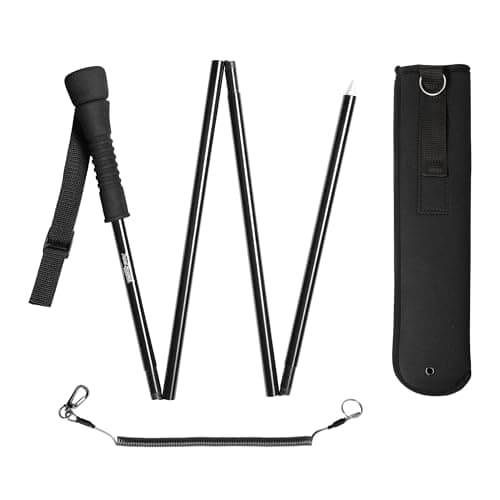
Collapsible, aluminum, and cheap enough that there is no reason not to own one. Folded it lives on your belt and does not interfere with casting; shaken out it is a full-length staff that holds you up in current.
Best for: Best wading staff overall9.0 - 2
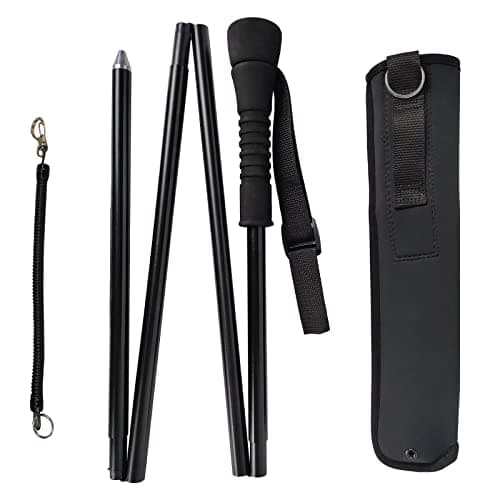
7075 is the aircraft-grade aluminum alloy — considerably stronger than the generic alloy in cheaper staffs for the same weight, which matters the moment a staff is loaded sideways between two boulders.
Best for: Best for strength-to-weight8.9 - 3
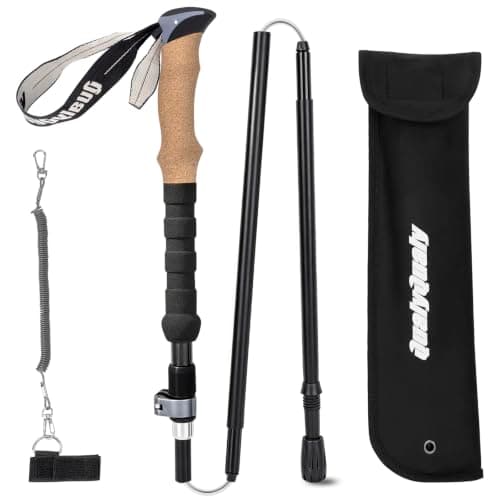
Adjustable between 47 and 56 inches, which is the feature to look for if more than one person uses it or if you wade water of very different depths. A staff that is too long in shallow water is awkward rather than dangerous, but it is still a nuisance.
Best for: Best adjustable length8.7 - 4
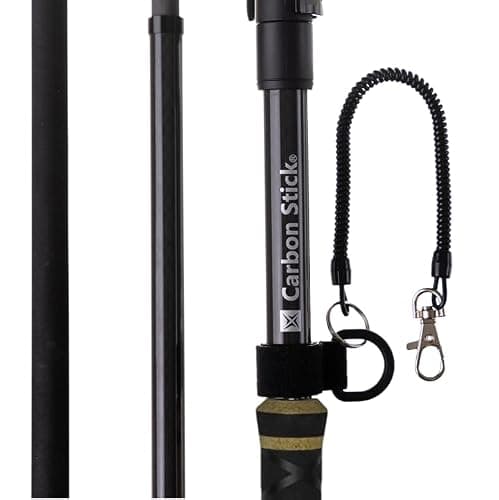
Carbon fiber takes real weight off your belt, and the cork handle is warmer and less slippery in a wet hand than bare metal. The pick if you walk long distances and notice every ounce on your hip.
Best for: Best lightweight staff8.8 - 5
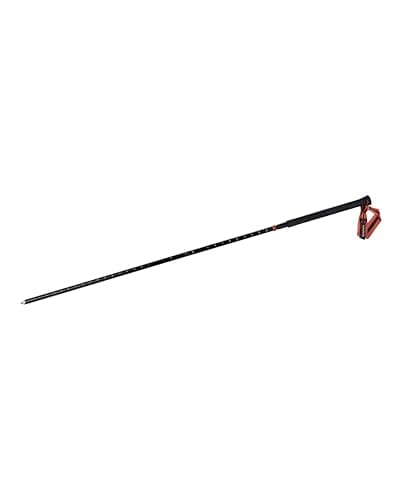
The one guides hand to clients. Built to be used daily in rivers for years, with the hardware and holster quality that comes with that, and the price that comes with it too.
Best for: Buy-it-for-life9.3
| # | Product | Best for | Score | Price |
|---|---|---|---|---|
| 1 | Troutbound 55.5" Collapsible Aluminum Wading Staff Collapsible, aluminum, and cheap enough that there is no reason not to own one. Folded it lives on your belt and does not interfere with casting; shaken out it is a full-length staff that holds you up in current. | Best wading staff overall | 9.0 | $29.99View on Amazon#ad |
| 2 | Aventik Wading Staff, 55" Foldable 7075 Aluminum 7075 is the aircraft-grade aluminum alloy — considerably stronger than the generic alloy in cheaper staffs for the same weight, which matters the moment a staff is loaded sideways between two boulders. | Best for strength-to-weight | 8.9 | $31.49View on Amazon#ad |
| 3 | QualyQualy Foldable Wading Staff & Stick, Adjustable 47-56" Adjustable between 47 and 56 inches, which is the feature to look for if more than one person uses it or if you wade water of very different depths. A staff that is too long in shallow water is awkward rather than dangerous, but it is still a nuisance. | Best adjustable length | 8.7 | $31.99View on Amazon#ad |
| 4 | X Carbon Stick Wading Staff, Carbon Fiber with Hybrid Cork Handle Carbon fiber takes real weight off your belt, and the cork handle is warmer and less slippery in a wet hand than bare metal. The pick if you walk long distances and notice every ounce on your hip. | Best lightweight staff | 8.8 | $99.99View on Amazon#ad |
| 5 | Simms Wading Staff The one guides hand to clients. Built to be used daily in rivers for years, with the hardware and holster quality that comes with that, and the price that comes with it too. | Buy-it-for-life | 9.3 | $169.95View on Amazon#ad |
Buy a collapsible aluminum staff — the Troutbound at around $30 is all most anglers need. The thing that matters is not the material or the brand, it is that it folds into a holster on your belt so it is actually with you when a crossing turns out to be deeper than it looked. A staff left in the truck has never stopped anybody falling.
Who actually needs one
Anybody wading water above the knee in current. Two feet in moving water is an unstable platform; three points of contact is a stable one. That is the whole physics of it, and it does not change with fitness or experience.
It matters more with age, and that is not a slight. Balance recovery slows, and the consequences of a fall in cold moving water rise. A staff is the single cheapest thing that extends the number of years somebody can keep wading, and plenty of very experienced anglers carry one for exactly that reason.
It also tells you what you cannot see. On a silty or broken-rock streambed, probing ahead with the staff finds the drop-off, the slick ledge and the hole before your foot does. That is arguably its bigger safety function, and it is the one nobody mentions.
The staff does not replace the sole
Folding or fixed
| Folding / collapsible | Fixed length | |
|---|---|---|
| Carried on the belt | Yes, in a holster | No — carried in the hand all day |
| Ready instantly | A second to shake out | Already ready |
| Interferes with casting | No, when stowed | Yes, unless you put it down |
| Joints to maintain | Yes — rinse after silty water | None |
| Likelihood you have it with you | High | Low |
Folding wins on the only metric that counts. A fixed staff is stronger and simpler, and it stays in the vehicle because carrying a pole in one hand while casting with the other is genuinely annoying. Every staff on this page folds for that reason.
Rinse the joints. Shock-corded folding sections collect grit and silt, and a staff that will not fold properly ends up strapped to a pack instead of on a belt. Fresh water and a shake-out after a silty river is all it takes.
Aluminum or carbon
Aluminum bends; carbon cracks. That is the practical difference. A staff gets wedged between rocks and loaded sideways sooner or later — an aluminum staff takes a bend you can straighten or live with, and a carbon one can fail outright. Aluminum is also a third of the price.
Carbon is lighter, and you notice it. On your hip for four miles of streambank, several ounces is real. If you walk a lot and buy carefully — placing the staff rather than jamming it — carbon is a pleasant upgrade.
Handles matter more than people expect. Bare aluminum in a cold wet hand is unpleasant and slippery. Cork or rubber is warmer and grippier, which is a real argument for the cork-handled option.
How long should a wading staff be?
Roughly chest height, or 50 to 58 inches for most adults. You want to be able to plant it upstream of you at arm's length and still have the top within easy reach without stooping.
Too short is the common error. A staff you have to bend down to use removes the stability it was meant to provide, because bending moves your center of gravity forward in exactly the water where you do not want that.
Adjustable is useful if it is shared. A staff set for a six-foot angler is wrong for someone at five-four, which is the case for the adjustable model if more than one person in the house wades.
How to use one in current
Plant it upstream, not downstream. The current pushes the staff against the streambed and helps hold it, and it braces you against the flow rather than letting the flow fold you over it.
Move one point of contact at a time. Staff, then foot, then foot. Two points are always down. This is slow, and slow is the technique — nobody falls over while standing still.
Face across the current, shuffle sideways. Presenting less of your body to the flow reduces the force on you considerably, and shuffling means you never cross your feet.
Use it to probe. Before you commit weight, feel ahead for the drop or the slick slab. Knowing the bottom is the staff's quiet main job.
Attach it to you, not to the pack. A staff on a retractor or lanyard at the belt is there in one motion. A staff clipped inside a pack is a staff you will not deploy because deploying it means taking the pack off mid-river.
The rest of staying upright
A wading belt, worn and tightened. It is the one safety item that comes with most waders and gets left in the box. A belt limits how much water fills the legs if you go in, which is the difference between a wet, embarrassing walk back and a genuine emergency.
Soles suited to the bed. Cleated rubber on gravel and cobble, studs on slick bedrock — covered in the wading boot guide and, for men's sizing specifically, the men's boot page.
And the judgment not to cross. Water pushing at your thighs when you are standing still is at the edge of what a wading angler should attempt, staff or not. The fish on the far bank are not worth it, and there are always fish on this bank. If cold is what shortens your days, base layers and a wading jacket do more than any other purchase.
A staff is one of three things that keep you upright. The other two are your soles and, on bigger water, flotation — the approved vest options are in the best fishing vests with a life jacket.
The picks in detail
Troutbound 55.5" Collapsible Aluminum Wading Staff
9.0/10Best for: Best wading staff overall
Collapsible, aluminum, and cheap enough that there is no reason not to own one. Folded it lives on your belt and does not interfere with casting; shaken out it is a full-length staff that holds you up in current.
- Length
- 55.5 in extended
- Material
- Aluminum
- Type
- Collapsible / folding
- Folds away so you actually carry it
- Aluminum bends instead of snapping
- Cheapest sensible staff
- Heavier than carbon
- Folding joints need rinsing after silty water
Aventik Wading Staff, 55" Foldable 7075 Aluminum
8.9/10Best for: Best for strength-to-weight
7075 is the aircraft-grade aluminum alloy — considerably stronger than the generic alloy in cheaper staffs for the same weight, which matters the moment a staff is loaded sideways between two boulders.
- Length
- 55 in extended
- Material
- 7075 aluminum alloy
- Type
- Foldable
- Stronger alloy than budget staffs
- Folds into a holster
- Same price as basic staffs
- Still heavier than carbon
- Basic grip
QualyQualy Foldable Wading Staff & Stick, Adjustable 47-56"
8.7/10Best for: Best adjustable length
Adjustable between 47 and 56 inches, which is the feature to look for if more than one person uses it or if you wade water of very different depths. A staff that is too long in shallow water is awkward rather than dangerous, but it is still a nuisance.
- Length
- 47-56 in, adjustable
- Material
- Aluminum
- Type
- Foldable, adjustable
- Adjusts to the user and the water
- Folds for the belt
- Good value
- Adjustment collars are another part to maintain
- Slight flex at full extension
X Carbon Stick Wading Staff, Carbon Fiber with Hybrid Cork Handle
8.8/10Best for: Best lightweight staff
Carbon fiber takes real weight off your belt, and the cork handle is warmer and less slippery in a wet hand than bare metal. The pick if you walk long distances and notice every ounce on your hip.
- Material
- Carbon fiber
- Handle
- Hybrid cork
- Best for
- Long walks, light carry
- Noticeably lighter than aluminum
- Cork handle in a wet hand
- Stiff, no flex
- Carbon can crack rather than bend if badly wedged
- Three times the aluminum staffs
Simms Wading Staff
9.3/10Best for: Buy-it-for-life
The one guides hand to clients. Built to be used daily in rivers for years, with the hardware and holster quality that comes with that, and the price that comes with it too.
- Brand
- Simms
- Type
- Collapsible wading staff
- Best for
- Guides and anglers out constantly
- Hardware that survives daily use
- Holster and retractor quality
- Brand service behind it
- Five times the cost of a working aluminum staff
- Overkill for occasional use
Prices shown are from Amazon as of October 20, 2026 and change often — the button always goes to the current listing. Some links may earn us a commission at no extra cost to you. How this works.
Frequently asked questions
Do I need a wading staff for fly fishing?
If you wade above the knee in current, a staff gives you a third point of contact and makes a real difference to stability. It also lets you probe for drop-offs and slick ledges before committing weight, which is arguably its bigger safety benefit on streambeds you cannot see.
How long should a wading staff be?
Roughly chest height - about 50 to 58 inches for most adults. You should be able to plant it upstream at arm's length with the handle still within easy reach. Too short is the common mistake, because stooping to use it moves your weight forward exactly where you do not want it.
Is a folding wading staff strong enough?
Yes. A shock-corded aluminum folding staff holds an adult's weight easily; the folding joint is not the weak point in normal use. Folding matters because a staff that lives in a belt holster is actually with you, while a fixed staff tends to stay in the vehicle.
Which way should you plant a wading staff?
Upstream of you. The current presses the staff into the streambed and helps hold it in place, and it braces you against the flow. Planted downstream, the current works to fold you over the staff rather than supporting you.
Sources
Keep reading
Not sure where to start?
The beginner gear guide walks you through exactly what a new stream angler needs — the six essentials first, nice-to-haves later, with one safe-default pick per category.