Waders · Roundup
The Best Wading Boots for Men
Men's wading boots are built on a wider, higher-volume last than women's, and they are sized to go over a neoprene bootie — which is why so many first pairs come back. Fit first, then sole.
Disclosure: Creek Cover is reader-supported. If you buy through our links we may earn a commission, at no extra cost to you. It never changes which pick we tell a new angler to start with. Full disclosure.
Quick picks at a glance
Tap a pick to read the full write-up, or the price button to check it on Amazon.
- 1
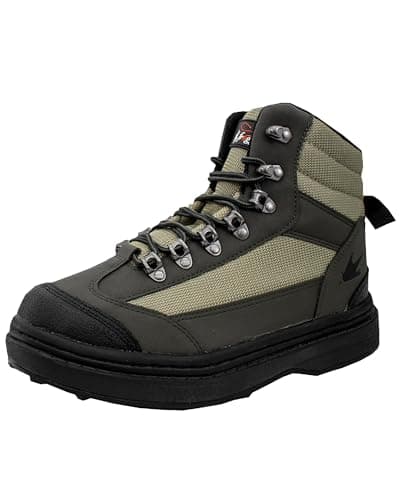
The sensible default and the easiest one to size: a men's-last laced boot with a cleated rubber sole, available in felt where your state allows it, at a price that pairs naturally with mid-range waders.
Best for: Best men's wading boot overall9.0 - 2
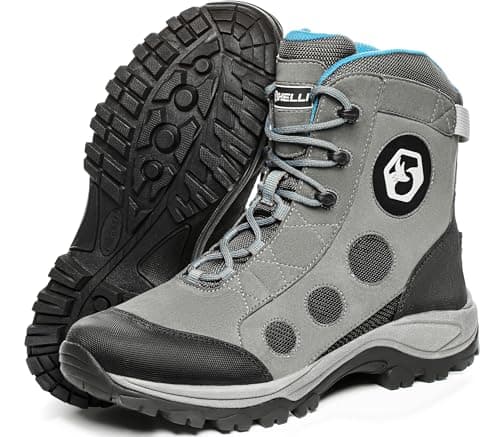
Creek fishing is walking, not standing, and a pound off each foot compounds over four miles of streambank. These keep weight down without giving up a laced fit, which is the trade most light boots make you pay.
Best for: Best lightweight pick for walking8.8 - 3
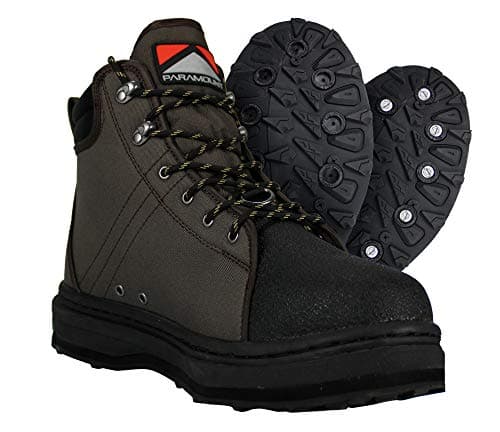
An aggressively cleated rubber sole on a conventional laced boot. The cleat pattern is the point: it is the cheapest route to meaningfully better purchase on a rocky streambed, and it takes screw-in studs readily.
Best for: Best grip at a budget price8.6 - 4
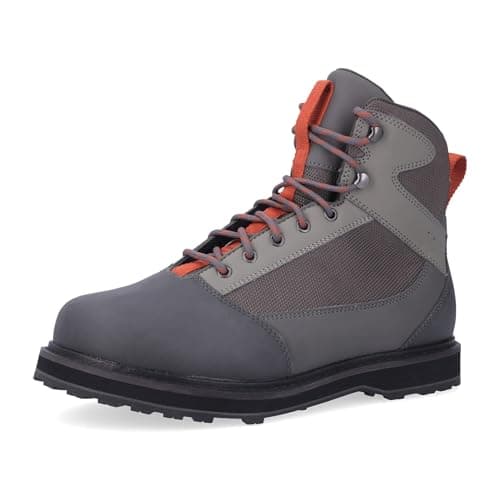
The entry point into the brand the guide on your river is probably wearing. Better support, better materials, a real repair path — and still well short of their flagship price.
Best for: Best mid-premium boot9.1 - 5
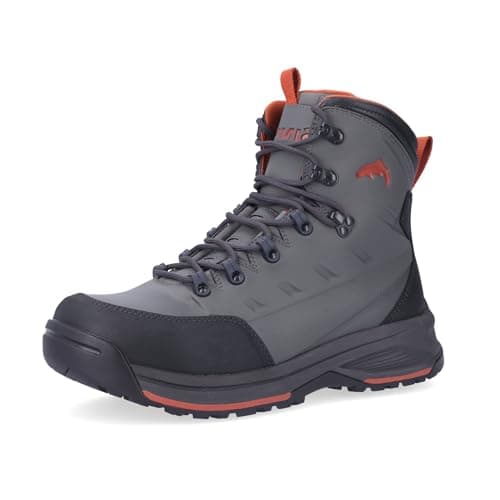
The buy-once boot. Most supportive and most durable here, and the one to choose if you carry a pack, wade pushy water, or want to stop replacing boots every other season.
Best for: Best for hard use, long days and heavy loads9.2
| # | Product | Best for | Score | Price |
|---|---|---|---|---|
| 1 | Frogg Toggs Men's Hellbender Wading Boot, Cleated The sensible default and the easiest one to size: a men's-last laced boot with a cleated rubber sole, available in felt where your state allows it, at a price that pairs naturally with mid-range waders. | Best men's wading boot overall | 9.0 | $89.95View on Amazon#ad |
| 2 | Foxelli Wading Boots, Rubber Sole Creek fishing is walking, not standing, and a pound off each foot compounds over four miles of streambank. These keep weight down without giving up a laced fit, which is the trade most light boots make you pay. | Best lightweight pick for walking | 8.8 | $89.97View on Amazon#ad |
| 3 | Paramount Outdoors Stonefly Cleated Sole Wading Boot An aggressively cleated rubber sole on a conventional laced boot. The cleat pattern is the point: it is the cheapest route to meaningfully better purchase on a rocky streambed, and it takes screw-in studs readily. | Best grip at a budget price | 8.6 | $89.99View on Amazon#ad |
| 4 | Simms Tributary Boot, Rubber The entry point into the brand the guide on your river is probably wearing. Better support, better materials, a real repair path — and still well short of their flagship price. | Best mid-premium boot | 9.1 | $179.95View on Amazon#ad |
| 5 | Simms Freestone Boot, Rubber The buy-once boot. Most supportive and most durable here, and the one to choose if you carry a pack, wade pushy water, or want to stop replacing boots every other season. | Best for hard use, long days and heavy loads | 9.2 | $229.95View on Amazon#ad |
Buy the Frogg Toggs Hellbender in cleated rubber, order it one to one and a half sizes above your normal shoe size, and add carbide studs if your streambed is slick bedrock. That covers the great majority of men fishing creeks and small streams. If you walk a long way, take the lightweight Foxelli; if you fish forty days a year, the Simms Freestone is the boot you buy once.
Sizing: one to one and a half sizes up
This is the mistake almost every man makes with his first pair. A wading boot goes on over the neoprene bootie of your stockingfoot waders plus socks, and that stack adds real volume — not just length but girth across the forefoot and instep.
If you wear a 10, buy an 11 or 11.5. A boot sized to your bare foot crushes the bootie, restricts circulation and gives you cold feet in mild water, which people reliably misdiagnose as thin waders. The full method, including how to measure if you are between sizes, is in how to size waders.
Fit-check at home in your waders and the socks you will actually wear. Lace them fully, stand up, rock forward onto your toes — the heel should barely lift. Then tap the toe against a wall; your toes should not reach the end. A little extra room is fine. A loose heel is not, because a lifting heel is what rolls an ankle on invisible rock.
Socks go outside the bootie
Wide feet and big sizes
Men's wading boots are built on a wider, higher-volume last than women's models, which is the real difference between the two ranges — a women's boot in a men's size is a narrower shape, not simply a smaller one. That is why we keep the women's boots on a separate page rather than treating them as the same product.
If your feet are wide, size up rather than hunting for a wide fitting. Almost no wading boot is offered in a width, so the practical move is a half size more than the usual advice and a thinner sock layer. Going up a full size from your street shoe to a 12 or 13 also tends to buy width, because the whole last scales.
Big sizes sell out first. Sizes 12 and 13 are the first to go in any boot range, and the Hellbender is one of the few budget boots that carries the full run reliably. If you wear 13 and find your size in stock in a boot you like, buy it then rather than in April with everybody else.
Sole choice, including the legal issue
| Sole | Grip on slick rock | On bank and in the truck | Legal status |
|---|---|---|---|
| Felt | Best | Poor — slippery, holds water | Banned in several US states |
| Plain rubber | Adequate | Good | Legal everywhere |
| Cleated rubber | Good | Very good | Legal everywhere |
| Studded rubber | Excellent | Noisy, marks surfaces | Legal everywhere |
Felt grips best and travels worst. Its dense fibers hold water, and with it algae spores, didymo and invertebrate larvae, which is why several states ban felt outright. Check your state wildlife agency before buying felt, and check again if you travel to fish. Several boots here are sold in both versions under near-identical listings, so read the title.
Studded rubber is the modern answer. Carbide studs screwed into a rubber sole close most of the gap with felt while staying legal everywhere and usable on dry ground. Studs are cheap, sold separately, and fit most boots, so buying rubber now and upgrading grip later costs very little. The full comparison is in felt wading boots vs rubber.
Support, weight and how much boot you need
Support is the reason stockingfoot waders exist. You are walking on rounded, invisible, moving rock. A boot that locks your heel and supports the ankle is what prevents the roll that ends a day, and it is the one area where premium boots are measurably better. If you carry a loaded pack or wade pushy water, buy support.
Weight is the creek-specific priority. Big-river anglers wade and stand; creek anglers walk. Over a few miles of streambank, the difference between a light boot and a heavy one is real, which is why the lightweight pick ranks as highly as it does despite less structure.
Drainage decides how much water you lift. A boot that holds water weighs several pounds more with every step out of the river. Look for drain ports or a mesh panel — you are going to be wet regardless, the question is how much weight comes out with you.
Clean, drain, dry
Wading boots are the main way anglers move invasive species between watersheds, and the damage is permanent. Scrub off visible mud and plant matter before you leave the water, drain everything, and let the boots dry completely — ideally 48 hours — before fishing a different stream. Some states require specific decontamination steps, so check locally.
It also makes boots last. Grit left in the sole and laces grinds at the upper every time it flexes, and the fastest way to destroy a boot is to leave it wet in a sealed bag. Dry them out of direct sun with the laces open.
When you do not need these at all
Bootfoot waders have the boot attached, so there is nothing extra to buy — worse fit and support, better warmth and convenience, and the whole trade is in stockingfoot vs bootfoot. The budget end of that route is covered in our TIDEWE review.
Wading wet in summer. On warm creeks in July, plenty of experienced anglers skip waders entirely: quick-dry pants, neoprene socks and dedicated wading shoes. Cooler, lighter, cheaper. You still want real grip and toe protection on a rocky bed. And if you are choosing boots and waders at the same time, the general wading boot roundup covers the same five boots with the sole decision in front, while a wading staff does more for your footing on pushy water than any sole upgrade.
If your legs give out before the fishing does, boot weight is the cheapest thing to fix — you lift each boot a couple of thousand times a mile. The lightest credible pairs, and the parts of a boot you must not lighten, are in the lightweight wading boot roundup.
If your day starts with a long walk, weight and sole compound matter more than anything here. Wading boots for hiking ranks the boots that handle a trail as well as a creek bed, and wading boots for wide feet covers the fit problem that no manufacturer in this category publishes a width for.
The picks in detail
Frogg Toggs Men's Hellbender Wading Boot, Cleated
9.0/10Best for: Best men's wading boot overall
The sensible default and the easiest one to size: a men's-last laced boot with a cleated rubber sole, available in felt where your state allows it, at a price that pairs naturally with mid-range waders.
- Sole
- Cleated rubber (felt option available)
- Closure
- Laced
- Sizing
- Men's, up to 13
- Best for
- General stream wading
- Rubber sole is legal in every state
- Full men's size run including 12 and 13
- Price matches sensible wader budgets
- Less supportive than premium boots on long walks
- Studs sold separately
Foxelli Wading Boots, Rubber Sole
8.8/10Best for: Best lightweight pick for walking
Creek fishing is walking, not standing, and a pound off each foot compounds over four miles of streambank. These keep weight down without giving up a laced fit, which is the trade most light boots make you pay.
- Sole
- Rubber
- Closure
- Laced
- Weight
- Lightweight construction
- Best for
- Covering ground on foot
- Noticeably lighter than most boots
- Drains and dries faster
- Comfortable on long bank walks
- Less ankle structure
- Lighter uppers scuff sooner
Paramount Outdoors Stonefly Cleated Sole Wading Boot
8.6/10Best for: Best grip at a budget price
An aggressively cleated rubber sole on a conventional laced boot. The cleat pattern is the point: it is the cheapest route to meaningfully better purchase on a rocky streambed, and it takes screw-in studs readily.
- Sole
- Cleated rubber
- Closure
- Laced
- Best for
- Rocky streambeds
- Aggressive cleat pattern
- Takes carbide studs
- Solid value for the build
- Heavier than light builds
- Basic fit adjustment
Simms Tributary Boot, Rubber
9.1/10Best for: Best mid-premium boot
The entry point into the brand the guide on your river is probably wearing. Better support, better materials, a real repair path — and still well short of their flagship price.
- Sole
- Rubber
- Closure
- Laced
- Color
- Basalt
- Best for
- Anglers who fish a lot
- Genuinely better support
- Brand with spares and service
- Holds its shape over seasons
- Roughly double the budget picks
- Heavier than the light options
Simms Freestone Boot, Rubber
9.2/10Best for: Best for hard use, long days and heavy loads
The buy-once boot. Most supportive and most durable here, and the one to choose if you carry a pack, wade pushy water, or want to stop replacing boots every other season.
- Sole
- Rubber (felt version available)
- Closure
- Laced
- Color
- Gunmetal
- Best for
- Heavy use, long seasons
- Best ankle support on this page
- Built to be resoled
- Stable on rounded cobble
- The most expensive here by a wide margin
- More boot than a small creek needs
Prices shown are from Amazon as of October 20, 2026 and change often — the button always goes to the current listing. Some links may earn us a commission at no extra cost to you. How this works.
Frequently asked questions
What size wading boots should men buy?
One to one and a half US sizes above your normal shoe size. The boot goes over the neoprene bootie of stockingfoot waders plus socks, which adds real bulk. A boot sized to your bare foot compresses the bootie, restricts circulation and causes cold feet even in mild water.
Are men's and women's wading boots different?
Yes. Men's boots are built on a wider, higher-volume last, so a women's boot in the same number is a narrower shape rather than simply a smaller one. Buying across ranges to get a size usually produces a boot that pinches across the forefoot.
What do I do if I have wide feet?
Size up rather than looking for a wide fitting, since almost no wading boot is offered in widths. Go a half size beyond the usual one-size-up advice and use a thinner sock layer. Moving up a full size also gains width, because the whole last scales with the number.
Do I need studs on men's wading boots?
On slick bedrock and heavy algae, studs make a real difference. On sand, gravel and small cobble, cleated rubber is enough - and studs are noisy on rock, which can spook trout on small creeks through vibration in the streambed. Studs are cheap and can be added later to most boots.
Sources
Keep reading
Not sure where to start?
The beginner gear guide walks you through exactly what a new stream angler needs — the six essentials first, nice-to-haves later, with one safe-default pick per category.