Waders & Boots · Roundup
The Best Lightweight Wading Boots
A wading boot full of water weighs more than it does in the box, and every ounce of that is lifted by your hip on each step. If a day on the creek leaves your legs done before the fishing is, lighter boots are the cheapest fix there is.
Disclosure: Creek Cover is reader-supported. If you buy through our links we may earn a commission, at no extra cost to you. It never changes which pick we tell a new angler to start with. Full disclosure.
Quick picks at a glance
Tap a pick to read the full write-up, or the price button to check it on Amazon.
- 1
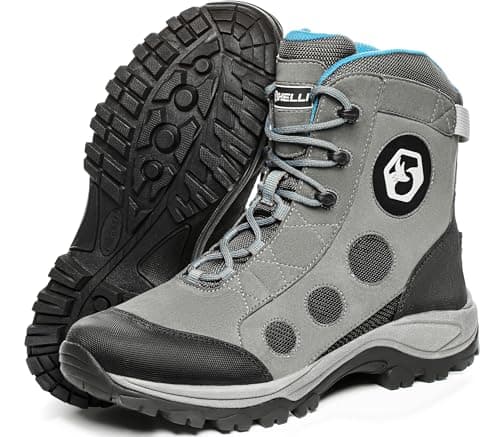
A genuinely light synthetic boot on a rubber lug sole, with mesh drainage panels so it empties as you step out rather than carrying half a liter of creek with you. There is no felt, no steel shank and no heavy leather, and the entire saving goes straight into how your legs feel at hour four.
Best for: Best lightweight wading boot overall, and the cheapest way to cut weight9.0 - 2
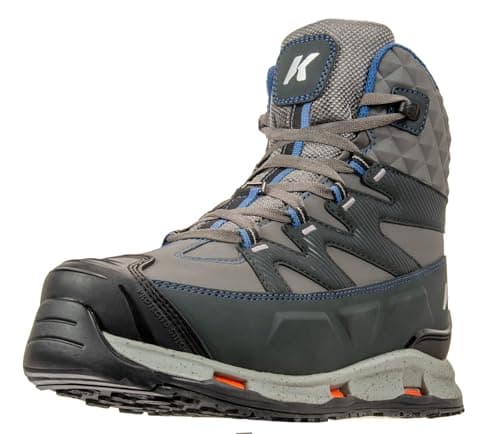
Korkers' light build, and the only boot here that lets you swap the sole to match the water instead of owning two pairs. Felt for slick bedrock, Kling-On rubber for everywhere felt is banned, both in the box. Lighter than the brand's guide boots without giving up the system that makes Korkers worth buying.
Best for: Best lightweight boot with interchangeable soles9.2 - 3
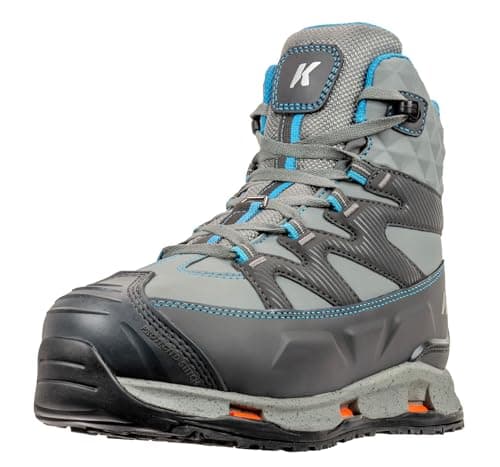
The same light interchangeable-sole boot on a women's last, which matters more in wading boots than almost anywhere else: a narrower heel and a lower instep are what stop a boot rubbing when it is full of water all day. Both soles included, same weight advantage.
Best for: Best lightweight boot for women9.1 - 4
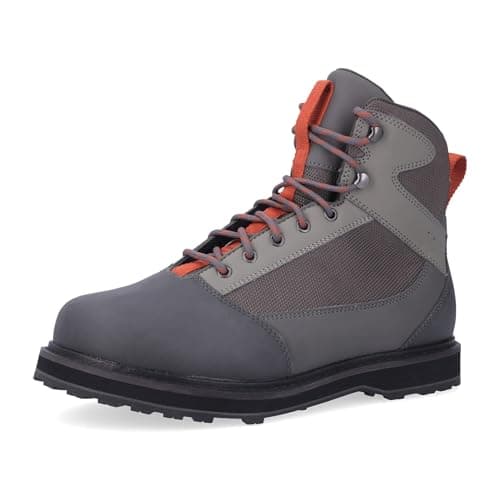
The boot to buy if comfort matters more to you than the absolute lowest weight. A synthetic upper on a rubber sole with the cushioning and lacing geometry of a hiking boot, which means it supports a tired ankle better than any of the ultralight options here. Heavier than the Foxelli and far kinder over eight hours.
Best for: Most comfortable all-day boot that is still reasonably light9.1 - 5
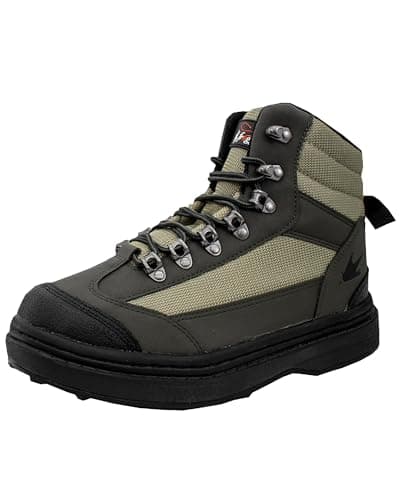
A light synthetic boot with an aggressive cleated rubber sole, so you get grip on gravel and mud without paying for a stud kit. The compromise is that cleats are no better than plain rubber on slimy bedrock — but on a typical gravel-and-cobble creek this is the sensible middle of the range.
Best for: Best light boot with real grip out of the box8.7
| # | Product | Best for | Score | Price |
|---|---|---|---|---|
| 1 | Foxelli Wading Boots, Rubber Sole A genuinely light synthetic boot on a rubber lug sole, with mesh drainage panels so it empties as you step out rather than carrying half a liter of creek with you. There is no felt, no steel shank and no heavy leather, and the entire saving goes straight into how your legs feel at hour four. | Best lightweight wading boot overall, and the cheapest way to cut weight | 9.0 | $89.97View on Amazon#ad |
| 2 | Korkers Bantam Lite Wading Boot with Felt & Kling-On Soles Korkers' light build, and the only boot here that lets you swap the sole to match the water instead of owning two pairs. Felt for slick bedrock, Kling-On rubber for everywhere felt is banned, both in the box. Lighter than the brand's guide boots without giving up the system that makes Korkers worth buying. | Best lightweight boot with interchangeable soles | 9.2 | $179.99View on Amazon#ad |
| 3 | Korkers Women's Bantam Lite Wading Boot with Felt & Kling-On Soles The same light interchangeable-sole boot on a women's last, which matters more in wading boots than almost anywhere else: a narrower heel and a lower instep are what stop a boot rubbing when it is full of water all day. Both soles included, same weight advantage. | Best lightweight boot for women | 9.1 | $179.99View on Amazon#ad |
| 4 | Simms Tributary Wading Boot, Rubber Sole The boot to buy if comfort matters more to you than the absolute lowest weight. A synthetic upper on a rubber sole with the cushioning and lacing geometry of a hiking boot, which means it supports a tired ankle better than any of the ultralight options here. Heavier than the Foxelli and far kinder over eight hours. | Most comfortable all-day boot that is still reasonably light | 9.1 | $179.95View on Amazon#ad |
| 5 | Frogg Toggs Men's Hellbender Wading Boot, Cleated Sole A light synthetic boot with an aggressive cleated rubber sole, so you get grip on gravel and mud without paying for a stud kit. The compromise is that cleats are no better than plain rubber on slimy bedrock — but on a typical gravel-and-cobble creek this is the sensible middle of the range. | Best light boot with real grip out of the box | 8.7 | $89.95View on Amazon#ad |
The best lightweight wading boot for most anglers is the Foxelli rubber-sole boot — the lightest credible pair here, with fast drainage and the lowest price. If you want light AND the right sole for every creek, buy the Korkers Bantam Lite, which ships with both felt and rubber soles. If what you actually want is the most comfortable boot for a long day, that is a different answer and it is a little heavier on purpose.
This page is written for the angler for whom weight is not a nice-to-have: older knees, a healing ankle, a long walk in, or simply the fact that a day's wading now ends your legs before it ends your fishing. Everything below is judged on that, not on a spec sheet.
Why boot weight matters more than you think
You lift each boot several thousand times a day. A mile of creek walking is roughly 2,000 steps per leg. Half a pound of extra boot is therefore half a ton of extra lifting over that mile, all of it done by your hip flexor while your foot is also pushing against current. This is why wading tires people out of proportion to the distance covered.
Wet boots weigh far more than dry ones. Felt soles hold water like a sponge and heavy fabric uppers hold more. A boot that is comfortable in the shop can gain a meaningful fraction of its own weight in the first ten minutes of wading, and it never dries out during the day.
Drainage is as important as mass. The boots that feel lightest after an hour are the ones that empty as you step out of the water rather than carrying it up the bank. Mesh panels and drain ports do more for perceived weight than shaving material off the upper.
Where the weight actually is
| Component | Weight impact | Can you cut it? |
|---|---|---|
| Felt sole | Heaviest single element, and it absorbs water | Yes — switch to rubber unless you need felt's grip |
| Steel studs | Small but real, and they add noise | Yes — only stud if your rock is slick |
| Leather or heavy fabric upper | Significant, holds water all day | Yes — synthetic uppers are lighter and drain |
| Steel shank / stiff midsole | Moderate | Carefully — this is what supports a tired ankle |
| Ankle height and padding | Moderate | No — this is the part preventing a twist |
| Lacing hardware | Minor | Not worth chasing |
Read the right column. The first three rows are free weight savings. The last three are not — they are the structure keeping your ankle in one piece on a loose cobble bottom, and cutting them is how a lightweight boot becomes a sprain.
What you must not cut
Ankle height. Wading boots come up over the ankle for one reason: the bottom of a creek rolls under your foot. A low-cut boot or a wading shoe saves a few ounces and removes the one thing stopping a rolled ankle in moving water, which for anyone with balance or joint concerns is exactly the wrong trade.
Grip. A light boot that slips is a worse boot. If your creek runs over slick bedrock or algae-covered cobble, you need felt or studded rubber, and you should accept the weight — the comparison is in felt vs rubber wading boot soles, including which states ban felt outright.
Fit over the bootie. A stockingfoot wader puts a neoprene bootie plus a sock inside the boot, so order one full size above your street shoe. A tight boot is colder, more painful and no lighter — it just feels heavier because your foot is fighting it.
If balance is the real concern, buy the staff before the boots
Comfortable is not the same as light
The most comfortable wading boots are usually not the lightest. Comfort over eight hours comes from cushioning, a supportive midsole and lacing that holds your heel down — all of which weigh something. The lightest boots are light partly because they have less of that structure.
Choose by what hurts. If it is your hips and thighs at the end of the day, buy the lightest boot. If it is the soles of your feet, your arches or your ankles, buy the supportive one and accept the ounces. Those are two different problems and they have opposite solutions.
Neoprene socks change the answer too. A wading sock inside the bootie adds cushioning and warmth and takes up volume, which makes a slightly loose boot fit properly. That is often a cheaper fix than a new pair — and it is covered along with the rest of the under-wader layering in what to wear under waders.
The rest of the weight problem
Boots are only part of what you are carrying. Lightweight waders save as much as light boots do, and a chest wader rolled down to waist height saves more than either — the formats are compared in waders vs bibs, and the lighter-weight wader options sit in the main wader roundup.
Your pack is probably the biggest single saving available. Most anglers carry four fly boxes and fish out of one. A small chest pack instead of a loaded sling removes real pounds — the chest pack roundup covers the light end.
And a short rod is lighter in the hand all day. On small water a 7 to 8 foot rod is both lighter and better suited than a 9-footer, which is the argument in the small-stream rod guide. For boots generally — including the heavier guide-grade options — start at the wading boot roundup.
If the reason you want a light boot is the walk in, read the hike-in page too. Wading boots for hiking ranks the same kind of boot on sole choice and support for a long approach rather than on weight alone.
The picks in detail
Foxelli Wading Boots, Rubber Sole
9.0/10Best for: Best lightweight wading boot overall, and the cheapest way to cut weight
A genuinely light synthetic boot on a rubber lug sole, with mesh drainage panels so it empties as you step out rather than carrying half a liter of creek with you. There is no felt, no steel shank and no heavy leather, and the entire saving goes straight into how your legs feel at hour four.
- Sole
- Rubber lug
- Upper
- Light synthetic with drainage
- Fits
- Over stockingfoot waders
- Noticeably lighter than a leather or felt-soled boot
- Drains fast, so it does not carry water weight
- Cheapest pair here by a wide margin
- Less ankle support than a stiff mid-height boot
- Rubber alone slips on algae — add studs if your creek is slick
Korkers Bantam Lite Wading Boot with Felt & Kling-On Soles
9.2/10Best for: Best lightweight boot with interchangeable soles
Korkers' light build, and the only boot here that lets you swap the sole to match the water instead of owning two pairs. Felt for slick bedrock, Kling-On rubber for everywhere felt is banned, both in the box. Lighter than the brand's guide boots without giving up the system that makes Korkers worth buying.
- Soles
- Felt and Kling-On rubber, both included
- System
- OmniTrax interchangeable
- Build
- Korkers' lightweight last
- Two soles included — one pair covers every creek
- Much lighter than guide-weight Korkers boots
- Replaceable soles extend the boot's life
- Costs more than a fixed-sole boot
- Swapping soles is a two-minute job, not instant
Korkers Women's Bantam Lite Wading Boot with Felt & Kling-On Soles
9.1/10Best for: Best lightweight boot for women
The same light interchangeable-sole boot on a women's last, which matters more in wading boots than almost anywhere else: a narrower heel and a lower instep are what stop a boot rubbing when it is full of water all day. Both soles included, same weight advantage.
- Last
- Women's-specific
- Soles
- Felt and Kling-On rubber, both included
- Build
- Lightweight
- A real women's last, not a resized men's boot
- Two soles in the box
- Light enough for long walk-ins
- Narrower size availability than the men's version
- Premium price
Simms Tributary Wading Boot, Rubber Sole
9.1/10Best for: Most comfortable all-day boot that is still reasonably light
The boot to buy if comfort matters more to you than the absolute lowest weight. A synthetic upper on a rubber sole with the cushioning and lacing geometry of a hiking boot, which means it supports a tired ankle better than any of the ultralight options here. Heavier than the Foxelli and far kinder over eight hours.
- Sole
- Rubber
- Upper
- Synthetic, hiking-boot construction
- Support
- Best here
- Genuine all-day comfort and ankle support
- Drains and dries well
- Simms build quality at the accessible tier
- Heavier than the ultralight picks
- Studs sold separately if your water is slick
Frogg Toggs Men's Hellbender Wading Boot, Cleated Sole
8.7/10Best for: Best light boot with real grip out of the box
A light synthetic boot with an aggressive cleated rubber sole, so you get grip on gravel and mud without paying for a stud kit. The compromise is that cleats are no better than plain rubber on slimy bedrock — but on a typical gravel-and-cobble creek this is the sensible middle of the range.
- Sole
- Cleated rubber
- Upper
- Synthetic
- Legal
- Everywhere — no felt
- Grip included, no stud purchase needed
- Light synthetic build
- Legal in felt-ban states
- Cleats do not help on algae-covered rock
- Mid-level ankle support
Prices shown are from Amazon as of October 20, 2026 and change often — the button always goes to the current listing. Some links may earn us a commission at no extra cost to you. How this works.
Frequently asked questions
What are the lightest wading boots?
Synthetic-upper boots on a plain rubber lug sole with mesh drainage, such as the Foxelli. The weight savings come from three places: no felt sole, no steel studs and no leather upper. Drainage matters as much as mass, because a boot that empties as you step out of the water stops carrying half a liter of creek with you.
Are lightweight wading boots less safe?
Only if the weight was cut from the wrong place. Dropping felt, studs and a heavy upper is free. Dropping ankle height, a supportive midsole or grip is not - the creek bottom rolls under your foot, and a low-cut or slick boot is how an ankle gets twisted in moving water.
What are the most comfortable wading boots for all day?
Usually not the lightest ones. All-day comfort comes from cushioning, a supportive midsole and lacing that holds your heel down, all of which add ounces. Choose by what hurts: if it is your hips and thighs, buy the lightest boot; if it is your arches or ankles, buy the supportive one.
What size wading boots should I buy over stockingfoot waders?
One full size above your street shoe size. The neoprene bootie on stockingfoot waders plus a wading sock takes real volume, and a tight wading boot is colder, more painful and feels heavier because your foot is fighting it rather than resting in it.
Sources
Keep reading
Not sure where to start?
The beginner gear guide walks you through exactly what a new stream angler needs — the six essentials first, nice-to-haves later, with one safe-default pick per category.