Waders & Boots · Buying Guide
Types of Waders Explained
There are only three decisions in waders: how high they come, what the fabric is, and whether the boot is attached. Everything on a wader listing is one of those three. Here is what each decision changes, and the combination most creek and stream anglers should buy.
Disclosure: Creek Cover is reader-supported. If you buy through our links we may earn a commission, at no extra cost to you. It never changes which pick we tell a new angler to start with. Full disclosure.
Quick picks at a glance
Tap a pick to read the full write-up, or the price button to check it on Amazon.
- 1
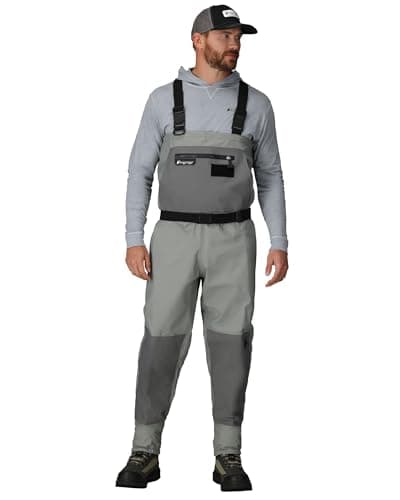
The combination to buy if you are only buying once: chest height, breathable laminate, stockingfoot. It handles a 50-degree spring morning and a 90-degree July evening, it wades deep when you need to and you choose your own boot. Everything else on this page is a specialization of this.
Best for: Best all-round type — breathable stockingfoot chest waders9.1 - 2
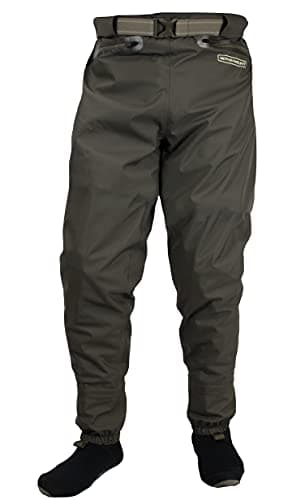
Waist-high pant waders are the forgotten middle of the range and the best warm-weather answer on small water. You keep the wading belt and the sealed seat, you lose the chest panel that cooks you in August, and they cost less than the equivalent chest wader.
Best for: Best waist-high type — summer creeks and warm weather9.0 - 3
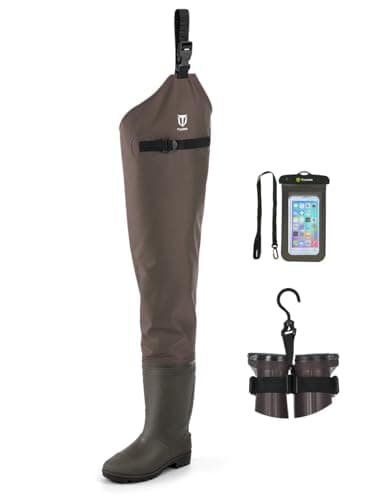
Hip waders are one garment you step into, with the boots attached, at a price that barely registers. On a creek you never wade past the thigh they are the quickest, coolest option there is. They have no belt and no safety margin, which is the whole reason they are cheap.
Best for: Best hip type — shallow creeks and quick trips8.8 - 4
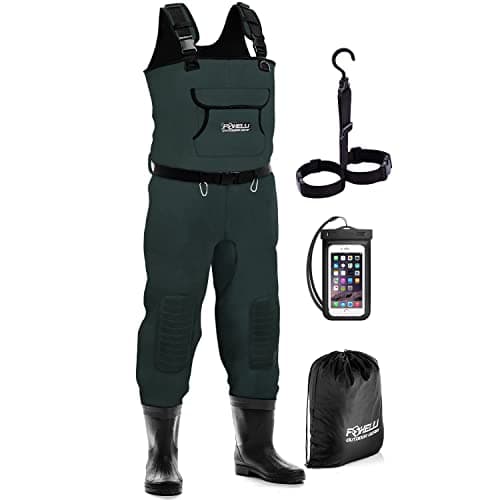
Neoprene bootfoot waders are the cold-weather type: 4mm of foam rubber insulates where a breathable shell only blocks water, and the attached boot means no bootie-and-boot stack to pack. They are hot, heavy and clammy once the air gets past 60 degrees, and that is fine — this is a November garment.
Best for: Best neoprene bootfoot type — cold water in late season8.7
| # | Product | Best for | Score | Price |
|---|---|---|---|---|
| 1 | Frogg Toggs Hellbender PRO Breathable Stockingfoot Chest Wader The combination to buy if you are only buying once: chest height, breathable laminate, stockingfoot. It handles a 50-degree spring morning and a 90-degree July evening, it wades deep when you need to and you choose your own boot. Everything else on this page is a specialization of this. | Best all-round type — breathable stockingfoot chest waders | 9.1 | $169.99View on Amazon#ad |
| 2 | Paramount Outdoors Fast Eddy Waist-High Stockingfoot Breathable Wader Pant Waist-high pant waders are the forgotten middle of the range and the best warm-weather answer on small water. You keep the wading belt and the sealed seat, you lose the chest panel that cooks you in August, and they cost less than the equivalent chest wader. | Best waist-high type — summer creeks and warm weather | 9.0 | $139.99View on Amazon#ad |
| 3 | TIDEWE Fishing Hip Waders, Lightweight Hip Boots Hip waders are one garment you step into, with the boots attached, at a price that barely registers. On a creek you never wade past the thigh they are the quickest, coolest option there is. They have no belt and no safety margin, which is the whole reason they are cheap. | Best hip type — shallow creeks and quick trips | 8.8 | $40.49View on Amazon#ad |
| 4 | Foxelli Chest Waders, 4mm Neoprene with Boots Neoprene bootfoot waders are the cold-weather type: 4mm of foam rubber insulates where a breathable shell only blocks water, and the attached boot means no bootie-and-boot stack to pack. They are hot, heavy and clammy once the air gets past 60 degrees, and that is fine — this is a November garment. | Best neoprene bootfoot type — cold water in late season | 8.7 | $102.97View on Amazon#ad |
There are three types of wader by height — chest, waist and hip — and two splits that cut across all three: breathable or neoprene, stockingfoot or bootfoot. For creek and stream fishing, the combination to buy is a breathable stockingfoot chest wader. Everything else on this page is a specialization: waist-high for hot weather, hip for shallow creeks, neoprene bootfoot for cold water.
If you want the field ranked rather than explained, the pairs are in the best fishing waders roundup. This page is the one to read first if the listings all look the same to you.
The short answer
Chest + breathable + stockingfoot covers 90% of US freshwater fishing. That is not a hedge, it is what the category has settled on. Chest height gives you depth you can choose not to use. Breathable fabric means the walk out does not soak you from the inside. Stockingfoot means your foot is in a real boot with a real sole.
Buy a specialization only when you know why.If you fish one shallow creek in July, hip waders are better and cheaper. If you stand in 38-degree water in December, neoprene is warmer. Those are real reasons. "It was on sale" is not. The fabric half of that choice is argued out in breathable vs neoprene waders.
Decision 1: height — chest, waist or hip
Chest waders come up to your sternum and are the default. The height is not about wading chest-deep — you should not — it is about margin. A drop-off, a slip, or a deeper crossing than you expected costs you nothing in chest waders and costs you a soaking in anything shorter. They also take a wading belt, which traps air at the waist and is the cheapest wading safety there is.
Waist-high waders, also sold as pant waders or wader pants, stop at the belt. They are much cooler, a little cheaper, and still fully sealed with a belt. On small summer creeks they are arguably the right buy and almost nobody considers them.
Hip waders are two sealed legs with a strap. Cheapest, coolest, quickest, and no margin whatsoever. They are the right tool on water you never wade past the thigh — the pairs are in the best hip waders roundup.
Height is the one decision you cannot adjust later
Decision 2: fabric — breathable, neoprene or PVC
Breathable laminate is the modern default and the right call above 50 degrees. A breathable wader is a waterproof shell that lets water vapor out, so the sweat from a mile walk does not end up pooled in your boots. It insulates you not at all, which is the point: you decide how warm you are with what you wear underneath. That is covered in base layers under waders.
Neoprene is foam rubber and it insulates. 3mm to 5mm thick, warm in genuinely cold water, and completely non-breathable. In late fall and winter that is a feature. In June it is a sauna. Neoprene is also tougher than a breathable laminate, which is why it survives being dragged through brush.
PVC and rubber are the cheap, bombproof option. Non-breathable, uninsulated, nearly puncture-proof, and under $50. It is the fabric of hip boots and of the pair you keep in the truck. Nobody walks a mile in PVC twice.
Decision 3: foot — stockingfoot or bootfoot
Stockingfoot waders end in a neoprene sock; you buy wading boots separately. That is one more purchase and it is worth it: a lace-up wading boot supports your ankle on uneven rock, grips with a sole you chose, and can be replaced when the sole wears out while the waders live on. This is what almost every serious stream angler wears.
Bootfoot waders have the boot molded on. One garment, nothing to pack, warmer in cold water because there is more air space around the foot, and far less supportive. For standing still in cold water they are genuinely better; for walking a mile of creek they are not. The full argument is in stockingfoot vs bootfoot waders.
Every type, in one table
| Type | Height | Fabric | Foot | Best season | Typical price |
|---|---|---|---|---|---|
| Breathable stockingfoot chest | Chest | Breathable | Stockingfoot | All year | $120-$400 + boots |
| Breathable waist / pant | Waist | Breathable | Stockingfoot | Summer | $100-$270 + boots |
| Breathable bootfoot chest | Chest | Breathable | Bootfoot | Spring, fall | $130-$250 |
| Neoprene bootfoot chest | Chest | 3-5mm neoprene | Bootfoot | Late fall, winter | $90-$160 |
| PVC hip wader | Hip | PVC | Bootfoot | Summer | $30-$60 |
| Breathable hip wader | Hip | Breathable | Stockingfoot | Summer | $60-$120 + boots |
Note what is missing: insulated breathable waders.Breathable waders are deliberately uninsulated — the insulation is your base layer. If a listing claims a breathable wader is "insulated," it usually means a fleece-lined hand pocket.
Which to buy for a creek
One pair, all year, small water: breathable stockingfoot chest waders. Pair them with a boot from the wading boot roundup and a wading belt, and you are done. Sizing is the only thing left to get wrong, and it is the most common return reason in the category — how to size waders covers it.
Second pair, hot weather: waist-high or hip. Both are cheap enough to own alongside chest waders, and both get used more than people expect once they exist.
Cold late season: neoprene bootfoot. If you fish into November and December, this is the pair that keeps you there. And if you are not wading at all — bank, boat or dock — you want bibs, not waders: waders vs bibs makes that call. Budget-first buyers should start with the best budget waders. And for the format most small-stream anglers overlook, see the best wading pants.
The picks in detail
Frogg Toggs Hellbender PRO Breathable Stockingfoot Chest Wader
9.1/10Best for: Best all-round type — breathable stockingfoot chest waders
The combination to buy if you are only buying once: chest height, breathable laminate, stockingfoot. It handles a 50-degree spring morning and a 90-degree July evening, it wades deep when you need to and you choose your own boot. Everything else on this page is a specialization of this.
- Height
- Chest
- Fabric
- Breathable laminate
- Foot
- Stockingfoot — boots separate
- The one type that works in every season
- Belt loops, so you can wear a wading belt
- Takes a real wading boot
- Boots are an extra purchase
- Breathable fabric is less abrasion-proof than rubber
Paramount Outdoors Fast Eddy Waist-High Stockingfoot Breathable Wader Pant
9.0/10Best for: Best waist-high type — summer creeks and warm weather
Waist-high pant waders are the forgotten middle of the range and the best warm-weather answer on small water. You keep the wading belt and the sealed seat, you lose the chest panel that cooks you in August, and they cost less than the equivalent chest wader.
- Height
- Waist (pant)
- Fabric
- Breathable
- Foot
- Stockingfoot
- Much cooler than chest height
- Still sealed, still belted
- Cheaper than chest waders
- No margin if you step into a hole
- Not a cold-weather garment
TIDEWE Fishing Hip Waders, Lightweight Hip Boots
8.8/10Best for: Best hip type — shallow creeks and quick trips
Hip waders are one garment you step into, with the boots attached, at a price that barely registers. On a creek you never wade past the thigh they are the quickest, coolest option there is. They have no belt and no safety margin, which is the whole reason they are cheap.
- Height
- Hip
- Fabric
- Coated shell
- Foot
- Bootfoot
- Nothing extra to buy
- Coolest option in summer
- Very low price
- No wading belt is possible
- Not breathable
Foxelli Chest Waders, 4mm Neoprene with Boots
8.7/10Best for: Best neoprene bootfoot type — cold water in late season
Neoprene bootfoot waders are the cold-weather type: 4mm of foam rubber insulates where a breathable shell only blocks water, and the attached boot means no bootie-and-boot stack to pack. They are hot, heavy and clammy once the air gets past 60 degrees, and that is fine — this is a November garment.
- Height
- Chest
- Fabric
- 4mm neoprene
- Foot
- Bootfoot
- Real insulation, not just a shell
- No separate boots needed
- Cheap for the warmth
- Sweaty above 60 degrees
- Heavy and slow to dry
Prices shown are from Amazon as of October 20, 2026 and change often — the button always goes to the current listing. Some links may earn us a commission at no extra cost to you. How this works.
Frequently asked questions
What are the different types of waders?
Three heights - chest, waist (pant) and hip - crossed with two fabric families, breathable laminate and non-breathable neoprene or PVC, and two foot styles, stockingfoot (boots bought separately) and bootfoot (boots attached). Every wader for sale is one combination of those three choices.
Which type of wader is best for fly fishing?
A breathable stockingfoot chest wader, worn with a separate lace-up wading boot and a wading belt. Chest height gives margin for a drop-off, breathable fabric keeps the walk out dry from the inside, and a real boot supports your ankle on rock.
What is the difference between stockingfoot and bootfoot waders?
Stockingfoot waders end in a neoprene sock and you buy wading boots separately, which gives you ankle support, a sole you choose and a boot you can replace. Bootfoot waders have the boot molded on - simpler, warmer standing still in cold water, and much less supportive on a long walk.
Are breathable or neoprene waders better?
Breathable above about 50 degrees, neoprene below it. Breathable waders are an uninsulated shell that lets sweat vapor out, so you set your own warmth with base layers. Neoprene is 3-5mm of foam rubber that insulates but does not breathe at all, which is why it is a late-fall and winter garment.
Do I need chest waders or will waist waders do?
Waist-high pant waders are enough on small creeks in warm weather, and they are cooler and cheaper. Buy chest waders if you are only buying one pair: the extra height is margin for a drop-off or a deeper crossing, and you can roll the top down when it is hot.
Sources
Keep reading
Not sure where to start?
The beginner gear guide walks you through exactly what a new stream angler needs — the six essentials first, nice-to-haves later, with one safe-default pick per category.