Guides · Buying Guide
How to Choose a Fly Rod
A fly rod is four numbers: line weight, length, action and piece count. Get the first two right and the rod will suit your water; get them wrong and no amount of money fixes it. Here is how to choose, in the order the decisions actually matter.
Disclosure: Creek Cover is reader-supported. If you buy through our links we may earn a commission, at no extra cost to you. It never changes which pick we tell a new angler to start with. Full disclosure.
Quick picks at a glance
Tap a pick to read the full write-up, or the price button to check it on Amazon.
- 1
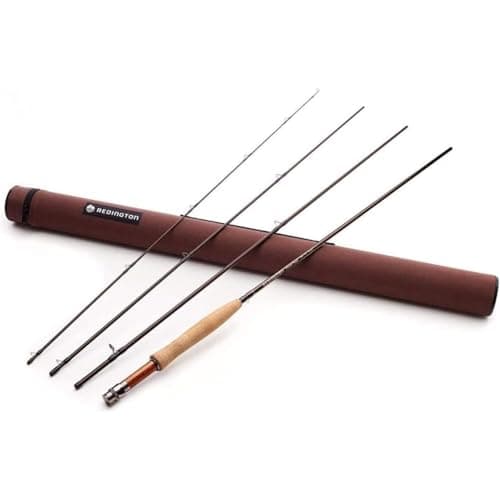
The rod that matches the recommendation on this page: moderate action, four pieces, available in the weights and lengths that suit small water. A moderate blank loads with twenty feet of line out, which is the cast you make on a creek, and it forgives the timing mistakes a fast rod punishes.
Best for: Best all-round choice — 4wt or 5wt, moderate action9.4 - 2
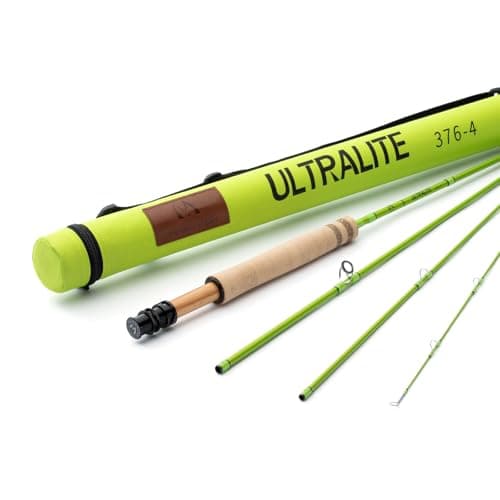
If your fishing is brushy creeks with six-inch trout, this is the right end of the range: a 1, 2 or 3-weight built short. Light rods make a small fish fun and a small pool manageable, and they land a fly with almost no disturbance. Choose this only if your water really is small.
Best for: Best if your water is tiny — a light, short creek rod9.1 - 3
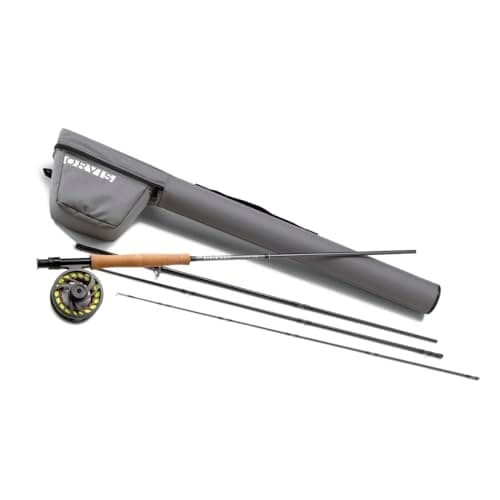
Choosing a rod is only one of four purchases if you are starting from zero. An outfit removes the other three decisions by matching the reel and line to the rod for you, and the Clearwater is the version of that with a real shop behind it. Buy this rather than a bare rod for a first setup.
Best for: Best if you own nothing yet — rod, reel and line matched9.3 - 4
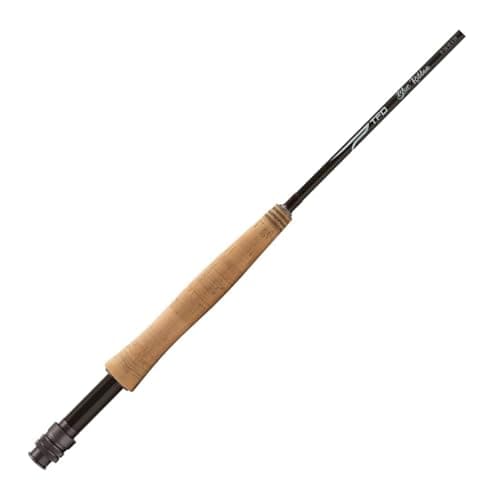
If you already know you fish dry flies on flat water, this is where the next hundred dollars goes. A medium-action presentation rod puts the fly down more softly than a general-purpose blank, which on a still pool is the whole game. Not the rod to start with; a good rod to graduate to.
Best for: Best step up — a presentation rod for dry flies9.2
| # | Product | Best for | Score | Price |
|---|---|---|---|---|
| 1 | Redington Classic Trout Fly Rod, 4-Piece Moderate Action The rod that matches the recommendation on this page: moderate action, four pieces, available in the weights and lengths that suit small water. A moderate blank loads with twenty feet of line out, which is the cast you make on a creek, and it forgives the timing mistakes a fast rod punishes. | Best all-round choice — 4wt or 5wt, moderate action | 9.4 | $199.99View on Amazon#ad |
| 2 | Maxcatch Ultralite-X Fly Fishing Rod for Small Streams, 1/2/3wt If your fishing is brushy creeks with six-inch trout, this is the right end of the range: a 1, 2 or 3-weight built short. Light rods make a small fish fun and a small pool manageable, and they land a fly with almost no disturbance. Choose this only if your water really is small. | Best if your water is tiny — a light, short creek rod | 9.1 | $84.95View on Amazon#ad |
| 3 | Orvis Clearwater Fly Rod Outfit, Rod and Reel Combo Choosing a rod is only one of four purchases if you are starting from zero. An outfit removes the other three decisions by matching the reel and line to the rod for you, and the Clearwater is the version of that with a real shop behind it. Buy this rather than a bare rod for a first setup. | Best if you own nothing yet — rod, reel and line matched | 9.3 | $479.00View on Amazon#ad |
| 4 | Temple Fork Outfitters Blue Ribbon Fly Rod, 9 ft 5wt 4-Piece If you already know you fish dry flies on flat water, this is where the next hundred dollars goes. A medium-action presentation rod puts the fly down more softly than a general-purpose blank, which on a still pool is the whole game. Not the rod to start with; a good rod to graduate to. | Best step up — a presentation rod for dry flies | 9.2 | $299.95View on Amazon#ad |
Choose a fly rod in this order: line weight, length, action, pieces. For creek and stream trout, that comes out as a 4-weight or 5-weight, 8 to 9 feet, moderate action, four pieces. Everything else on a rod listing — the blank material, the reel seat, the thread wraps — changes how the rod feels, not whether it suits your water.
If you want the rod rather than the reasoning, the Redington Classic Trout is that specification at a fair price, and the Orvis Clearwater outfit is the version that comes with a reel and line already matched.
The short answer
One rod, small water, no experience: 8'6" 4-weight, moderate, 4-piece. That rod will fish a size 18 dry, a small nymph rig and a little streamer, on water from six feet wide to sixty, and it will do none of those perfectly. It is the right first rod anyway, because a specialist rod bought before you know your water is a wasted specialist.
If your creek is genuinely tiny: 3-weight, 7'6" to 8 feet. Brushy, canopied water with small fish rewards a shorter, lighter rod — the field is in the small-stream rod roundup.
If you fish bigger water or wind: 9-foot 5-weight, medium-fast. More reach, more line speed, more capability with a weighted rig.
Decision 1: line weight
Line weight is the single most important number on the rod. It describes the mass of line the rod is built to cast, and it has to match your flies and your water, not the size of the fish. A 3-weight line is light enough to land on a flat pool without a sound; a 6-weight carries a weighted streamer into wind.
For trout in creeks and small rivers, 4 or 5. A 4-weight is the better creek rod: lighter, more delicate, more fun on a small fish. A 5-weight is the better all-rounder: it casts further, handles an indicator and a weighted nymph, and copes with a breeze. The full comparison is in 4wt vs 5wt fly rods.
Go to 6 only for streamers, bass or wind. On trout creeks a 6-weight lands hard and is more line than the fish require. If streamers are the plan, pair it with a sink tip from the streamer line roundup.
The rod weight and the line weight must match
Decision 2: length
Nine feet is the default, and it is too long for a lot of creeks. Rod length buys you reach — line control at distance, higher backcasts, better mending. It costs you space behind you, which on a canopied creek is the scarce resource.
Measure your backcast, not the river. If there are trees eight feet behind where you stand, a nine-foot rod is fighting them on every cast. Seven and a half to eight and a half feet is the creek range for exactly that reason.
Longer than nine feet is a specialist choice. Ten-foot rods exist for European-style nymphing and for mending across heavy current. They are excellent at that and awkward everywhere else.
Decision 3: action
Action is where the rod bends, and it decides how the rod feels to cast. A fast rod bends near the tip, generates high line speed and needs good timing plus thirty feet of line to come alive. A moderate rod bends into the middle, loads at short range and forgives a sloppy stroke.
For creeks and for beginners: moderate. Both arguments point the same way. Short casts need a rod that loads with little line out, and a new caster needs a rod that gives them feedback rather than punishing timing. This is the decision most often made backwards, because fast rods demo well in a parking lot with forty feet of line.
For wind, distance and weighted rigs: medium-fast. If you fish open water, or you fish indicators and heavy nymphs, the extra stiffness earns its place.
| Your water | Line weight | Length | Action | Pieces |
|---|---|---|---|---|
| Tiny brushy creek, small trout | 2wt-3wt | 7'6" - 8' | Moderate | 4 |
| Creeks and small streams | 4wt | 8' - 8'6" | Moderate | 4 |
| One rod for everything | 5wt | 8'6" - 9' | Moderate to medium-fast | 4 |
| Open water, wind, nymph rigs | 5wt-6wt | 9' | Medium-fast | 4 |
| Streamers, bass, tributary steelhead | 6wt | 9' | Fast | 4 |
Decision 4: pieces
Four pieces, unless you have a reason. A modern four-piece rod casts indistinguishably from a two-piece and fits in a car, a closet and a backpack. The old argument that fewer ferrules means a better action has not been true for twenty years.
More pieces for travel. Six, seven and eight-piece rods pack down to under two feet and go in hand luggage. They are a genuine compromise in feel, and worth it if the alternative is not bringing a rod — the options are in the backpacking fly rod roundup.
What to spend, and on what
Spend on the rod and the line; save on the reel. For trout in creeks the reel is a line holder with a brake — a cheap one is fine, and the money is better in the blank and in a good line. The reels that are worth it anyway are in the trout fly reel roundup.
Under $200 total: buy a matched outfit, not parts. Rod, reel and line in one box is better value than three cheap individual purchases, and nothing is mismatched. The field is in the complete outfit roundup and the full starter list is in the fly fishing starter kit.
Past about $400 you are buying refinement, not capability. Lighter swing weight, better recovery, nicer components — all real, all noticeable at fifty days a year and invisible at five. The brand-by-brand picture is in the best fly rod brands guide, and the premium end is in the high-end fly rod roundup.
The four common mistakes
Buying a fast rod as a first rod. It will feel dead at the ranges you fish and you will blame yourself. Buy moderate first.
Buying nine feet for a six-foot creek. Length is reach you cannot use if the trees take your backcast.
Buying the rod without the line. A mismatched or cheap line ruins a good rod more completely than a cheap rod ruins a good line — see the best fly line roundup.
Buying heavier "to be safe." A 6-weight does not catch bigger trout in a creek; it just lands harder and spooks more fish. Start where the water is, and the rest of the kit list is in fly fishing gear for beginners. The action question on its own, with four rods across the scale, is in fast vs moderate action fly rods.
The picks in detail
Redington Classic Trout Fly Rod, 4-Piece Moderate Action
9.4/10Best for: Best all-round choice — 4wt or 5wt, moderate action
The rod that matches the recommendation on this page: moderate action, four pieces, available in the weights and lengths that suit small water. A moderate blank loads with twenty feet of line out, which is the cast you make on a creek, and it forgives the timing mistakes a fast rod punishes.
- Action
- Moderate
- Pieces
- 4
- Best weights
- 3wt to 5wt
- Loads at short range
- Forgiving for a newer caster
- Warranty and dealer support behind it
- Not a wind rod
- Feels slow if you learned on a stiff rod
Maxcatch Ultralite-X Fly Fishing Rod for Small Streams, 1/2/3wt
9.1/10Best for: Best if your water is tiny — a light, short creek rod
If your fishing is brushy creeks with six-inch trout, this is the right end of the range: a 1, 2 or 3-weight built short. Light rods make a small fish fun and a small pool manageable, and they land a fly with almost no disturbance. Choose this only if your water really is small.
- Weights
- 1wt / 2wt / 3wt
- Built for
- Small streams
- Price band
- Budget
- Makes a 7-inch trout feel like a fish
- Delicate presentation on tiny pools
- Very cheap for a dedicated creek rod
- Useless in wind
- Will not throw a weighted streamer rig
Orvis Clearwater Fly Rod Outfit, Rod and Reel Combo
9.3/10Best for: Best if you own nothing yet — rod, reel and line matched
Choosing a rod is only one of four purchases if you are starting from zero. An outfit removes the other three decisions by matching the reel and line to the rod for you, and the Clearwater is the version of that with a real shop behind it. Buy this rather than a bare rod for a first setup.
- Includes
- Rod and reel combo
- Brand support
- Orvis retail network
- Use
- First complete setup
- Reel and line already matched to the rod
- Nothing else to decide
- Shop support if something is wrong
- Costs more than a bare budget rod
- You cannot choose the reel yourself
Temple Fork Outfitters Blue Ribbon Fly Rod, 9 ft 5wt 4-Piece
9.2/10Best for: Best step up — a presentation rod for dry flies
If you already know you fish dry flies on flat water, this is where the next hundred dollars goes. A medium-action presentation rod puts the fly down more softly than a general-purpose blank, which on a still pool is the whole game. Not the rod to start with; a good rod to graduate to.
- Action
- Medium
- Length
- 9 ft, 5wt
- Built for
- Dry-fly presentation
- Lands a fly quietly
- Protects fine tippet
- Designer-led taper at a mid price
- Gives up distance
- Not the best first rod
Prices shown are from Amazon as of October 20, 2026 and change often — the button always goes to the current listing. Some links may earn us a commission at no extra cost to you. How this works.
Frequently asked questions
How do I choose a fly rod?
Decide in this order: line weight, length, action, piece count. For creek and stream trout that comes out as a 4-weight or 5-weight, 8 to 9 feet, moderate action, four pieces. Line weight matches your flies and water rather than the size of the fish, and it is the most important number on the rod.
What weight fly rod should a beginner buy?
A 5-weight if you want one rod for everything, or a 4-weight if your water is creeks and small streams. A 5-weight casts further, handles wind and copes with a weighted nymph rig; a 4-weight lands more softly and is more fun on small trout.
What length fly rod is best for small streams?
Seven and a half to eight and a half feet. Nine feet is the industry default and it is too long for canopied creeks, where the trees behind you take your backcast. Measure the space behind where you stand, not the width of the water.
Should a beginner buy a fast or moderate action fly rod?
Moderate. A moderate action bends into the middle of the blank, so it loads with twenty feet of line out - the cast you actually make on small water - and it gives a new caster feedback instead of punishing timing. Fast rods need distance and good timing to feel right.
Is a 4-piece fly rod as good as a 2-piece?
Yes. Modern four-piece rods cast indistinguishably from two-piece rods and fit in a car and a closet. Only go beyond four pieces for travel rods that need to pack under two feet, where there is a real but worthwhile compromise in feel.
Sources
Keep reading
Not sure where to start?
The beginner gear guide walks you through exactly what a new stream angler needs — the six essentials first, nice-to-haves later, with one safe-default pick per category.