Fly Rods & Reels · Buying guide
Euro Nymphing Rods: What to Buy, and Whether You Need One
A euro nymphing rod is long, light and soft-tipped, and it does one job extremely well. Here is the spec that matters, the size to buy, the rod and leader system that go with it, and the honest answer about brushy creeks.
Disclosure: Creek Cover is reader-supported. If you buy through our links we may earn a commission, at no extra cost to you. It never changes which pick we tell a new angler to start with. Full disclosure.
Quick picks at a glance
Tap a pick to read the full write-up, or the price button to check it on Amazon.
- 1
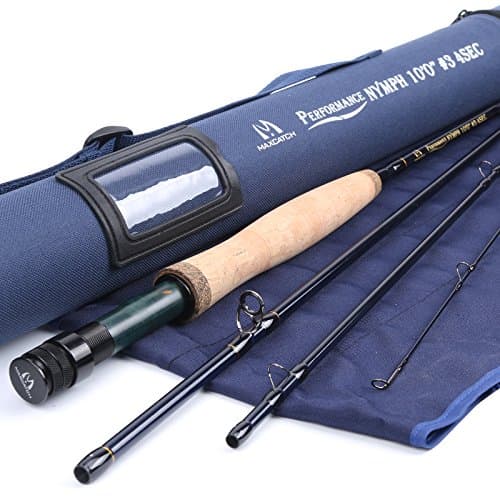
Ten feet, light line weight, soft tip: that is the euro nymphing specification, and this rod carries it at a price that makes experimenting reasonable. The extra length is what lets you hold line off the water and lead a fly through a drift without the current grabbing it, and the light rating is what lets a pair of tungsten nymphs flex the blank enough to cast. Available in 10 ft and 11 ft, in 2, 3 and 4 weight.
Best for: The rod — the only part that has to be purpose-built - 2
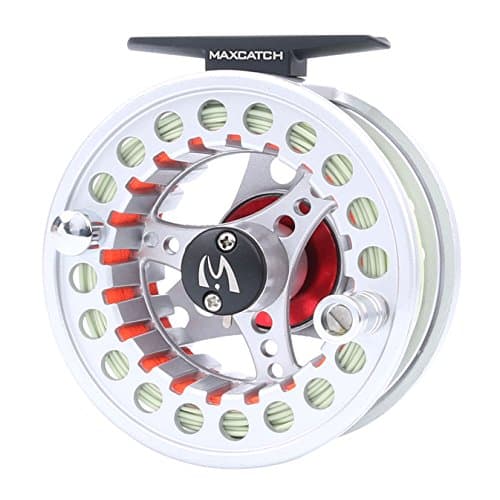
Euro nymphing is the one branch of fly fishing where the reel genuinely matters, and not for its drag. You hold a ten-foot rod at arm's length for hours, so balance decides whether that is comfortable; a reel slightly heavier than the rod would strictly need brings the balance point back toward your hand. A 3/4wt aluminum reel with line already on it is the straightforward answer at this price.
Best for: The reel — weight at the handle is the point - 3
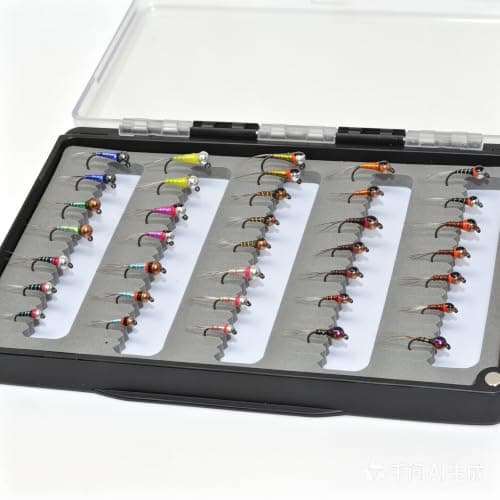
Euro nymphing is a weight-delivery system: there is no indicator and almost no fly line out, so the flies themselves have to sink fast enough to be fishing within the first second of the drift. Perdigons — slim epoxy bodies over tungsten beads — are the pattern built for exactly that, and 36 of them across sizes 14 to 18 is a working box. Barbless hooks are standard for the technique and required on a number of waters.
Best for: The flies — tungsten is what makes the system work - 4
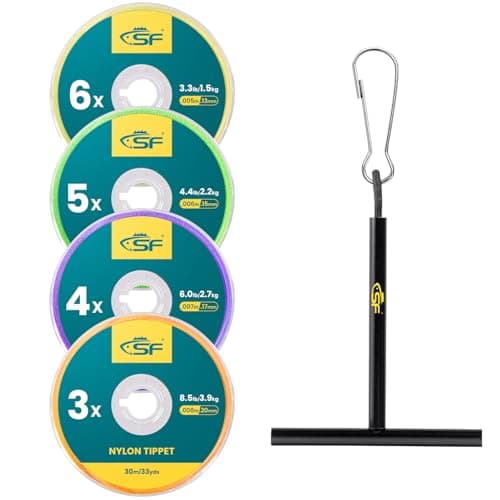
A euro nymphing leader is long, thin and hand-built, which means spools rather than a packaged tapered leader: a thin butt section, a colored sighter in the middle, and a fine tippet section to the flies. A 3X to 6X set gives you the diameters for the whole lower half of that build. Buying tippet by the spool also costs a fraction of replacing tapered leaders when you snag, which with weighted flies on the bottom you will.
Best for: The leader material — you build this one yourself
| # | Product | Best for | Score | Price |
|---|---|---|---|---|
| 1 | Maxcatch Performance Nymph Fly Rod, 10ft 2/3/4wt Ten feet, light line weight, soft tip: that is the euro nymphing specification, and this rod carries it at a price that makes experimenting reasonable. The extra length is what lets you hold line off the water and lead a fly through a drift without the current grabbing it, and the light rating is what lets a pair of tungsten nymphs flex the blank enough to cast. Available in 10 ft and 11 ft, in 2, 3 and 4 weight. | The rod — the only part that has to be purpose-built | — | $89.95View on Amazon#ad |
| 2 | Maxcatch ECO Pre-Loaded Fly Reel 3/4wt, Aluminum Body Euro nymphing is the one branch of fly fishing where the reel genuinely matters, and not for its drag. You hold a ten-foot rod at arm's length for hours, so balance decides whether that is comfortable; a reel slightly heavier than the rod would strictly need brings the balance point back toward your hand. A 3/4wt aluminum reel with line already on it is the straightforward answer at this price. | The reel — weight at the handle is the point | — | $31.99View on Amazon#ad |
| 3 | Outdoor Planet 36-Piece Perdigon Nymph Assortment, Tungsten Barbless, with Magnetic Fly Box Euro nymphing is a weight-delivery system: there is no indicator and almost no fly line out, so the flies themselves have to sink fast enough to be fishing within the first second of the drift. Perdigons — slim epoxy bodies over tungsten beads — are the pattern built for exactly that, and 36 of them across sizes 14 to 18 is a working box. Barbless hooks are standard for the technique and required on a number of waters. | The flies — tungsten is what makes the system work | — | $27.99View on Amazon#ad |
| 4 | SF Nylon Fly Fishing Tippet, 3X-6X 30m Spools A euro nymphing leader is long, thin and hand-built, which means spools rather than a packaged tapered leader: a thin butt section, a colored sighter in the middle, and a fine tippet section to the flies. A 3X to 6X set gives you the diameters for the whole lower half of that build. Buying tippet by the spool also costs a fraction of replacing tapered leaders when you snag, which with weighted flies on the bottom you will. | The leader material — you build this one yourself | — | $9.99View on Amazon#ad |
A euro nymphing rod should be 10 ft in a 2, 3 or 4 weight with a soft tip, and the Maxcatch Performance Nymph rod is the pick that meets that spec without specialist pricing — for an angler fishing open pocket water and runs, not a tunnel of alders. Add tungsten Perdigons, build a long thin leader from tippet spools, and put a slightly heavy metal reel on it so the rod balances in your hand.
One honest caveat first, because it decides whether the rest of this page is useful to you: a ten-foot rod is the wrong tool on a creek with branches over both banks. Euro nymphing is a technique for water with room above and behind you — open pocket water, freestone runs, bigger streams. If your water is a tunnel, skip to what to buy instead.
What euro nymphing actually is
Nymph fishing with no fly line out and no indicator. You hold a long rod high, keep almost all the fly line inside the rod, and lead two weighted nymphs through a drift on a long thin leader with a brightly colored section — a sighter — that tells you what the flies are doing. Takes are seen in the sighter or felt directly, because there is no slack anywhere in the system.
It is called “euro” because the competition circuits developed it. French, Czech, Polish and Spanish variations differ in leader length and fly weight, and the umbrella term for all of them is euro nymphing or tightline nymphing. The common thread is contact: the leader stays tight from rod tip to fly.
It catches a great many fish, and it is not fun for everyone. Honest assessment: tightline nymphing is the most effective way to catch trout in moving water, and it is also repetitive, close-range and not visual in the way a dry fly is. Plenty of anglers learn it, catch a lot, and go back to fishing dries because they prefer it.
What makes a euro rod different
Length, for reach and line control. Ten feet versus the standard nine does two things: it holds more leader off the water so the current cannot drag the flies, and it reaches further across a seam without you having to wade into it. That is the entire argument for the extra foot, and it is a real one.
A light line rating, because the flies do the loading. You are not casting a fly line, you are lobbing two weighted nymphs, so the blank has to flex under a few grams of tungsten. A 2 to 4 weight does; a 6 weight does not move at all and the cast becomes a throw.
A soft tip, because it is the strike indicator. The top section of a euro rod is deliberately soft so it loads under the weight of the flies and telegraphs a take as a tiny change in tension before you feel anything in your hand. It is also what protects fine tippet on a close-range hook set.
Light swing weight, because you hold it up all day.A ten-foot rod held at arm’s length for four hours is a fatigue problem before it is a fishing problem, which is why these rods are built light and why reel balance matters more here than anywhere else in fly fishing.
What size to buy
| Length / weight | Best water | Why |
|---|---|---|
| 10 ft 3wt | The default — small to mid-size streams | Enough reach to control a drift, short enough to use in real cover |
| 10 ft 2wt | Small clear streams, light flies, fine tippet | Softest tip and the most protection for 6X |
| 10 ft 4wt | Freestone rivers, heavier tungsten, windy days | Handles bigger flies and more current without collapsing |
| 10 ft 6 in to 11 ft | Bigger rivers, long open runs | Maximum reach and line control — unusable in tight cover |
If you are buying one, buy a 10 ft 3wt. It is the standard for a reason: it is the longest rod most people can actually fish on small water and the lightest rating that still handles a tungsten pair. Longer is better only if your water is genuinely open.
The rest of the system
The leader is as important as the rod. A euro leader is long — often fifteen to twenty feet — thin, and built in sections: a level butt, a colored sighter, then tippet to the flies. You build it from spools rather than buying a packaged tapered leader, and the general principles behind the build are in fly line, leader and tippet explained.
The fly line barely matters, because it barely leaves the rod.A standard weight-forward floating line in your rod’s rating is fine to start with. Dedicated thin nymphing lines exist and they help at the margins; they are not where a beginner’s money should go first. The fly line roundup covers what a good general line does.
Two flies, usually: a heavy point fly and a lighter one above it.The heavy fly gets the rig down and the lighter one fishes naturally in the drift. Check your state’s rules first — the number of flies allowed on one line, and barbless requirements, vary by state and by individual water, and your state wildlife agency is the only reliable source.
Barbless hooks are the convention here for a practical reason. Tightline nymphing hooks fish deeper in the mouth than dry fly fishing does, and a barbless hook comes out in seconds with forceps. The pattern side of this is covered in the nymph roundup.
Does a creek angler need one?
Often, no — and that is worth saying on a site about small water. Euro nymphing earns its advantage on water where you can hold a long rod up, cover several seams from one position, and lead a drift for ten or fifteen feet. A creek pocket is four feet long and roofed with alder. The technique still works there, but a nine-foot or shorter rod with a short line does nearly as well with far less snagging.
Where it genuinely pays off on small water
And it is a poor single rod. A 10 ft 2-4wt with a soft tip casts a dry fly acceptably at short range and badly at any distance, and it is clumsy in brush. Buying one as your only fly rod means owning a specialist tool for a general job. The first-rod argument is in the beginner rod roundup.
What to buy instead for tight water
A short rod, for creeks with cover. Seven and a half to eight and a half feet in a 3 or 4 weight is the small-stream specification, and it is the opposite end of the scale from a euro rod — chosen for fitting between branches rather than reaching across seams. The options are in the small-stream rod roundup.
A 9 ft 5wt, if you want one rod for everything. It nymphs competently at short range, casts dries, throws a streamer, and handles a bigger river on a trip away. The honest default, and the reasoning is in how to choose a fly rod.
Or a tenkara rod, which is the other long-rod answer. Fixed line, no reel, ten to twelve feet of rod — a completely different route to the same tightline drift control, and genuinely good on small streams. Covered in the tenkara rod roundup.
The picks in detail
Maxcatch Performance Nymph Fly Rod, 10ft 2/3/4wt
Best for: The rod — the only part that has to be purpose-built
Ten feet, light line weight, soft tip: that is the euro nymphing specification, and this rod carries it at a price that makes experimenting reasonable. The extra length is what lets you hold line off the water and lead a fly through a drift without the current grabbing it, and the light rating is what lets a pair of tungsten nymphs flex the blank enough to cast. Available in 10 ft and 11 ft, in 2, 3 and 4 weight.
- Line weight
- 2wt / 3wt / 4wt
- Length
- 10ft / 11ft
- Blank
- IM10 carbon
- Grip
- AAA cork
- Meets the standard euro spec at a fraction of specialist pricing
- Choice of length and line weight for your water
- Soft tip registers takes a stiffer rod hides
- Ten feet is awkward in genuinely brushy creeks
- A dedicated tool — it is a poor dry fly rod
Maxcatch ECO Pre-Loaded Fly Reel 3/4wt, Aluminum Body
Best for: The reel — weight at the handle is the point
Euro nymphing is the one branch of fly fishing where the reel genuinely matters, and not for its drag. You hold a ten-foot rod at arm's length for hours, so balance decides whether that is comfortable; a reel slightly heavier than the rod would strictly need brings the balance point back toward your hand. A 3/4wt aluminum reel with line already on it is the straightforward answer at this price.
- Size
- 3/4wt
- Body
- Aluminum
- Included
- Line pre-loaded
- Right size class to balance a 10 ft light rod
- Metal body adds the handle weight the technique wants
- Comes with line, so nothing else to buy
- Bundled line is not a dedicated nymphing line
- Drag is basic — irrelevant for creek trout
Outdoor Planet 36-Piece Perdigon Nymph Assortment, Tungsten Barbless, with Magnetic Fly Box
Best for: The flies — tungsten is what makes the system work
Euro nymphing is a weight-delivery system: there is no indicator and almost no fly line out, so the flies themselves have to sink fast enough to be fishing within the first second of the drift. Perdigons — slim epoxy bodies over tungsten beads — are the pattern built for exactly that, and 36 of them across sizes 14 to 18 is a working box. Barbless hooks are standard for the technique and required on a number of waters.
- Count
- 36 flies
- Sizes
- 14, 16, 18
- Bead
- Tungsten, barbless hooks
- Tungsten sinks fast enough for short creek pockets
- Barbless, as most euro nymphing water expects
- Magnetic box holds small flies better than foam
- Narrow use — poor choice in slow shallow flat water
- Most expensive flies per unit in our fly picks
SF Nylon Fly Fishing Tippet, 3X-6X 30m Spools
Best for: The leader material — you build this one yourself
A euro nymphing leader is long, thin and hand-built, which means spools rather than a packaged tapered leader: a thin butt section, a colored sighter in the middle, and a fine tippet section to the flies. A 3X to 6X set gives you the diameters for the whole lower half of that build. Buying tippet by the spool also costs a fraction of replacing tapered leaders when you snag, which with weighted flies on the bottom you will.
- Sizes
- 3X to 6X
- Length
- 30 m per spool
- Material
- Nylon monofilament
- The right format for a hand-built nymphing leader
- Covers tippet and the lower leader sections
- Cheap enough to rebuild after every snag
- You still need colored sighter material for the middle
- Requires learning one leader-building knot
Prices shown are from Amazon as of October 20, 2026 and change often — the button always goes to the current listing. Some links may earn us a commission at no extra cost to you. How this works.
Frequently asked questions
What size rod is best for euro nymphing?
A 10 ft 3-weight is the standard and the right first choice. Ten feet gives you the reach and line control the technique depends on while still being usable on small water, and a 3-weight is light enough for tungsten nymphs to load the blank. Go to 10'6" or 11 ft only if your water is genuinely open.
Can you euro nymph with a normal fly rod?
Yes, at short range. A 9 ft rod in a 4 or 5 weight will fish a tightline rig perfectly well in close pocket water — you simply cannot hold as much leader off the water or lead a drift as far. On a creek, where drifts are a few feet long, the difference is much smaller than it is on a river.
Do I need a special reel for euro nymphing?
Not a special one, but weight matters more than usual. You hold a long rod at arm's length for hours, so a slightly heavy metal reel brings the balance point back toward your hand and reduces fatigue. Drag is irrelevant for creek trout — balance is the only specification that counts.
What flies do you use for euro nymphing?
Tungsten-beaded nymphs, usually two: a heavier point fly to get the rig down and a lighter fly above it. Perdigons — slim epoxy bodies over tungsten beads in sizes 14 to 18 — are the pattern built for the job because they sink fast enough to fish within the first second of a short drift.
Is euro nymphing worth it on small streams?
On open pocket water and freestone runs, yes. In brushy creeks with branches over both banks, a ten-foot rod spends the day in the trees and a shorter rod with a short line does nearly as well. Treat a euro rod as a strong second rod for open water rather than a first rod for a creek.
Sources
Keep reading
Not sure where to start?
The beginner gear guide walks you through exactly what a new stream angler needs — the six essentials first, nice-to-haves later, with one safe-default pick per category.