Waders & Boots · Roundup
The Best Wading Boots for Hiking
A wading boot that grips bedrock perfectly can still ruin a two-mile walk in. Hiking to your water asks for three things a standard wading boot ignores: low weight, a rubber lug sole that works on dirt as well as rock, and real drainage. Here are five boots that do all three.
Disclosure: Creek Cover is reader-supported. If you buy through our links we may earn a commission, at no extra cost to you. It never changes which pick we tell a new angler to start with. Full disclosure.
Quick picks at a glance
Tap a pick to read the full write-up, or the price button to check it on Amazon.
- 1
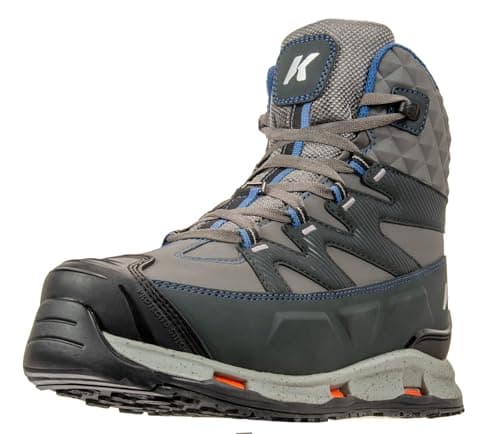
The lightest build Korkers makes, which answers the one real objection to interchangeable-sole boots: weight. You walk in on the Kling-On rubber sole, which grips trail and wet rock, and you can swap to felt for a slick bedrock creek without owning a second pair.
Best for: Best wading boot for hiking overall — lightest, with two soles9.4 - 2
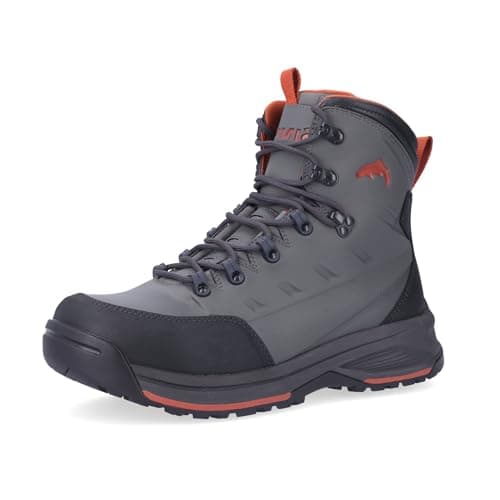
The boot that feels most like a hiking boot while still being a wading boot. A supportive upper, a structured heel and a rubber lug sole mean the mile in does not leave your ankles tired before you have made a cast. The one to buy if the walk is the hard part of your day.
Best for: Best support for long walks — the most hiking-boot-like9.3 - 3
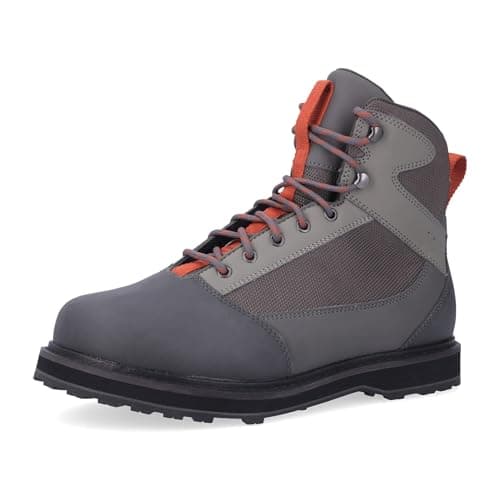
The Freestone's cheaper sibling, and the sensible choice if you walk a reasonable distance rather than a long one. You lose some of the upper structure and keep the rubber lug sole and the drainage. For most creek anglers this is enough boot.
Best for: Best value from a wading specialist9.1 - 4
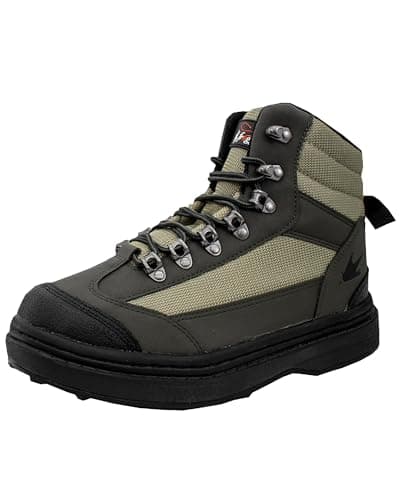
A cleated rubber sole on a light synthetic boot at well under the Simms price. Cleats are the compromise sole: better than smooth rubber on wet rock, better than felt on a dirt trail, and legal in every state. For a couple of hundred days of creek fishing it is plenty of boot.
Best for: Best mid-price boot — cleated rubber for mixed ground8.9 - 5
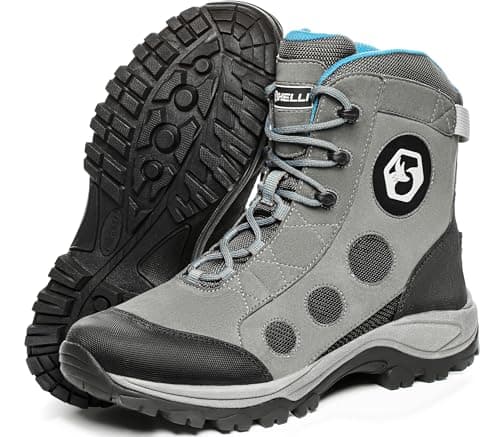
The cheap pair that is still a real wading boot: rubber sole, drainage ports, lace-up upper. You feel the missing support on a long rocky approach, and for a half-mile path to a local creek it does the job for a third of the money.
Best for: Best budget wading boots for walking in8.6
| # | Product | Best for | Score | Price |
|---|---|---|---|---|
| 1 | Korkers Bantam Lite Wading Boot with Felt & Kling-On Soles The lightest build Korkers makes, which answers the one real objection to interchangeable-sole boots: weight. You walk in on the Kling-On rubber sole, which grips trail and wet rock, and you can swap to felt for a slick bedrock creek without owning a second pair. | Best wading boot for hiking overall — lightest, with two soles | 9.4 | $179.99View on Amazon#ad |
| 2 | Simms Freestone Boot, Rubber Sole The boot that feels most like a hiking boot while still being a wading boot. A supportive upper, a structured heel and a rubber lug sole mean the mile in does not leave your ankles tired before you have made a cast. The one to buy if the walk is the hard part of your day. | Best support for long walks — the most hiking-boot-like | 9.3 | $229.95View on Amazon#ad |
| 3 | Simms Tributary Boot, Rubber Sole The Freestone's cheaper sibling, and the sensible choice if you walk a reasonable distance rather than a long one. You lose some of the upper structure and keep the rubber lug sole and the drainage. For most creek anglers this is enough boot. | Best value from a wading specialist | 9.1 | $179.95View on Amazon#ad |
| 4 | Frogg Toggs Hellbender Wading Boot, Cleated A cleated rubber sole on a light synthetic boot at well under the Simms price. Cleats are the compromise sole: better than smooth rubber on wet rock, better than felt on a dirt trail, and legal in every state. For a couple of hundred days of creek fishing it is plenty of boot. | Best mid-price boot — cleated rubber for mixed ground | 8.9 | $89.95View on Amazon#ad |
| 5 | Foxelli Wading Boots, Rubber Sole The cheap pair that is still a real wading boot: rubber sole, drainage ports, lace-up upper. You feel the missing support on a long rocky approach, and for a half-mile path to a local creek it does the job for a third of the money. | Best budget wading boots for walking in | 8.6 | $89.97View on Amazon#ad |
Buy the Korkers Bantam Lite if you want the lightest boot that still swaps soles, or the Simms Freestone in rubber if the walk in is the hardest part of your day. Those are the two honest answers for hiking to your water. The Foxelli pair is the budget version and the Frogg Toggs Hellbender is the cleated middle ground.
Prices come live from the retailer, date-stamped under each buy button. We compile published specifications — soles, weights and build details — rather than running field tests.
What a hiking wading boot needs
A rubber lug sole, not felt. Felt is superb on slick bedrock and useless on a dirt trail — wet felt on packed earth is like walking on a bar of soap, and it is banned outright in several states. If you walk to your water, the walking sole has to be rubber.
Low weight, because water doubles it. A boot that feels fine in a shop weighs far more soaked, and you carry that for the whole hike out. The lightest boot you can tolerate is usually the right one for a hike-in angler.
Real drainage. A wading boot has holes in it for a reason: a boot that holds a pint of water each is dead weight on the trail. Drainage ports are the difference between a wading boot and a waterproof hiking boot, and it is why the waterproof boot is the wrong tool.
And support in the heel and ankle. You are walking on loose cobble with a neoprene bootie between your foot and the boot, which means less proprioception than a hiking boot gives you. Structure matters more here, not less.
The five boots, compared
| Boot | Sole | Weight | Support | Buy it if |
|---|---|---|---|---|
| Korkers Bantam Lite | Felt + Kling-On, swappable | Lightest | Medium | You walk far and your creek bottom varies |
| Simms Freestone (rubber) | Rubber lug | Mid | High | The approach is long and rocky |
| Simms Tributary (rubber) | Rubber lug | Mid | Medium | You want a Simms for less |
| Frogg Toggs Hellbender | Cleated rubber | Light | Medium | You want cleats at a mid price |
| Foxelli Wading Boots | Rubber | Light | Low | Budget first, short walk in |
Sole choice for a hike-in
Rubber lug for the trail and most creek bottoms. Modern wading rubber compounds grip wet rock far better than the hard rubber of twenty years ago, and they are the only sole that works on both the path and the river. This is the default.
Cleats if your creek is slick and your trail is firm. Carbide or metal studs in a rubber sole bite into algae-covered rock and are legal everywhere felt is not. They also clack on rock, collect mud on soft ground, and chew up a truck floor.
Felt only if you can swap it. Felt is the best sole in the water and the worst on the walk. An interchangeable-sole boot like the Bantam Lite is the only way to have both — the full sole comparison is in rubber vs felt wading boot soles, and the brand that built the swap system is covered in the Korkers review.
Check your state before you buy felt
Weight, and why it doubles in water
Every wading boot gets heavier the moment you step in. The upper soaks, the laces soak, and gravel finds its way in. A pair that weighs four pounds dry can walk out at six. On a two-mile exit after a day of fishing, that is a genuine difference.
So buy the lightest boot that still supports you. That trade-off is the whole point of this page, and it is why the Bantam Lite tops it: it is the lightest boot here that has not given up structure or sole choice. The broader lightweight field is in the lightweight wading boot roundup.
And rinse the gravel out before the hike home. Half a pound of creek gravel per boot is common, costs nothing to remove, and is the cheapest weight saving available.
Sizing and socks
One full size above your street shoe, always. You are putting a neoprene bootie plus a wading sock inside the boot. A snug wading boot is colder, more painful and feels heavier because your foot is fighting it — and on a hike-in it is the thing that will blister. The full process is in how to size waders.
Lace them properly for the walk, then again for the water. Tight through the instep for the trail, looser over the forefoot once you are wading. Two minutes of lacing saves a heel blister.
Wear a real wading sock, not a cotton one. Cotton holds water and abrades. A synthetic or merino wading sock under the bootie is the cheapest comfort upgrade available — it sits alongside the rest of the layering in base layers under waders.
Why not just wear hiking boots?
Because a waterproof boot fills up and stays full. A hiking boot is built to keep water out, which means it also keeps water in. Thirty seconds of wading gives you two boots full of creek for the rest of the day.
And the sole compound is wrong. Trail rubber is tuned for dry rock and dirt, not for algae-covered stone underwater. The grip difference on a slick creek bed is large and it is the kind of difference you discover while falling.
Hip waders and bootfoot waders are the exception. If you are not walking far, an all-in-one bootfoot wader skips this purchase entirely — see the best hip waders and stockingfoot vs bootfoot waders. For everything else, start from the main wading boot roundup.
The picks in detail
Korkers Bantam Lite Wading Boot with Felt & Kling-On Soles
9.4/10Best for: Best wading boot for hiking overall — lightest, with two soles
The lightest build Korkers makes, which answers the one real objection to interchangeable-sole boots: weight. You walk in on the Kling-On rubber sole, which grips trail and wet rock, and you can swap to felt for a slick bedrock creek without owning a second pair.
- Weight
- Lightest in the Korkers range
- Soles
- Felt + Kling-On rubber included
- Closure
- Laces
- Light enough for a real walk in
- Two soles in the box — trail and bedrock
- Soles replaceable, so the boot outlasts them
- Less ankle structure than a guide-weight boot
- Light upper wears faster in heavy brush
Simms Freestone Boot, Rubber Sole
9.3/10Best for: Best support for long walks — the most hiking-boot-like
The boot that feels most like a hiking boot while still being a wading boot. A supportive upper, a structured heel and a rubber lug sole mean the mile in does not leave your ankles tired before you have made a cast. The one to buy if the walk is the hard part of your day.
- Sole
- Rubber lug
- Support
- High
- Build
- Synthetic upper
- Genuine ankle support on uneven ground
- Rubber lug sole works on dirt and rock
- Simms build quality and repair support
- Heavier than the Bantam Lite
- Rubber is weaker than felt on slick algae
Simms Tributary Boot, Rubber Sole
9.1/10Best for: Best value from a wading specialist
The Freestone's cheaper sibling, and the sensible choice if you walk a reasonable distance rather than a long one. You lose some of the upper structure and keep the rubber lug sole and the drainage. For most creek anglers this is enough boot.
- Sole
- Rubber lug
- Support
- Medium
- Build
- Synthetic upper
- Noticeably cheaper than the Freestone
- Same sole compound family
- Drains quickly
- Less support on a long rocky approach
- Thinner upper than the Freestone
Frogg Toggs Hellbender Wading Boot, Cleated
8.9/10Best for: Best mid-price boot — cleated rubber for mixed ground
A cleated rubber sole on a light synthetic boot at well under the Simms price. Cleats are the compromise sole: better than smooth rubber on wet rock, better than felt on a dirt trail, and legal in every state. For a couple of hundred days of creek fishing it is plenty of boot.
- Sole
- Cleated rubber
- Build
- Light synthetic
- Legality
- Legal in felt-ban states
- Good price for a cleated sole
- Light on the trail
- No felt restrictions to check
- Cleats pick up mud on soft trails
- Upper is basic
Foxelli Wading Boots, Rubber Sole
8.6/10Best for: Best budget wading boots for walking in
The cheap pair that is still a real wading boot: rubber sole, drainage ports, lace-up upper. You feel the missing support on a long rocky approach, and for a half-mile path to a local creek it does the job for a third of the money.
- Sole
- Rubber
- Price
- Budget
- Build
- Synthetic
- Lowest price here
- Light
- Drains properly, unlike a sneaker
- Minimal ankle support
- Sole compound is less grippy on wet rock
Prices shown are from Amazon as of October 20, 2026 and change often — the button always goes to the current listing. Some links may earn us a commission at no extra cost to you. How this works.
Frequently asked questions
What are the best wading boots for hiking?
The Korkers Bantam Lite for most hike-in anglers - it is the lightest boot that still takes interchangeable soles, so you walk in on rubber and can switch to felt for slick bedrock. The Simms Freestone in rubber is the better choice if the approach is long and rocky and you want real ankle support.
Can you hike in wading boots?
Yes, as long as the sole is rubber rather than felt. Wet felt on a dirt trail is dangerously slippery, while a rubber lug sole handles both the path and wet rock. Expect a wading boot to be heavier and less supportive than a hiking boot, and size it a full size up for the bootie and sock.
Should wading boots have felt or rubber soles for walking in?
Rubber. Felt is the best sole in the water and the worst on the walk, and it is banned in several states because it carries invasive organisms between watersheds. If you want felt for a slick creek bed, buy an interchangeable-sole boot and swap it at the water.
Can I wear hiking boots instead of wading boots?
Not usefully. A waterproof hiking boot fills with water and stays full, because it is built to keep water out rather than let it drain, and trail rubber grips poorly on algae-covered rock. Wading boots have drainage ports and a different sole compound for exactly these reasons.
What size wading boots should I buy for hiking?
One full size above your street shoe size. A neoprene bootie plus a wading sock takes real volume, and a tight boot is what blisters on a long walk in. Lace tight through the instep for the trail and loosen over the forefoot once you are in the water.
Sources
Keep reading
Not sure where to start?
The beginner gear guide walks you through exactly what a new stream angler needs — the six essentials first, nice-to-haves later, with one safe-default pick per category.