Waders & Boots · Roundup
The Best Wading Pants for Fly Fishing
Wading pants are waist-high waders, and on a creek you rarely wade deeper than that. These are the four worth buying, the case for leaving your chest waders at home in July, and the one convertible pair that removes the decision entirely.
Disclosure: Creek Cover is reader-supported. If you buy through our links we may earn a commission, at no extra cost to you. It never changes which pick we tell a new angler to start with. Full disclosure.
Quick picks at a glance
Tap a pick to read the full write-up, or the price button to check it on Amazon.
- 1
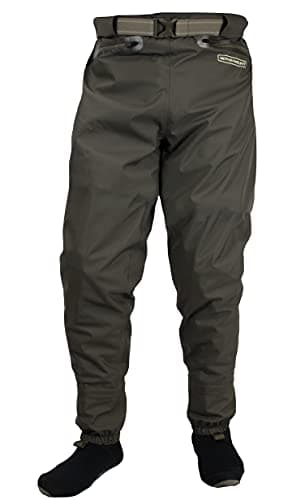
The format most small-stream anglers should own and almost nobody buys first. Waist-high breathable fabric over a neoprene bootie gives you everything chest waders give you up to the waist — which is as deep as you have any business wading in moving creek water — with far less heat, far less bulk and a lower price. The stockingfoot means proper laced wading boots in your real shoe size rather than whatever boot a manufacturer bonded on.
Best for: Best overall — the waist-high format creek anglers overlook - 2
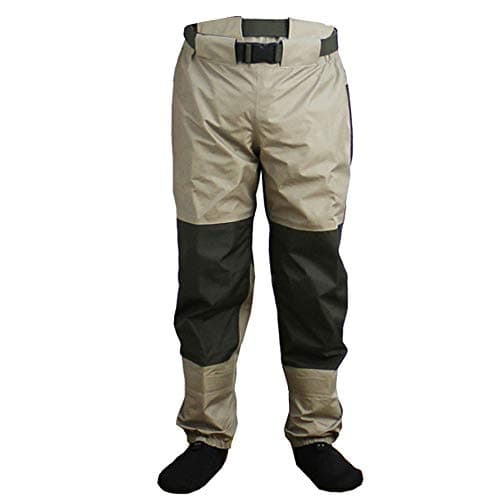
Roughly half the price of the Paramount pair and the same basic idea: breathable laminate, waist height, stockingfoot. It is the right purchase if you are not yet sure whether you will fish enough to justify better gear, or if you want a second pair to keep in the truck. Budget laminates are thinner and seams are the usual failure point, so check the seams after the first few trips and keep the receipt.
Best for: Best budget — the cheapest honest way into the format - 3
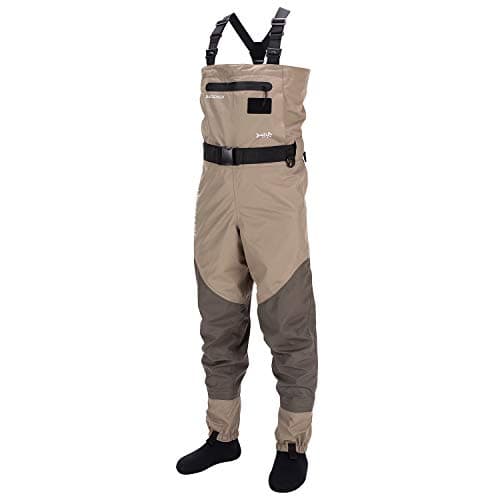
The pick that removes the decision. Worn up it is a breathable chest wader for spring high water; rolled down and belted it is a waist-high wading pant for a July afternoon. If you fish one creek through the whole year, this is a more useful object than either dedicated format, and it costs less than most chest waders on their own. The compromise is bulk: a convertible pair carries the fabric for both configurations whichever way you wear it.
Best for: Best convertible — two waders in one for summer creeks - 4
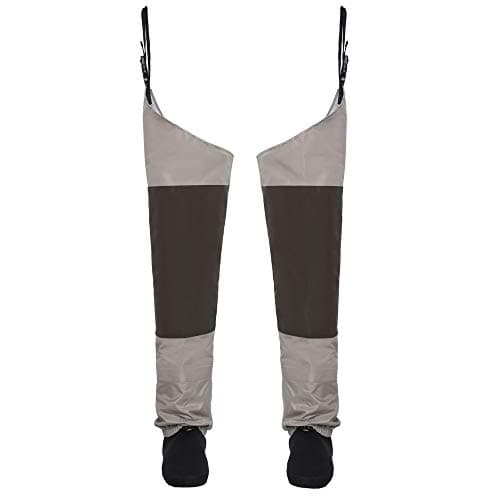
The honest alternative if your water is genuinely small. Hip waders stop at the top of the thigh, which is enough for a creek you cross at the riffles and fish from the gravel, and they are cooler and lighter again than wading pants. They are the wrong buy for anything with real depth — one step into a knee-deep-plus slot and you are wet — so match them to water you know.
Best for: Best lighter alternative — for creeks you barely wade at all
| # | Product | Best for | Score | Price |
|---|---|---|---|---|
| 1 | Paramount Outdoors Fast Eddy Waist-High Stockingfoot Breathable Wader Pant The format most small-stream anglers should own and almost nobody buys first. Waist-high breathable fabric over a neoprene bootie gives you everything chest waders give you up to the waist — which is as deep as you have any business wading in moving creek water — with far less heat, far less bulk and a lower price. The stockingfoot means proper laced wading boots in your real shoe size rather than whatever boot a manufacturer bonded on. | Best overall — the waist-high format creek anglers overlook | — | $139.99View on Amazon#ad |
| 2 | Kylebooker Breathable Stockingfoot Waist-High Pant Waders KB003 Roughly half the price of the Paramount pair and the same basic idea: breathable laminate, waist height, stockingfoot. It is the right purchase if you are not yet sure whether you will fish enough to justify better gear, or if you want a second pair to keep in the truck. Budget laminates are thinner and seams are the usual failure point, so check the seams after the first few trips and keep the receipt. | Best budget — the cheapest honest way into the format | — | $87.99View on Amazon#ad |
| 3 | BASSDASH Men's Breathable Chest and Waist Convertible Waders, Stockingfoot The pick that removes the decision. Worn up it is a breathable chest wader for spring high water; rolled down and belted it is a waist-high wading pant for a July afternoon. If you fish one creek through the whole year, this is a more useful object than either dedicated format, and it costs less than most chest waders on their own. The compromise is bulk: a convertible pair carries the fabric for both configurations whichever way you wear it. | Best convertible — two waders in one for summer creeks | — | $119.98View on Amazon#ad |
| 4 | Kylebooker Breathable Stockingfoot Hip Waders The honest alternative if your water is genuinely small. Hip waders stop at the top of the thigh, which is enough for a creek you cross at the riffles and fish from the gravel, and they are cooler and lighter again than wading pants. They are the wrong buy for anything with real depth — one step into a knee-deep-plus slot and you are wet — so match them to water you know. | Best lighter alternative — for creeks you barely wade at all | — | $69.34View on Amazon#ad |
The best wading pants for fly fishing are the Paramount Fast Eddy waist-high pant waders — a purpose-built breathable waist-high wader with a stockingfoot, for an angler who fishes small water and sweats in chest waders. If the budget is tight, the Kylebooker KB003 is the same idea for about half the money. And if you only want to buy one wader for the whole year, the BASSDASH convertible pair is a chest wader in April and a wading pant in July.
Wading pants are waders that stop at the waist. They are built from the same breathable laminates as chest waders, they end in the same neoprene bootie, and they take the same separate wading boots. The only thing they do not give you is the ability to wade above your waist — which, on moving creek water, is not something you should be doing anyway.
What wading pants actually are
Chest waders from the waist down, essentially. Same fabric, same construction, same stockingfoot. The top finishes at a waistband with a belt loop arrangement rather than continuing up over a chest panel with suspenders. That is the whole difference in the object.
They are not wet-wading pants, and they are not rain pants.Three different products get called “wading pants”. Breathable waist-high waders — what this page covers — keep you dry. Quick-dry wet-wading trousers are worn with the expectation of getting soaked. Waterproof fishing bibs and rain pants shed rain from above but are not built to be submerged. If you want the bib comparison instead, that is waders vs bibs.
Stockingfoot is the right choice in this format. Every pick here ends in a neoprene bootie rather than an attached boot, which means you buy wading boots in your real shoe size and get genuine ankle support on rounded, slick streambed rock. The full argument is in stockingfoot vs bootfoot.
Why waist-high suits creek fishing
Because you should not be wading deeper than that. Moving water at mid-thigh already pushes hard on a person; at waist depth in current you are at the edge of what is safe on foot. Chest waders let you go past that point, which on a small stream is a hazard rather than a feature. Waist height matches the depth you can actually fish safely.
Because heat is the real reason people stop wearing waders. Breathable fabric vents sweat vapor, but it still traps a lot of heat, and on a July creek where half the day is spent walking between pools the difference between a chest wader and a waist-high one is substantial. Gear that is too hot gets left in the car, and gear in the car catches no fish.
Because creek fishing is mostly walking. A small stream is fished by moving — three casts into a pool and on to the next one. Less fabric above the waist means less bulk at the shoulders, a free casting arm, and a pack or sling that sits where it should. A sling pack in particular rides far better over a waistband than over a chest panel and suspenders.
The one case for chest waders anyway
Pants vs chest vs hip
| Height | Wade to | Best for | Give up |
|---|---|---|---|
| Hip waders | Top of the thigh | Tiny creeks, bank fishing, hot weather, quick sessions | Any margin for a deeper step than planned |
| Wading pants (waist) | Waist | Small streams year round, summer on bigger water | Chest pocket, deep wading, kneeling in the water |
| Chest waders | Chest, belted | Spring high water, cold weather, bigger rivers | Heat, bulk, and about a third more money |
| Convertible | Either | One wader for the whole year | Some bulk at the waist in both configurations |
The short version: match the height to your water, not to the catalog. Most small-stream anglers own chest waders because that is what a tackle shop sells first, and fish in them at knee depth all summer. The height guide above, and the longer types of waders explained, are both arguments for buying for the water in front of you.
The four compared
| Pair | Height | Feet | Buy it if |
|---|---|---|---|
| Paramount Fast Eddy | Waist | Stockingfoot | You want purpose-built wading pants |
| Kylebooker KB003 | Waist | Stockingfoot | You want the format at the lowest price |
| BASSDASH convertible | Chest or waist | Stockingfoot | You want one wader for every season |
| Kylebooker hip waders | Hip | Stockingfoot | Your creek genuinely never gets deep |
The wading belt is not optional
A belt is what stops a wader filling. Worn snugly at the waist, it traps air inside the legs and slows water entry dramatically if you go in. On wading pants the belt sits at the top of the garment, which is the most effective place it can be — the format is slightly safer than chest waders worn unbelted, which is how a great many people wear them.
Waders do not drag you under, and the belt still matters. The old story that flooded waders pull you down is not how it works; what actually happens is that a leg full of water becomes heavy and unwieldy the moment you try to stand up in current. Keeping the water out keeps you mobile, and mobility is what gets you back to the bank.
Add a staff if your creek is a rock garden. A wading staff is a third point of contact and the difference between a committed step and a swim on slick bedrock. It matters more on small streams than people expect, because creeks concentrate current into narrow chutes — the wading staff roundup covers the folding options worth carrying.
What to wear under them
Never cotton. Cotton absorbs sweat, holds it against you and stops insulating the moment it is damp. In a breathable wader it also blocks the moisture transfer the fabric depends on, which is why people in jeans under waders conclude that breathable waders do not breathe.
In summer, almost nothing. A thin synthetic legging or quick-dry shorts is enough. The point of wading pants in July is heat management, and layering under them defeats it.
In cold weather, a proper base layer and a fleece mid. Synthetic or merino against the skin, fleece over it, both cut close enough not to bunch in the boot. Bunched fabric at the ankle is the most common cause of a cold foot and a sore one. The base layer guide covers what works under waders specifically.
Sizing and fit
Size by shoe size first, then by waist and inseam. The bootie is the part you cannot alter. Get the foot right and then check that the waist closes comfortably over your thickest expected layers, because a wader you can only fasten in a t-shirt is a summer-only wader whatever the label says.
Inseam matters more than people think. Excess length bunches at the crotch, and bunched fabric flexing in the same place is where seams fail first. Too short and you cannot lift a knee to climb a bank. Before you remove the tags, put them on with your usual layers and lift a knee to your chest — if that pulls the crotch down hard, the inseam is wrong.
Then size your boots over the bootie, not over a sock. A neoprene bootie takes up real volume, so wading boots generally go up a full size from your street shoe. Full detail, including the measurement method, is in how to size waders, and the width question is in wading boots for wide feet.
The picks in detail
Paramount Outdoors Fast Eddy Waist-High Stockingfoot Breathable Wader Pant
Best for: Best overall — the waist-high format creek anglers overlook
The format most small-stream anglers should own and almost nobody buys first. Waist-high breathable fabric over a neoprene bootie gives you everything chest waders give you up to the waist — which is as deep as you have any business wading in moving creek water — with far less heat, far less bulk and a lower price. The stockingfoot means proper laced wading boots in your real shoe size rather than whatever boot a manufacturer bonded on.
- Format
- Breathable waist-high pant wader
- Wading depth
- To the waist
- Feet
- Neoprene bootie — boots separate
- Purpose-built as wading pants, not a cut-down chest wader
- Dramatically cooler than chest waders in summer
- Takes proper laced boots in your true shoe size
- No chest pocket and no bib — nowhere to stash a fly box
- You cannot wade deep, by design
Kylebooker Breathable Stockingfoot Waist-High Pant Waders KB003
Best for: Best budget — the cheapest honest way into the format
Roughly half the price of the Paramount pair and the same basic idea: breathable laminate, waist height, stockingfoot. It is the right purchase if you are not yet sure whether you will fish enough to justify better gear, or if you want a second pair to keep in the truck. Budget laminates are thinner and seams are the usual failure point, so check the seams after the first few trips and keep the receipt.
- Height
- Waist (pant)
- Construction
- Breathable laminate
- Feet
- Stockingfoot
- Lowest cost of entry to breathable wading pants
- Light enough to carry in a pack on a hike-in creek
- Stockingfoot, so your boots are your own choice
- Thinner laminate than the mid-price pairs
- Seam durability is the known weak point at this price
BASSDASH Men's Breathable Chest and Waist Convertible Waders, Stockingfoot
Best for: Best convertible — two waders in one for summer creeks
The pick that removes the decision. Worn up it is a breathable chest wader for spring high water; rolled down and belted it is a waist-high wading pant for a July afternoon. If you fish one creek through the whole year, this is a more useful object than either dedicated format, and it costs less than most chest waders on their own. The compromise is bulk: a convertible pair carries the fabric for both configurations whichever way you wear it.
- Type
- Convertible chest / waist, stockingfoot
- Wading depth
- Chest or waist
- Feet
- Neoprene bootie
- Covers spring high water and summer heat with one purchase
- Cheaper than most dedicated chest waders
- Stockingfoot — your own boots, your own size
- Bulkier at the waist than a purpose-built pant
- More seams and fittings than a simple design
Kylebooker Breathable Stockingfoot Hip Waders
Best for: Best lighter alternative — for creeks you barely wade at all
The honest alternative if your water is genuinely small. Hip waders stop at the top of the thigh, which is enough for a creek you cross at the riffles and fish from the gravel, and they are cooler and lighter again than wading pants. They are the wrong buy for anything with real depth — one step into a knee-deep-plus slot and you are wet — so match them to water you know.
- Height
- Hip
- Construction
- Breathable laminate
- Feet
- Stockingfoot — boots needed
- Coolest and lightest option on this page
- Quick on and off for short creek sessions
- Lowest price of the four
- No margin for a deeper step than you planned
- Not enough coverage for spring flows
Prices shown are from Amazon as of October 20, 2026 and change often — the button always goes to the current listing. Some links may earn us a commission at no extra cost to you. How this works.
Frequently asked questions
What are wading pants?
Waders that stop at the waist. They use the same breathable laminate and the same neoprene stockingfoot as chest waders, and they take the same separate wading boots — the only thing they give up is the ability to wade above the waist, which is deeper than it is safe to wade in moving creek water anyway.
Are wading pants better than chest waders?
For small streams in warm weather, usually yes: much cooler, less bulk at the shoulders, easier to walk and cast in, and cheaper. Chest waders are the better choice for spring high water, cold weather, bigger rivers and anyone who likes to kneel in the water to make a cast.
Can you wear wading pants in cold weather?
Yes, with a proper base layer and a fleece mid-layer underneath. The limit is not temperature but depth and splash — waist-high waders leave your torso exposed to rain and spray, so a good wading jacket matters more with pants than with chest waders.
Do I still need a wading belt with wading pants?
Yes. The belt traps air in the legs and slows water entry if you go in, and on waist-high waders it sits at the top of the garment, which is the most effective position it can occupy. Water in the legs does not pull you under, but it does make standing up in current very difficult.
What size wading pants should I buy?
Size by shoe size first, since the neoprene bootie cannot be altered, then check the waist closes comfortably over your thickest layers and that the inseam lets you lift a knee to your chest. Excess bunched fabric at the crotch is the most common cause of premature seam failure.
Sources
Keep reading
Not sure where to start?
The beginner gear guide walks you through exactly what a new stream angler needs — the six essentials first, nice-to-haves later, with one safe-default pick per category.