Waders & Boots · Roundup
The Best Wading Boots for Wide Feet
No wading boot is sold in a width. What a wide foot actually needs is volume and adjustment — so these five are chosen on lacing, closure and upper construction, with the sizing rule that solves most of the problem before you buy anything.
Disclosure: Creek Cover is reader-supported. If you buy through our links we may earn a commission, at no extra cost to you. It never changes which pick we tell a new angler to start with. Full disclosure.
Quick picks at a glance
Tap a pick to read the full write-up, or the price button to check it on Amazon.
- 1
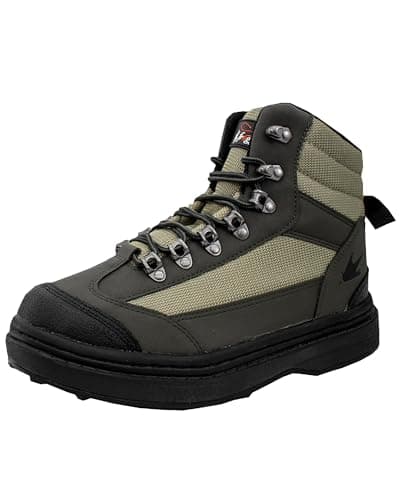
The sensible first boot for a wide foot because it gives you the two things that matter and charges very little for them: a lace system that opens the whole forefoot, and a size run up to 13. A laced boot sized a full step up from your street shoe is the standard fix for the volume a neoprene bootie takes up, and it is the fix that works for most people. Cleated rubber grips a stream bottom and stays legal in states where felt is not.
Best for: Best overall — laced low, sized up, cheap enough to get wrong once - 2
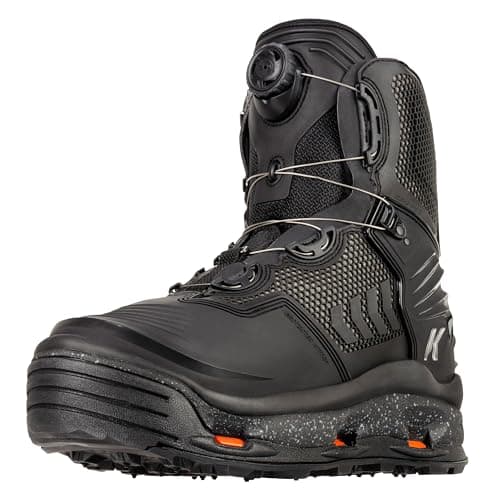
The most adjustable boot here, and the one to buy if sizing up has left you with a loose heel. A BOA dial tensions the upper evenly and can be snugged or released a click at a time with gloves on, which means you can hold the ankle without clamping down across the widest part of the foot — the exact compromise that hurts in a laced boot sized up for volume. Two interchangeable soles in the box make it a year-round boot as well.
Best for: Best adjustment — a dial that tightens the ankle without crushing the forefoot - 3
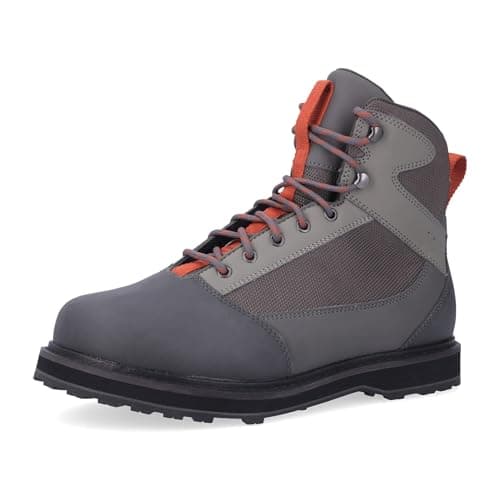
Built like a hiking boot rather than a wading slipper, which is relevant to a wide foot for a reason that is easy to miss: a structured synthetic upper holds its shape instead of collapsing inward onto the foot as it wets out and dries. That means the volume you sized for on day one is still there on day fifty. Buy it for creeks you walk a mile into, and size up over the bootie as with everything here.
Best for: Best support — hiking-boot construction for long walk-in days - 4
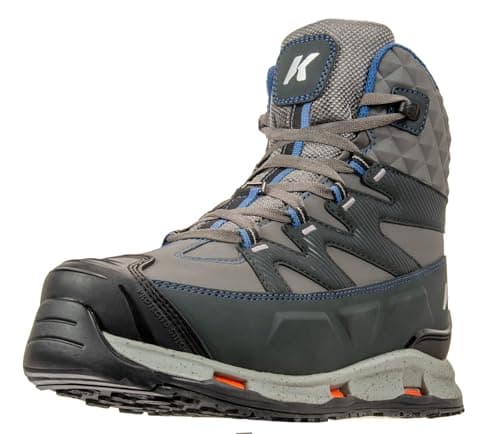
The lightest boot in the Korkers range, which helps a wide foot in a slightly indirect way: a light, soft-sided boot flexes around a foot rather than forcing the foot into the boot's shape. The trade is support, so this is the pick for someone who fishes short creek sessions rather than walking miles. Two soles are included, which is unusual at any price and genuinely useful if you fish across state lines.
Best for: Best lightweight — least boot to wrap around a wide foot - 5
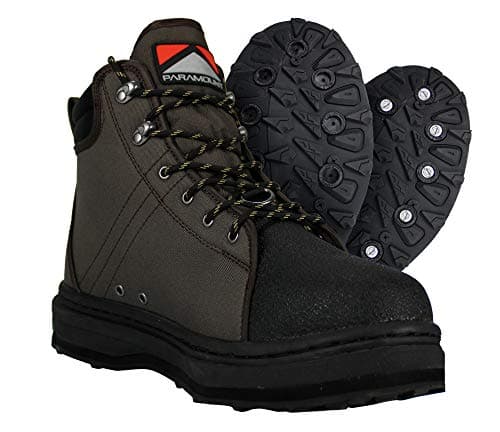
The value pick for rocky streambeds. An aggressive cleated rubber sole that accepts carbide studs, in a laced boot at a budget price, which is a sensible combination if your creek is slick bedrock rather than gravel. Same wide-foot approach as the Frogg Toggs pair: there is no width option, so the volume comes from sizing up and from opening the lacing across the forefoot.
Best for: Best grip at a budget price — and it takes studs
| # | Product | Best for | Score | Price |
|---|---|---|---|---|
| 1 | Frogg Toggs Men's Hellbender Wading Boot, Cleated Sole The sensible first boot for a wide foot because it gives you the two things that matter and charges very little for them: a lace system that opens the whole forefoot, and a size run up to 13. A laced boot sized a full step up from your street shoe is the standard fix for the volume a neoprene bootie takes up, and it is the fix that works for most people. Cleated rubber grips a stream bottom and stays legal in states where felt is not. | Best overall — laced low, sized up, cheap enough to get wrong once | — | $89.95View on Amazon#ad |
| 2 | Korkers River Ops BOA Wading Boots with Interchangeable Soles The most adjustable boot here, and the one to buy if sizing up has left you with a loose heel. A BOA dial tensions the upper evenly and can be snugged or released a click at a time with gloves on, which means you can hold the ankle without clamping down across the widest part of the foot — the exact compromise that hurts in a laced boot sized up for volume. Two interchangeable soles in the box make it a year-round boot as well. | Best adjustment — a dial that tightens the ankle without crushing the forefoot | — | $299.99View on Amazon#ad |
| 3 | Simms Tributary Wading Boot, Rubber Sole Built like a hiking boot rather than a wading slipper, which is relevant to a wide foot for a reason that is easy to miss: a structured synthetic upper holds its shape instead of collapsing inward onto the foot as it wets out and dries. That means the volume you sized for on day one is still there on day fifty. Buy it for creeks you walk a mile into, and size up over the bootie as with everything here. | Best support — hiking-boot construction for long walk-in days | — | $179.95View on Amazon#ad |
| 4 | Korkers Bantam Lite Wading Boot with Felt & Kling-On Soles The lightest boot in the Korkers range, which helps a wide foot in a slightly indirect way: a light, soft-sided boot flexes around a foot rather than forcing the foot into the boot's shape. The trade is support, so this is the pick for someone who fishes short creek sessions rather than walking miles. Two soles are included, which is unusual at any price and genuinely useful if you fish across state lines. | Best lightweight — least boot to wrap around a wide foot | — | $179.99View on Amazon#ad |
| 5 | Paramount Outdoors Stonefly Cleated Sole Wading Boot The value pick for rocky streambeds. An aggressive cleated rubber sole that accepts carbide studs, in a laced boot at a budget price, which is a sensible combination if your creek is slick bedrock rather than gravel. Same wide-foot approach as the Frogg Toggs pair: there is no width option, so the volume comes from sizing up and from opening the lacing across the forefoot. | Best grip at a budget price — and it takes studs | — | $89.99View on Amazon#ad |
The honest answer to “best wading boots for wide feet” is that no wading boot is sold in a D or EE width — so the fix is volume and adjustment, and the Frogg Toggs Hellbender sized a full step up is the cheapest version of that fix that works. If sizing up has left your heel slipping, a BOA dial closure tensions the ankle without clamping the forefoot. If you walk a long way to your water, a structured synthetic boot keeps the volume you sized for over several seasons.
One thing this page will not do is tell you a boot is “wide fitting.” No manufacturer in this category publishes a width measurement, and we have no way to measure one honestly. What the picks above are chosen on is construction that creates or preserves room: lacing that opens the forefoot, dial closures that spread tension, and uppers that hold their shape. That plus the sizing rule below is what actually solves the problem.
Why wading boots have no widths
The category is too small to carry the inventory. Hiking boots sell in regular and wide because the volumes justify two sets of lasts, two sets of molds and two sets of stock. Wading boots are a niche inside a niche; almost every model is built on one last in whole sizes only. That is a commercial fact rather than a design opinion, and it is why the question has no straightforward product answer.
And wading boots are already built oversized. Every boot on this page is designed to be worn over a neoprene stockingfoot bootie, not a sock. That bootie is typically 3mm to 5mm of neoprene wrapped around the whole foot, so the boots are cut with roughly a size of extra volume baked in. For many wide-footed anglers this is why wading boots are actually easier to fit than hiking boots.
Which means the sizing conversation is the fitting conversation. There is no width to choose, so the variables you control are size, lacing and what you put inside the boot. Get those three right and a standard-last boot fits a wide foot perfectly well.
The bootie is the real variable
Your wader’s bootie decides how much room is left. A thick 5mm bootie with a reinforced gravel guard takes up noticeably more volume than a thin one. If you are fitting boots to waders you already own, bring the waders — or at least know the bootie thickness — because two boots in the same size can fit completely differently over different booties.
Socks inside the bootie count too. A heavy merino sock under a 5mm bootie under a boot is three layers of compression on the widest part of your foot, and it is the most common reason a boot that felt fine in the living room goes numb in the creek. In cold weather size the boot for the thick sock; in summer accept slightly more room.
Never solve cold feet with a thicker sock. Compressed insulation does not insulate, and restricted circulation is what makes a foot cold in the first place. The reliable fix is more room and a wind-proof layer above the water line, which is covered in base layers under waders.
The five-minute fitting test
How far to size up
| Your setup | Start at | Why |
|---|---|---|
| Stockingfoot waders, thin bootie, summer sock | One full size above street shoe | The standard recommendation across the category |
| Stockingfoot waders, 5mm bootie, winter socks | One and a half to two sizes above | Neoprene plus a heavy sock is real volume, not a rounding error |
| Wide foot, laced boot | One full size up, then open the lower lacing | The lace track across the forefoot is the adjustment that matters |
| Wide foot, heel slipping after sizing up | Same size, dial or speed-lace closure | Even tension holds the ankle without a pressure band on the forefoot |
Round up, not down. A boot slightly too big can be laced tighter, insoled, or worn with a thicker sock. A boot too narrow across the forefoot cannot be fixed by anything, and it will take the enjoyment out of every trip you make. The measurement method itself is in how to size waders, which covers the bootie and the boot together.
The features that actually help
Lacing that runs low toward the toe. A boot with only three high eyelets can tighten the ankle and nothing else. A lace track that starts near the ball of the foot lets you leave the forefoot open and still hold the heel, which is precisely what a wide foot needs. All the laced picks here lace low.
A dial closure, if sizing up has left a loose heel. A BOA-style dial spreads tension along the whole upper rather than concentrating it at each eyelet, so you get a secure ankle without a tight band across the widest part of your foot. It is the single most useful wide-foot feature available in this category — and it is also the most expensive.
A structured synthetic upper. Boots that are soaked and dried hundreds of times either keep their shape or slowly collapse inward. A hiking-boot-style synthetic upper holds the internal volume you paid for; a soft unstructured one gradually closes down on the foot. If you are buying one pair for several seasons, this matters.
What does not help: felt soles. Sole material has nothing to do with fit, and felt brings its own problems — it is banned in a number of states because it transports invasive species. The full comparison is in felt vs rubber wading boots, and the general boot roundup is here.
The five compared
| Boot | Closure | Sole | Buy it for |
|---|---|---|---|
| Frogg Toggs Hellbender | Laced | Cleated rubber | The cheapest fix that works |
| Korkers River Ops BOA | BOA dial | Interchangeable, two included | Even tension and a secure heel |
| Simms Tributary | Laced | Rubber | Structure that keeps its volume |
| Korkers Bantam Lite | Laced | Felt + rubber included | A light boot that flexes around the foot |
| Paramount Stonefly | Laced | Cleated rubber, takes studs | Grip on slick rock at a budget price |
Diagnosing a boot that hurts
Numb or burning across the ball of the foot: too little volume. This is the classic wide-foot symptom and it is a size problem, not a lacing problem. Go up a size, or drop to a thinner sock inside the bootie. Loosening the laces alone will usually just transfer the problem to a slipping heel.
Heel lifting, toes bumping the front: too much length, not enough closure. You have sized up for width and now the boot is long. Keep the size and change how it closes — a dial, or a heel-lock lacing pattern through the top two eyelets, which costs nothing to try.
Pressure on top of the foot: lacing, not size. A high instep in a boot laced evenly from top to bottom gets a pressure ridge. Skip an eyelet pair over the sore spot and lace normally above and below it. This is a standard hiking fix and it works identically in a wading boot.
Cold feet with no pinching: circulation, or the water line. If nothing hurts and the foot is simply cold, the problem is usually a sock that is too thick for the space or heat loss above the boot. Fix the space first and add insulation at the calf, not the toes.
The bootfoot alternative
Bootfoot waders remove the boot-fitting problem and add their own. With an attached boot there is no bootie inside a boot, so there is no stacked volume — and the boots are generously cut with air space, which is why they are warmer. For a wide foot in cold weather, that can be a genuinely good answer.
The cost is sizing granularity and support. Bootfoot waders come in whole boot sizes tied to a body size, so you cannot independently fix a fit problem, and an attached rubber boot gives far less ankle support on uneven rock than a laced wading boot. The trade-off in full is in stockingfoot vs bootfoot waders.
If body sizing is also part of the problem, start there. Fit issues often come in pairs, and extended and stout wader sizing is its own subject — waders for big and tall anglers covers the pairs built for it, and the men’s boot roundup covers the mainstream size runs.
The picks in detail
Frogg Toggs Men's Hellbender Wading Boot, Cleated Sole
Best for: Best overall — laced low, sized up, cheap enough to get wrong once
The sensible first boot for a wide foot because it gives you the two things that matter and charges very little for them: a lace system that opens the whole forefoot, and a size run up to 13. A laced boot sized a full step up from your street shoe is the standard fix for the volume a neoprene bootie takes up, and it is the fix that works for most people. Cleated rubber grips a stream bottom and stays legal in states where felt is not.
- Sole
- Cleated rubber (felt option available)
- Closure
- Laced
- Sizing
- Men's, up to 13
- Best for
- General stream wading
- Lace adjustment opens the forefoot, not just the ankle
- Size run goes high enough to size up a full step
- Lowest-risk price on this page
- No width option — volume comes from sizing up
- Laces are slow with cold hands
Korkers River Ops BOA Wading Boots with Interchangeable Soles
Best for: Best adjustment — a dial that tightens the ankle without crushing the forefoot
The most adjustable boot here, and the one to buy if sizing up has left you with a loose heel. A BOA dial tensions the upper evenly and can be snugged or released a click at a time with gloves on, which means you can hold the ankle without clamping down across the widest part of the foot — the exact compromise that hurts in a laced boot sized up for volume. Two interchangeable soles in the box make it a year-round boot as well.
- Closure
- BOA dial
- Soles included
- Interchangeable, two in the box
- Support
- Guide-grade
- Even tension — holds the heel without a pressure band over the forefoot
- Adjustable mid-river, with gloves, one-handed
- Interchangeable soles cover felt-legal and felt-banned water
- By far the most expensive pick here
- A dial is one more mechanical part to fail
Simms Tributary Wading Boot, Rubber Sole
Best for: Best support — hiking-boot construction for long walk-in days
Built like a hiking boot rather than a wading slipper, which is relevant to a wide foot for a reason that is easy to miss: a structured synthetic upper holds its shape instead of collapsing inward onto the foot as it wets out and dries. That means the volume you sized for on day one is still there on day fifty. Buy it for creeks you walk a mile into, and size up over the bootie as with everything here.
- Sole
- Rubber
- Upper
- Synthetic, hiking-boot construction
- Support
- Best here
- Structured upper keeps its internal volume over seasons
- The most supportive boot here for walking to water
- Rubber sole is legal in every state
- Heavier than the lightweight picks
- Mid-premium price
Korkers Bantam Lite Wading Boot with Felt & Kling-On Soles
Best for: Best lightweight — least boot to wrap around a wide foot
The lightest boot in the Korkers range, which helps a wide foot in a slightly indirect way: a light, soft-sided boot flexes around a foot rather than forcing the foot into the boot's shape. The trade is support, so this is the pick for someone who fishes short creek sessions rather than walking miles. Two soles are included, which is unusual at any price and genuinely useful if you fish across state lines.
- Weight
- Lightest in the Korkers range
- Soles
- Felt + Kling-On rubber included
- Closure
- Laces
- Soft-sided build flexes around the foot
- Both sole types in the box
- Least tiring boot here on a long day of wading
- Less ankle support than the structured boots
- Light uppers wear faster in rocky creeks
Paramount Outdoors Stonefly Cleated Sole Wading Boot
Best for: Best grip at a budget price — and it takes studs
The value pick for rocky streambeds. An aggressive cleated rubber sole that accepts carbide studs, in a laced boot at a budget price, which is a sensible combination if your creek is slick bedrock rather than gravel. Same wide-foot approach as the Frogg Toggs pair: there is no width option, so the volume comes from sizing up and from opening the lacing across the forefoot.
- Sole
- Cleated rubber
- Closure
- Laced
- Best for
- Rocky streambeds
- Aggressive cleat pattern
- Takes carbide studs
- Solid value for the build
- No width option, as with every boot here
- Budget uppers are less structured than the Simms pair
Prices shown are from Amazon as of October 20, 2026 and change often — the button always goes to the current listing. Some links may earn us a commission at no extra cost to you. How this works.
Frequently asked questions
Do wading boots come in wide sizes?
Essentially no. Wading boots are a small category and almost every model is built on a single last in whole sizes, with no width options published. The practical fix is to size up — wading boots are already cut to be worn over a neoprene bootie — and to choose a closure that holds the ankle without clamping the forefoot.
How much should I size up wading boots?
One full size above your street shoe for a thin bootie and a summer sock, and one and a half to two sizes for a 5mm bootie with heavy socks. Round up rather than down: a boot slightly too long can be laced or insoled, but a boot too narrow across the forefoot cannot be fixed.
Are BOA wading boots better for wide feet?
Often, yes. A dial closure spreads tension along the whole upper rather than concentrating it at individual eyelets, so you can hold the heel securely without a tight band across the widest part of the foot. That is exactly the compromise that hurts in a laced boot sized up for volume.
Why do my wading boots make my feet numb?
Almost always stacked volume: a thick sock inside a neoprene bootie inside a boot that has no room left. Go up a boot size or use a thinner sock, rather than loosening the laces, which tends to move the problem to a slipping heel. Numbness is a space problem, not a tightness problem.
Would bootfoot waders fit a wide foot better?
Sometimes. With an attached boot there is no bootie-inside-boot stacking and the boots are cut with generous air space, which also makes them warmer. The trade is that boot sizes are tied to body sizes so you cannot fix fit independently, and attached rubber boots give much less ankle support on rock.
Sources
Keep reading
Not sure where to start?
The beginner gear guide walks you through exactly what a new stream angler needs — the six essentials first, nice-to-haves later, with one safe-default pick per category.