Guides · Buying Guide
Beginner Fishing Supplies: What to Buy, in Order
Eight things get you fishing. The lists online have forty, and the extra thirty-two are why people spend three hundred dollars and still cannot catch a trout.
Disclosure: Creek Cover is reader-supported. If you buy through our links we may earn a commission, at no extra cost to you. It never changes which pick we tell a new angler to start with. Full disclosure.
Quick picks at a glance
Tap a pick to read the full write-up, or the price button to check it on Amazon.
- 1
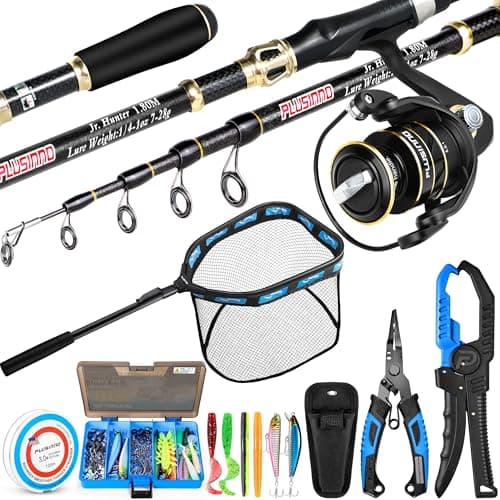
Rod, reel, line, net, tackle box and lures in a single purchase — six of the eight items on this page covered at once. Everything in it is basic; nothing in it is missing.
Best for: Best complete beginner kit9.0 - 2
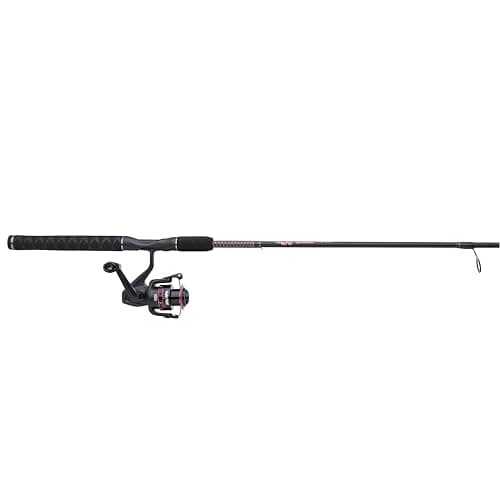
If you buy the pieces separately rather than a kit, start here. A composite blank that survives a beginner, a matched reel so nothing is mis-sized, and a rod you will still be using in five years.
Best for: Best rod and reel to build around9.3 - 3
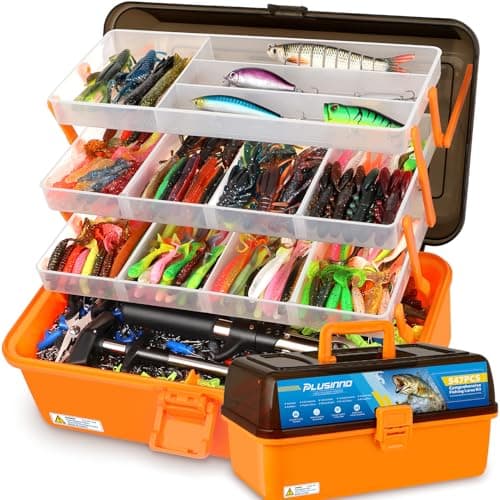
A four-layer box with hooks, weights, swivels, floats, soft plastics and tools already sorted into it. This is the item people underestimate — the small consumables are what you actually run out of.
Best for: Best tackle kit8.9 - 4
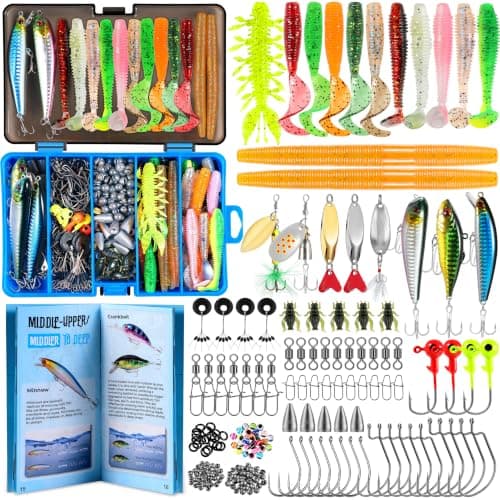
A box of crankbaits, spoons, hooks and weights for about the price of three branded lures. The finishes are generic, but for learning what your water responds to it is the efficient first purchase.
Best for: Cheapest useful lure start8.4
| # | Product | Best for | Score | Price |
|---|---|---|---|---|
| 1 | PLUSINNO Full Fishing Kit: Rod and Reel Combo, Net, Tackle Box and Lures Rod, reel, line, net, tackle box and lures in a single purchase — six of the eight items on this page covered at once. Everything in it is basic; nothing in it is missing. | Best complete beginner kit | 9.0 | $62.04View on Amazon#ad |
| 2 | Ugly Stik GX2 Spinning Reel and 6' Fishing Rod Combo, 2-Piece If you buy the pieces separately rather than a kit, start here. A composite blank that survives a beginner, a matched reel so nothing is mis-sized, and a rod you will still be using in five years. | Best rod and reel to build around | 9.3 | $79.95View on Amazon#ad |
| 3 | PLUSINNO Fishing Tackle Kit, 4-Layer Tackle Box, 547 Pieces A four-layer box with hooks, weights, swivels, floats, soft plastics and tools already sorted into it. This is the item people underestimate — the small consumables are what you actually run out of. | Best tackle kit | 8.9 | $46.90View on Amazon#ad |
| 4 | PLUSINNO Fishing Lures, 137-Piece Tackle Box A box of crankbaits, spoons, hooks and weights for about the price of three branded lures. The finishes are generic, but for learning what your water responds to it is the efficient first purchase. | Cheapest useful lure start | 8.4 | $16.49View on Amazon#ad |
If you want one answer: buy the PLUSINNO full fishing kit, a pair of nail clippers and a fishing license, and go fishing this weekend. That covers everything on this page for well under a hundred dollars. If you would rather buy gear you keep, start with the Ugly Stik GX2 combo and add the 547-piece tackle kit.
The reason beginner fishing supply lists are so long is that they are written to sell supplies. The actual list is eight items, four of which cost under ten dollars, and you can catch fish on your first morning with all of them. If you are weighing spinning tackle against a fly setup on price, how much fly fishing costs has the other side of that comparison.
The eight things you actually need
| # | Item | Why it is on the list | Rough cost |
|---|---|---|---|
| 1 | Rod and reel | Everything else depends on what you are casting | $40-$80 |
| 2 | Line | Usually included, usually worth replacing | $8 |
| 3 | Hooks | Size 10-12 for trout and panfish | $5 |
| 4 | Split shot or small weights | Gets the bait or lure down | $5 |
| 5 | A float or two | Shows the bite and sets depth | $5 |
| 6 | Lures or bait | What the fish actually takes | $10-$20 |
| 7 | Clippers or nippers | The tool you use twenty times a day | $5 |
| 8 | A fishing license | Legally required almost everywhere | $20-$50 |
That is the whole thing. A reasonable total is around $100 to $170 including the license, and a kit purchase pulls the gear half of that down considerably. Everything else sold to beginners is an improvement on this list, not an addition to it.
What to look for in each one
Rod and reel. Two numbers matter. Length: 6 feet is the right default — long enough to cast, short enough for a brushy bank or a crowded dock. Power: light or medium-light for general freshwater, ultralight if you specifically want trout in small streams. Get this wrong and the rod will not cast the lures you bought, which is the most common beginner failure. The beginner rod roundup covers the options in detail.
Line. Monofilament, 4 lb for trout and panfish or 8 lb for general use. Mono stretches, which forgives the over-hard strike every beginner makes. Whatever came on your reel has probably been coiled on a shelf for a year — respool before the first trip, because old line is the single biggest cause of the tangles that make people give up.
Hooks. Size 10 to 12 for trout and panfish. The instinct is to buy bigger; resist it. A hook too large is the second most common beginner mistake, because the fish feels metal before it feels food.
Weights and floats. A few small split shot and two or three floats. These cost almost nothing and turn a rod into a fishing system — the float tells you about bites you would otherwise never feel.
Lures or bait. Pick one to start. For lures, a 1/16 ounce inline spinner is the most productive single trout lure made — see the best trout lures. For bait, a jar of PowerBait and some hooks will out-fish lures on a stocked pond — the best trout bait has the rigs.
Clippers. Nail clippers work. This is the item people forget and then spend the day biting line.
The one spec that decides everything
Buy a kit, or buy the pieces?
Both are reasonable and they suit different people.
Buy a kit if you are not yet sure you will stick with it. A complete kit is cheaper than the sum of its parts, nothing arrives mis-matched, and you will be fishing the weekend it lands. The honest cost is that the rod is the weakest part and you will outgrow it within a season or two if you take to the sport. For most people trying fishing for the first time, that is the correct trade.
Buy the pieces if you already know you will fish regularly, or if you know your target is trout in small water. The pieces route means a rod that lasts years and a tackle selection chosen for your water rather than generically. It costs more up front and requires the decisions above.
The middle path, and what we would do: a durable combo plus a tackle kit for the consumables. That is the rod you keep with the small stuff solved in one purchase, for roughly the price of a kit plus twenty dollars.
The order to buy in
The most expensive beginner mistake is not buying the wrong thing — it is buying in the wrong sequence, and ending up with a good rod and no way to tie anything to it.
First: rod, reel and line. Everything else depends on what you are casting, so no other decision can be made properly before this one.
Second: hooks, weights, and either lures or bait. This is the cheapest part of the list and the part that actually catches fish. Do not skip to gear while this is missing.
Third: the license. Five minutes online from your state wildlife agency.
Fourth, and only after you have fished a few times: a net, a way to carry it all, and — if you want to stand in the water in cold months — waders and boots. In warm weather you can wade wet in old trainers, so this genuinely waits. For carrying, a fishing backpack suits bank fishing and a sling pack suits wading.
What to skip for now
Everything in this paragraph is sold to beginners and none of it belongs in a first purchase: braid or fluorocarbon line, a second rod, a tackle bag larger than a sandwich tin, electronic anything, a rod holder, a cooler, polarized sunglasses marketed as fishing-specific, scents and attractants, and any product described as a “system.”
Two worth a caveat. A landing net is genuinely useful but not on day one — you can hand-land small fish, and a net is the first thing to add once you are catching. And a cheap pair of polarized sunglasses is worth having for seeing into water and for eye safety with a hook flying about; you do not need a fishing-branded pair.
If you are specifically interested in fly fishing rather than spinning, this is not quite the right list — the equivalent is fly fishing gear for beginners, and fly fishing vs spinning covers which to start with.
The license, and where you can fish
You almost certainly need a license, even on small public water. A resident annual freshwater permit is typically $20 to $50 and takes a few minutes to buy online from your state wildlife agency. Some states sell a one-day permit for a few dollars, which is the cheapest way to test whether you enjoy fishing at all.
While you are on that website, check two more things for the specific water you plan to fish: the season, and whether there are special regulations. A meaningful share of the best trout water in America is lure-only or fly-only, where every bait in a beginner kit is prohibited. These rules are set per water body and change between seasons, which is exactly why we do not publish a summary here — check the current rules yourself before you go.
On access: there is far more public water than people assume. State and national forest land, state wildlife areas and many small creeks run through public ground nobody fishes. Your state agency publishes access maps alongside the regulations.
Your first trip, specifically
Beginner fishing supply demand peaks twice a year — in November, because kits are gifts, and again in June when people actually want to go. If you are reading this in the gap, that is the best time to buy: you have months to practice before the water is busy.
Three things to do before you drive anywhere. Spend twenty minutes casting in a park with a weight tied on instead of a hook. Casting is a timing skill and learning it on grass, where you can watch the line, is far easier than learning it on water while also managing current and branches. Tie your knot at home — one knot is enough, and an improved clinch covers everything on this page. Pick a stocked pond for trip one, not a wild river. Stocked fish are naive and plentiful, and catching something on your first morning is what makes you go back.
Then keep it simple on the water: one lure or one bait, fished slowly, in the most likely spot you can see. For trout, that is the shade, the inlet, or the deepest water you can reach. The whole list on this page exists to get you to that point — after that it is repetition, and repetition is the enjoyable part.
Two pages that go further: what gear to use for trout fishing gives the rod, reel and line sizes in numbers, and the gifts hub covers which of these items are safe to buy for somebody else.
The picks in detail
PLUSINNO Full Fishing Kit: Rod and Reel Combo, Net, Tackle Box and Lures
9.0/10Best for: Best complete beginner kit
Rod, reel, line, net, tackle box and lures in a single purchase — six of the eight items on this page covered at once. Everything in it is basic; nothing in it is missing.
- Includes
- Rod, reel, line, net, box, lures
- Rod type
- Telescopic spinning
- Best for
- Going from nothing to fishing in one order
- Still need
- License, clippers
- Covers most of the beginner list in one box
- Cheaper than assembling the same items separately
- Telescopic rod packs into a car boot
- Telescopic rods are less sensitive than two-piece blanks
- Lures are generic rather than chosen for your water
Ugly Stik GX2 Spinning Reel and 6' Fishing Rod Combo, 2-Piece
9.3/10Best for: Best rod and reel to build around
If you buy the pieces separately rather than a kit, start here. A composite blank that survives a beginner, a matched reel so nothing is mis-sized, and a rod you will still be using in five years.
- Length
- 6'0", 2-piece
- Blank
- Graphite / fiberglass composite
- Includes
- Rod and matched reel
- Best for
- Mixed freshwater, long-term use
- Far more durable than a kit rod
- Matched reel removes the pairing decision
- Two-piece, so it fits in a car
- Costs more than a whole starter kit on its own
- Too stiff for the smallest trout lures
PLUSINNO Fishing Tackle Kit, 4-Layer Tackle Box, 547 Pieces
8.9/10Best for: Best tackle kit
A four-layer box with hooks, weights, swivels, floats, soft plastics and tools already sorted into it. This is the item people underestimate — the small consumables are what you actually run out of.
- Pieces
- 547
- Box
- 4-layer, large
- Includes
- Hooks, weights, swivels, floats, soft baits, tools
- Best for
- Covering consumables in one purchase
- Covers every small consumable at once
- Box is genuinely usable, not a throwaway
- Cheaper than buying the categories separately
- Includes a lot you will never use
- Hook quality is adequate rather than good
PLUSINNO Fishing Lures, 137-Piece Tackle Box
8.4/10Best for: Cheapest useful lure start
A box of crankbaits, spoons, hooks and weights for about the price of three branded lures. The finishes are generic, but for learning what your water responds to it is the efficient first purchase.
- Pieces
- 137
- Includes
- Crankbaits, spoons, hooks, weights
- Box
- Included
- Best for
- First lures on a tight budget
- Lowest-cost way to own a spread of lures
- Box included
- Good for working out what your water likes
- Hooks and split rings are the weak point
- No proven trout patterns — buy one or two of those separately
Prices shown are from Amazon as of October 20, 2026 and change often — the button always goes to the current listing. Some links may earn us a commission at no extra cost to you. How this works.
Frequently asked questions
What do I need to buy for beginner fishing?
Eight things: a rod and reel, line, hooks, split shot weights, a float or two, lures or bait, clippers to cut line, and a fishing license. That totals roughly $100 to $170 including the license, and a complete starter kit brings the gear half of that down considerably. Everything else sold to beginners is an improvement on this list, not an addition to it.
Are beginner fishing kits worth buying?
Yes, if you are not yet sure you will stick with fishing. A complete kit costs less than the sum of its parts, nothing arrives mis-matched, and you can fish the weekend it lands. The rod is the weakest part and you will outgrow it within a season or two if you take to the sport — which is a fair trade for a first purchase.
How much should a beginner spend on fishing gear?
About $60 to $80 on a rod and reel, $25 to $35 on hooks, weights, floats and lures, and $20 to $50 on a license. Spending more buys sensitivity and durability you will not appreciate yet. If money is tight, a complete kit plus a license gets you fishing for under a hundred dollars.
What order should I buy fishing gear in?
Rod, reel and line first, because every other choice depends on what you are casting. Then hooks, weights and lures or bait — the cheap part that actually catches fish. Then the license. Only after a few trips: a net, a pack and waders. In warm weather you can wade in old trainers, so waders genuinely wait.
Do I need a fishing license as a beginner?
In nearly every case yes, even on small public water. A resident annual freshwater permit is usually $20 to $50 from your state wildlife agency and takes minutes online. Many states also sell a one-day permit, which is the cheapest way to test whether you enjoy fishing before committing.
What should I not buy as a beginner?
Braid or fluorocarbon line, a second rod, a large tackle bag, electronics, rod holders, scents and attractants, and anything sold as a system. Two caveats: a landing net is worth adding once you are catching fish, and cheap polarized sunglasses are worth having for eye safety and for seeing into water.
Sources
Keep reading
Not sure where to start?
The beginner gear guide walks you through exactly what a new stream angler needs — the six essentials first, nice-to-haves later, with one safe-default pick per category.