Waders & Boots · Comparison
Breathable vs Neoprene Waders
One question settles it: do you walk to your fishing, or stand still in it? Breathable waders let sweat out and need layers for warmth. Neoprene is a wetsuit that keeps you warm and cooks you the moment you start hiking. Most creek anglers buy the wrong one.
Disclosure: Creek Cover is reader-supported. If you buy through our links we may earn a commission, at no extra cost to you. It never changes which pick we tell a new angler to start with. Full disclosure.
Quick picks at a glance
Tap a pick to read the full write-up, or the price button to check it on Amazon.
- 1
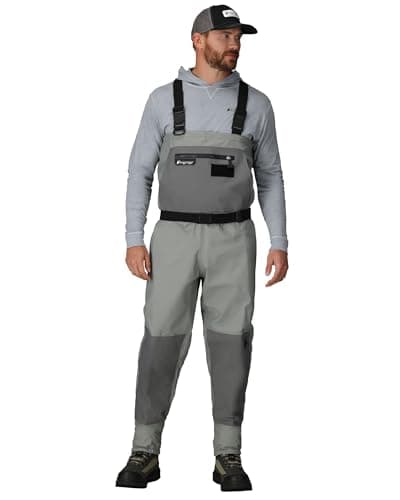
The honest mid-price breathable pair, and the right default for creek fishing. Multi-layer waterproof-breathable fabric through the body, a neoprene stockingfoot at the bottom so you wear a real wading boot, and enough room to layer fleece underneath when it turns cold. What you are paying for over a budget pair is seam construction, which is where every wader eventually fails.
Best for: Best breathable — the default for anyone who walks to their fishing9.1 - 2
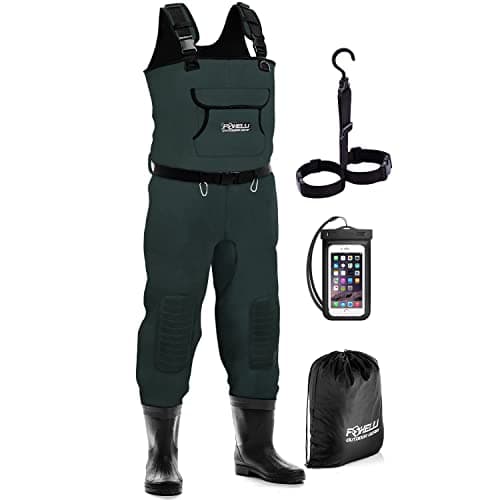
If your fishing is late-season, deep and stationary, this is the correct buy and breathable is not. Four millimeters of closed-cell neoprene is insulation you wear, with attached cleated boots so there is nothing else to purchase. The trade-off is absolute: it does not breathe, so a mile of bank walking in it leaves you as wet inside as a leak would.
Best for: Best neoprene — cold, deep, standing-still water8.8 - 3
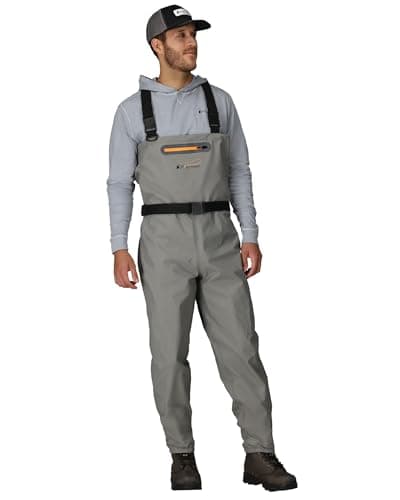
The cheapest breathable wader we would tell someone to buy. It gives up fabric weight and some seam reinforcement against the Hellbender PRO, which shows up as a shorter life rather than as a worse first season. If you are not sure you will fish enough to justify the mid-price pair, start here and find out.
Best for: Best breathable on a budget — the entry into the category8.6 - 4
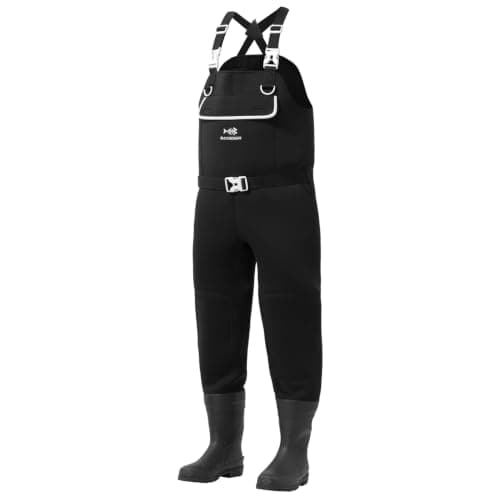
The step up on the neoprene side, and worth it if neoprene is genuinely the right category for you rather than a price decision. Heavier build and better boots than the budget pairs, which is what matters when the wader is doing the insulating and taking the abuse. Everything said about breathability still applies: this is a standing-in-cold-water garment, not a hiking one.
Best for: Best neoprene upgrade — more build for genuinely hard use8.7
| # | Product | Best for | Score | Price |
|---|---|---|---|---|
| 1 | Frogg Toggs Hellbender PRO Breathable Stockingfoot Chest Wader The honest mid-price breathable pair, and the right default for creek fishing. Multi-layer waterproof-breathable fabric through the body, a neoprene stockingfoot at the bottom so you wear a real wading boot, and enough room to layer fleece underneath when it turns cold. What you are paying for over a budget pair is seam construction, which is where every wader eventually fails. | Best breathable — the default for anyone who walks to their fishing | 9.1 | $169.99View on Amazon#ad |
| 2 | Foxelli Chest Waders, 4mm Neoprene with Boots If your fishing is late-season, deep and stationary, this is the correct buy and breathable is not. Four millimeters of closed-cell neoprene is insulation you wear, with attached cleated boots so there is nothing else to purchase. The trade-off is absolute: it does not breathe, so a mile of bank walking in it leaves you as wet inside as a leak would. | Best neoprene — cold, deep, standing-still water | 8.8 | $102.97View on Amazon#ad |
| 3 | Frogg Toggs Canyon II Breathable Stockingfoot Chest Wader The cheapest breathable wader we would tell someone to buy. It gives up fabric weight and some seam reinforcement against the Hellbender PRO, which shows up as a shorter life rather than as a worse first season. If you are not sure you will fish enough to justify the mid-price pair, start here and find out. | Best breathable on a budget — the entry into the category | 8.6 | $99.99View on Amazon#ad |
| 4 | BASSDASH Men's Neoprene Waders with Waterproof Rubber Boots The step up on the neoprene side, and worth it if neoprene is genuinely the right category for you rather than a price decision. Heavier build and better boots than the budget pairs, which is what matters when the wader is doing the insulating and taking the abuse. Everything said about breathability still applies: this is a standing-in-cold-water garment, not a hiking one. | Best neoprene upgrade — more build for genuinely hard use | 8.7 | $119.98View on Amazon#ad |
Buy breathable waders if you walk to your fishing, and neoprene only if you stand still in cold water. For creek and stream anglers that means breathable almost every time — the Hellbender PRO if you want the pair that lasts, the Canyon II if you are testing whether you will fish enough to care. Neoprene earns its place in a narrow set of conditions, and the 4mm Foxelli pair covers them without overspending.
This is the single most common wader buying mistake, and it happens because the question gets framed as warm vs cold. It is not. It is a question about whether you move.
The short answer
Breathable if you move, neoprene if you do not. A breathable wader lets water vapor out, so the heat you generate hiking a bank escapes instead of condensing inside the garment. A neoprene wader is a sealed insulating layer: it traps that heat on purpose, which is wonderful when you are stationary in forty-degree water and miserable within ten minutes of walking.
Creek fishing is a walking sport. You fish a pocket, you take six steps, you fish the next one. Over an afternoon you might cover a mile of stream and climb in and out of the water twenty times. That is the usage profile breathable fabric exists for, and it is why the main waders roundup leads with breathable pairs throughout.
Warmth is not the deciding factor it looks like. Breathable waders are not cold waders — they are waders with no insulation of their own, which you add underneath to the temperature of the day. That is a feature: one pair covers March and July. What to wear under waders walks through the layering.
What the two materials actually are
Breathable waders are built from a waterproof-breathable laminate, usually a nylon or polyester face fabric bonded to a membrane. The membrane blocks liquid water from outside while letting water vapor from inside pass through it. Three-layer and four-layer constructions are common, and heavier builds are usually layered more at the knees and seat where wear happens.
Neoprene waders are closed-cell foam rubber, the same material as a diving wetsuit, typically 3mm to 5mm thick. The foam cells trap air, and trapped air is insulation. Neoprene is completely waterproof and completely non-breathable — those are the same property described twice.
Thickness is the neoprene spec that matters. 3mm is a shoulder-season wader, 4mm is the general-purpose thickness most fishing pairs use, and 5mm is for genuinely cold water and genuinely little movement. Thicker also means stiffer and more tiring to walk in, so more is not better.
Most neoprene waders are bootfoot; most breathable waders are stockingfoot. That is not a coincidence — neoprene is a cold-water garment and an attached insulated boot suits it. It is also a real downside, because an attached boot fits worse than a boot you size yourself. The full trade-off is in stockingfoot vs bootfoot waders, and the categories are laid out in types of waders explained.
Head to head
| Breathable | Neoprene | |
|---|---|---|
| Warmth on its own | None — comes from your layers | High — the wader is the insulation |
| Breathability | Good — vapor passes out | None — sealed foam |
| Walking comfort | Good; the point of the category | Poor; hot and stiff within minutes |
| Season range | All year, by changing layers | Cold months only |
| Weight and bulk | Light, packs small | Heavy, bulky, slow to dry |
| Typical foot | Stockingfoot — buy boots to fit | Bootfoot — boots attached |
| Entry price | Slightly higher, plus boots | Lower all-in, boots included |
| Snag resistance | Lower — thin laminate | Higher — thick rubber |
| Right for creek fishing | Yes, nearly always | Only for cold, deep, stationary days |
The sweat problem nobody mentions
Wet legs in waders are usually your own sweat.A huge share of the “my waders leak” complaints that reach retailers are condensation, not a breach. The body generates a surprising amount of moisture during a bank hike, and in a sealed garment it has nowhere to go but onto your base layer.
This is what makes neoprene a poor creek wader. Walk half a mile to a headwater pool in 4mm neoprene in October and you will arrive damp inside, then stand in cold water while that dampness takes your heat away. The garment designed to keep you warm has made you colder than a breathable pair with a fleece layer would have.
Breathable fabric is not magic either. It moves vapor at a limited rate, and a hard uphill hike will out-produce any membrane. The fix is the same one hikers use: a wicking base layer next to skin, not cotton, and unclipping the shoulder straps and rolling the wader to the waist while you walk in.
If you only fish a handful of cold days a year
Warmth: layers vs the wader
Neoprene puts the insulation in the garment; breathable puts it on you. That is the entire difference, and it decides flexibility. A 4mm neoprene wader is warm on a 35-degree morning and unwearable on a 75-degree afternoon, because you cannot remove any of it. A breathable wader is whatever you put underneath it.
Layering is not complicated, but cotton ruins it. A synthetic or merino base layer, a fleece mid layer on cold days, and loose-fitting wader-sized boots so circulation is not cut off at the ankle. Cotton holds the moisture the membrane just moved off your skin and puts it straight back.
Your feet get cold before the rest of you does. Standing in moving water drains heat through the soles faster than anywhere else, regardless of wader material. Thick wool socks and boots sized to accommodate them do more for cold-weather comfort than upgrading from breathable to neoprene ever will. The boot side is covered in the wading boots roundup.
Who should buy which
| If you | Buy | Why |
|---|---|---|
| Fish creeks and small streams, walking between pools | Breathable | You move constantly; sweat is the real enemy, not cold water |
| Fish spring through fall and want one pair | Breathable | Layers extend it into the cold; neoprene cannot shed heat in summer |
| Stand in one deep cold pool for hours | Neoprene | No movement to generate sweat, and the insulation is doing real work |
| Fish late-season still water or duck-season-cold conditions | Neoprene | The one profile where sealed insulation beats layering |
| Want the cheapest all-in entry with boots included | Neoprene | Bootfoot neoprene is cheaper all-in — but it is the wrong tool for creeks |
| Are buying your first pair for trout streams | Breathable | It covers more of your season and is far more pleasant to walk in |
The budget trap is the last row. Bootfoot neoprene looks like the cheap option because boots are included, and for a creek angler it is the expensive one — you buy it, discover you cannot walk in it, and buy breathable waders a season later. If budget is the constraint, the honest answer is an entry breathable pair plus inexpensive boots, which the cheap waders roundup covers in detail. Where waders sit against every other startup cost is set out in how much fly fishing costs.
Durability and what actually fails
Neoprene survives brush better; breathable survives time better. Thick rubber shrugs off the thorns and snags that creek banks are full of, where thin laminate can be punctured. But neoprene degrades on its own — the foam compresses, loses loft and stiffens, and a pair stored folded for a season comes back with permanent creases.
Both fail at the seams, not the fabric. On breathable waders it is the crotch and inner-leg seams, from the flexing of walking and from a wader bought too small. On neoprene it is the glued-and-taped seams at the boot joint. Buying for a correct fit is the single biggest thing you can do for wader life — how to size waders walks through the measurements, and the most durable waders compares the pairs built to last.
Dry them inside out, every time. Breathable waders need the inside dried or the membrane delaminates; neoprene needs it or it smells and the glue line softens. Hang them, do not fold them, and keep them out of direct sun — ultraviolet light is hard on both materials. A wader that is dried properly outlasts a more expensive one that is not — and when one does start leaking, how to repair waders covers the fix for each material.
The picks in detail
Frogg Toggs Hellbender PRO Breathable Stockingfoot Chest Wader
9.1/10Best for: Best breathable — the default for anyone who walks to their fishing
The honest mid-price breathable pair, and the right default for creek fishing. Multi-layer waterproof-breathable fabric through the body, a neoprene stockingfoot at the bottom so you wear a real wading boot, and enough room to layer fleece underneath when it turns cold. What you are paying for over a budget pair is seam construction, which is where every wader eventually fails.
- Fabric
- Waterproof-breathable laminate
- Foot
- Stockingfoot — boots bought separately
- Warmth
- From layers, not the wader
- Breathes on the walk in and the walk out
- Layer underneath to extend it into cold months
- Stockingfoot means proper boot sizing and ankle support
- Needs separate wading boots — a second purchase
- No insulation of its own in genuinely cold water
Foxelli Chest Waders, 4mm Neoprene with Boots
8.8/10Best for: Best neoprene — cold, deep, standing-still water
If your fishing is late-season, deep and stationary, this is the correct buy and breathable is not. Four millimeters of closed-cell neoprene is insulation you wear, with attached cleated boots so there is nothing else to purchase. The trade-off is absolute: it does not breathe, so a mile of bank walking in it leaves you as wet inside as a leak would.
- Fabric
- 4mm closed-cell neoprene
- Foot
- Bootfoot — cleated boots attached
- Warmth
- Insulating on its own
- Warm without layering, in water breathable waders cannot handle
- Boots included — one purchase, nothing to size separately
- Neoprene shrugs off brush better than thin laminate
- Does not breathe at all — you sweat through on any walk
- Attached boots mean a worse fit than a dedicated wading boot
Frogg Toggs Canyon II Breathable Stockingfoot Chest Wader
8.6/10Best for: Best breathable on a budget — the entry into the category
The cheapest breathable wader we would tell someone to buy. It gives up fabric weight and some seam reinforcement against the Hellbender PRO, which shows up as a shorter life rather than as a worse first season. If you are not sure you will fish enough to justify the mid-price pair, start here and find out.
- Fabric
- Breathable nylon, multi-layer
- Foot
- Stockingfoot
- Position
- Entry price for breathable
- Breathable at close to neoprene money
- Stockingfoot, so you still buy a real boot
- Low-risk way to test whether you fish enough to upgrade
- Lighter fabric wears through faster in brush
- Seams are the first thing to go in year two or three
BASSDASH Men's Neoprene Waders with Waterproof Rubber Boots
8.7/10Best for: Best neoprene upgrade — more build for genuinely hard use
The step up on the neoprene side, and worth it if neoprene is genuinely the right category for you rather than a price decision. Heavier build and better boots than the budget pairs, which is what matters when the wader is doing the insulating and taking the abuse. Everything said about breathability still applies: this is a standing-in-cold-water garment, not a hiking one.
- Fabric
- Neoprene
- Foot
- Bootfoot — rubber boots attached
- Use
- Cold water, limited walking
- Better boots than the budget neoprene pairs
- Built for repeated hard-season use
- One purchase, fully equipped
- Heavy and hot the moment you leave the water
- Costs more than an entry breathable pair that suits creek fishing better
Prices shown are from Amazon as of October 20, 2026 and change often — the button always goes to the current listing. Some links may earn us a commission at no extra cost to you. How this works.
Frequently asked questions
Are breathable or neoprene waders better?
Breathable, for almost all creek and stream fishing. You walk between pools, and neoprene traps the sweat that walking produces, so you arrive damp and then get cold standing in the water. Neoprene is the better choice only when you are stationary for hours in genuinely cold water.
Are breathable waders warm enough for winter?
Yes, with layers. Breathable waders have no insulation of their own, so warmth comes from a wicking base layer and fleece pants underneath, which is enough for cold-water wading for an afternoon. The advantage is flexibility: the same pair works in July with nothing underneath.
How thick should neoprene waders be?
4mm is the general-purpose thickness for fishing. 3mm is a shoulder-season wader and 5mm is for genuinely cold, deep, stationary fishing. Thicker neoprene is also stiffer and more tiring to walk in, so going up in thickness costs you mobility rather than simply adding comfort.
Why do my waders feel wet inside if they are not leaking?
It is condensation from your own sweat. Any sealed garment collects the moisture your body produces while walking, and neoprene collects all of it because it does not breathe. Wear a synthetic or merino base layer rather than cotton, and roll breathable waders down to the waist on the walk in.
Can you wear neoprene waders in summer?
You can, but you will overheat quickly. Neoprene is insulation you cannot remove, so on a warm day it traps body heat with nowhere to go. In summer most creek anglers either wade wet in quick-dry pants or use breathable waders with nothing underneath them.
Sources
Keep reading
Not sure where to start?
The beginner gear guide walks you through exactly what a new stream angler needs — the six essentials first, nice-to-haves later, with one safe-default pick per category.