Flies & Lures · Roundup
The Best Streamers for Trout
A streamer is the fly you fish when you want the biggest trout in the pool rather than the most trout. These are the five worth carrying on small water, how to fish them where there is no room for a long cast, and the two days a year they beat everything else in the box.
Disclosure: Creek Cover is reader-supported. If you buy through our links we may earn a commission, at no extra cost to you. It never changes which pick we tell a new angler to start with. Full disclosure.
Quick picks at a glance
Tap a pick to read the full write-up, or the price button to check it on Amazon.
- 1
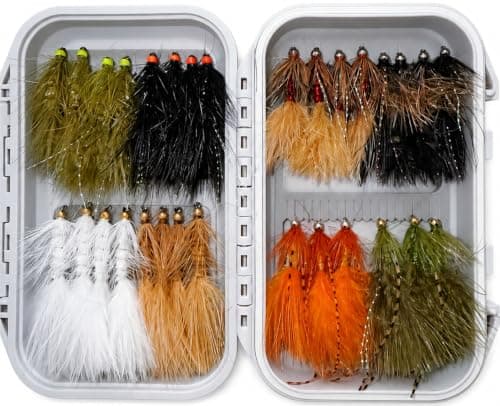
The most useful fly ever tied, and not only as a streamer. Stripped fast it is a fleeing baitfish; swung slow on a tight line it is a leech; dead-drifted on the bottom it is a big stonefly nymph. That versatility is exactly what a creek angler needs, because a small stream will not give you room to specialize. Buy black and olive, buy sizes 8 and 10 for trout water, and keep the bigger ones for bass.
Best for: Best overall — the one streamer to own - 2
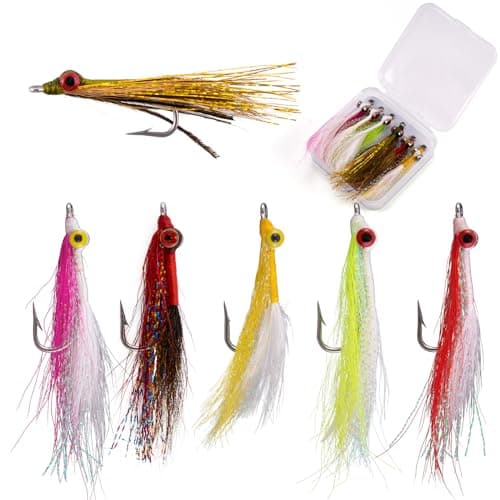
When a creek trout has switched to eating small fish — which happens most obviously in autumn and after high water drops — you want something that looks like a minnow rather than a leech. The Clouser rides hook-point-up, which means it bounces off rocks instead of burying the point in them, and that single design decision makes it the most fishable baitfish pattern on a shallow rocky streambed.
Best for: Best baitfish imitation — for trout eating minnows - 3
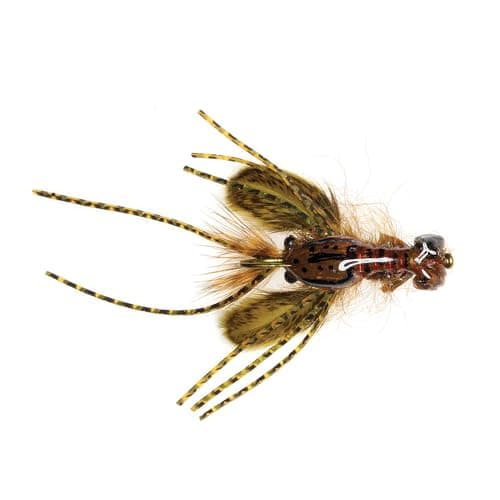
A crayfish is the highest-calorie meal in most small streams, and the trout that eat them are the ones worth catching. This fly fishes on the bottom, slowly, which is both the correct way to imitate a crayfish and the opposite of how most people fish a streamer. It is a specialist — a crayfish pattern will out-fish everything on some creeks and do nothing on others — but when it works it works on the big fish.
Best for: Best for the biggest fish in the creek - 4
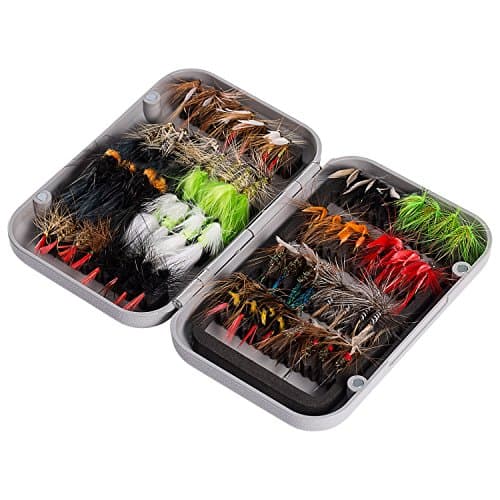
The cheapest way to find out whether you like fishing streamers at all. The mix includes bass-sized streamers and poppers alongside the trout patterns, so there are more and larger streamers in here than in the pure trout kits — which matters if your creek holds smallmouth as well as trout. Assortment-grade construction, which for a fly you are stripping through submerged timber is the right trade.
Best for: Best cheap source of streamers — and everything else - 5
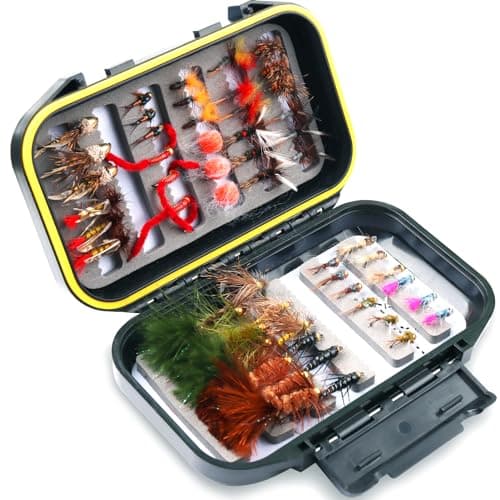
If you are buying flies for the first time and streamers are only part of what you need, this is the efficient purchase. Woolly Buggers for the streamer fishing, dries and nymphs for everything else, and eggs and worms for the high stained water after rain when a streamer is often the second-best fly rather than the first. Buy it as a complete box with buggers in it, not as a streamer selection.
Best for: Best one-box buy — buggers plus the rest of a creek season
| # | Product | Best for | Score | Price |
|---|---|---|---|---|
| 1 | Wooly Bugger Flies for Trout, Bass & Panfish, Sizes 4-10 The most useful fly ever tied, and not only as a streamer. Stripped fast it is a fleeing baitfish; swung slow on a tight line it is a leech; dead-drifted on the bottom it is a big stonefly nymph. That versatility is exactly what a creek angler needs, because a small stream will not give you room to specialize. Buy black and olive, buy sizes 8 and 10 for trout water, and keep the bigger ones for bass. | Best overall — the one streamer to own | — | $26.99View on Amazon#ad |
| 2 | Dr.Fish Clouser Minnow Streamer Flies, 6 Pack When a creek trout has switched to eating small fish — which happens most obviously in autumn and after high water drops — you want something that looks like a minnow rather than a leech. The Clouser rides hook-point-up, which means it bounces off rocks instead of burying the point in them, and that single design decision makes it the most fishable baitfish pattern on a shallow rocky streambed. | Best baitfish imitation — for trout eating minnows | — | $14.99View on Amazon#ad |
| 3 | Colorado Fly Supply Creek Crawler Crayfish Fly A crayfish is the highest-calorie meal in most small streams, and the trout that eat them are the ones worth catching. This fly fishes on the bottom, slowly, which is both the correct way to imitate a crayfish and the opposite of how most people fish a streamer. It is a specialist — a crayfish pattern will out-fish everything on some creeks and do nothing on others — but when it works it works on the big fish. | Best for the biggest fish in the creek | — | $15.95View on Amazon#ad |
| 4 | BASSDASH 64-Piece Fly Fishing Flies Kit with Fly Box The cheapest way to find out whether you like fishing streamers at all. The mix includes bass-sized streamers and poppers alongside the trout patterns, so there are more and larger streamers in here than in the pure trout kits — which matters if your creek holds smallmouth as well as trout. Assortment-grade construction, which for a fly you are stripping through submerged timber is the right trade. | Best cheap source of streamers — and everything else | — | $19.98View on Amazon#ad |
| 5 | 54-Piece Trout Fly Assortment: Dries, Nymphs, San Juan Worms, Salmon Eggs & Woolly Buggers If you are buying flies for the first time and streamers are only part of what you need, this is the efficient purchase. Woolly Buggers for the streamer fishing, dries and nymphs for everything else, and eggs and worms for the high stained water after rain when a streamer is often the second-best fly rather than the first. Buy it as a complete box with buggers in it, not as a streamer selection. | Best one-box buy — buggers plus the rest of a creek season | — | $49.99View on Amazon#ad |
The best streamer for trout is a Woolly Bugger in size 8 or 10, black or olive — the multi-pack in sizes 4 to 10 is the only streamer purchase most creek anglers need to make. If the trout in your creek are eating minnows, add a Clouser Minnow, which rides hook-point-up and survives a rocky bottom. And if you specifically want the largest fish in the stream rather than the most fish, fish a crayfish pattern slowly along the bottom.
A streamer is a fly that imitates something swimming — a baitfish, a leech, a sculpin, a crayfish — rather than a drifting insect. You fish it with movement, which is the whole difference. A dry fly and a nymph both work by looking like helpless food going past at the speed of the current; a streamer works by looking like prey trying to escape, and it triggers a completely different response from a trout.
What a streamer actually imitates
Four things, and your retrieve decides which. The same Woolly Bugger stripped in six-inch pulls is a fleeing minnow; swung slowly across the current on a tight line it is a leech undulating; crawled along the gravel it is a crayfish; dead-drifted under an indicator it is a large stonefly nymph. One fly, four meals. This is why streamer boxes can be small.
Creek trout eat more meat than people assume. A brown trout over about twelve inches gets most of its calories from other fish, crayfish and large invertebrates rather than drifting mayflies — the economics of being a bigger fish demand bigger meals. On a small stream that is a sculpin under a rock, a minnow in the tail of the pool, or a crayfish in the shallows.
Which makes a streamer a size-selection tool. Fishing a streamer usually means fewer takes and bigger average fish. A nymph will out-catch it on numbers almost every day of the year. If the goal for the afternoon is the best fish in the creek rather than a dozen eight-inch ones, the streamer is the correct choice.
When a streamer beats a nymph
High, stained water after rain. This is the clearest case. Visibility drops, insects are not hatching, and trout tuck into the slack water at the edges looking for something substantial. A big dark streamer worked slowly along the bank is the right fly, and often the only fly that gets eaten.
Autumn, when brown trout get aggressive. Pre-spawn browns in October and November chase things out of territory rather than eat them, and a streamer is what they chase. This is the best month of the year to catch the largest trout in a small stream. It is also spawning season, so fish the pools and runs and walk around the pale gravel nests in the shallows.
First and last light in summer. Low clear water makes trout cautious in daylight, and a streamer stripped through a pool at midday will mostly spook them. At dawn and in the last half hour of light that caution collapses and the same fly gets chased hard.
The honest exception
The four types worth carrying
| Type | Imitates | How to fish it | When |
|---|---|---|---|
| Woolly Bugger | Leech, sculpin, crayfish, big nymph | Anything — strip, swing or dead drift | Always. The default streamer |
| Baitfish (Clouser, minnow patterns) | Small fish | Short sharp strips with pauses | Autumn, and after high water clears |
| Crayfish | Crayfish | Slow crawl along the bottom | Summer and early autumn, for the biggest fish |
| Soft-hackle / swung wet fly | Emerging insect, small baitfish | Cast across, let it swing | Riffles and evenings, when a full streamer is too much |
Two patterns is a complete creek streamer box. A Woolly Bugger and a baitfish pattern, in two sizes and two colors, covers the realistic range of a small stream. The crayfish is a worthwhile third if your creek has them — turn over a rock in the shallows and you will know within a minute.
Size and color on small water
Smaller than you think. Big-river streamer fishing runs to articulated flies three and four inches long. On a creek holding eight to twelve-inch trout, a size 8 or 10 Woolly Bugger — roughly an inch and a half — is a substantial meal, and a four-inch fly is an object a trout flees rather than attacks. Scale the fly to the fish you expect to catch.
Dark in dirty water, natural in clear. Black and dark olive give the strongest silhouette in stained or low light, which is why they are the colors to own first. In gin-clear low water, natural tones — olive, brown, tan, a sparse bit of flash — draw fewer refusals. Color is a real variable, and a smaller one than depth or retrieve speed.
Weight is the variable that actually decides things. A streamer fishing a foot under the surface over a four-foot plunge pool is not being fished at all. Bead-head and dumb-bell-eye streamers sink on their own, which is what lets you fish them on a normal floating line in creek-sized water.
Getting it down without a sinking line
On a creek you almost never need a sinking line. Pools are short and shallow, casts are twenty feet, and a weighted fly plus a few seconds of sink time puts the streamer in front of the fish. A sinking or sink-tip line is a big-water tool — the case for one, and which to buy if you do fish bigger rivers, is in the streamer line roundup.
Use the current instead. Cast upstream of the target, let the fly tumble down and sink as it comes, and start the retrieve only when it is at depth in the right place. The creek does the work that a sinking line would do on a river, and you keep the one weight-forward floating line that handles everything else.
Short, stout tippet. Streamers are heavy and air-resistant, and fine tippet will not turn them over — it collapses in a pile and the fly lands with no direction. Three or four feet of 3X or 4X off the end of a tapered leader is about right. The leader and tippet explainer covers why the taper matters more than the length.
Fishing a streamer in twenty feet of room
Down and across is the classic, and it works. Stand at the head of a pool, cast across and slightly downstream, and let the current swing the fly around below you. You do nothing except hold the rod — the current gives the fly movement, and takes come as it turns in the slower water. It is the easiest effective streamer technique there is.
Upstream and back at you, for undercut banks. On a brushy creek the best fish sit under the bank you are standing on. Flick the streamer upstream tight to the bank and strip it back faster than the current — a fly moving downstream past a fish, then suddenly speeding up, looks exactly like something that has seen a trout and panicked.
Strip, pause, strip. The pause is where the takes happen. A fly that moves continuously looks mechanical. Two short pulls and a one-second stop lets the fly drop, flare and look wounded, and that is when a following trout commits. Keep the rod tip low and pointed at the fly so there is no slack to absorb the take.
Set with the line hand, not the rod. A trout hits a streamer hard and hooks itself against tension. Lifting the rod on the take usually pulls the fly out of its mouth; pulling the line straight back with your free hand — a strip set — drives the hook in and keeps the fly in the zone if you miss. If you are fishing spinning gear instead, the same water and the same fish are covered in the creek lure roundup.
The picks in detail
Wooly Bugger Flies for Trout, Bass & Panfish, Sizes 4-10
Best for: Best overall — the one streamer to own
The most useful fly ever tied, and not only as a streamer. Stripped fast it is a fleeing baitfish; swung slow on a tight line it is a leech; dead-drifted on the bottom it is a big stonefly nymph. That versatility is exactly what a creek angler needs, because a small stream will not give you room to specialize. Buy black and olive, buy sizes 8 and 10 for trout water, and keep the bigger ones for bass.
- Sizes
- 4 to 10
- Type
- Weighted streamer
- Species
- Trout, bass, panfish
- Imitates four different food items depending on retrieve
- Weighted, so it fishes without a sinking line
- Cheap enough to fish in the snaggy cover where big trout sit
- Heavier to cast on a light creek rod
- Not a subtle fly for low clear water
Dr.Fish Clouser Minnow Streamer Flies, 6 Pack
Best for: Best baitfish imitation — for trout eating minnows
When a creek trout has switched to eating small fish — which happens most obviously in autumn and after high water drops — you want something that looks like a minnow rather than a leech. The Clouser rides hook-point-up, which means it bounces off rocks instead of burying the point in them, and that single design decision makes it the most fishable baitfish pattern on a shallow rocky streambed.
- Type
- Weighted baitfish streamer
- Count
- 6
- Rides
- Hook point up
- Target
- Trout and smallmouth in rocky water
- Hook-point-up design snags far less on a rocky bottom
- The right silhouette when trout are on minnows
- Works equally well on creek smallmouth
- Only six flies in the pack
- Dumb-bell eyes make it a heavy cast on a 3-weight
Colorado Fly Supply Creek Crawler Crayfish Fly
Best for: Best for the biggest fish in the creek
A crayfish is the highest-calorie meal in most small streams, and the trout that eat them are the ones worth catching. This fly fishes on the bottom, slowly, which is both the correct way to imitate a crayfish and the opposite of how most people fish a streamer. It is a specialist — a crayfish pattern will out-fish everything on some creeks and do nothing on others — but when it works it works on the big fish.
- Type
- Crayfish
- Fishes
- On the bottom, static or crawled
- Best water
- Creeks, canals, reservoir margins
- Imitates the biggest meal available in most creeks
- Selects for larger trout rather than more trout
- Also the best carp and smallmouth fly here
- Needs a slow bottom retrieve most anglers find boring
- Creek-dependent — some streams hold few crayfish
BASSDASH 64-Piece Fly Fishing Flies Kit with Fly Box
Best for: Best cheap source of streamers — and everything else
The cheapest way to find out whether you like fishing streamers at all. The mix includes bass-sized streamers and poppers alongside the trout patterns, so there are more and larger streamers in here than in the pure trout kits — which matters if your creek holds smallmouth as well as trout. Assortment-grade construction, which for a fly you are stripping through submerged timber is the right trade.
- Count
- 64 flies
- Mix
- Dries, nymphs and streamers
- Box
- Included
- More and bigger streamers than a pure trout assortment
- Covers bass as well as trout on a mixed creek
- Lowest cost per fly on this page
- A general kit, not a streamer box
- Assortment-grade hooks and materials
54-Piece Trout Fly Assortment: Dries, Nymphs, San Juan Worms, Salmon Eggs & Woolly Buggers
Best for: Best one-box buy — buggers plus the rest of a creek season
If you are buying flies for the first time and streamers are only part of what you need, this is the efficient purchase. Woolly Buggers for the streamer fishing, dries and nymphs for everything else, and eggs and worms for the high stained water after rain when a streamer is often the second-best fly rather than the first. Buy it as a complete box with buggers in it, not as a streamer selection.
- Count
- 54 flies
- Includes
- Dries, nymphs, San Juan worms, eggs, buggers
- Best on
- Stocked and wild rainbows
- Streamers plus a complete fly box in one purchase
- Eggs and worms cover the days a streamer gets ignored
- Highest fly count per dollar here
- Only a few of the 54 are streamers
- No baitfish or crayfish patterns in the mix
Prices shown are from Amazon as of October 20, 2026 and change often — the button always goes to the current listing. Some links may earn us a commission at no extra cost to you. How this works.
Frequently asked questions
What is the best streamer for trout?
A Woolly Bugger in size 8 or 10, in black or olive. It imitates a leech, a sculpin, a crayfish or a large stonefly nymph depending on how you retrieve it, it comes weighted so it fishes on an ordinary floating line, and it catches trout on every kind of water. No other single streamer covers as much ground.
When should I fish a streamer instead of a nymph?
In high or stained water after rain, through autumn when brown trout turn aggressive, and at first and last light in summer. A nymph will out-catch a streamer on numbers most days; a streamer gets fewer takes from larger fish, which makes it the right choice when you want the best fish in the creek rather than the most.
What size streamers for small streams?
Size 8 and 10, roughly an inch to an inch and a half. Big-river streamer fishing uses three and four-inch articulated flies, but a fly that size on a creek holding eight to twelve-inch trout is something they flee rather than eat. Scale the fly to the fish you actually expect.
Do I need a sinking line to fish streamers?
Not on a creek. Pools are short and shallow, casts are short, and a weighted streamer with a few seconds of sink time reaches the fish on a normal weight-forward floating line. Sinking and sink-tip lines are big-water tools for holding a fly deep through a long swing.
What color streamer should I use?
Black or dark olive in stained water and low light, natural olive and brown tones in clear water. The silhouette matters more than the shade in dirty water, and subtlety matters more in clear water. Depth and retrieve speed both affect your results more than color does.
Sources
Keep reading
Not sure where to start?
The beginner gear guide walks you through exactly what a new stream angler needs — the six essentials first, nice-to-haves later, with one safe-default pick per category.