Flies & Lures · Roundup
The Best Nymphs for Trout
Trout take most of their food underwater, which is why a nymph catches fish on days when nothing rises. These are the five patterns that cover a creek season, the sizes that matter more than the patterns, and the assortments worth buying instead of tying.
Disclosure: Creek Cover is reader-supported. If you buy through our links we may earn a commission, at no extra cost to you. It never changes which pick we tell a new angler to start with. Full disclosure.
Quick picks at a glance
Tap a pick to read the full write-up, or the price button to check it on Amazon.
- 1
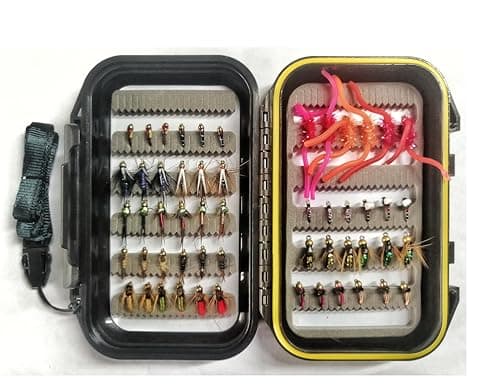
The sensible first nymph buy. Fifty-four bead heads across the patterns a trout stream actually asks for, in a waterproof box you can drop in the creek, for roughly what a shop charges for six hand-tied flies. Assortment-grade hooks are the trade-off and they are a fair one: nymphs are the flies you lose to the bottom, and losing a cheap one does not change your afternoon.
Best for: Best overall — the whole nymph box in one purchase9.2 - 2
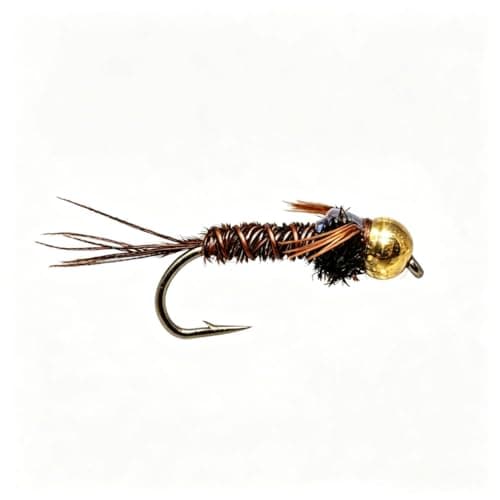
If you fish one nymph for the rest of your life, make it a bead head Pheasant Tail. It is a passable mayfly nymph, a passable midge pupa and a passable nothing-in-particular, and trout eat all three readings of it. Buying it as a 12-pack across sizes 12 to 18 is the right way to own it, because size is the variable that decides whether it gets taken.
Best for: Best single pattern — the one nymph to own in four sizes9.3 - 3
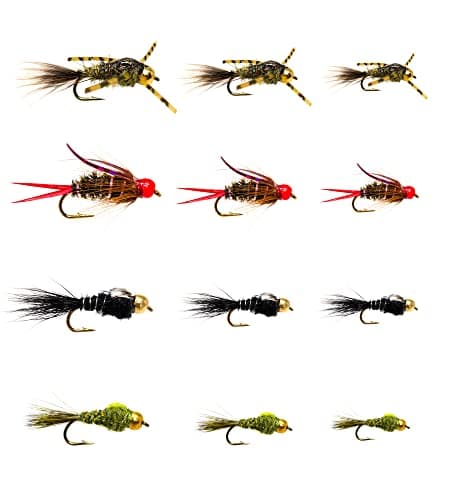
Prince Nymph and Hare's Ear are the two flies most American trout have been caught on, and this pack gives you both plus a rubber-legged variant for high or colored water. Pair it with the Pheasant Tail above and you own the classic nymph box in two purchases for less than the cost of one premium assortment.
Best for: Best classic trio — the three patterns that predate everything else9.0 - 4
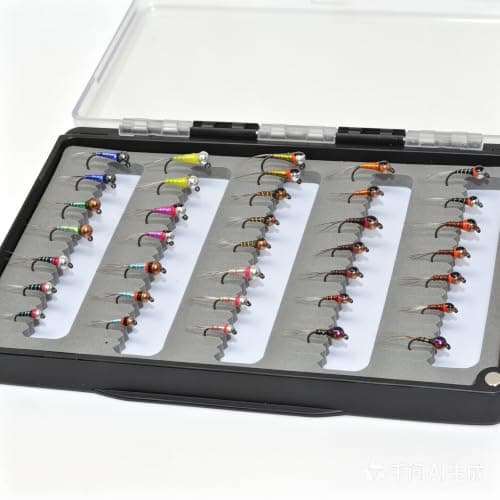
Perdigons are the modern answer to a problem creeks create constantly: a pocket that is two feet deep and four feet long, with no time for a fly to sink. A slim epoxy body over a tungsten bead drops through the current column faster than anything else on this page, and barbless hooks come out of a small trout in a second. The magnetic box is genuinely better than a foam one for flies this small.
Best for: Best for deep pockets and fast water9.1 - 5
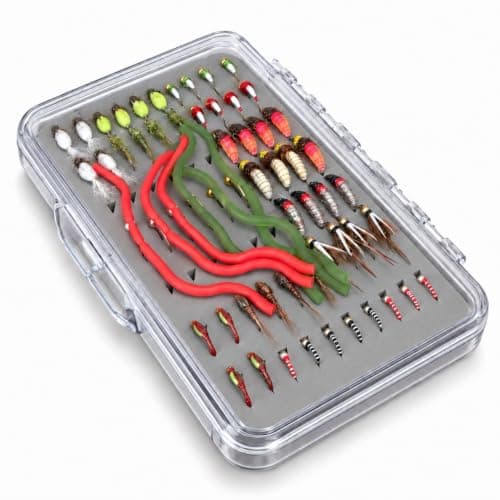
The three flies to reach for when the standard box has failed. A Squirmy Worm is the highest-percentage fly in high, stained water after rain; a Zebra Midge catches fish in cold, clear, low water in midwinter when nothing is hatching; the Hare's Ear covers everything between. It is a deliberately odd set, and that is the point — it fills the two conditions a classic assortment handles worst.
Best for: Best for hard days — the patterns that work when nothing else does8.8
| # | Product | Best for | Score | Price |
|---|---|---|---|---|
| 1 | Wifreo 54-Piece Bead Head Nymph Assortment with Waterproof Fly Box The sensible first nymph buy. Fifty-four bead heads across the patterns a trout stream actually asks for, in a waterproof box you can drop in the creek, for roughly what a shop charges for six hand-tied flies. Assortment-grade hooks are the trade-off and they are a fair one: nymphs are the flies you lose to the bottom, and losing a cheap one does not change your afternoon. | Best overall — the whole nymph box in one purchase | 9.2 | $22.99View on Amazon#ad |
| 2 | Outdoor Planet Flashback Pheasant Tail Gold Bead Nymph Assortment, 12 Pack, Sizes 12-18 If you fish one nymph for the rest of your life, make it a bead head Pheasant Tail. It is a passable mayfly nymph, a passable midge pupa and a passable nothing-in-particular, and trout eat all three readings of it. Buying it as a 12-pack across sizes 12 to 18 is the right way to own it, because size is the variable that decides whether it gets taken. | Best single pattern — the one nymph to own in four sizes | 9.3 | $10.99View on Amazon#ad |
| 3 | Prince Nymph, Gold-Ribbed Hare's Ear and Rubber-Legged Hare's Ear, 12-Piece Assortment Prince Nymph and Hare's Ear are the two flies most American trout have been caught on, and this pack gives you both plus a rubber-legged variant for high or colored water. Pair it with the Pheasant Tail above and you own the classic nymph box in two purchases for less than the cost of one premium assortment. | Best classic trio — the three patterns that predate everything else | 9.0 | $9.99View on Amazon#ad |
| 4 | Outdoor Planet 36-Piece Perdigon Nymph Assortment, Tungsten Barbless, with Magnetic Fly Box Perdigons are the modern answer to a problem creeks create constantly: a pocket that is two feet deep and four feet long, with no time for a fly to sink. A slim epoxy body over a tungsten bead drops through the current column faster than anything else on this page, and barbless hooks come out of a small trout in a second. The magnetic box is genuinely better than a foam one for flies this small. | Best for deep pockets and fast water | 9.1 | $27.99View on Amazon#ad |
| 5 | Trout Nymph Assortment: Squirmy Worm, Zebra Midge and Hare's Ear, Sizes 10-18 The three flies to reach for when the standard box has failed. A Squirmy Worm is the highest-percentage fly in high, stained water after rain; a Zebra Midge catches fish in cold, clear, low water in midwinter when nothing is hatching; the Hare's Ear covers everything between. It is a deliberately odd set, and that is the point — it fills the two conditions a classic assortment handles worst. | Best for hard days — the patterns that work when nothing else does | 8.8 | $23.99View on Amazon#ad |
The best nymphs for trout are a bead head Pheasant Tail, a Hare’s Ear, a Prince Nymph, a Zebra Midge and a Perdigon — and the 54-piece bead head box is the cheapest way to own all five. If you would rather buy one pattern properly than fifty-four roughly, buy Pheasant Tails in four sizes. And if your creek is a staircase of short, deep pockets, add tungsten Perdigons — they are the only flies here that reach the bottom in time.
A nymph is the immature, underwater stage of an aquatic insect, and an artificial nymph is a fly tied to imitate it. That single definition explains why this page matters more than the dry fly page: trout take the overwhelming majority of their food below the surface, and a dry fly only works during the fraction of the year when insects are hatching. A nymph works the rest of the time.
Why nymphs out-fish dry flies
Because the food is down there. Mayflies, caddisflies, stoneflies and midges spend almost their entire lives underwater as nymphs or larvae and only days as adults. A trout holding in a creek is watching a conveyor belt of drifting nymphs go past at eye level all day, every day. The hatch it rises to is the exception, not the rule.
Because a nymph works on a dead day. The honest reason to carry nymphs is that most trips do not coincide with a hatch. You arrive at eleven in the morning in July, nothing is rising, and the choice is to fish a dry fly on faith or put something under the surface where the fish are already feeding. On small water this is the difference between a blank afternoon and a decent one.
Because small streams hide their fish deep. Creek trout sit in the few places with depth and cover: a plunge pool below a drop, the slot under an undercut bank, the pocket behind a boulder. All three are subsurface lies. A dry fly skates over the top of them; a weighted nymph goes into them. The general trout fly selection covers the full box across dries, nymphs and streamers — this page is the subsurface half of it in detail.
The one-fly test
The five patterns that matter
| Pattern | Size | Imitates | When it is the right fly |
|---|---|---|---|
| Bead head Pheasant Tail | 12 to 18 | Mayfly nymph, midge pupa | Always. The default nymph in clear to lightly stained water |
| Gold-Ribbed Hare's Ear | 12 to 16 | Caddis pupa, generic buggy nymph | Scruffier water, early season, when the Pheasant Tail is refused |
| Prince Nymph | 12 to 16 | Stonefly nymph, attractor | Freestone creeks, pocket water, higher flows |
| Zebra Midge | 16 to 20 | Midge pupa | Cold, clear, low winter water with no hatch at all |
| Perdigon (tungsten) | 14 to 18 | Generic fast-sinking nymph | Short, deep pockets where a standard nymph never reaches bottom |
That is the entire list. Two sizes each of the first three, plus a few midges and a few Perdigons, is about thirty flies — one shirt-pocket box, and more subsurface coverage than you will ever need on small water. The box options are compared in the fly box roundup.
What is deliberately missing is more patterns. Stonefly nymphs in size 6, scuds, sow bugs, caddis larvae in four colors, and the hundred other things a fly shop wall offers are all real flies that catch real fish somewhere. On a brushy creek holding 7-inch to 12-inch trout, none of them beats a correctly sized Pheasant Tail drifted properly, and buying them is the most common way beginners spend money without catching more fish.
Size and weight beat pattern
Size is the first thing to change when you are being refused. Trout feeding on drifting nymphs are size-sensitive long before they are pattern-sensitive. If a 14 is ignored in clear water, the fix is a 16 or an 18 of the same fly, not a different pattern. In high or colored water the fix runs the other way: go up to a 12. The whole size system, and which sizes to buy for each kind of fly, is set out in what size flies to use for trout.
Weight decides whether the fly is fishing at all. A nymph drifting a foot under the surface over a four-foot pool is not being fished — the trout is on the bottom and has not seen it. The bead is what fixes this, and the material matters: tungsten is roughly twice as dense as brass, so a tungsten-beaded fly sinks in about half the water. That is why the Perdigon set earns a place in a creek box even though it is the most expensive fly here per unit.
Bead color is a real variable, and a small one. Gold and copper beads add flash that helps in stained water; black and matte tungsten draw fewer refusals from pressured fish in gin-clear water. If you are choosing between two otherwise identical packs, this is a reasonable tiebreaker. It is not worth buying both.
Barbless is worth choosing when it is offered. Creek trout are often small and often wild, nymphing hooks them deep more often than a dry fly does, and a barbless hook comes out in seconds with forceps. Several states and many special-regulation stretches also require it. Check your state wildlife agency for the water you plan to fish — tackle rules vary by state and by stretch, and they change.
How many nymphs you actually need
Thirty, and you will lose eight of them. That is the honest arithmetic of nymph fishing: the fly is designed to tick along the bottom, and the bottom is where rocks, sticks and roots live. A nymph box is a consumable in a way a dry fly box is not, and your buying should reflect it.
Which is the argument for assortments over hand-tied flies. There is a real quality gap — hand-tied flies hold their hackle and keep a sharper hook — but it is the wrong gap to pay for on the fly you are most likely to leave in a log. Buy the assortment box for your nymphs and spend the saved money on better dries, which live in the air and last for years. The full argument on fly quality tiers and cost per fish is in the cheap flies guide.
| If you are | Buy | Roughly |
|---|---|---|
| Starting from zero | One 54-piece bead head assortment | A full season of nymphs in one box |
| Topping up a box that works | A 12-pack of Pheasant Tails in four sizes | The cheapest useful purchase here |
| Fishing deep pocket water | A tungsten Perdigon set | The specialist addition |
| Fishing through winter | Zebra Midges in 16 to 20 | The only fly that reliably works in January |
Fishing a nymph on a creek
Short line, upstream, no slack. On a creek you are rarely more than twenty feet from the fly, which removes most of the difficulty that makes nymphing sound technical on big rivers. Flick the nymph to the head of the pocket, lift the rod tip to follow it down, and keep just enough tension to feel the take without dragging the fly.
Dead drift is the whole technique. A real nymph has no engine; it tumbles at the speed of the current. A fly being pulled across the current at a different speed looks wrong to a trout and gets refused. Everything about nymphing — the mending, the rod lift, the leader length — exists to let the fly drift as if nothing were attached to it.
You will not feel most takes. A trout inhales a nymph and spits it in under a second, and on a dead drift there is nothing pulling. Watch where the leader enters the water: a pause, a twitch, a drift that stops a fraction early. Set on anything odd. The single most common mistake is waiting to feel something.
Add an indicator if you cannot read the leader. A small yarn indicator or a buoyant dry fly fished eighteen inches above the nymph solves the detection problem outright and costs you very little on small water. Setting the leader up is covered in how to tie tippet to leader, and a short rod helps more than any of it — the small-stream rod guide makes that case.
Through the season
Winter: midges, small, slow. Water in the thirties and low forties means fish on the bottom of the deepest pool, barely moving, eating almost nothing. A size 18 Zebra Midge drifted slowly through that pool is the only thing that reliably works, and you need to put it right on their nose.
Spring: everything, heavy. High cold water from snowmelt and rain, fish pushed to the edges, visibility down. This is Prince Nymph and Squirmy Worm weather — bigger, heavier, more visible flies, fished in close to the bank where the current slackens.
Summer: small and subtle, early and late. Low clear water makes trout cautious and makes 16s and 18s the working sizes. Mornings and evenings are the productive hours; in the middle of the day the dry fly often takes over, which is the one season nymphs are not automatically the better choice. Terrestrials dominate the surface in those months - see the best summer trout flies.
Fall: back to the Pheasant Tail, and watch where you walk. Cooling water brings fish back on the feed and the standard nymph box comes into its own again. Brook and brown trout spawn in autumn; gravel beds in shallow water should be walked around, not cast to. Species-specific selections are in flies for brook trout and flies for rainbow trout. The surface half of the same box is in the dry fly roundup, and if you would rather fish nymphs on a long rod with no indicator at all, that is euro nymphing.
The picks in detail
Wifreo 54-Piece Bead Head Nymph Assortment with Waterproof Fly Box
9.2/10Best for: Best overall — the whole nymph box in one purchase
The sensible first nymph buy. Fifty-four bead heads across the patterns a trout stream actually asks for, in a waterproof box you can drop in the creek, for roughly what a shop charges for six hand-tied flies. Assortment-grade hooks are the trade-off and they are a fair one: nymphs are the flies you lose to the bottom, and losing a cheap one does not change your afternoon.
- Count
- 54 flies
- Type
- Bead head nymphs and wet flies
- Box
- Waterproof, included
- Covers the standard patterns in one buy
- Waterproof box included — no second purchase
- Cheap enough to fish the snaggy water where trout actually sit
- Assortment-grade hooks dull faster than hand-tied flies
- Sizes skew a shade large for headwater fish
Outdoor Planet Flashback Pheasant Tail Gold Bead Nymph Assortment, 12 Pack, Sizes 12-18
9.3/10Best for: Best single pattern — the one nymph to own in four sizes
If you fish one nymph for the rest of your life, make it a bead head Pheasant Tail. It is a passable mayfly nymph, a passable midge pupa and a passable nothing-in-particular, and trout eat all three readings of it. Buying it as a 12-pack across sizes 12 to 18 is the right way to own it, because size is the variable that decides whether it gets taken.
- Count
- 12 flies
- Sizes
- 12, 14, 16, 18
- Head
- Gold bead, flashback wing case
- The highest-percentage single nymph pattern there is
- Four sizes in one pack — the variable that matters
- Hand-tied at an assortment price
- One pattern only — no caddis or stonefly coverage
- Twelve flies does not last long in brushy water
Prince Nymph, Gold-Ribbed Hare's Ear and Rubber-Legged Hare's Ear, 12-Piece Assortment
9.0/10Best for: Best classic trio — the three patterns that predate everything else
Prince Nymph and Hare's Ear are the two flies most American trout have been caught on, and this pack gives you both plus a rubber-legged variant for high or colored water. Pair it with the Pheasant Tail above and you own the classic nymph box in two purchases for less than the cost of one premium assortment.
- Count
- 12 flies
- Patterns
- Prince, Hare's Ear, rubber-legged Hare's Ear
- Head
- Bead head
- Two of the three most proven nymph patterns in one pack
- Rubber legs give you a high-water option
- Lowest cost per fly of any pick here
- No small sizes for clear low water
- Hook quality is assortment-grade, not premium
Outdoor Planet 36-Piece Perdigon Nymph Assortment, Tungsten Barbless, with Magnetic Fly Box
9.1/10Best for: Best for deep pockets and fast water
Perdigons are the modern answer to a problem creeks create constantly: a pocket that is two feet deep and four feet long, with no time for a fly to sink. A slim epoxy body over a tungsten bead drops through the current column faster than anything else on this page, and barbless hooks come out of a small trout in a second. The magnetic box is genuinely better than a foam one for flies this small.
- Count
- 36 flies
- Sizes
- 14, 16, 18
- Bead
- Tungsten, barbless hooks
- Sinks faster than any standard nymph — made for short pockets
- Barbless hooks for quick release on small wild fish
- Magnetic box holds tiny flies better than foam
- Most expensive pick here per fly
- Narrow use: poor choice for slow, shallow, flat water
Trout Nymph Assortment: Squirmy Worm, Zebra Midge and Hare's Ear, Sizes 10-18
8.8/10Best for: Best for hard days — the patterns that work when nothing else does
The three flies to reach for when the standard box has failed. A Squirmy Worm is the highest-percentage fly in high, stained water after rain; a Zebra Midge catches fish in cold, clear, low water in midwinter when nothing is hatching; the Hare's Ear covers everything between. It is a deliberately odd set, and that is the point — it fills the two conditions a classic assortment handles worst.
- Patterns
- Squirmy Worm, Zebra Midge, Hare's Ear
- Sizes
- 10 to 18
- Best in
- High water and cold clear water
- Covers the two conditions standard nymph boxes handle worst
- Wide size range in one purchase
- Zebra Midge is the best winter trout fly made
- Not a first purchase — buy it after a general box
- Squirmy Worm material tears and the flies are short-lived
Prices shown are from Amazon as of October 20, 2026 and change often — the button always goes to the current listing. Some links may earn us a commission at no extra cost to you. How this works.
Frequently asked questions
What is the best nymph for trout?
A bead head Pheasant Tail in size 14 or 16. It reads as a mayfly nymph, a midge pupa or generic drifting food depending on what the trout is looking for, which is why it works across more water and more months than any other single pattern. Carry it in sizes 12 through 18 and change size before you change pattern.
How many nymph patterns do I actually need?
Five: a Pheasant Tail, a Hare's Ear, a Prince Nymph, a Zebra Midge and a fast-sinking Perdigon. Two sizes each of the first three plus a few of the last two is roughly thirty flies, which fits a shirt-pocket box and covers a full season on any small trout stream.
Should nymphs be weighted?
Yes, for creek fishing. An unweighted nymph drifting near the surface over a four-foot pool never reaches the fish. A bead head gets it down inside the short drift a creek pocket gives you, and tungsten beads sink roughly twice as fast as brass, which matters in deep, fast pocket water.
Are cheap nymph assortments any good?
For nymphs specifically, yes. Assortment flies have softer hooks and looser bodies than hand-tied patterns, but nymphs are the flies you lose to rocks and roots, so paying premium prices for them is poor value. Buy assortments for nymphs and spend the difference on better dry flies, which last far longer.
What size nymphs for small streams?
Size 14 and 16 for most of the year, 12 in high or colored water, and 18 in low clear summer water or winter. Size matters more than pattern to a feeding trout, so if a fly is being refused in clear water the first change should be a smaller version of the same fly.
Sources
Keep reading
Not sure where to start?
The beginner gear guide walks you through exactly what a new stream angler needs — the six essentials first, nice-to-haves later, with one safe-default pick per category.