Fly Rods & Reels · Roundup
The Best Fly Line for Streamers
Streamer fishing fails for one of two reasons: the fly never gets down, or the line cannot pick up a heavy fly and turn it over. A sink tip solves both. Here are five real lines, the depth each one fishes, and the one most creek and small-river anglers should buy.
Disclosure: Creek Cover is reader-supported. If you buy through our links we may earn a commission, at no extra cost to you. It never changes which pick we tell a new angler to start with. Full disclosure.
Quick picks at a glance
Tap a pick to read the full write-up, or the price button to check it on Amazon.
- 1
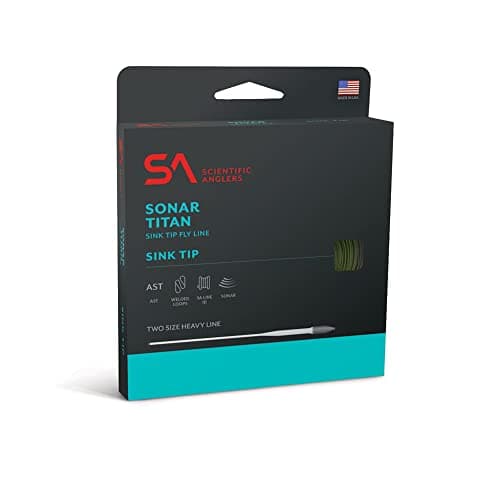
A floating running line with a type-3 sinking front end, built on an aggressive short head that throws weighted flies. That combination is what streamer fishing on a creek needs: the fly gets down two to three feet in the run, while the floating belly stays controllable and liftable off the water.
Best for: Best fly line for streamers overall — the small-water default9.4 - 2
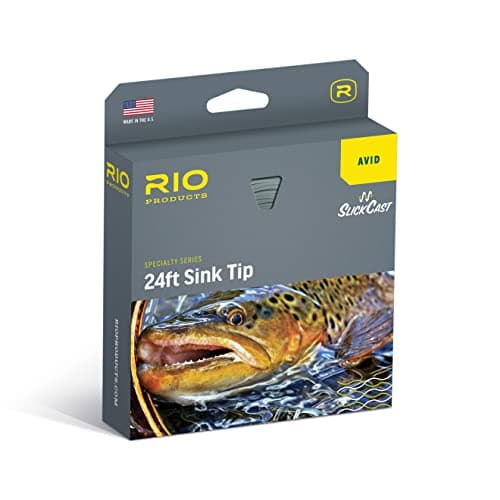
A 24-foot slow-sinking tip on a trout taper, which is the gentlest introduction to sink-tip fishing there is. It fishes a foot or two down rather than deep, and because the tip sinks slowly it does not hang up in the cobble on a shallow creek run. The easiest line here to cast with a normal trout stroke.
Best for: Best value streamer line — the easiest sink tip to cast9.2 - 3
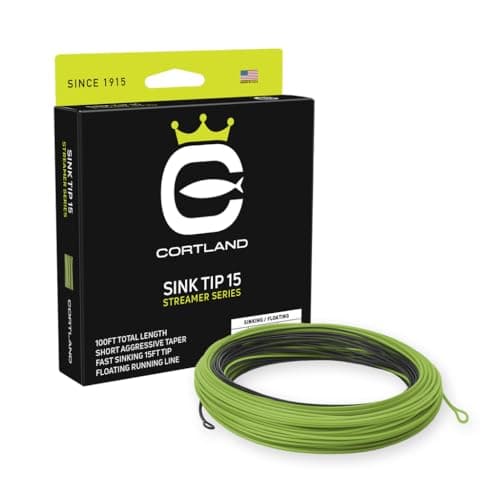
A purpose-built streamer line: a short 15-foot sinking tip that loads fast and punches heavy flies into tight banks. The shorter tip is the point — it turns over faster than a 24-foot tip and gets the fly down without you stripping in half the line to recast. This is the one for a 7-weight and a big fly.
Best for: Best for big flies and deeper water — a 15 ft sinking tip9.1 - 4
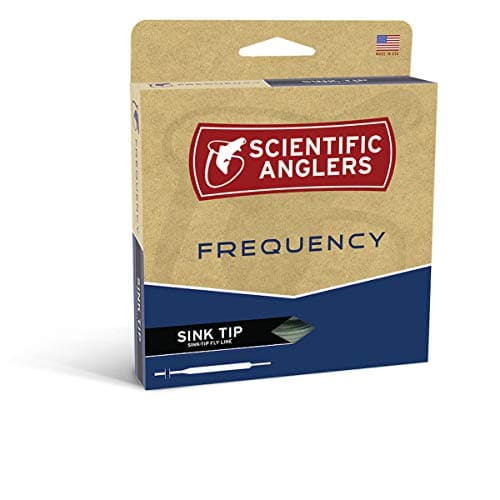
The budget line in the Scientific Anglers catalog, with a type-3 sinking tip on a plain floating body. You give up the slick coating and the fine taper work of the Sonar, and you keep the part that matters: the fly gets down. If you are testing whether streamer fishing is for you, start here.
Best for: Best budget sink tip — the cheapest honest way to fish deep8.8 - 5
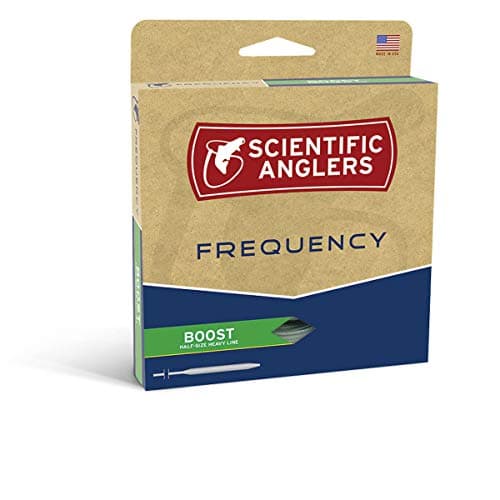
Sometimes the right streamer line floats. On a creek that runs two feet deep, a sinking tip just plows the gravel — what you need is a floating line with enough front-end mass to throw a weighted fly, and the Boost taper is exactly that: a half-size-heavy head on a floating body.
Best for: Best floating line for streamers in shallow creeks9.0
| # | Product | Best for | Score | Price |
|---|---|---|---|---|
| 1 | Scientific Anglers Sonar Titan Sink Tip Fly Line, WF5F/S3 A floating running line with a type-3 sinking front end, built on an aggressive short head that throws weighted flies. That combination is what streamer fishing on a creek needs: the fly gets down two to three feet in the run, while the floating belly stays controllable and liftable off the water. | Best fly line for streamers overall — the small-water default | 9.4 | $99.95View on Amazon#ad |
| 2 | RIO Avid Series 24ft Sinking Tip Trout Fly Line, Slow Sinking A 24-foot slow-sinking tip on a trout taper, which is the gentlest introduction to sink-tip fishing there is. It fishes a foot or two down rather than deep, and because the tip sinks slowly it does not hang up in the cobble on a shallow creek run. The easiest line here to cast with a normal trout stroke. | Best value streamer line — the easiest sink tip to cast | 9.2 | $79.99View on Amazon#ad |
| 3 | Cortland Streamer Sink Tip 15 Fly Line, WF7S/F A purpose-built streamer line: a short 15-foot sinking tip that loads fast and punches heavy flies into tight banks. The shorter tip is the point — it turns over faster than a 24-foot tip and gets the fly down without you stripping in half the line to recast. This is the one for a 7-weight and a big fly. | Best for big flies and deeper water — a 15 ft sinking tip | 9.1 | $89.95View on Amazon#ad |
| 4 | Scientific Anglers Frequency Sink Tip Type III Fly Line, WF7F/S The budget line in the Scientific Anglers catalog, with a type-3 sinking tip on a plain floating body. You give up the slick coating and the fine taper work of the Sonar, and you keep the part that matters: the fly gets down. If you are testing whether streamer fishing is for you, start here. | Best budget sink tip — the cheapest honest way to fish deep | 8.8 | $47.96View on Amazon#ad |
| 5 | Scientific Anglers Frequency Boost Fly Line, WF5F Sometimes the right streamer line floats. On a creek that runs two feet deep, a sinking tip just plows the gravel — what you need is a floating line with enough front-end mass to throw a weighted fly, and the Boost taper is exactly that: a half-size-heavy head on a floating body. | Best floating line for streamers in shallow creeks | 9.0 | $59.95View on Amazon#ad |
Buy the Scientific Anglers Sonar Titan Sink Tip in WF5F/S3 if you are fishing streamers on creeks and small rivers. It is a floating line with a type-3 sinking front end, so a weighted fly gets down two or three feet while the belly stays on the surface where you can still control it. If you want the gentlest version of that, the RIO Avid 24ft sinking tip casts like a normal trout line, and on genuinely shallow creeks the floating Frequency Boost is the better answer.
Prices on this page come live from the retailer and are date-stamped under each buy button. We compile manufacturer specifications — sink rates, head lengths and tapers — and do not claim to have tested these lines ourselves.
What a streamer line has to do
It has to turn over a heavy fly. A cone-head Woolly Bugger or a small articulated streamer weighs many times what a size 16 dry weighs, and a standard trout taper with a long fine front end collapses under it. Streamer lines answer this with a short, heavy head — mass concentrated in the first 25 to 35 feet — which is why they feel so different to cast.
It has to get the fly down and keep it down. Trout eat streamers below themselves far more often than above, and current lifts anything buoyant. A sinking tip holds the fly in the strike zone through the whole swing instead of letting it climb out halfway.
And it has to stay controllable. This is why sink tips beat full sinking lines for most trout fishing: with a floating body you can still mend, still lift, and still see where your line is. A full sinking line is deeper and almost unmanageable on a small stream.
The five lines, compared
| Line | Type | Sink rate | Fishes | Buy it for |
|---|---|---|---|---|
| SA Sonar Titan Sink Tip | Floating body, sinking tip | Type 3 | 2-3 ft down | The all-round creek streamer line |
| RIO Avid 24ft Sinking Tip | Floating body, 24 ft tip | Slow | 1-2 ft down | The easiest sink tip to cast |
| Cortland Streamer Sink Tip 15 | Floating body, 15 ft tip | Type 3 | 2-4 ft down | Heavy and articulated flies |
| SA Frequency Sink Tip Type III | Floating body, sinking tip | Type 3 | 2-3 ft down | The cheapest real sink tip |
| SA Frequency Boost | Full floating | None | Surface to 1 ft | Shallow creeks and weighted flies |
Picking a sink rate
Sink rates are sold as "type" numbers, and the number is inches per second. A type-3 tip sinks roughly three inches per second, type 6 about six. On a creek with a three-foot run and a four-second drift, type 3 puts the fly a foot or so down by the time it reaches the fish, which is right. Type 6 puts it in the rocks.
Deeper is not better; matched is better. The common mistake is buying the fastest sinking line available and then fishing it on water three feet deep, where it snags constantly and you blame the fly. Buy slow for shallow creeks, type 3 for mixed water, and faster only if you fish deep winter pools or tailwater runs.
One line, two depths: carry a sinking leader instead
What line weight for streamers?
5-weight for creek streamers, 6 or 7 for anything bigger. A 5-weight sink tip on a 9-foot 5-weight rod throws a size 8 or 10 weighted streamer comfortably, and that covers most small-stream trout fishing. Step to a 6 or 7 when the flies get past three inches or you are casting into wind all day.
Do not put a streamer line on a 3-weight. A short heavy head overloads a light rod and the rod cannot recover between strokes. If your creek rod is a 3-weight — and on brushy water it should be, per the small-stream rod roundup — fish unweighted or lightly weighted streamers on the floating line instead.
Line weight and rod weight should match, not be "overlined." Streamer tapers are already built half a size heavy. Deliberately going up another size on top of that makes a rod feel dead. The weight question in general is covered in 4wt vs 5wt fly rods.
Streamers on small water
On a creek, the cast is short and the fly lands hard. You are often making 20-foot casts under branches, which means the head of the line never fully leaves the rod. That favors the shorter heads here — the Cortland 15-foot tip and the Sonar Titan — over long-bellied lines that need distance to load.
Fish the fly across and down, not upstream. A streamer works when it looks like a fleeing baitfish, so cast across the current, let the sink tip pull it down, and strip it back along the seam. On small water the whole swing takes four seconds, which is why slow sink rates are usually enough.
The flies themselves are simpler than the line choice. A Woolly Bugger and a Clouser Minnow in two sizes will cover a season — both are in the creek lure and fly guide and in the best flies for rainbow trout.
The leader matters as much as the line
Short and strong: 4 to 6 feet of 1X to 3X. A long tapered dry-fly leader lets a heavy streamer hinge and tangle, and it lets the fly float up away from the sinking tip you just paid for. Cut it down. With a sink tip you want the fly close to the line, not drifting three feet above it.
Tie it straight to the tip with a loop. No tippet rings, no three-section tapers. If you want the knots, the one you need is in how to tie tippet to leader, and the rest of the rigging is in how to set up a fly rod.
And give the reel a thought. Sink tips are heavier than floating lines and take more room on the spool, so check the capacity before you load one onto a small-arbor trout reel. The options are in the trout fly reel roundup. For the flies that go on the end of it, see the best streamers for trout.
The picks in detail
Scientific Anglers Sonar Titan Sink Tip Fly Line, WF5F/S3
9.4/10Best for: Best fly line for streamers overall — the small-water default
A floating running line with a type-3 sinking front end, built on an aggressive short head that throws weighted flies. That combination is what streamer fishing on a creek needs: the fly gets down two to three feet in the run, while the floating belly stays controllable and liftable off the water.
- Type
- Floating body, sinking tip
- Sink rate
- Type 3 tip
- Taper
- Short, aggressive head
- Turns over cone-heads and articulated flies
- Floating belly keeps line control and mending possible
- Also available in 6wt and 8wt for bigger water
- Overkill on a 3wt creek rod
- Short head punishes a slow casting stroke
RIO Avid Series 24ft Sinking Tip Trout Fly Line, Slow Sinking
9.2/10Best for: Best value streamer line — the easiest sink tip to cast
A 24-foot slow-sinking tip on a trout taper, which is the gentlest introduction to sink-tip fishing there is. It fishes a foot or two down rather than deep, and because the tip sinks slowly it does not hang up in the cobble on a shallow creek run. The easiest line here to cast with a normal trout stroke.
- Type
- Floating body, 24 ft sinking tip
- Sink rate
- Slow
- Taper
- Trout taper
- Casts like a normal trout line
- Slow sink keeps you off the bottom in shallow water
- Cheaper than a dedicated streamer system
- Not enough sink for deep winter pools
- Less front-end mass for big articulated flies
Cortland Streamer Sink Tip 15 Fly Line, WF7S/F
9.1/10Best for: Best for big flies and deeper water — a 15 ft sinking tip
A purpose-built streamer line: a short 15-foot sinking tip that loads fast and punches heavy flies into tight banks. The shorter tip is the point — it turns over faster than a 24-foot tip and gets the fly down without you stripping in half the line to recast. This is the one for a 7-weight and a big fly.
- Type
- Floating body, 15 ft sinking tip
- Weight
- WF7
- Built for
- Heavy and articulated streamers
- Fast loading for short, hard casts
- Handles the heaviest flies here
- Short tip recasts quickly
- 7-weight is more rod than most creeks need
- Aggressive taper is not a dry-fly line
Scientific Anglers Frequency Sink Tip Type III Fly Line, WF7F/S
8.8/10Best for: Best budget sink tip — the cheapest honest way to fish deep
The budget line in the Scientific Anglers catalog, with a type-3 sinking tip on a plain floating body. You give up the slick coating and the fine taper work of the Sonar, and you keep the part that matters: the fly gets down. If you are testing whether streamer fishing is for you, start here.
- Type
- Floating body, sinking tip
- Sink rate
- Type 3
- Weight
- WF7
- Lowest price for a real sink tip
- Same sink rate as the premium line
- Simple, durable coating
- Coating is less slick, so it shoots less line
- Memory in cold weather
Scientific Anglers Frequency Boost Fly Line, WF5F
9.0/10Best for: Best floating line for streamers in shallow creeks
Sometimes the right streamer line floats. On a creek that runs two feet deep, a sinking tip just plows the gravel — what you need is a floating line with enough front-end mass to throw a weighted fly, and the Boost taper is exactly that: a half-size-heavy head on a floating body.
- Type
- Full floating
- Taper
- Boost — half size heavy head
- Weight
- WF5F
- Throws weighted flies without a sinking tip
- Still fishes dries and nymphs — one line, every method
- Easiest line here to lift and recast
- Depth comes only from the fly and the leader
- Heavy head is not a delicate presentation line
Prices shown are from Amazon as of October 20, 2026 and change often — the button always goes to the current listing. Some links may earn us a commission at no extra cost to you. How this works.
Frequently asked questions
What is the best fly line for streamers?
A sink-tip line: a floating body with a sinking front end. For creeks and small rivers the Scientific Anglers Sonar Titan Sink Tip in WF5F/S3 is the default - the type-3 tip fishes two to three feet down and the aggressive head turns over weighted flies that a standard trout taper cannot.
Do you need a sinking line for streamer fishing?
Not always. On water under about three feet, a floating line with a weighted fly and a short leader fishes the whole column fine, and a sinking tip just drags bottom. A sink tip earns its place in deeper runs, in fast current that lifts the fly, and in cold water when trout sit low.
What sink rate should a streamer line have?
Type 3 - about three inches per second - covers most trout streamer fishing. Choose a slow-sinking tip for shallow creeks where a faster line would snag, and only go to type 6 or faster for deep winter pools and heavy tailwater runs.
What weight fly line is best for streamers?
A 5-weight for creek and small-river streamers, stepping to a 6 or 7 for flies over about three inches or for casting in wind. Do not put a streamer taper on a 3-weight creek rod - the short heavy head overloads a light rod, so fish lighter flies on a floating line instead.
What leader do you use with a sink tip for streamers?
Four to six feet of 1X to 3X, straight to the loop on the line tip. A long tapered leader lets a heavy fly hinge and allows it to ride up away from the sinking tip, which defeats the purpose of buying the line.
Sources
Keep reading
Not sure where to start?
The beginner gear guide walks you through exactly what a new stream angler needs — the six essentials first, nice-to-haves later, with one safe-default pick per category.