Guides · Buying guide
Fly Line, Leader and Tippet Explained
Three pieces of material connect your reel to your fly, and almost every beginner is confused by at least one of them. Here is what each part does, why you cannot skip any of them, and exactly what to buy for a small trout stream.
Disclosure: Creek Cover is reader-supported. If you buy through our links we may earn a commission, at no extra cost to you. It never changes which pick we tell a new angler to start with. Full disclosure.
Quick picks at a glance
Tap a pick to read the full write-up, or the price button to check it on Amazon.
- 1
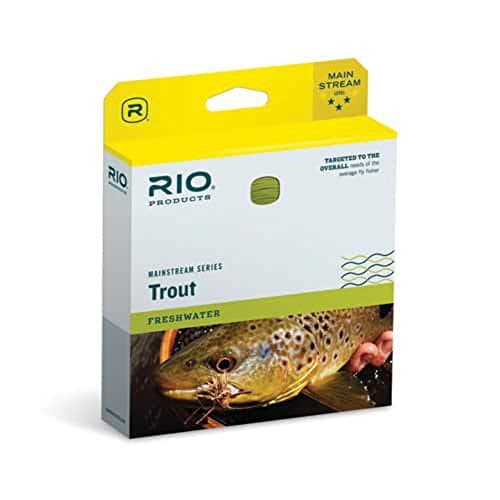
The fly line is the weight you cast, so it is the single component that most changes how a rod feels. A weight-forward floating trout line in your rod's rated weight is the right answer for almost all creek fishing, and a known line at a sensible price beats the generic line bundled with a starter outfit by a wide margin. Match the number on the box to the number on your rod and nothing else needs thinking about.
Best for: The line — the part that does the casting - 2
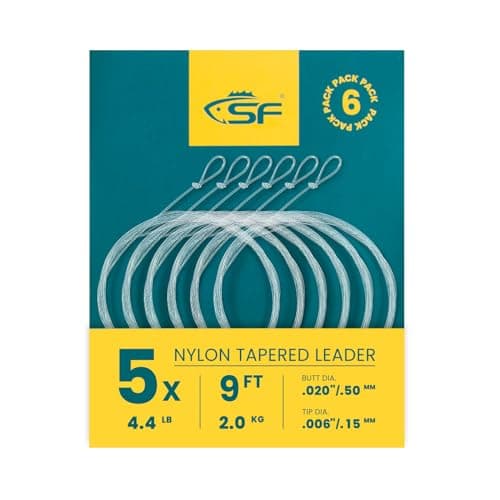
A knotless tapered leader is a single length of nylon drawn thick at one end and fine at the other, and the taper is what transfers energy from the heavy line down to the fly so it lands pointing away from you. Nine feet at 5X is the standard trout leader and the correct default for creek fishing. Buy two or three — they are cheap, and a leader that has been shortened by six fly changes needs replacing rather than rescuing.
Best for: The leader — the part that makes the cast turn over - 3
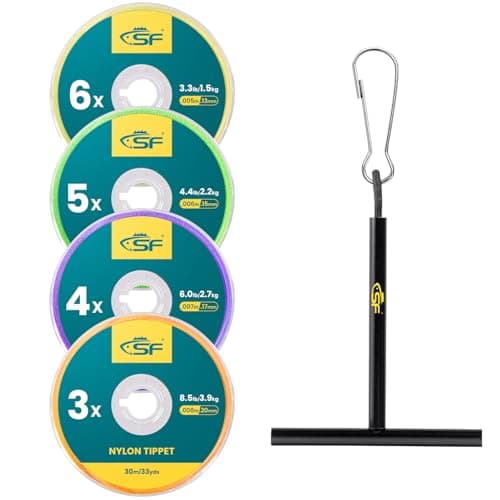
Tippet is level line in a single diameter, sold on spools, and its job is to be the sacrificial end of your leader. Every fly change costs you a couple of inches; snags cost you more. Replacing those inches from a spool costs cents, where replacing a whole tapered leader costs a few dollars. A 3X to 6X set covers everything from a weighted streamer to a size 20 midge on the same leader.
Best for: The tippet — the consumable you tie the fly to - 4
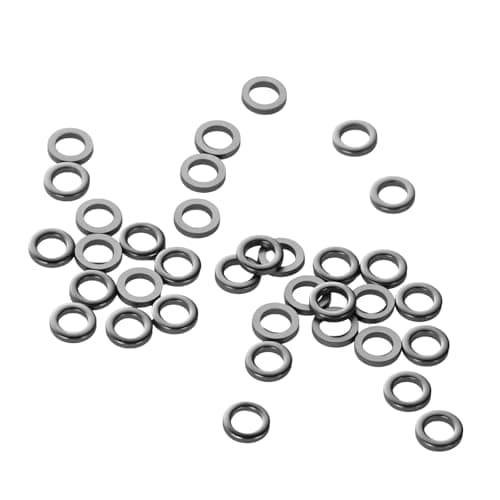
A tippet ring is a 2mm steel ring tied into the end of your tapered leader; all subsequent tippet goes to the ring rather than to the leader. The leader then never gets shorter, which means one leader lasts most of a season instead of three trips. For the price of a sandwich this is the highest-value small purchase in fly fishing, and it removes the most common reason a beginner's casting quietly gets worse through the day.
Best for: The upgrade — stop shortening your leader at all
| # | Product | Best for | Score | Price |
|---|---|---|---|---|
| 1 | Rio Mainstream Trout Fly Fishing Line, Weight Forward Floating The fly line is the weight you cast, so it is the single component that most changes how a rod feels. A weight-forward floating trout line in your rod's rated weight is the right answer for almost all creek fishing, and a known line at a sensible price beats the generic line bundled with a starter outfit by a wide margin. Match the number on the box to the number on your rod and nothing else needs thinking about. | The line — the part that does the casting | — | $49.99View on Amazon#ad |
| 2 | SF Fly Fishing Tapered Leader, 9 ft 5X A knotless tapered leader is a single length of nylon drawn thick at one end and fine at the other, and the taper is what transfers energy from the heavy line down to the fly so it lands pointing away from you. Nine feet at 5X is the standard trout leader and the correct default for creek fishing. Buy two or three — they are cheap, and a leader that has been shortened by six fly changes needs replacing rather than rescuing. | The leader — the part that makes the cast turn over | — | $7.99View on Amazon#ad |
| 3 | SF Nylon Fly Fishing Tippet, 3X-6X 30m Spools Tippet is level line in a single diameter, sold on spools, and its job is to be the sacrificial end of your leader. Every fly change costs you a couple of inches; snags cost you more. Replacing those inches from a spool costs cents, where replacing a whole tapered leader costs a few dollars. A 3X to 6X set covers everything from a weighted streamer to a size 20 midge on the same leader. | The tippet — the consumable you tie the fly to | — | $9.99View on Amazon#ad |
| 4 | 50-Pack Fly Fishing Tippet Rings, 2mm Stainless Steel A tippet ring is a 2mm steel ring tied into the end of your tapered leader; all subsequent tippet goes to the ring rather than to the leader. The leader then never gets shorter, which means one leader lasts most of a season instead of three trips. For the price of a sandwich this is the highest-value small purchase in fly fishing, and it removes the most common reason a beginner's casting quietly gets worse through the day. | The upgrade — stop shortening your leader at all | — | $6.99View on Amazon#ad |
Fly line is the thick weighted line you cast; leader is the clear tapered length that connects line to fly; tippet is the fine level line you tie the fly to and replace as it gets used up. For a creek, that means a weight-forward floating line, a 9 ft 5X tapered leader, and a spool of 5X tippet. Add a tippet ring and the leader stops getting shorter altogether.
That is the whole answer, and if it is all you wanted you can stop reading. The rest of this page explains why the system is built that way, because understanding it is what stops you buying the wrong thing in a shop and what lets you diagnose your own casting when it stops working.
The three parts, in order
| Part | What it is | Typical length | Its job |
|---|---|---|---|
| Fly line | Thick, coated, colored line on the reel | 80 to 90 ft | Carries the weight — this is what you actually cast |
| Leader | Clear nylon, thick at one end and fine at the other | 7.5 to 9 ft | Transfers the cast's energy down to the fly and hides the thick line |
| Tippet | Clear nylon of one diameter, from a spool | 18 in to 3 ft, added on | The sacrificial end you tie flies to and rebuild as it shortens |
| Backing (bonus) | Thin braided line under the fly line | 50 to 100 yds | Fills the reel spool; a creek trout will never reach it |
They connect in that order, every time. Backing to reel, fly line to backing, leader to fly line, tippet to leader, fly to tippet. If you are setting an outfit up from scratch, how to set up a fly rod walks through it in sequence with the knots named.
Why you cannot tie the fly to the line
Because the line is visible, and because it would land in a heap. Fly line is thick, opaque and colored — a trout in clear water sees it. If you tied a size 16 dry fly directly to the end of it, the fly would slam down on the water right next to a bright plastic rope.
And because the energy has to go somewhere. A fly cast works by transferring energy along a tapering mass. When the loop reaches the end of the fly line it needs progressively lighter material to pass that energy into, which is what rolls the fly over and lays it out straight. Remove that taper and the cast stops dead at the end of the line and dumps everything in a pile.
This is also why a too-heavy tippet ruins a drift. Fine tippet is not only about invisibility; it is flexible enough to let a small fly drift freely on the current. Heavy stiff material drags the fly, and drag is what causes most refusals on a small stream — the same point the dry fly roundup makes about presentation.
What a taper actually does
A leader is thick at the butt and fine at the tip, and the change is gradual. The thick butt section is stiff enough to accept the punch from the fly line; the middle section steps down; the fine tip is flexible enough to present a fly delicately. A knotless tapered leader does all of this in one continuous extrusion with nothing to catch.
Fly lines are tapered too, and that is what the WF means. Weight forward lines carry most of their mass in the first thirty feet, which loads a rod quickly at short range — exactly what creek fishing needs. Double taper lines are symmetrical and present more delicately at the cost of short-range punch. The full comparison is in the fly line roundup.
A hand-tied leader is a taper you build yourself. Sections of decreasing diameter knotted together, usually in a 60/20/20 ratio of butt, mid and tippet. It is cheaper per leader, it is fully customizable, and it is an entirely optional rabbit hole. Buy knotless leaders until you have a reason not to.
The X system, decoded
Higher X means thinner. That is the one thing to remember. The system is a legacy of how gut and nylon were drawn through dies — each pass made it one X finer. So 6X is thinner and weaker than 4X, which is thinner and weaker than 2X. It is the opposite of how every other fishing line is numbered, which is why it confuses everyone at first.
| Tippet | Rough diameter | Rough breaking strain | Fly sizes | Use on a creek |
|---|---|---|---|---|
| 3X | 0.008 in | About 8 lb | 6 to 10 | Streamers and weighted flies |
| 4X | 0.007 in | About 6 lb | 10 to 14 | Nymph rigs, high or colored water |
| 5X | 0.006 in | About 5 lb | 14 to 18 | The creek default — dries and nymphs |
| 6X | 0.005 in | About 3.5 lb | 16 to 22 | Low clear water, small dries, spooky fish |
The rule of four.Divide your fly’s hook size by four and round to get a workable X: a size 16 fly wants about 4X to 5X; a size 20 wants 5X to 6X. It is a rough guide rather than a law, and it gets you to the right spool without thinking.
Go finer only when you have a reason. Beginners often reach for 6X and 7X believing finer is always better. Finer tippet breaks more easily, is harder to knot, and costs you fish and flies. On a brushy creek holding eight to twelve-inch trout, 5X is plenty fine and considerably more forgiving.
What to use on a creek
A 7.5 ft leader beats a 9 ft one in tight cover. The standard trout leader is nine feet, and it is the right default on open water. On a creek where your cast is fifteen feet and there are branches on both banks, a shorter leader turns over more reliably and gives you more control. If you only buy one, buy 9 ft and cut it back as needed.
Add 18 inches to two feet of tippet and leave it there. Tie tippet on at the start of the day, change flies off the tippet, and rebuild the tippet when it gets down to a few inches. That is the whole working routine, and it means your leader stays the length and taper you bought.
Nylon for almost everything on small water. Nylon monofilament floats better, stretches more and knots more easily than fluorocarbon, and stretch is genuinely useful when a trout takes a size 18 fly at close range. Fluorocarbon is less visible and sinks, which makes it a sensible nymphing upgrade later, but it is not the beginner default.
The one knot you have to learn
When to replace each part
Tippet: constantly, and without thinking about it. Any time it is down to a few inches, any time it has a wind knot in it, and any time you have been fishing hard around rock. It costs cents. Checking it by running it between your fingers for nicks takes five seconds and saves the fish of the day.
Leader: when it is visibly shorter or stiff. A leader that has lost a foot and a half to fly changes no longer has the taper it was designed with and will not turn over properly. Nylon also hardens with age and UV exposure — a leader that has lived in a hot car for two summers should be thrown away.
Fly line: every few seasons, or when it stops floating. A line that sinks at the tip, cracks on the coating or feels sticky and grabby through the guides is finished. Most lines last much longer if you clean them occasionally with warm water and mild soap, which removes the grit that abrades the coating.
Backing: effectively never, on a creek. A small-stream trout will not take line off the reel, let alone reach the backing. Replace it when you replace the line, or when it is obviously damaged, and otherwise ignore it.
The tippet ring trick
It solves the one structural flaw in the system.Every time you tie tippet directly to a tapered leader you consume a little of the leader’s fine end, so the leader gets shorter and thicker over the day. A tippet ring moves all that wear off the leader and onto a steel ring that never wears out.
How it works in practice. Cut your tapered leader back to roughly six and a half feet, tie the ring to the end, then tie 18 to 24 inches of tippet to the ring. Change flies all season; change tippet when it shortens; the leader stays exactly as it is. One pack of fifty ringswill outlive most anglers’ interest in the subject.
The honest objection. A ring is a tiny hinge point and a tiny amount of weight, and a few dry fly purists dislike both. On a creek with a size 16 Adams it makes no difference you will ever detect. If you are starting out, the next steps are in fly fishing gear for beginners, and the rod side of the system is in how to choose a fly rod.
The picks in detail
Rio Mainstream Trout Fly Fishing Line, Weight Forward Floating
Best for: The line — the part that does the casting
The fly line is the weight you cast, so it is the single component that most changes how a rod feels. A weight-forward floating trout line in your rod's rated weight is the right answer for almost all creek fishing, and a known line at a sensible price beats the generic line bundled with a starter outfit by a wide margin. Match the number on the box to the number on your rod and nothing else needs thinking about.
- Taper
- Weight forward (WF)
- Density
- Floating
- Best for
- General trout, nymphs and dries
- Range
- Short to medium casts
- The biggest single improvement available to a cheap outfit
- Weight-forward taper loads a rod at creek range
- Floating, which is what every small-stream technique assumes
- Costs more than the rest of this page put together
- Must match your rod's line weight
SF Fly Fishing Tapered Leader, 9 ft 5X
Best for: The leader — the part that makes the cast turn over
A knotless tapered leader is a single length of nylon drawn thick at one end and fine at the other, and the taper is what transfers energy from the heavy line down to the fly so it lands pointing away from you. Nine feet at 5X is the standard trout leader and the correct default for creek fishing. Buy two or three — they are cheap, and a leader that has been shortened by six fly changes needs replacing rather than rescuing.
- Length
- 9 ft
- Tip
- 5X
- Type
- Knotless tapered
- The standard trout length and size — a safe default
- Knotless, so nothing catches weed or hinges
- Cheap enough to carry spares
- Gets shorter and thicker with every fly change
- Nine feet is long for very tight creeks
SF Nylon Fly Fishing Tippet, 3X-6X 30m Spools
Best for: The tippet — the consumable you tie the fly to
Tippet is level line in a single diameter, sold on spools, and its job is to be the sacrificial end of your leader. Every fly change costs you a couple of inches; snags cost you more. Replacing those inches from a spool costs cents, where replacing a whole tapered leader costs a few dollars. A 3X to 6X set covers everything from a weighted streamer to a size 20 midge on the same leader.
- Sizes
- 3X to 6X
- Length
- 30 m per spool
- Material
- Nylon monofilament
- Turns a leader into a season of fishing rather than a day
- Lets you change fly size without changing leaders
- Nylon stretches, which protects small hook holds
- Needs one knot you have to learn
- Nylon degrades in UV — replace spools yearly
50-Pack Fly Fishing Tippet Rings, 2mm Stainless Steel
Best for: The upgrade — stop shortening your leader at all
A tippet ring is a 2mm steel ring tied into the end of your tapered leader; all subsequent tippet goes to the ring rather than to the leader. The leader then never gets shorter, which means one leader lasts most of a season instead of three trips. For the price of a sandwich this is the highest-value small purchase in fly fishing, and it removes the most common reason a beginner's casting quietly gets worse through the day.
- Size
- 2 mm stainless
- Count
- 50
- Does
- Joins tippet to leader without a knot
- One leader lasts a season instead of a few trips
- Removes the fiddliest knot from the system
- Fifty rings is effectively a lifetime supply
- A tiny metal object to tie on in cold weather
- Some anglers dislike the hinge point on dry fly presentations
Prices shown are from Amazon as of October 20, 2026 and change often — the button always goes to the current listing. Some links may earn us a commission at no extra cost to you. How this works.
Frequently asked questions
What is the difference between fly line, leader and tippet?
Fly line is the thick weighted line you cast — it supplies the mass. Leader is a clear tapered length, usually 7.5 to 9 feet, that transfers the cast's energy down to the fly and keeps the visible line away from the fish. Tippet is fine level line from a spool that you tie the fly to and replace as it is used up.
Do I need tippet if I have a leader?
You can fish without it, but you will spend far more on leaders. Every fly change shortens your leader's fine end, so after a day of fishing the taper is gone. Adding 18 to 24 inches of tippet gives you a sacrificial section that costs cents to rebuild instead of a few dollars.
What does 5X tippet mean?
It is a diameter rating, and higher X means thinner: 5X is roughly 0.006 inches and breaks at around 5 lb, where 3X is thicker and stronger. The numbering is a legacy of how line was drawn through dies. For creek trout fishing with flies in sizes 14 to 18, 5X is the standard default.
What size leader and tippet for small streams?
A 7.5 to 9 ft tapered leader with a 5X tip, plus 18 to 24 inches of 5X tippet. Shorter leaders turn over better in tight cover, and 5X is fine enough for small flies while still being forgiving around brush. Drop to 6X only in low, clear water with very spooky fish.
How often should I replace my leader?
When it has lost more than about a foot to fly changes, when it is visibly stiff, or after a season in a hot car — nylon hardens with age and UV. A tippet ring tied to the end largely solves the problem, because all the wear then happens on the tippet instead of on the leader.
Sources
Keep reading
Not sure where to start?
The beginner gear guide walks you through exactly what a new stream angler needs — the six essentials first, nice-to-haves later, with one safe-default pick per category.