Flies & Lures · Roundup
The Best Dry Flies for Trout
A dry fly is the one you can watch a trout eat, which is why most anglers want a box of them first. These are the five patterns that cover a creek season, the assortments that actually carry them, and the one place where paying more for a fly is genuinely worth it.
Disclosure: Creek Cover is reader-supported. If you buy through our links we may earn a commission, at no extra cost to you. It never changes which pick we tell a new angler to start with. Full disclosure.
Quick picks at a glance
Tap a pick to read the full write-up, or the price button to check it on Amazon.
- 1
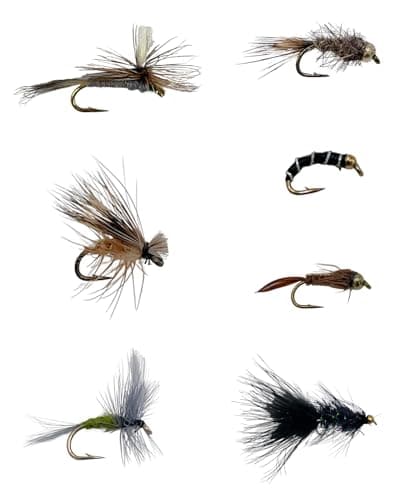
Seven patterns, eighteen flies, no filler. That is a dry fly box rather than a fly lottery, and it is the difference between knowing why you tied on a fly and picking the prettiest one. The patterns in a spring-creek set are the ones that were designed on small, cold, clear water, which is exactly the water this site is about. You will need backups of whichever two you end up fishing most — that is a sign it worked, not a flaw.
Best for: Best overall — the classic dry patterns, in a box you can learn - 2
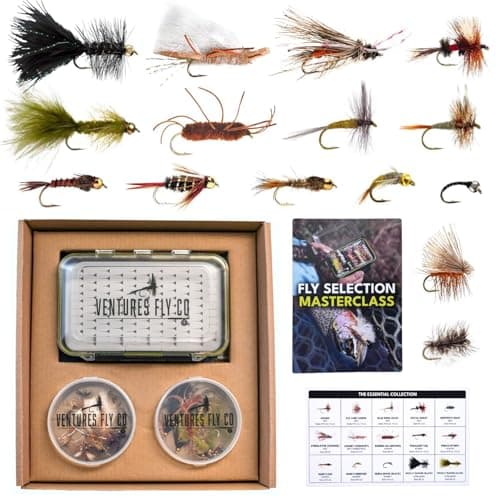
Dry flies are the one category where paying more changes the fishing. A dry fly works because stiff hackle tips hold it on the surface film; when the hackle collapses the fly sinks and the trout stops eating it. Hand-tied flies hold hackle and body shape through several fish where bulk flies go soft after one, so the extra cost buys fishing time rather than bragging rights. Forty flies with a box included is the sensible quantity at this grade.
Best for: Best quality — the dries that still float on fish number six - 3
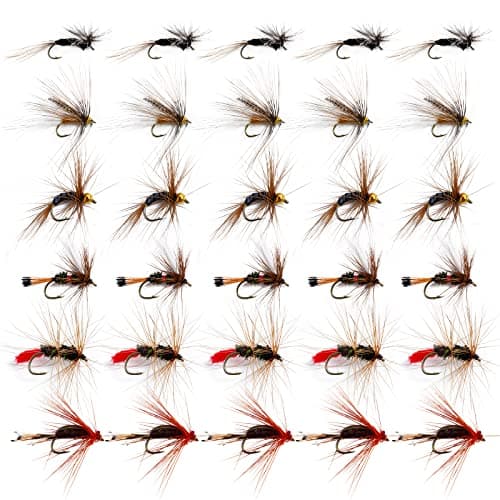
If you have a rod and no flies at all, start here. Thirty flies across dries, wets and nymphs is roughly a creek season of fishing, the box is included, and the whole kit costs less than four flies at a shop counter. The hooks are assortment-grade and the hackle will not survive a hard day the way a hand-tied fly does — but at this price the right answer to a tired fly is to tie on another one.
Best for: Best first purchase — the smallest sensible spend on flies - 4
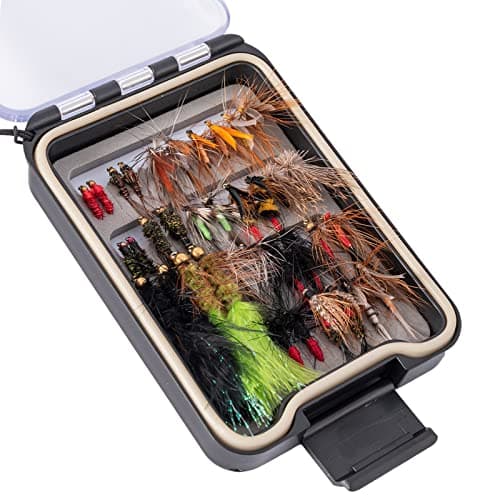
The cheapest hand-tied kit worth buying, and the honest compromise on this page. You get the hackle durability that makes a dry fly float properly, at a price much closer to the assortment kits than to a fly shop. Thirty-six flies across dries, wets and nymphs with the box included is a complete first box for someone who would rather own fewer, better flies.
Best for: Best middle ground — hand-tied flies at bulk-kit money - 5
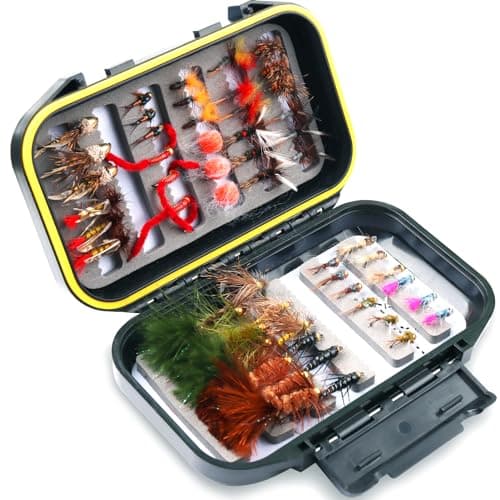
The widest spread on this page, and the pick for someone who wants to stop buying flies for a year. Dries for the hatch, nymphs for the rest of the day, and worms and eggs for high stained water after rain, all in one box. The dry content is a share of 54 rather than the whole kit, so it is a general box with good dries in it rather than a dry fly box — buy it on that basis.
Best for: Best one-box answer — dries plus everything else a creek asks for
| # | Product | Best for | Score | Price |
|---|---|---|---|---|
| 1 | Feeder Creek Fly Fishing Assortment, 18-Piece Spring Creek Collection, 7 Classic Patterns Seven patterns, eighteen flies, no filler. That is a dry fly box rather than a fly lottery, and it is the difference between knowing why you tied on a fly and picking the prettiest one. The patterns in a spring-creek set are the ones that were designed on small, cold, clear water, which is exactly the water this site is about. You will need backups of whichever two you end up fishing most — that is a sign it worked, not a flaw. | Best overall — the classic dry patterns, in a box you can learn | — | $19.99View on Amazon#ad |
| 2 | Ventures Fly Co. 40 Premium Hand-Tied Flies with Box Dry flies are the one category where paying more changes the fishing. A dry fly works because stiff hackle tips hold it on the surface film; when the hackle collapses the fly sinks and the trout stops eating it. Hand-tied flies hold hackle and body shape through several fish where bulk flies go soft after one, so the extra cost buys fishing time rather than bragging rights. Forty flies with a box included is the sensible quantity at this grade. | Best quality — the dries that still float on fish number six | — | $74.99View on Amazon#ad |
| 3 | Goture 30-Piece Dry, Wet & Nymph Fly Assortment Kit If you have a rod and no flies at all, start here. Thirty flies across dries, wets and nymphs is roughly a creek season of fishing, the box is included, and the whole kit costs less than four flies at a shop counter. The hooks are assortment-grade and the hackle will not survive a hard day the way a hand-tied fly does — but at this price the right answer to a tired fly is to tie on another one. | Best first purchase — the smallest sensible spend on flies | — | $9.99View on Amazon#ad |
| 4 | Ansnbo 36-Piece Hand-Tied Trout & Bass Fly Assortment with Fly Box The cheapest hand-tied kit worth buying, and the honest compromise on this page. You get the hackle durability that makes a dry fly float properly, at a price much closer to the assortment kits than to a fly shop. Thirty-six flies across dries, wets and nymphs with the box included is a complete first box for someone who would rather own fewer, better flies. | Best middle ground — hand-tied flies at bulk-kit money | — | $13.96View on Amazon#ad |
| 5 | 54-Piece Trout Fly Assortment: Dries, Nymphs, San Juan Worms, Salmon Eggs & Woolly Buggers The widest spread on this page, and the pick for someone who wants to stop buying flies for a year. Dries for the hatch, nymphs for the rest of the day, and worms and eggs for high stained water after rain, all in one box. The dry content is a share of 54 rather than the whole kit, so it is a general box with good dries in it rather than a dry fly box — buy it on that basis. | Best one-box answer — dries plus everything else a creek asks for | — | $49.99View on Amazon#ad |
The best dry flies for trout are a Parachute Adams, an Elk Hair Caddis, a Stimulator, a Blue-Winged Olive and a foam terrestrial — and the 18-piece spring creek collection is the cleanest way to own that kind of box without buying ninety flies you cannot name. If you want dries that are still floating on the sixth fish, pay for hand-tied flies instead. If you own a rod and no flies at all, the 30-piece kit is the smallest sensible amount of money to spend before your first trip.
A dry fly floats on the surface and imitates an adult insect — a mayfly that has just hatched, a caddis laying eggs, a grasshopper that fell in. That is the whole definition, and it is also the reason beginners want them: a dry fly is the only fly where you watch the trout come up and take it. It is the most enjoyable way to catch a fish on a creek. It is not, honestly, the most productive one, which is what the nymph page is about.
When a dry fly is the right fly
When fish are rising, obviously. Rings on the surface mean trout are taking something off the top and a dry fly is the correct answer. On a small stream this is usually an evening event in summer, and sometimes a mid-afternoon one in spring and autumn when a hatch comes off in cool weather.
And when nothing is rising, on small water, in summer. This is the part that surprises people. Creek trout live in thin water with limited food and short feeding windows, and they will come up for a plausible meal whether or not anything is hatching. A buoyant attractor dry drifted down a pocket on a July afternoon catches fish on water where the same approach would be hopeless on a big river. Small-stream trout are opportunists.
When you want to fish one fly and see what happens. A dry fly tells you everything: whether the drift is right, whether your leader is turning over, whether a fish looked and refused. You cannot see any of that with a nymph. For a beginner learning to read current, that visual feedback is worth more than the extra fish a nymph would have caught.
Dry-dropper: the setup that ends the argument
The five dry patterns that matter
| Pattern | Size | Imitates | When it is the right fly |
|---|---|---|---|
| Parachute Adams | 14 to 18 | Almost any mayfly | The default dry. Visible on the water, takes fish with no hatch at all |
| Elk Hair Caddis | 14 to 16 | Adult caddisfly | Riffles and broken water, summer evenings, when fish slash rather than sip |
| Stimulator | 10 to 14 | Stonefly, hopper, attractor | Pocket water and fast chutes; floats a dropper nymph better than anything |
| Blue-Winged Olive | 16 to 20 | Small olive mayfly | Cool, gray, drizzly days — the hatch that shows up when nothing else does |
| Foam terrestrial (beetle, ant, hopper) | 10 to 16 | Land insects that fall in | High summer on brushy creeks, where overhanging cover drops food all day |
Two sizes each of the first three is a working dry box. That is roughly a dozen flies, which fits one row of a shirt-pocket fly box and covers most of what a small trout stream will ask of you. Add the olives for cold gray days and the terrestrials for July and August and you are done. If the numbering itself is the confusing part, what size flies to use for trout decodes it.
Visibility is a legitimate reason to choose a fly. A size 18 olive on riffled water at dusk is invisible, and a fly you cannot see is a fly you cannot fish — you miss takes and you cannot tell when the drift goes wrong. A white or orange post on a parachute pattern, or a bright foam tag on an attractor, is not a gimmick. On small brushy water it is the difference between fishing and guessing.
Why there is no dry-only box
Nobody sells a good dry-fly-only assortment at these prices, and that is worth saying plainly. Every kit on this page is a mixed assortment: dries alongside wets, nymphs and in one case eggs and worms. If you want thirty dry flies and nothing else, the route is a fly shop counter at roughly four to six dollars a fly, which is four to six times the cost per fly of anything here.
For almost everyone, the mixed box is the better buy anyway. You are going to fish nymphs — all the honest arithmetic on a trout stream says most of the fish are caught under the surface. A kit that gives you dries for the rising fish and nymphs for the other six hours is a more useful object than a box of dries you fish on faith. Buy the mix, then top up the two or three patterns you actually fished out.
What to check when you open the box. Sort the dries out of the mix and look at the hackle: it should stand out stiffly from the hook at right angles, not lie back along the body. Squeeze the body — it should not unwind. Then check the hook point with a thumbnail. Two minutes of this tells you which flies in a cheap kit are worth carrying and which are decoration.
Hackle is what you are paying for
A dry fly floats on a few dozen stiff fiber tips, and nothing else. It is not buoyant material holding it up; it is surface tension against fine hackle and a tail. Quality hackle is stiff, glossy and dense; cheap hackle is soft and webby. A soft-hackled dry fly floats for one fish, maybe two, then rides lower, then swamps.
Which is why dries are the opposite case to nymphs. A nymph is a consumable: it drags along the bottom, it snags, and buying expensive ones is poor value — the full argument is in the nymph roundup. A dry fly lives in the air and on the surface, hardly ever snags bottom, and will last years if it keeps its shape. Spend the money you saved on nymphs here.
Floatant is the cheap half of the answer. A gel or powder floatant applied to a dry fly before it ever gets wet roughly doubles how long it fishes, and powder will resurrect a fly that has already drowned. It costs very little and belongs in the same pocket as the flies — see the accessories guide for the short list of small things that genuinely matter.
The five boxes compared
| Box | Flies | Grade | Buy it if |
|---|---|---|---|
| Feeder Creek Spring Creek | 18 | Classic patterns | You want a dry box you can learn, not a lottery |
| Ventures Fly Co. 40 | 40 | Hand-tied | You fish often and want dries that keep floating |
| Goture 30-piece | 30 | Assortment | You own a rod and zero flies and want to go fishing |
| Ansnbo 36-piece | 36 | Hand-tied | You want hand-tied durability at bulk-kit money |
| 54-piece trout assortment | 54 | Assortment | You want one box to cover dries, nymphs and high water |
Fishing a dry fly on a creek
Cast upstream, not across. A trout faces into the current, so an upstream cast puts the fly in front of it without putting your line over its head. On a creek you are usually within twenty feet, which means a short cast, a high rod tip and very little line on the water.
Drag is the only thing that really matters. A natural insect drifts at exactly the speed of the current. The moment your fly starts to skate — pulled by a line lying across faster water — a trout that was about to eat it stops. Most refusals on a small stream are drag refusals, not pattern refusals. Keep the line short, keep it off the fast seams, and let the fly ride free.
Pause before you set. A trout takes a dry fly from below and needs a moment to close its mouth and turn down. Striking the instant you see the splash pulls the fly out. Wait until the fish has turned, then lift the rod — not a hard strike, just a firm lift. This is the single most common beginner mistake on dry flies, and one afternoon fixes it.
A short rod and a floating line make all of this easier. Nine-foot rods are built for distance on open water; a brushy creek wants something shorter, which is the case made in the small-stream rod guide. A weight-forward floating line turns a short cast over at close range — the fly line roundup covers why that matters more than the rod does.
Through the season
Early spring: olives, small, on gray days. Cold water and few insects, but Blue-Winged Olives hatch in exactly the drizzly overcast weather that feels least promising. A size 18 olive on a flat pool on a gray April afternoon is the dry fly opportunity of early season.
Late spring: caddis and attractors in the riffles. Water warms, insects multiply, and fish move into broken water. This is Elk Hair Caddis and Stimulator weather, and the best time of year to catch a creek trout on a fly it can barely see coming.
Summer: terrestrials, early and late. Low clear water, bright sun, cautious fish. Beetles, ants and hoppers fall off overhanging brush all day and creek trout key on them hard. Fish the first two hours and the last two, and fish close to the bank cover — the boxes built for that season are in the best summer trout flies.
Autumn: back to the Adams, and mind where you walk. Cooling water brings fish back on the feed and a Parachute Adams covers the sparse late hatches. Brook and brown trout spawn in autumn; pale gravel beds in shallow water are nests and should be walked around rather than fished over. Species-specific selections are in flies for brook trout and flies for rainbow trout.
The picks in detail
Feeder Creek Fly Fishing Assortment, 18-Piece Spring Creek Collection, 7 Classic Patterns
Best for: Best overall — the classic dry patterns, in a box you can learn
Seven patterns, eighteen flies, no filler. That is a dry fly box rather than a fly lottery, and it is the difference between knowing why you tied on a fly and picking the prettiest one. The patterns in a spring-creek set are the ones that were designed on small, cold, clear water, which is exactly the water this site is about. You will need backups of whichever two you end up fishing most — that is a sign it worked, not a flaw.
- Count
- 18 flies
- Patterns
- 7 classics
- Water
- Spring creeks and headwaters
- A small, deliberate selection instead of a hundred near-duplicates
- Classic patterns proven on small cold water
- Few enough flies that you learn what each one is for
- Only 18 flies — carry backups of your two favorites
- No streamers or weighted nymphs in the set
Ventures Fly Co. 40 Premium Hand-Tied Flies with Box
Best for: Best quality — the dries that still float on fish number six
Dry flies are the one category where paying more changes the fishing. A dry fly works because stiff hackle tips hold it on the surface film; when the hackle collapses the fly sinks and the trout stops eating it. Hand-tied flies hold hackle and body shape through several fish where bulk flies go soft after one, so the extra cost buys fishing time rather than bragging rights. Forty flies with a box included is the sensible quantity at this grade.
- Count
- 40 hand-tied flies
- Mix
- Dries, nymphs, streamers
- Box
- Included
- Holds hackle and shape after fish, unlike bulk flies
- Box included — no second purchase
- General trout spread, so the nymphs are usable too
- Several times the cost per fly of the bulk kits
- A mixed kit, so you are paying for nymphs as well as dries
Goture 30-Piece Dry, Wet & Nymph Fly Assortment Kit
Best for: Best first purchase — the smallest sensible spend on flies
If you have a rod and no flies at all, start here. Thirty flies across dries, wets and nymphs is roughly a creek season of fishing, the box is included, and the whole kit costs less than four flies at a shop counter. The hooks are assortment-grade and the hackle will not survive a hard day the way a hand-tied fly does — but at this price the right answer to a tired fly is to tie on another one.
- Count
- 30 flies
- Mix
- Dry, wet and nymph
- Box
- Included
- Cheapest total outlay here
- Right size for a first season
- Covers the surface and subsurface in one buy
- Assortment-grade hackle goes soft quickly
- No streamers in the mix
Ansnbo 36-Piece Hand-Tied Trout & Bass Fly Assortment with Fly Box
Best for: Best middle ground — hand-tied flies at bulk-kit money
The cheapest hand-tied kit worth buying, and the honest compromise on this page. You get the hackle durability that makes a dry fly float properly, at a price much closer to the assortment kits than to a fly shop. Thirty-six flies across dries, wets and nymphs with the box included is a complete first box for someone who would rather own fewer, better flies.
- Count
- 36 flies
- Tied
- Hand-tied
- Mix
- Dry, wet, nymph
- Hand-tied durability without fly-shop pricing
- Box included
- Small enough count to stay organized
- Three to four times the cost per fly of the biggest bulk kits
- Fewer flies to lose in brush
54-Piece Trout Fly Assortment: Dries, Nymphs, San Juan Worms, Salmon Eggs & Woolly Buggers
Best for: Best one-box answer — dries plus everything else a creek asks for
The widest spread on this page, and the pick for someone who wants to stop buying flies for a year. Dries for the hatch, nymphs for the rest of the day, and worms and eggs for high stained water after rain, all in one box. The dry content is a share of 54 rather than the whole kit, so it is a general box with good dries in it rather than a dry fly box — buy it on that basis.
- Count
- 54 flies
- Includes
- Dries, nymphs, San Juan worms, eggs, buggers
- Best on
- Stocked and wild rainbows
- Covers surface, subsurface and high-water flies in one purchase
- The eggs and worms are genuinely useful after rain
- Highest total fly count per dollar here
- Only part of the box is dries
- Assortment-grade construction throughout
Prices shown are from Amazon as of October 20, 2026 and change often — the button always goes to the current listing. Some links may earn us a commission at no extra cost to you. How this works.
Frequently asked questions
What is the best dry fly for trout?
A Parachute Adams in size 14 or 16. It suggests almost any mayfly, it is visible on broken water because of its white post, and it catches trout on days when nothing is hatching at all. If you are allowed one dry fly for an unknown trout stream in an unknown month, that is the correct choice.
How many dry flies do I need?
About a dozen. Two sizes each of a Parachute Adams, an Elk Hair Caddis and a Stimulator, plus a few small olives and a couple of foam terrestrials, covers a full season on a small stream. Dry flies last far longer than nymphs because they rarely snag the bottom, so the box does not need constant restocking.
Are cheap dry flies any good?
Less so than cheap nymphs. A dry fly floats on stiff hackle tips, and cheap hackle is soft, so a bulk dry fly rides lower after one fish and swamps after two. Cheap nymphs are fine because they are consumables that get lost on the bottom; for dries specifically, hand-tied flies are the upgrade worth paying for.
Can you catch trout on a dry fly when nothing is rising?
On small water, yes, routinely. Creek trout have short feeding windows and limited food, so they will come up for a plausible insect whether or not a hatch is happening. A buoyant attractor dry drifted through a pocket is a legitimate tactic on a small stream even on a dead afternoon.
What size dry flies for small streams?
Size 14 and 16 for most of the year, 10 to 12 for foam terrestrials and attractors in summer, and 18 to 20 for Blue-Winged Olives in cool weather. Size matters more than pattern to a feeding trout, so if a fly is refused in clear water the first change should be a smaller version of the same fly.
Sources
Keep reading
Not sure where to start?
The beginner gear guide walks you through exactly what a new stream angler needs — the six essentials first, nice-to-haves later, with one safe-default pick per category.