Guides · Buying guide
How Much Does Fly Fishing Cost?
Fly fishing has a reputation as an expensive hobby, and the reputation is sold to you by people with rods to sell. Here is the real line-by-line cost of starting on small water, what each item does, and the three places it is worth spending more.
Disclosure: Creek Cover is reader-supported. If you buy through our links we may earn a commission, at no extra cost to you. It never changes which pick we tell a new angler to start with. Full disclosure.
Quick picks at a glance
Tap a pick to read the full write-up, or the price button to check it on Amazon.
- 1
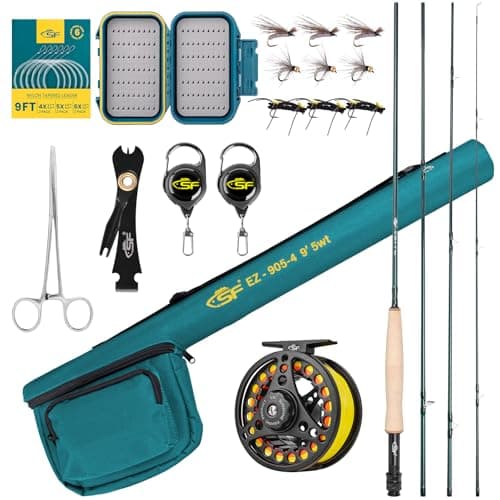
This is the single line item that decides whether fly fishing is a cheap hobby or an expensive one. A matched combo buys the rod, the reel and the line already loaded, at a price well under what the three cost separately, and 5-weight is the correct all-round trout size. The compromise is in the components, not the usability: the reel is a line holder and the blank is heavier than a better rod, neither of which a creek trout will notice.
Best for: The bare-minimum start — rod, reel and line in one purchase8.8 - 2
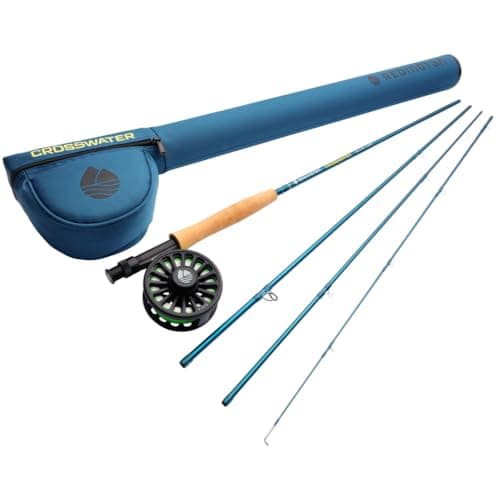
The step that most beginners eventually take, which is the argument for taking it first if the money is there. A real rod brand, a graphite blank with manners, Rio line rather than an unbranded one, and a travel case — assembled and matched so nothing is mismatched. If you expect to fish more than a handful of times, this is cheaper than buying the entry combo and replacing it.
Best for: The buy-it-once outfit — if you already know you will keep fishing9.1 - 3
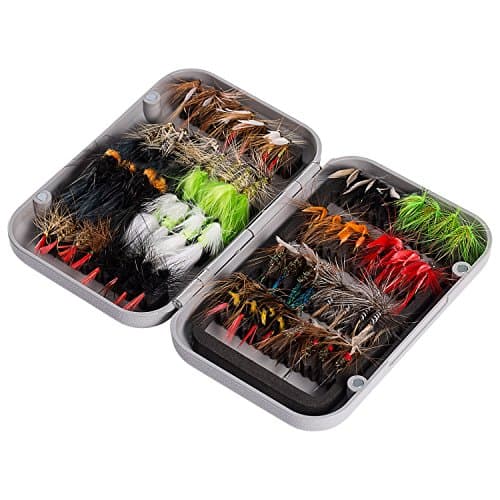
The item beginners most reliably overspend on, and the easiest place to save. Sixty-four flies with a box, covering dries, nymphs and streamers, costs about what half a dozen hand-tied patterns do at a counter. The hooks are softer and the bodies looser than premium flies, which matters least on the flies you lose to trees and rocks.
Best for: The flies line item — a season of them for the price of six shop flies8.7 - 4
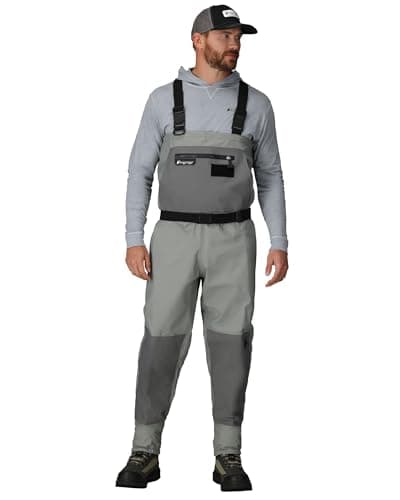
Waders are usually the largest single number in a beginner's budget and the easiest one to defer. In warm months you can wade wet in old sneakers and quick-dry pants and lose nothing. When you do buy, a mid-price breathable stockingfoot pair is the bracket worth paying for, because the cheap end fails at the seams and gets replaced.
Best for: The biggest optional line item — and it is genuinely optional at first9.1 - 5
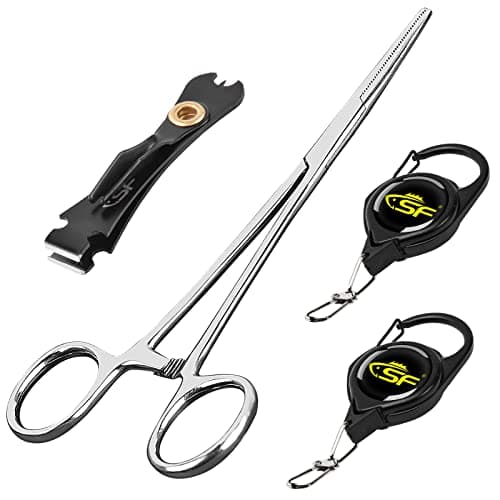
Nippers to cut tippet, forceps to unhook a fish and pinch a barb, and a retractor to keep both where your hand expects them. It is the smallest number on this page and the one that most changes how a day on the water feels, because the alternative is biting line and digging hooks out with your fingers.
Best for: The small stuff — the cheapest items you will use the most8.9
| # | Product | Best for | Score | Price |
|---|---|---|---|---|
| 1 | SF Fly Fishing Rod and Reel Combo Starter Kit, 9' 5wt This is the single line item that decides whether fly fishing is a cheap hobby or an expensive one. A matched combo buys the rod, the reel and the line already loaded, at a price well under what the three cost separately, and 5-weight is the correct all-round trout size. The compromise is in the components, not the usability: the reel is a line holder and the blank is heavier than a better rod, neither of which a creek trout will notice. | The bare-minimum start — rod, reel and line in one purchase | 8.8 | $84.99View on Amazon#ad |
| 2 | Redington Crosswater Fly Fishing Outfit, 9' 5WT 4-Piece with Reel, Line and Case The step that most beginners eventually take, which is the argument for taking it first if the money is there. A real rod brand, a graphite blank with manners, Rio line rather than an unbranded one, and a travel case — assembled and matched so nothing is mismatched. If you expect to fish more than a handful of times, this is cheaper than buying the entry combo and replacing it. | The buy-it-once outfit — if you already know you will keep fishing | 9.1 | $229.99View on Amazon#ad |
| 3 | BASSDASH 64-Piece Fly Fishing Flies Kit with Fly Box The item beginners most reliably overspend on, and the easiest place to save. Sixty-four flies with a box, covering dries, nymphs and streamers, costs about what half a dozen hand-tied patterns do at a counter. The hooks are softer and the bodies looser than premium flies, which matters least on the flies you lose to trees and rocks. | The flies line item — a season of them for the price of six shop flies | 8.7 | $19.98View on Amazon#ad |
| 4 | Frogg Toggs Hellbender PRO Breathable Stockingfoot Chest Wader Waders are usually the largest single number in a beginner's budget and the easiest one to defer. In warm months you can wade wet in old sneakers and quick-dry pants and lose nothing. When you do buy, a mid-price breathable stockingfoot pair is the bracket worth paying for, because the cheap end fails at the seams and gets replaced. | The biggest optional line item — and it is genuinely optional at first | 9.1 | $169.99View on Amazon#ad |
| 5 | SF Fly Fishing Tools Kit: Nipper, Zinger and Forceps Nippers to cut tippet, forceps to unhook a fish and pinch a barb, and a retractor to keep both where your hand expects them. It is the smallest number on this page and the one that most changes how a day on the water feels, because the alternative is biting line and digging hooks out with your fingers. | The small stuff — the cheapest items you will use the most | 8.9 | $9.99View on Amazon#ad |
You can start fly fishing for small-stream trout for well under $150 all-in, and buy a setup you never need to replace for around $450. The cheap route is a matched rod, reel and line combo, a box of assortment flies, a leader, a spool of tippet and nippers and forceps. Everything beyond that list is an improvement, not a requirement.
The gap between those two numbers is almost entirely the rod outfit and the waders. Nothing else on the list is expensive, and the parts of the sport that cost thousands of dollars are parts you can ignore for as long as you like.
The short answer
The minimum viable setup is six items. A rod, a reel, a fly line, a tapered leader, some flies and a way to cut line. A matched combo collapses the first three into one purchase, which is why it is the right starting point for anyone who has not already decided this is their hobby for life.
Waders are the item people wrongly treat as essential. They are the largest number in most beginner budgets and they are optional for your entire first summer. Wading wet in quick-dry pants and an old pair of sneakers is how a lot of creek fishing is done in July, and it costs nothing.
The expensive version of this sport is real, and it is a choice. Premium rods, machined reels, guided days and travel exist and people enjoy them. None of it catches more trout in a creek than the list above, and the honest version of this page says so plainly. The full first-purchase sequence is in fly fishing gear for beginners.
The six things you have to buy
| Item | What it does | Budget bracket | Buy-it-once bracket |
|---|---|---|---|
| Rod, reel and line | The whole casting system. A matched combo is one purchase | Under $100 as a combo | $200 to $300 as a branded outfit |
| Tapered leader | Connects fly line to fly and turns the cast over | A few dollars each | Same — leaders are cheap at every tier |
| Tippet | The replaceable final section you tie flies to | Around $10 a spool | Same — one spool lasts a season |
| Flies | What the fish eats | Under $25 for a 60-plus assortment | $3 to $5 each for hand-tied patterns |
| Nippers and forceps | Cut line, unhook fish, pinch barbs | Around $10 for a kit | $30 to $60 for machined tools |
| A way to stand in the water | Old sneakers in summer; waders and boots otherwise | Free in warm months | $150 to $300 for waders plus boots |
The totals are the point. At the budget end those six come to roughly $125 to $150 if you skip waders, and that is a complete, functional, fish-catching setup. At the buy-it-once end, with hand-tied flies, machined tools, waders and boots, you are looking at somewhere in the region of $550 to $700. Both are real routes into the sport and most people end up somewhere between them.
Brackets, not prices. Every number above is a bracket, because retail pricing on fishing gear moves constantly and a figure typed into an article is wrong within weeks. The live price on each pick on this page comes straight from the retailer.
Three honest budgets
The $150 start: find out whether you like it. An entry combo, an assortment of flies with a box, a leader, a spool of tippet, and a nipper-and-forceps kit. Wade wet, fish a creek near home, and spend nothing else until you have been out five or six times. This is the budget we would give almost every beginner, and the one the fly fishing starter kit guide builds out item by item.
The $450 start: you already know you will keep going. A branded outfit like the Crosswater instead of the entry combo, the same flies and terminal tackle, plus a basic pair of breathable waders and boots. You will not need to replace any of it, which makes it cheaper than the $150 route for anyone who fishes regularly.
The $750-plus start: you are buying for a decade. A mid-tier rod chosen for your water rather than bought as part of an outfit, a reel with a real drag, premium line, a mid-price breathable wader and a studded boot, a net, and a sling pack to carry it. There is no version of this that catches more creek trout than the $150 setup — it is more pleasant, lasts longer and holds resale value.
The one upgrade that actually changes your casting
The license, and the costs that are not gear
A fishing license is the one unavoidable recurring cost. A resident annual freshwater license commonly falls in the $20 to $50 range, but it varies substantially by state, by residency and by permit type, and several states add a separate trout stamp. Buy it online from your state wildlife agency — that is the only accurate source for what it costs where you fish, and for the seasons, bait restrictions and special-regulation stretches that come with it.
Fuel is often the real budget line. Most people spend more driving to water over a season than they spent on their rod. It is also the cost that most rewards fishing close to home, which small creeks are unusually good for — there is almost certainly overlooked trout water within half an hour of you.
Lessons and guides are optional and useful. A guided day is a real expense and it compresses a season of learning into eight hours. It is not required: an hour casting on grass before your first trip gets you to functional, and the rest is reading water, which comes from fishing.
Where the extra money is worth it
Fly line, first and always. It is the cheapest component with the largest effect on how the setup feels, and the part budget combos compromise most. Branded line on any rod is money well spent.
Waders, second — if you buy them at all. This is the one category where the budget option reliably fails and gets replaced, usually at the seams in season two. A mid-price breathable pair costs more than twice the cheap one and lasts more than three times as long. The comparison between materials is in breathable vs neoprene waders, and the value end is covered in the best cheap waders.
Boots, third. You stand in them on slick rounded rock all day and a bad pair is a safety issue, not a comfort one. Studded rubber soles on a boot that actually fits is the specification worth paying for; the wading boots roundup covers the tiers.
The rod is fourth, and that surprises people. A rod becomes genuinely better above a certain price, but the improvement is in feel and recovery, not in whether fish get caught. Buy the rod that suits your water — shorter for brushy creeks — long before you buy the expensive one.
What to skip entirely
A second rod, for at least a year.The “you need a 3-weight and a 5-weight” advice is true eventually and useless at the start. One 5-weight covers everything a beginner does on a trout stream.
An expensive reel. On creek trout the reel holds line and nothing else; you play fish with your hand on the line, not off the drag. This is the single largest place beginners overspend for no return. The budget tier is covered in the best fly reels for the money.
The wall of flies. Thirty to sixty flies in a box covers a season. Fly shops make their margin here, and a beginner buying patterns one at a time can spend more on flies in a month than their rod cost. Why the cheap assortments make sense is in the cheap flies guide, and the subsurface half of the box is in the best nymphs for trout.
A vest, a pack and a net, in month one. All three are genuinely useful and none of them is urgent. A jacket pocket holds a fly box and a spool of tippet perfectly well while you decide whether this is your sport. When you do want one, vest vs pack settles the format question.
What it costs after year one
Very little, which is the part nobody advertises. Once the setup exists, the recurring costs are a license, tippet, leaders and replacing lost flies. For most creek anglers that is a modest annual figure — less than a single premium rod, spread across a whole season of fishing.
Fly line is the one component with a service life. It cracks and loses its coating after a few hundred days on the water, and a tired line casts noticeably worse than a new one. Budgeting for a replacement every few seasons is realistic; buying a new rod because casting has got harder usually is not.
And the gear holds up better than you expect. Rods last decades if they are not stood on or shut in a car door. Reels have almost nothing to break. Waders are the one item on a clock, and drying them inside out after every trip is what decides whether that clock runs for two seasons or six — covered in how to size waders and the most durable waders.
The picks in detail
SF Fly Fishing Rod and Reel Combo Starter Kit, 9' 5wt
8.8/10Best for: The bare-minimum start — rod, reel and line in one purchase
This is the single line item that decides whether fly fishing is a cheap hobby or an expensive one. A matched combo buys the rod, the reel and the line already loaded, at a price well under what the three cost separately, and 5-weight is the correct all-round trout size. The compromise is in the components, not the usability: the reel is a line holder and the blank is heavier than a better rod, neither of which a creek trout will notice.
- Includes
- Rod, reel, line, leader
- Size
- 9 ft, 5-weight, multi-piece
- Role
- The entry line item
- Removes the three hardest beginner decisions in one buy
- Costs less than a mid-range reel on its own
- 5-weight is the right first trout weight
- Heavier and less refined than a step-up outfit
- The reel is a line holder, not a fish-fighting tool
Redington Crosswater Fly Fishing Outfit, 9' 5WT 4-Piece with Reel, Line and Case
9.1/10Best for: The buy-it-once outfit — if you already know you will keep fishing
The step that most beginners eventually take, which is the argument for taking it first if the money is there. A real rod brand, a graphite blank with manners, Rio line rather than an unbranded one, and a travel case — assembled and matched so nothing is mismatched. If you expect to fish more than a handful of times, this is cheaper than buying the entry combo and replacing it.
- Includes
- Rod, reel, Rio line, travel case
- Size
- 9 ft, 5-weight, 4-piece
- Role
- The one-and-done bracket
- A rod you will not want to replace in two seasons
- Branded fly line, which is a bigger upgrade than the rod
- Travel case included
- Roughly triple the entry combo
- 9 feet is long for the tightest brushy creeks
BASSDASH 64-Piece Fly Fishing Flies Kit with Fly Box
8.7/10Best for: The flies line item — a season of them for the price of six shop flies
The item beginners most reliably overspend on, and the easiest place to save. Sixty-four flies with a box, covering dries, nymphs and streamers, costs about what half a dozen hand-tied patterns do at a counter. The hooks are softer and the bodies looser than premium flies, which matters least on the flies you lose to trees and rocks.
- Count
- 64 flies
- Covers
- Dries, nymphs, streamers
- Box
- Included
- Removes the largest hidden cost of starting
- Box included — one less purchase
- Broad enough to fish a whole first season
- Assortment-grade hooks and durability
- Contains patterns you will never tie on
Frogg Toggs Hellbender PRO Breathable Stockingfoot Chest Wader
9.1/10Best for: The biggest optional line item — and it is genuinely optional at first
Waders are usually the largest single number in a beginner's budget and the easiest one to defer. In warm months you can wade wet in old sneakers and quick-dry pants and lose nothing. When you do buy, a mid-price breathable stockingfoot pair is the bracket worth paying for, because the cheap end fails at the seams and gets replaced.
- Type
- Breathable stockingfoot chest wader
- Also needs
- Wading boots, bought separately
- Role
- Defer in summer, buy before fall
- Extends your season by months at both ends
- Breathable, so the walk between pools is bearable
- Mid-price build lasts where budget pairs leak
- Requires separate boots — budget for both
- The single largest item in a starting budget
SF Fly Fishing Tools Kit: Nipper, Zinger and Forceps
8.9/10Best for: The small stuff — the cheapest items you will use the most
Nippers to cut tippet, forceps to unhook a fish and pinch a barb, and a retractor to keep both where your hand expects them. It is the smallest number on this page and the one that most changes how a day on the water feels, because the alternative is biting line and digging hooks out with your fingers.
- Includes
- Nipper, zinger retractor, forceps
- Role
- Non-negotiable, barely a cost
- Clip to
- Vest, pack or shirt
- Costs almost nothing and gets used every trip
- Forceps make unhooking fast, which fish survive better
- Three tools in one purchase
- Budget tools dull sooner than machined ones
- Easy to lose if you do not clip the retractor
Prices shown are from Amazon as of October 20, 2026 and change often — the button always goes to the current listing. Some links may earn us a commission at no extra cost to you. How this works.
Frequently asked questions
How much does it cost to start fly fishing?
Under $150 for a complete, functional setup if you wade wet: a matched rod, reel and line combo, a leader, a spool of tippet, an assortment of flies and a nipper-and-forceps kit. Around $450 buys a branded outfit and basic waders you will not need to replace, and a license is typically $20 to $50 on top.
Is fly fishing an expensive hobby?
It does not have to be. The expensive version is real but entirely optional, and a budget creek setup catches the same trout as a premium one. After the first purchase the recurring costs are small: a license, tippet, leaders and replacement flies, with fly line needing replacing every few seasons.
Do I need waders to start fly fishing?
Not in warm months. Wading wet in quick-dry pants and old sneakers works perfectly well in summer and costs nothing, which is why waders are the easiest big line item to defer. They become worth buying when you want to fish spring and fall, where they add months to your season.
Is a cheap fly rod combo worth it?
Yes, as a way to find out whether you like the sport. A matched combo removes the three hardest beginner decisions, and its compromises are in weight and refinement rather than in whether fish get caught. If you already know you will keep fishing, a branded outfit costs less than buying the combo and replacing it.
What is the best upgrade for a cheap fly fishing setup?
Fly line. It is the component that loads the rod, so a good weight-forward floating line on a budget rod casts better than a cheap line on an expensive one. It is also the part budget combos compromise most, which makes it the highest-return upgrade available.
Sources
Keep reading
Not sure where to start?
The beginner gear guide walks you through exactly what a new stream angler needs — the six essentials first, nice-to-haves later, with one safe-default pick per category.