Guides · How-To
Fly Fishing Knots for Beginners
There are hundreds of fishing knots and you need five. Four of them get tied once a season; one gets tied every time you change a fly. Learn that one properly and the rest are a quiet afternoon at the kitchen table.
Disclosure: Creek Cover is reader-supported. If you buy through our links we may earn a commission, at no extra cost to you. It never changes which pick we tell a new angler to start with. Full disclosure.
Quick picks at a glance
Tap a pick to read the full write-up, or the price button to check it on Amazon.
- 1
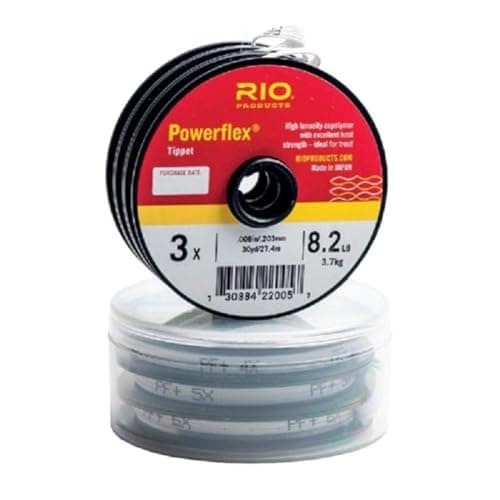
The practical answer to "what do I practice on." Three 30-yard spools in 3X, 4X and 5X cover the range a small-stream setup asks for, and 90 yards total is a great deal more line than a season of fishing needs, which is the point: you can burn a few yards learning to seat a clinch knot and still have plenty left. Buying tippet in a three-pack also stops the beginner habit of tying everything to one size because it is the only spool in the pack.
Best for: Best for learning — three sizes, enough line to practice with - 2
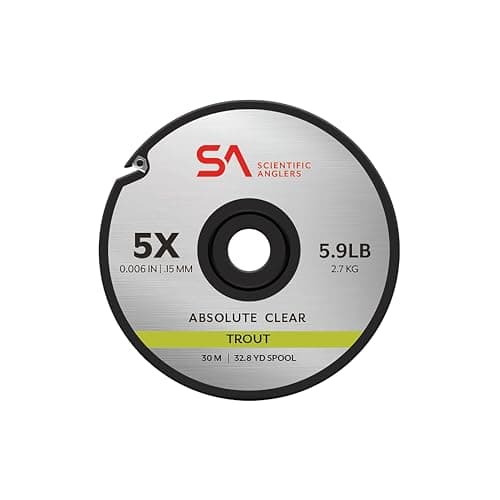
A single 5X spool, and the one to put on the water rather than on the kitchen table. 5X is the general-purpose creek size: fine enough for size 16 and 18 flies in clear water, strong enough to turn a decent trout in current. A premium tippet does not make a bad knot hold, but it does mean the line itself is not the weak link once your knots are seated properly.
Best for: Best single spool — the tippet to fish once your knots are good - 3
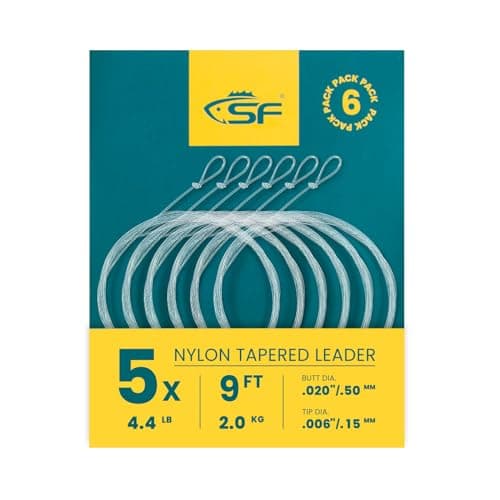
The cheapest shortcut on this page. A tapered leader with a loop already tied in the butt end connects to your fly line loop-to-loop, which means the hardest knot in fly fishing — the nail knot — is a knot you may never have to tie. Six leaders is a season on a creek, and because they are inexpensive you can replace a leader that has gotten short and knotty instead of nursing it along with yet another tippet section.
Best for: Best way to skip a knot — leaders that come with the loop tied - 4
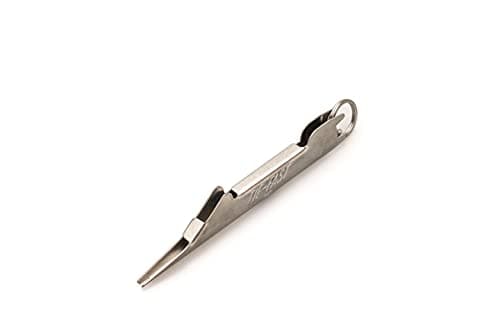
The one knot genuinely worth buying a tool for. A nail knot joins leader to fly line and is fiddly by hand because you are wrapping fine nylon around a slippery coated line while holding tension on both. This tool holds the wraps for you and pulls the tag through in one motion, and once you have done it twice it takes seconds. If your fly line already has a welded loop you can skip this entirely, which is the honest caveat.
Best for: Best tool — the nail knot in about ten seconds - 5
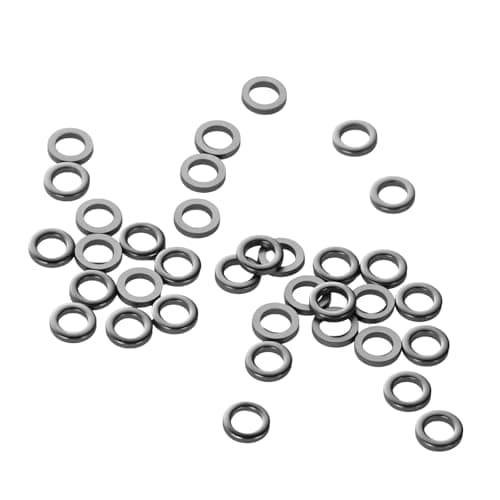
A tiny welded ring that deletes one of the five knots from your day. Tie it once to the end of your tapered leader and from then on new tippet attaches to the ring with the same clinch knot you already use for flies, instead of a surgeon's knot into the leader. Your leader stops getting shorter every time you re-rig, which is the real saving: a leader with a ring lasts a whole season. Fifty rings is more than most anglers will use in years.
Best for: Best upgrade — removes the leader-to-tippet knot permanently
| # | Product | Best for | Score | Price |
|---|---|---|---|---|
| 1 | RIO Powerflex Trout Tippet, 3-Pack of 30 yd Spools, 3X to 5X The practical answer to "what do I practice on." Three 30-yard spools in 3X, 4X and 5X cover the range a small-stream setup asks for, and 90 yards total is a great deal more line than a season of fishing needs, which is the point: you can burn a few yards learning to seat a clinch knot and still have plenty left. Buying tippet in a three-pack also stops the beginner habit of tying everything to one size because it is the only spool in the pack. | Best for learning — three sizes, enough line to practice with | — | $15.49View on Amazon#ad |
| 2 | Scientific Anglers Absolute Trout Tippet, 30 m Spool, 5X A single 5X spool, and the one to put on the water rather than on the kitchen table. 5X is the general-purpose creek size: fine enough for size 16 and 18 flies in clear water, strong enough to turn a decent trout in current. A premium tippet does not make a bad knot hold, but it does mean the line itself is not the weak link once your knots are seated properly. | Best single spool — the tippet to fish once your knots are good | — | $8.40View on Amazon#ad |
| 3 | SF Fly Fishing Tapered Leader, 9 ft 5X with Pre-Tied Loop, 6-Pack The cheapest shortcut on this page. A tapered leader with a loop already tied in the butt end connects to your fly line loop-to-loop, which means the hardest knot in fly fishing — the nail knot — is a knot you may never have to tie. Six leaders is a season on a creek, and because they are inexpensive you can replace a leader that has gotten short and knotty instead of nursing it along with yet another tippet section. | Best way to skip a knot — leaders that come with the loop tied | — | $5.59View on Amazon#ad |
| 4 | TIE-FAST Fishing Line Knot Tyer The one knot genuinely worth buying a tool for. A nail knot joins leader to fly line and is fiddly by hand because you are wrapping fine nylon around a slippery coated line while holding tension on both. This tool holds the wraps for you and pulls the tag through in one motion, and once you have done it twice it takes seconds. If your fly line already has a welded loop you can skip this entirely, which is the honest caveat. | Best tool — the nail knot in about ten seconds | — | $13.41View on Amazon#ad |
| 5 | 50-Pack Fly Fishing Tippet Rings, 2 mm Stainless Steel A tiny welded ring that deletes one of the five knots from your day. Tie it once to the end of your tapered leader and from then on new tippet attaches to the ring with the same clinch knot you already use for flies, instead of a surgeon's knot into the leader. Your leader stops getting shorter every time you re-rig, which is the real saving: a leader with a ring lasts a whole season. Fifty rings is more than most anglers will use in years. | Best upgrade — removes the leader-to-tippet knot permanently | — | $6.99View on Amazon#ad |
Learn the improved clinch knot first — it attaches the fly, and you will tie it more than every other knot combined. Then the double surgeon's knot for adding tippet, and loop-to-loop for joining leader to fly line. That is a complete fly fishing setup. A knot tool handles the nail knot if your fly line has no welded loop, and a tippet ring removes the surgeon's knot from your life entirely.
Knots are where fly fishing loses most beginners, and it is mostly a presentation problem rather than a difficulty problem. Books show thirty knots as if they were all equally necessary, which makes a five-minute skill look like a syllabus. In practice there is one knot you tie constantly, two you tie occasionally, and two you tie about once a year. None of them is hard. What matters is seating them correctly, which almost nobody is told.
The five knots, in order
| Knot | What it joins | How often you tie it | Difficulty |
|---|---|---|---|
| Improved clinch | Fly to tippet | Every fly change — dozens a day | Easy |
| Double surgeon's | Tippet to leader | Once or twice a trip | Easy |
| Loop-to-loop | Leader to fly line | Every few trips | Very easy — no knot tied |
| Nail knot | Leader to fly line, no loop | Once a season, or never | Fiddly by hand |
| Arbor knot | Backing or line to the reel spool | Once per reel | Easy |
Notice the frequency column. It tells you where to spend your practice time: the clinch knot is 90 percent of the knot tying you will ever do on the water, usually with cold hands, in failing light, with a fish rising ten feet away. The other four are kitchen-table jobs you do calmly, at home, with good light and no hurry. Learn one properly and treat the rest as rigging.
If you do not know what tippet and leader are yet, start with fly line, leader and tippet explained — it covers the three pieces of material between your reel and your fly and the X sizing system, and this page makes considerably more sense afterwards. For the physical assembly of the rod itself, see how to set up a fly rod.
1. Improved clinch — fly to tippet
This is the knot. Learn it until your hands do it without you. Pass the tippet through the hook eye, leaving six inches of tag. Twist the tag around the standing line five times. Pass the tag back through the small loop next to the hook eye, then back through the larger loop you just created — that second pass is the "improved" part, and it is what stops the knot slipping on fine nylon. Wet it, pull the standing line slowly until the wraps gather neatly against the hook eye, and trim the tag short.
Five turns, not three. Three turns is a standard clinch and it slips on the slick, fine tippet sizes that creek fishing uses. Five is the number for 4X to 6X. On heavy tippet above 2X, four turns is plenty, because thick nylon is harder to gather and a five-turn knot bulks up.
The common failure is a pigtail. If the tag end comes back curled like a pig's tail, the knot slipped rather than broke, which means too few turns or a dry cinch. That is useful information: a clean break leaves a straight end, so the shape of what is left on your tippet tells you whether to blame the knot or the line.
Trim close, but not flush
2. Double surgeon's — tippet to leader
The easiest line-to-line knot there is, and the one to use. Overlap the end of your leader and the new tippet section by about six inches, so they lie side by side. Treat the pair as one line and tie a simple overhand loop. Pass both ends through that loop a second time. Wet it, then pull all four ends apart at once — this part matters, because pulling only two ends tightens half the knot and leaves the other half loose.
It works when the two lines are close in diameter. Going from a 5X leader tip to 5X or 6X tippet is exactly what it is for. Joining 3X to 6X is asking too much of it; step down one or at most two X sizes at a time, which is also better for how the cast turns over.
Or skip it. A tippet ring tied to the end of your leader turns every tippet change into another clinch knot — a knot you are already practicing all day. The dedicated page on this join, how to tie tippet to leader, walks through both options in detail and explains why the ring is the better default for most creek anglers.
3. Loop-to-loop — leader to fly line
No knot gets tied here at all, which is why it is the modern default. Most fly lines sold today come with a welded loop at the tip, and most tapered leaders come with a pre-tied loop in the butt. Pass the leader's loop through the fly line's loop. Then pass the far end of the leader — all nine feet of it — through its own loop. Pull slowly and the two loops seat into a neat square.
The mistake to avoid is a girth hitch. If the connection looks like one loop strangling the other rather than two interlocking squares, you threaded it wrong. Undo it and start again: a girth hitch puts a hard bend in the loop and cuts into the coating, and it will eventually part at the worst moment.
It takes ten seconds and it is reversible. That is the practical advantage. You can carry two leaders — a 5X for dries and a shorter heavier one for streamers — and swap them on the bank without tying anything. Over a season that convenience is worth more than the tiny amount of extra hinge a loop connection adds to the cast.
4. Nail knot — when there is no loop
Only needed if your fly line has no welded loop. Older lines and some budget lines do not, and then the leader butt has to be joined directly to the fly line. The nail knot does that with a smooth, slim connection that slides through the rod guides rather than catching on them.
How it works. Lay the leader butt alongside the end of the fly line, pointing in opposite directions, with a small tube or the groove of a knot tool against both. Wrap the leader back over itself and the fly line five or six times. Feed the leader tag back through the tube or groove, under all the wraps. Remove the tube, wet it, and tighten by pulling the leader butt and tag alternately until the wraps bed down. Trim both tags close.
By hand this is the one genuinely fiddly knot in fly fishing, because you are holding tension on two slippery materials while keeping five wraps from unravelling. A knot tyer tool holds the wraps for you and turns it into a ten-second job for the cost of a couple of flies. If you intend to fish for years, buy one once; if your line has a loop, do not bother.
A simpler alternative exists. Tie a perfection loop in the leader butt and a short braided loop or a nail-knotted loop on the fly line once, then go loop-to-loop forever after. That is what most anglers end up doing, and it is why the nail knot is last on the frequency list rather than first on the difficulty one.
5. Arbor knot — line to reel
The knot you tie once per reel and then forget. Pass the line around the reel spool. Tie a simple overhand knot in the tag end around the standing line. Tie a second overhand knot in the tag end itself, as a stopper. Pull the standing line and the first knot slides down to the spool while the stopper jams against it.
It is deliberately a weak knot and that is fine. Nothing should ever load the connection at the spool: if a fish takes all your line and backing, the knot is not your problem. What matters is that it does not slip while you spool line on under tension.
Spool with tension and in the right direction. Line wound on loosely will dig into itself on the first good fish. Thread the line through a book or pinch it between gloved fingers while you reel, and check the reel is set up for the hand you retrieve with before you start — swapping it afterwards means stripping all the line off again.
Why knots fail, and how to seat one
Every knot is weaker than the line it is tied in. A knot works by pinching the line against itself, and that pinch is a stress point. You cannot avoid the loss; you can avoid making it worse. Almost all of a beginner's lost fish come down to three correctable habits.
One: cinching dry. Nylon under friction heats, and heat weakens it permanently. Wet every knot before you tighten it — water, or your mouth, whichever is closer — and the wraps slide into place instead of grinding. This single habit is the biggest difference between knots that hold and knots that do not.
Two: tightening fast. Pull slowly and watch the wraps gather. A knot yanked tight sets unevenly, with one wrap carrying the load. If the finished knot looks lumpy or the turns are crossed, cut it off and tie another — tippet is cheap and a refusal costs you a fish either way.
Three: not testing it. Give every fresh knot a firm, steady pull against the rod before you cast. It is better to find out on the bank. A knot that fails under a slow pull from your hand was going to fail on a fish, and you have just saved yourself the worse version of that discovery.
Check your leader for wind knots
How to practice in one evening
Practice on heavy line, fish on fine line. Tie the clinch knot twenty times on 3X or on a scrap of mono from a spinning spool, where you can see what your hands are doing. The movement is identical on 5X; only the visibility changes. Fifteen minutes on thick line beats an hour of squinting at 6X.
Practice with a hook you can hold. Use a size 10 or 12 fly, or a bare hook with the point bent down. A size 18 dry fly is the wrong teaching aid — you will be fighting the hook eye rather than learning the knot.
Then do it with cold wet hands, once. Fifty degrees, wet fingers and fading light is the real test, and it is the condition in which every beginner suddenly cannot tie anything. Knowing you can do it badly-lit and clumsy is worth more than knowing you can do it at the kitchen table.
Rig the whole thing at home before your first trip. Line on the reel with an arbor knot, leader on the line loop-to-loop, tippet ring on the leader, fly on the tippet with a clinch knot. That is four of the five knots done once, in order, in daylight — and it leaves you with only the clinch knot to tie on the water. The complete gear list for that first trip is in fly fishing gear for beginners, and how much fly fishing costs covers what the whole setup runs.
The picks in detail
RIO Powerflex Trout Tippet, 3-Pack of 30 yd Spools, 3X to 5X
Best for: Best for learning — three sizes, enough line to practice with
The practical answer to "what do I practice on." Three 30-yard spools in 3X, 4X and 5X cover the range a small-stream setup asks for, and 90 yards total is a great deal more line than a season of fishing needs, which is the point: you can burn a few yards learning to seat a clinch knot and still have plenty left. Buying tippet in a three-pack also stops the beginner habit of tying everything to one size because it is the only spool in the pack.
- Sizes
- 3X, 4X, 5X
- Length
- 30 yd per spool
- Material
- Nylon copolymer
- Three sizes, so you can match tippet to fly size from day one
- Enough material to practice knots without rationing
- Supple nylon seats and cinches predictably, which is what a beginner needs
- Costs more than a single budget spool
- Nylon absorbs water and degrades in sunlight — replace spools yearly
Scientific Anglers Absolute Trout Tippet, 30 m Spool, 5X
Best for: Best single spool — the tippet to fish once your knots are good
A single 5X spool, and the one to put on the water rather than on the kitchen table. 5X is the general-purpose creek size: fine enough for size 16 and 18 flies in clear water, strong enough to turn a decent trout in current. A premium tippet does not make a bad knot hold, but it does mean the line itself is not the weak link once your knots are seated properly.
- Size
- 5X
- Length
- 30 m
- Use
- General small-stream tippet
- 5X is the one size that covers most creek fishing
- Consistent diameter, so knots cinch the same way every time
- Compact spool fits any pack or vest pocket
- One size only — you still want 4X for bigger flies
- Costs more per yard than bulk nylon
SF Fly Fishing Tapered Leader, 9 ft 5X with Pre-Tied Loop, 6-Pack
Best for: Best way to skip a knot — leaders that come with the loop tied
The cheapest shortcut on this page. A tapered leader with a loop already tied in the butt end connects to your fly line loop-to-loop, which means the hardest knot in fly fishing — the nail knot — is a knot you may never have to tie. Six leaders is a season on a creek, and because they are inexpensive you can replace a leader that has gotten short and knotty instead of nursing it along with yet another tippet section.
- Length
- 9 ft
- Tip
- 5X
- Count
- 6 leaders
- Pre-tied loop removes the need for a nail knot
- Six leaders at budget pricing, so you replace rather than repair
- 9 ft 5X is the standard trout starting point
- One length and taper only
- Budget nylon — expect slightly more memory coil than a premium leader
TIE-FAST Fishing Line Knot Tyer
Best for: Best tool — the nail knot in about ten seconds
The one knot genuinely worth buying a tool for. A nail knot joins leader to fly line and is fiddly by hand because you are wrapping fine nylon around a slippery coated line while holding tension on both. This tool holds the wraps for you and pulls the tag through in one motion, and once you have done it twice it takes seconds. If your fly line already has a welded loop you can skip this entirely, which is the honest caveat.
- Tool for
- Nail knot, needle knot
- Size
- Pocket, loops to a zinger
- Material
- Stainless steel
- Turns the hardest common fly knot into a ten-second job
- Also useful for re-rigging a sighter or a dropper tag
- Cheap, pocketable, nothing to break
- Unnecessary if your fly line has a welded loop and you use loop-to-loop
- Single-purpose — it does nothing else in your kit
50-Pack Fly Fishing Tippet Rings, 2 mm Stainless Steel
Best for: Best upgrade — removes the leader-to-tippet knot permanently
A tiny welded ring that deletes one of the five knots from your day. Tie it once to the end of your tapered leader and from then on new tippet attaches to the ring with the same clinch knot you already use for flies, instead of a surgeon's knot into the leader. Your leader stops getting shorter every time you re-rig, which is the real saving: a leader with a ring lasts a whole season. Fifty rings is more than most anglers will use in years.
- Size
- 2 mm
- Count
- 50 rings
- Material
- Stainless steel
- Replaces the surgeon's knot with a knot you already know
- Stops the leader shortening every time you change tippet
- Cheapest meaningful upgrade in fly fishing
- Fiddly to handle in cold weather or with wet fingers
- Slightly heavier than a knot, so it can sink the tip of a dry-fly leader
Prices shown are from Amazon as of November 20, 2026 and change often — the button always goes to the current listing. Some links may earn us a commission at no extra cost to you. How this works.
Frequently asked questions
What fly fishing knots do beginners actually need?
Five: the improved clinch knot for attaching a fly, the double surgeon's knot for adding tippet, the loop-to-loop connection for joining leader to fly line, the nail knot if your fly line has no welded loop, and the arbor knot for putting line on the reel. The clinch knot is the only one you tie regularly.
What is the easiest fly fishing knot to learn first?
The improved clinch knot. It is five twists, two passes and a pull, it attaches the fly, and it is the knot you will tie more than all the others combined. Learn it on 3X tippet or a scrap of spinning mono where you can see what your hands are doing, then switch to finer tippet.
Why do my fly fishing knots keep slipping?
Usually too few turns or a dry cinch. Use five turns on a clinch knot in 4X to 6X tippet rather than three, and always wet the knot before you tighten it so the wraps slide into place instead of generating friction heat. A curled, pigtailed tag end is the signature of a knot that slipped rather than line that broke.
Do I need to wet a knot before tightening it?
Yes. Nylon under friction heats, and heat permanently weakens the line at exactly the point that carries the load. Water or saliva lets the wraps seat smoothly. It costs nothing, takes a second, and is the single most effective habit for keeping knots strong.
Can a tippet ring replace a knot?
It replaces one. A small welded ring tied to the end of your tapered leader lets you attach new tippet with the same clinch knot you use for flies, instead of a surgeon's knot into the leader. It also stops your leader getting shorter every time you re-rig, so one leader lasts a whole season.
Sources
Keep reading
Not sure where to start?
The beginner gear guide walks you through exactly what a new stream angler needs — the six essentials first, nice-to-haves later, with one safe-default pick per category.