Waders & Boots · Roundup
The Best Wading Boots for Slippery Rocks
Slick rock is not one problem. Algae-covered cobble, polished bedrock and loose greasy stone each defeat a different sole, which is why the boots that solve this best are the ones that let you change soles rather than the ones with the most aggressive tread.
Disclosure: Creek Cover is reader-supported. If you buy through our links we may earn a commission, at no extra cost to you. It never changes which pick we tell a new angler to start with. Full disclosure.
Quick picks at a glance
Tap a pick to read the full write-up, or the price button to check it on Amazon.
- 1
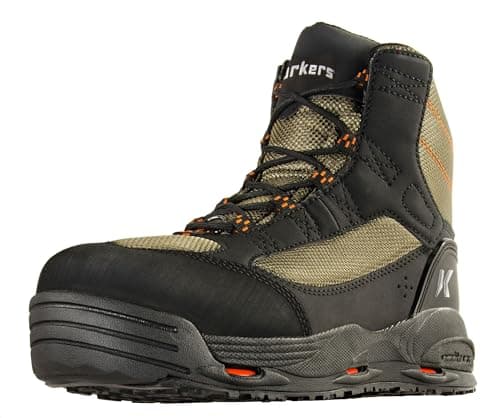
The best answer on this page because it refuses to answer the question with one sole. The OmniTrax system takes interchangeable outsoles, and the Greenback ships with felt and with Kling-On sticky rubber, which between them cover the two surfaces that actually put anglers on their backs: algae-filmed cobble and polished wet bedrock. Swapping takes about a minute and no tools, so a felt-ban state border stops being a problem you solve at the till. Conventional laces rather than a dial keeps the price down, and this is the cheapest way into the sole-swapping idea.
Best for: Best overall for slick rock — two soles in the box, swappable in a minute - 2
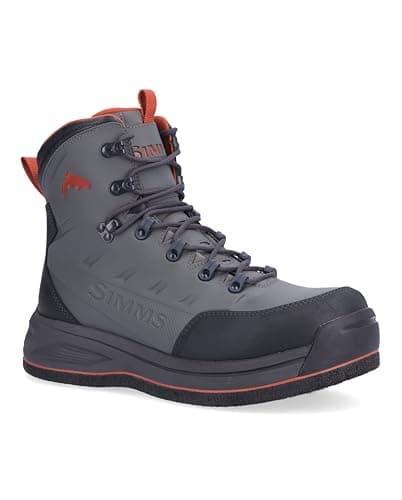
The pick if your creek is one creek, it is slick with algae, and felt is legal in your state. Felt holds on biofilm better than any rubber compound made, and a dedicated felt boot does not carry the weight of a sole-mounting plate to achieve it. Simms is the wading brand and the Freestone is their workhorse chassis, which is where the money goes here — support and build rather than tread cleverness. The limitation is the whole point of the boot: it does one surface superbly and you cannot change your mind on the bank.
Best for: Best dedicated felt boot — maximum grip on algae, one surface only - 3
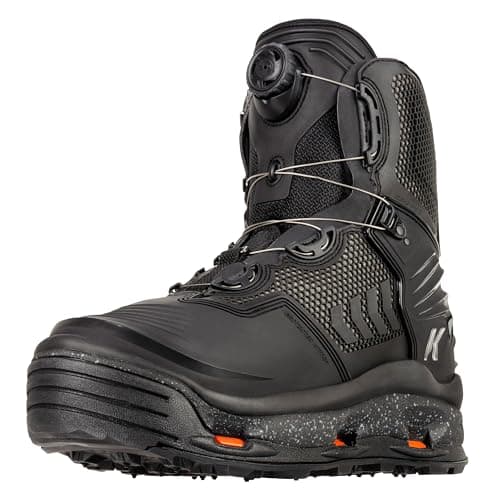
The pick if you are on slick rock all day, every day, and your ankles are paying for it. This is the top of the Korkers range: the same interchangeable sole system as the Greenback on a guide-grade chassis, closed with a BOA dial rather than laces. The dial matters more than it sounds on slick ground, because you can re-tension a boot one-handed mid-river when the upper has relaxed, which is exactly when a loose heel turns into a fall. It is the most expensive boot on the page and the support is where that money went.
Best for: Guide-grade pick — the stiffest chassis here, with a BOA dial - 4
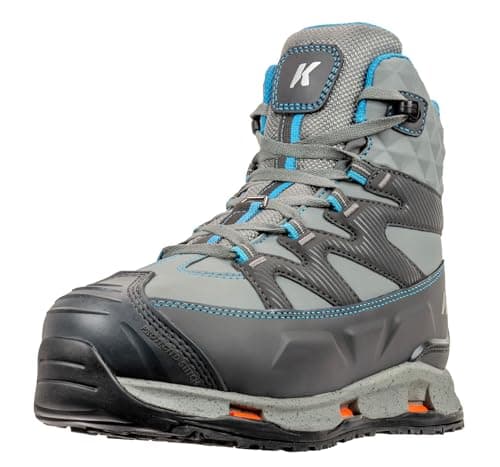
The pick for anyone who wants the sole-swapping system on a last that actually fits. The Bantam Lite is the lightest boot in the Korkers range and this is the women's-specific version, which means the heel cup and instep volume are cut for a women's foot rather than scaled down from a men's pattern. On slick rock that fit is not cosmetic: a heel that lifts inside the boot is a heel that slides on the rock. It ships with felt and Kling-On in the box like the Greenback, so nothing is given up for the lighter build.
Best for: Best women's option — a women's last, and still two soles - 5
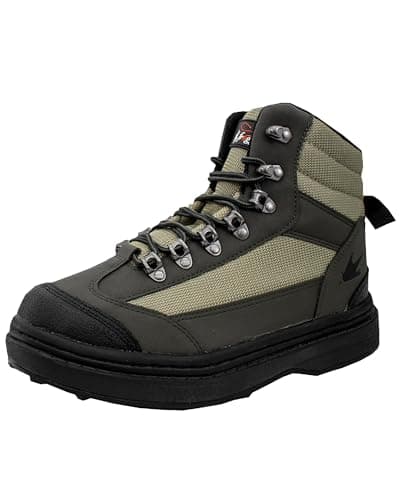
The cheapest pick here and the sensible floor for this problem. Cleated rubber is not the best sole on algae and we are not going to pretend otherwise, but it is legal in all fifty states, it grips rounded creek cobble, and crucially it gives you the cheap upgrade path: a set of screw-in studs costs a fraction of the difference between this boot and the Korkers and transforms its bite on polished stone. For an angler on one creek with a budget, the cleated boot plus studs plus a wading staff beats a premium boot bought at the expense of the staff.
Best for: Budget pick — cleated rubber, legal in every state, add studs for slick rock
| # | Product | Best for | Score | Price |
|---|---|---|---|---|
| 1 | Korkers Greenback Wading Boot with Felt & Kling-On Soles The best answer on this page because it refuses to answer the question with one sole. The OmniTrax system takes interchangeable outsoles, and the Greenback ships with felt and with Kling-On sticky rubber, which between them cover the two surfaces that actually put anglers on their backs: algae-filmed cobble and polished wet bedrock. Swapping takes about a minute and no tools, so a felt-ban state border stops being a problem you solve at the till. Conventional laces rather than a dial keeps the price down, and this is the cheapest way into the sole-swapping idea. | Best overall for slick rock — two soles in the box, swappable in a minute | — | $111.96View on Amazon#ad |
| 2 | Simms Freestone Boot, Felt The pick if your creek is one creek, it is slick with algae, and felt is legal in your state. Felt holds on biofilm better than any rubber compound made, and a dedicated felt boot does not carry the weight of a sole-mounting plate to achieve it. Simms is the wading brand and the Freestone is their workhorse chassis, which is where the money goes here — support and build rather than tread cleverness. The limitation is the whole point of the boot: it does one surface superbly and you cannot change your mind on the bank. | Best dedicated felt boot — maximum grip on algae, one surface only | — | $160.95View on Amazon#ad |
| 3 | Korkers River Ops BOA Wading Boots with Interchangeable Soles The pick if you are on slick rock all day, every day, and your ankles are paying for it. This is the top of the Korkers range: the same interchangeable sole system as the Greenback on a guide-grade chassis, closed with a BOA dial rather than laces. The dial matters more than it sounds on slick ground, because you can re-tension a boot one-handed mid-river when the upper has relaxed, which is exactly when a loose heel turns into a fall. It is the most expensive boot on the page and the support is where that money went. | Guide-grade pick — the stiffest chassis here, with a BOA dial | — | $299.99View on Amazon#ad |
| 4 | Korkers Women's Bantam Lite Wading Boot with Felt & Kling-On Soles The pick for anyone who wants the sole-swapping system on a last that actually fits. The Bantam Lite is the lightest boot in the Korkers range and this is the women's-specific version, which means the heel cup and instep volume are cut for a women's foot rather than scaled down from a men's pattern. On slick rock that fit is not cosmetic: a heel that lifts inside the boot is a heel that slides on the rock. It ships with felt and Kling-On in the box like the Greenback, so nothing is given up for the lighter build. | Best women's option — a women's last, and still two soles | — | $179.99View on Amazon#ad |
| 5 | Frogg Toggs Men's Hellbender Wading Boot, Cleated Sole The cheapest pick here and the sensible floor for this problem. Cleated rubber is not the best sole on algae and we are not going to pretend otherwise, but it is legal in all fifty states, it grips rounded creek cobble, and crucially it gives you the cheap upgrade path: a set of screw-in studs costs a fraction of the difference between this boot and the Korkers and transforms its bite on polished stone. For an angler on one creek with a budget, the cleated boot plus studs plus a wading staff beats a premium boot bought at the expense of the staff. | Budget pick — cleated rubber, legal in every state, add studs for slick rock | — | $88.65View on Amazon#ad |
The best wading boot for slippery rocks is the Korkers Greenback, because it ships with felt and sticky rubber in the box and swaps between them in a minute — which is the only honest answer when "slippery" means three different surfaces. It is for the angler who fishes more than one creek, or one creek that changes through the season. The budget pick is the Frogg Toggs Hellbender in cleated rubber, which is legal everywhere and takes screw-in studs for a fraction of the price difference. Prices come from our live retailer feed and are date-stamped beneath the comparison table.
Three of the five picks here are Korkers, and that is not brand loyalty — Korkers is the one maker whose whole product line is built around interchangeable outsoles, which is the feature this specific problem rewards. The two non-Korkers picks are there because a dedicated felt boot and a cheap cleated boot both beat an interchangeable boot on one axis each: weight and price.
Slick rock is three problems
Anglers say "slippery rocks" as if it were one surface. It is at least three, and the sole that saves you on one will drop you on another. Knowing which one your creek has is worth more than any amount of tread depth.
| Surface | What it feels like | What beats it | What fails on it |
|---|---|---|---|
| Algae-filmed cobble | Greasy — the foot slides slowly | Felt, then studded rubber | Plain lug rubber |
| Polished wet bedrock | No purchase at all, sudden | Studs, carbide tips | Felt alone, plain rubber |
| Loose round cobble | The rock moves, not the boot | Ankle support and a staff | Any sole — this is not a sole problem |
| Mud and clay banks | Sticky then abruptly slick | Lug rubber | Felt — it packs and glazes |
| Snow on the walk in | Balling up underfoot | Lug rubber | Felt — it freezes solid |
The important row is the third one. Loose cobble is not a grip problem and no boot solves it. If your creek bed is rounded stone the size of a grapefruit, your falls come from rocks rolling under you, and the fixes are ankle support, a slower wading pace and a third point of contact. Buying a stickier sole for that is money spent on the wrong problem — the staffs are in the best wading staffs.
What we have not done
What each sole actually fixes
Felt grips biofilm. Sticky rubber grips clean wet stone. Studs grip everything hard enough to bite into. Lug rubber grips the walk in. No single compound does all four, which is why the interchangeable-sole boots sit at the top of this page.
| Sole | Algae | Polished bedrock | Banks and snow | Travels between states |
|---|---|---|---|---|
| Felt | Best here | Poor | Poor | No — banned in several states |
| Kling-On / sticky rubber | Good | Good | Fair | Yes |
| Cleated rubber | Fair | Fair | Good | Yes |
| Lug rubber (hiking tread) | Poor | Poor | Best here | Yes |
| Rubber plus studs | Good | Best here | Fair | Yes |
Sticky rubber is the best single compromise, and that is why Korkers pairs it with felt rather than with lug tread. If you are going to own one sole and it has to be legal everywhere, make it a sticky rubber compound and put studs in it. The straight comparison of the two headline options is in rubber vs felt wading boot soles, and the whole boot field without the slick-rock filter is in the best wading boots.
Studs: the cheapest upgrade there is
A set of screw-in studs costs a small fraction of the gap between the cheapest and the most expensive boot on this page, and on polished bedrock it closes most of it. This is the highest-leverage thing an angler on a budget can do about slick rock.
Two cautions, both practical. Studs are loud and they transmit through the sole, so in very low clear water on wild fish they are a disadvantage — you can be heard coming. And they chew up drift boat decks and the hardwood floor in your hallway, so a studded boot becomes an outdoor-only boot. Check the listing says the sole is stud-compatible before you drill into it; a thin budget sole can be penetrated right through.
Studs do not replace felt on algae, they replace a sole compound on hard stone. Biofilm is soft, so a metal point sinks through it and finds the same slick rock underneath; felt works by matting into the film instead. That distinction is why the top pick ships with both and why no amount of studding makes a lug sole good on a green rock.
The five compared
| Boot | Sole approach | Support | Buy it if |
|---|---|---|---|
| Korkers Greenback | Felt + Kling-On, swappable | Mid | You fish more than one kind of water |
| Simms Freestone, felt | Felt only | Mid-high | One creek, algae, felt is legal there |
| Korkers River Ops BOA | Interchangeable, BOA dial | Guide-grade | You are on slick rock every day |
| Korkers Women's Bantam Lite | Felt + Kling-On, swappable | Mid, lightest | You want a women's last and both soles |
| Frogg Toggs Hellbender | Cleated rubber, stud-ready | Entry | Budget — then buy studs and a staff |
The page splits on one question: do you fish one surface or several? One surface, and a dedicated boot is lighter and cheaper for the same grip. Several, and the swappable sole is worth the weight of the mounting plate. Anglers who travel to fish are nearly always in the second group, even when they think they are in the first.
The boot is not the whole answer
Most creek falls are a wading-technique problem wearing a boot costume. Three habits do more for your footing than any upgrade on this page, and all three are free. Move one foot at a time and never while the other is unweighted. Shuffle rather than step, so you feel a rock move before you commit to it. And face slightly upstream, because current pushing into the back of your knee is what folds a leg.
A wading staff is the single best piece of kit for slick rock. Three points of contact beats any sole compound, it probes depth ahead of your foot, and it costs less than the difference between most of these boots — the field is in the best wading staffs. A wading belt worn snug is the other free safety item, and the broader approach to small water is in the creek fishing gear guide.
Before you buy felt
Felt soles are banned in several US states, and we deliberately do not list which ones here, because those lists change and a stale list on a website is worse than no list. Check your state wildlife or fish-and-game agency before you order, and check the agency for any state you plan to travel to with the boots.
The reason for the bans is not arbitrary. Felt stays wet for days and the water it holds carries didymo and whirling-disease spores between watersheds, which is a real mechanism rather than a precaution. That is also the practical argument for the interchangeable boot: you can own felt for your home creek and travel on rubber without buying a second pair of boots. The cheaper end of the boot market, where the felt-versus-rubber decision is usually made on price alone, is in the best wading boots under $100, and the band above it is the best wading boots under $200.
The picks in detail
Korkers Greenback Wading Boot with Felt & Kling-On Soles
Best for: Best overall for slick rock — two soles in the box, swappable in a minute
The best answer on this page because it refuses to answer the question with one sole. The OmniTrax system takes interchangeable outsoles, and the Greenback ships with felt and with Kling-On sticky rubber, which between them cover the two surfaces that actually put anglers on their backs: algae-filmed cobble and polished wet bedrock. Swapping takes about a minute and no tools, so a felt-ban state border stops being a problem you solve at the till. Conventional laces rather than a dial keeps the price down, and this is the cheapest way into the sole-swapping idea.
- Soles included
- Felt + Kling-On rubber
- System
- OmniTrax interchangeable
- Closure
- Conventional laces
- Two soles in the box — the only real fix for mixed water
- Felt stays legal because you can swap it out at a state line
- Cheapest entry into the interchangeable system
- The sole plate adds weight over a fixed-sole boot
- Two soles to store, dry and keep track of
Simms Freestone Boot, Felt
Best for: Best dedicated felt boot — maximum grip on algae, one surface only
The pick if your creek is one creek, it is slick with algae, and felt is legal in your state. Felt holds on biofilm better than any rubber compound made, and a dedicated felt boot does not carry the weight of a sole-mounting plate to achieve it. Simms is the wading brand and the Freestone is their workhorse chassis, which is where the money goes here — support and build rather than tread cleverness. The limitation is the whole point of the boot: it does one surface superbly and you cannot change your mind on the bank.
- Sole
- Felt
- Chassis
- Freestone — Simms' workhorse build
- Legal
- Banned in several US states — check first
- Best grip on algae-covered stone of anything here
- Simms chassis support without the price of their top boot
- No sole plate, so lighter than an interchangeable boot
- Felt is banned in several US states
- Holds water — heavy to carry, slow to dry, poor on snow and mud
Korkers River Ops BOA Wading Boots with Interchangeable Soles
Best for: Guide-grade pick — the stiffest chassis here, with a BOA dial
The pick if you are on slick rock all day, every day, and your ankles are paying for it. This is the top of the Korkers range: the same interchangeable sole system as the Greenback on a guide-grade chassis, closed with a BOA dial rather than laces. The dial matters more than it sounds on slick ground, because you can re-tension a boot one-handed mid-river when the upper has relaxed, which is exactly when a loose heel turns into a fall. It is the most expensive boot on the page and the support is where that money went.
- Closure
- BOA dial
- Soles included
- Interchangeable, two in the box
- Support
- Guide-grade chassis
- Stiffest support here — the safest option in pushy current
- One-handed re-tensioning while you are standing in the river
- Interchangeable soles, same as the Greenback
- Most expensive pick on the page by a wide margin
- A BOA dial is one more mechanical part to damage
Korkers Women's Bantam Lite Wading Boot with Felt & Kling-On Soles
Best for: Best women's option — a women's last, and still two soles
The pick for anyone who wants the sole-swapping system on a last that actually fits. The Bantam Lite is the lightest boot in the Korkers range and this is the women's-specific version, which means the heel cup and instep volume are cut for a women's foot rather than scaled down from a men's pattern. On slick rock that fit is not cosmetic: a heel that lifts inside the boot is a heel that slides on the rock. It ships with felt and Kling-On in the box like the Greenback, so nothing is given up for the lighter build.
- Soles included
- Felt + Kling-On rubber
- Last
- Women's-specific
- Build
- Lightest in the Korkers range
- Women's-specific last — heel and instep, not just length
- Lightest interchangeable-sole boot here
- Both soles in the box
- Lighter build means less chassis support than the River Ops
- Priced well above the fixed-sole boots
Frogg Toggs Men's Hellbender Wading Boot, Cleated Sole
Best for: Budget pick — cleated rubber, legal in every state, add studs for slick rock
The cheapest pick here and the sensible floor for this problem. Cleated rubber is not the best sole on algae and we are not going to pretend otherwise, but it is legal in all fifty states, it grips rounded creek cobble, and crucially it gives you the cheap upgrade path: a set of screw-in studs costs a fraction of the difference between this boot and the Korkers and transforms its bite on polished stone. For an angler on one creek with a budget, the cleated boot plus studs plus a wading staff beats a premium boot bought at the expense of the staff.
- Sole
- Cleated rubber (felt option on the listing)
- Closure
- Laced
- Sizing
- Men's, up to 13
- Cheapest pick on the page by a clear margin
- Legal everywhere — no state-by-state checking
- Takes studs, which is the cheap fix for slick rock
- Bare cleated rubber is beaten by felt on algae
- Fixed sole — no swapping when the water changes
Prices shown are from Amazon as of November 21, 2026 and change often — the button always goes to the current listing. Some links may earn us a commission at no extra cost to you. How this works.
Frequently asked questions
What wading boot sole is best for slippery rocks?
Felt on algae-covered stone, studded sticky rubber on polished wet bedrock. Those are different surfaces and no single sole wins both, which is why boots with interchangeable outsoles are the strongest answer to this question. If you must own one sole, choose a sticky rubber compound and add screw-in studs.
Do studs really help on slick rock?
On hard stone, yes, and they are the cheapest upgrade available — a set of screw-in studs costs a small fraction of the difference between a budget boot and a premium one. On algae they help less than people expect, because the metal point sinks through the soft biofilm and finds the same slick rock underneath. Studs also make noise, which is a disadvantage on wild fish in low clear water.
Is felt worth it if it is banned in some states?
It is worth it if you fish one home creek, that creek is algae-slick, and felt is legal in your state. Felt grips biofilm better than any rubber compound. If you travel to fish at all, buy an interchangeable-sole boot so you can run felt at home and rubber away, or buy sticky rubber and stud it.
Will better boots stop me falling in on a creek?
Only partly. If your falls come from rocks rolling under you rather than your sole sliding, that is a loose-cobble problem and no sole fixes it — ankle support, a slower shuffling wading pace and a wading staff do. A staff gives you three points of contact and probes depth ahead of your foot, and it costs less than the gap between two boots on this page.
Are interchangeable soles worth the extra weight?
If you fish more than one kind of water, yes. The sole-mounting plate adds some weight over a fixed-sole boot, and in return you can run felt on algae and rubber on bedrock and banks from one pair of boots, and you can comply with a felt ban at a state line without buying a second pair. If you only ever fish one creek, a dedicated boot is lighter and cheaper for the same grip.
Can I wear studded boots in a drift boat?
You should not. Studs chew up boat decks, and most guides will ask you to leave them on the bank or wear a different pair. The same applies to hardwood floors at home. A studded boot is effectively an outdoor-only boot, which is another argument for an interchangeable system if you fish from a boat as well as on foot.
Sources
Keep reading
Not sure where to start?
The beginner gear guide walks you through exactly what a new stream angler needs — the six essentials first, nice-to-haves later, with one safe-default pick per category.