Waders & Boots · Roundup
The Best Wading Boots Under $200
Two hundred dollars is the line where wading boots stop improving in ways you can feel. Above it you buy BOA dials, interchangeable soles and a lighter upper; below it you can still buy a boot that lasts five seasons — if you buy the sole your creek actually needs.
Disclosure: Creek Cover is reader-supported. If you buy through our links we may earn a commission, at no extra cost to you. It never changes which pick we tell a new angler to start with. Full disclosure.
Quick picks at a glance
Tap a pick to read the full write-up, or the price button to check it on Amazon.
- 1
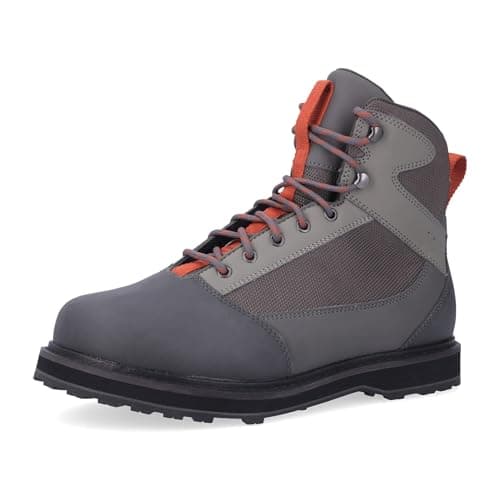
The best boot in this band and the easiest recommendation on the page. Tributary is Simms' entry line, so you get their lasts, their lacing and their rubber outsole specification without paying flagship money. Rubber soles are legal on every water in the country, which removes the one way a boot purchase can actually go wrong. On a creek — short walks, wet rock, a lot of stepping over things — this does everything the $300 boots do apart from accept a different sole.
Best for: Best overall under $200 — the entry boot from the wading brand - 2
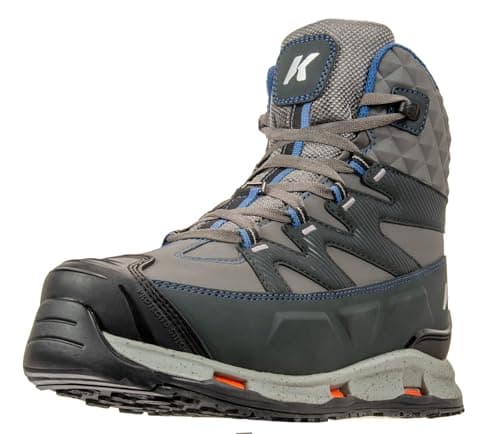
The only boot in this band that comes with two outsoles and lets you change them. Korkers' system means you carry a felt sole for slick bedrock and a rubber Kling-On sole for water where felt is banned or where you will walk a trail — which is normally two boot purchases. The Bantam Lite is their lightest model, which matters because a heavy boot is exhausting on a creek where you spend as much time walking as wading.
Best for: Best traction — two soles in the box, swapped in seconds - 3
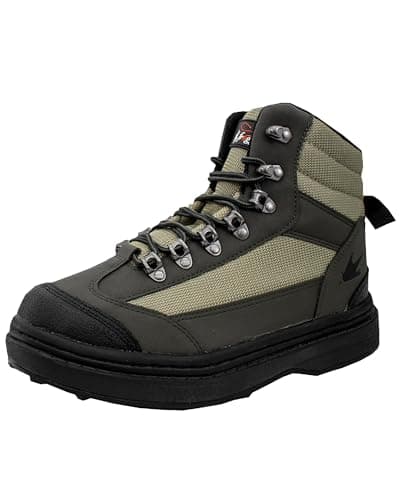
The boot that makes the honest argument against spending the whole $200. It costs roughly half the band and it is the boot we point most beginners at, because the Hellbender does the two things a wading boot must do — hold your ankle and grip the bottom — and does them for years. The cleated sole bites into mud, gravel and loose bottom, which is what most creeks actually have, and leaves you with money for waders.
Best for: Best value — roughly half the budget, most of the boot - 4
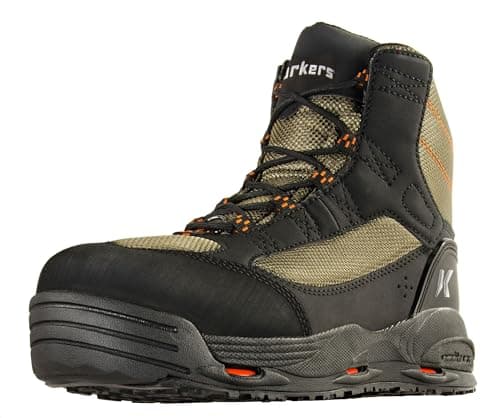
The cheaper way into the Korkers sole system, and the pick if the two-sole idea appeals but the Bantam Lite is more than you want to spend. Same felt and Kling-On pair in the box, same swap mechanism, a heavier and less refined upper. For a creek angler who fishes one slick-bedrock stream and one trail-walk stream, this is the most practical boot on the page.
Best for: Best middle ground — the interchangeable-sole system, cheaper - 5
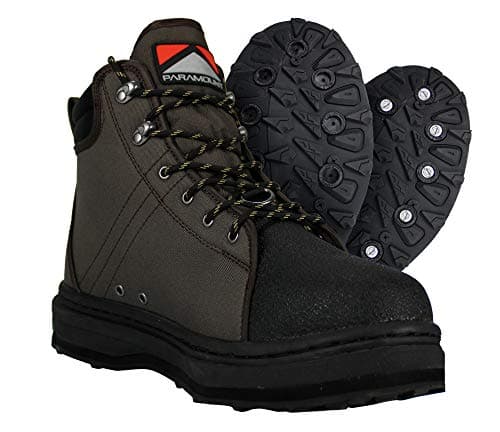
The cheapest boot on the page and the one to buy if the budget is really the waders and the boots are an afterthought you still want to get right. Cleated rubber sole, laced upper, nothing clever. Paramount sells into the same value segment as Frogg Toggs and this is a direct alternative to the Hellbender at a similar level — buy whichever is cheaper on the day, or whichever fits your foot better, because at this price those are the only two variables that matter.
Best for: Budget pick — the cheapest boot here that does the job
| # | Product | Best for | Score | Price |
|---|---|---|---|---|
| 1 | Simms Tributary Wading Boot, Rubber Sole The best boot in this band and the easiest recommendation on the page. Tributary is Simms' entry line, so you get their lasts, their lacing and their rubber outsole specification without paying flagship money. Rubber soles are legal on every water in the country, which removes the one way a boot purchase can actually go wrong. On a creek — short walks, wet rock, a lot of stepping over things — this does everything the $300 boots do apart from accept a different sole. | Best overall under $200 — the entry boot from the wading brand | — | $170.13View on Amazon#ad |
| 2 | Korkers Bantam Lite Wading Boot with Felt & Kling-On Soles The only boot in this band that comes with two outsoles and lets you change them. Korkers' system means you carry a felt sole for slick bedrock and a rubber Kling-On sole for water where felt is banned or where you will walk a trail — which is normally two boot purchases. The Bantam Lite is their lightest model, which matters because a heavy boot is exhausting on a creek where you spend as much time walking as wading. | Best traction — two soles in the box, swapped in seconds | — | $179.99View on Amazon#ad |
| 3 | Frogg Toggs Men's Hellbender Wading Boot, Cleated Sole The boot that makes the honest argument against spending the whole $200. It costs roughly half the band and it is the boot we point most beginners at, because the Hellbender does the two things a wading boot must do — hold your ankle and grip the bottom — and does them for years. The cleated sole bites into mud, gravel and loose bottom, which is what most creeks actually have, and leaves you with money for waders. | Best value — roughly half the budget, most of the boot | — | $88.65View on Amazon#ad |
| 4 | Korkers Greenback Wading Boot with Felt & Kling-On Soles The cheaper way into the Korkers sole system, and the pick if the two-sole idea appeals but the Bantam Lite is more than you want to spend. Same felt and Kling-On pair in the box, same swap mechanism, a heavier and less refined upper. For a creek angler who fishes one slick-bedrock stream and one trail-walk stream, this is the most practical boot on the page. | Best middle ground — the interchangeable-sole system, cheaper | — | $116.40View on Amazon#ad |
| 5 | Paramount Outdoors Stonefly Cleated Sole Wading Boot The cheapest boot on the page and the one to buy if the budget is really the waders and the boots are an afterthought you still want to get right. Cleated rubber sole, laced upper, nothing clever. Paramount sells into the same value segment as Frogg Toggs and this is a direct alternative to the Hellbender at a similar level — buy whichever is cheaper on the day, or whichever fits your foot better, because at this price those are the only two variables that matter. | Budget pick — the cheapest boot here that does the job | — | $89.99View on Amazon#ad |
The best wading boot under $200 is the Simms Tributary with a rubber sole — the entry boot from the company that defines this category, legal on every water in the country, and near the top of the budget where the money is genuinely well spent. If traction on slick bedrock is your problem, the Korkers Bantam Lite ships with felt and rubber soles in the same box. The budget pick is the Paramount Stonefly, the cheapest boot here that holds your ankle and grips a creek bottom. Every pick on this page carried a live price under $200 at the as-of date shown beneath the comparison table; prices come from our feed, never from this copy.
Wading boots are the piece of gear most beginners under-buy and then replace twice. They are also the piece where $200 is genuinely enough — the field above that line adds convenience and weight savings rather than safety or durability.
What $200 actually buys
At this budget you get a real upper, a real sole and real ankle support. That is the whole specification of a wading boot and all three are available well inside $200. A boot has to drain, resist abrasion from gravel, hold a lace under tension when wet, and support an ankle on a loose streambed. None of that requires a premium price.
| Spend | What you get | What you still do not get |
|---|---|---|
| Under $100 | Laced upper, cleated rubber sole, usable ankle support | Light weight, felt option, refined fit |
| $100 to $200 | Brand lasts, interchangeable soles on some models, better drainage | BOA dials, the lightest uppers, studded plates |
| $200 to $300 | BOA closure, multiple sole plates, lighter construction | Little that changes safety or longevity |
Above $200 the gains are convenience. A BOA dial tightens with cold wet hands faster than laces; a lighter upper is less tiring on a long hike; a studded plate is better on ice-glazed rock. These are real improvements and none of them is the difference between a safe wade and a fall. The boots above this band are ranked in the best wading boots if you want the full field.
The sole decision comes first
Pick the sole before you pick the boot, because the sole decides where you can legally fish. Felt grips wet bedrock better than anything else and is banned in several states as an invasive-species vector, because the fibres hold water and organisms between rivers. Rubber is legal everywhere. Cleated rubber bites soft bottoms. Your state wildlife agency publishes the current rule and is the only authority worth trusting on it.
| Sole | Best on | Worst on | Legality |
|---|---|---|---|
| Felt | Smooth wet bedrock, algae-covered rock | Mud, snow, trail walking | Banned in several states — check yours |
| Plain rubber | Trail walking, mixed bottoms, gravel | Slick algae-covered bedrock | Legal everywhere |
| Cleated rubber | Mud, silt, loose gravel, soft bottoms | Smooth bedrock, polished stone | Legal everywhere |
| Studded rubber | Almost everything, including ice | Hard floors, boat decks | Legal everywhere |
For most creeks, cleated rubber is the right default. Small streams tend to have gravel, silt, sand and cobble rather than long runs of polished bedrock, and cleats bite all of that. If your water is a limestone or slate-bottomed stream where you slide on apparently flat rock, that is when felt earns its reputation — the full comparison is in felt wading boots vs rubber.
The two Korkers picks dodge the question entirely. Both ship with a felt sole and a rubber Kling-On sole and let you change between them, which is the only way to own the right sole for two different streams without buying two boots. That system is examined in more detail in the Korkers wading boots review.
The five compared
| Boot | Sole | Position in band | Buy it if |
|---|---|---|---|
| Simms Tributary | Rubber | Top of band | You want the best boot the budget allows |
| Korkers Bantam Lite | Felt + rubber, swappable | Top of band | Traction on bedrock is your problem |
| Frogg Toggs Hellbender | Cleated | About half the band | You want most of the boot for half the money |
| Korkers Greenback | Felt + rubber, swappable | Mid-band | You want two soles for less |
| Paramount Stonefly | Cleated | Cheapest here | The waders are the real budget |
Sizing over a stockingfoot wader
Go up one full size from your street shoe, sometimes two. A wading boot goes over the neoprene foot of a stockingfoot wader plus whatever sock you have on, and that is a real volume of material. A boot that fits your bare foot will crush your toes once the wader is inside it, and crushed toes in cold water is a day ended early.
Try them on wearing the waders, if you possibly can. This is the single piece of advice that prevents returns. If you are buying online, buy the size up, put the waders on, lace the boot properly and walk around indoors before the boot has been in water. The full method is in how to size waders, which covers the boot step too.
Lace them tight and re-lace after ten minutes. Wet laces stretch and neoprene compresses, so a boot laced on the bank is looser by the time you are in the water. A loose wading boot is how ankles get turned on a cobble bottom. If you have wide feet, that is a separate fit problem with its own list in the best wading boots for wide feet.
When to spend less
If the waders are not bought yet, spend less on boots. A leaking wader ruins a day; a basic boot does not. The sensible split for a first setup is roughly two-thirds on waders and one-third on boots, which points at the Hellbender or the Stonefly rather than the top of this band. The wader field at that budget is in the best cheap waders.
If you fish a handful of days a year, spend less. Wading boots fail by abrasion and by the sole delaminating, and both are a function of days used. A boot at half this band will outlast a decade of occasional fishing. The whole-season case is different.
If you are considering bootfoot waders, you may not need boots at all. A bootfoot wader has the boot attached — one purchase, one size, warmer feet, less ankle support. On a creek where you wade a short distance from the car that is a legitimate choice; the comparison is in stockingfoot vs bootfoot waders.
When to spend more
If you hike to your water, buy light. Boot weight is carried with every step and the lightest boots are above this band or at the very top of it. If your fishing involves a mile in and a mile out, that is the one place where paying more buys something you feel all day — the options are in the lightest wading boots and the best wading boots for hiking.
If you fish big slick water, buy studs and a BOA. Studded plates and a dial closure genuinely help on a large, fast, polished-bedrock river. On a creek you are rarely more than knee-deep and the consequence of a slip is wet knees, not a swim. Spend accordingly.
If your feet are a known problem, buy the fit, whatever it costs. Wide feet, high arches and orthotics all trump price. A boot that fits is safer than a better boot that does not, and no amount of specification compensates for a foot sliding inside a boot on a loose streambed.
The picks in detail
Simms Tributary Wading Boot, Rubber Sole
Best for: Best overall under $200 — the entry boot from the wading brand
The best boot in this band and the easiest recommendation on the page. Tributary is Simms' entry line, so you get their lasts, their lacing and their rubber outsole specification without paying flagship money. Rubber soles are legal on every water in the country, which removes the one way a boot purchase can actually go wrong. On a creek — short walks, wet rock, a lot of stepping over things — this does everything the $300 boots do apart from accept a different sole.
- Sole
- Rubber
- Line
- Simms Tributary (entry tier)
- Closure
- Laces
- Legal everywhere — no felt restrictions to check
- Simms fit and construction at the bottom of their range
- Near the top of the band, so you are spending the budget well
- Fixed sole — no studs or interchangeable plates
- Near the limit of the band, with little room to spare
Korkers Bantam Lite Wading Boot with Felt & Kling-On Soles
Best for: Best traction — two soles in the box, swapped in seconds
The only boot in this band that comes with two outsoles and lets you change them. Korkers' system means you carry a felt sole for slick bedrock and a rubber Kling-On sole for water where felt is banned or where you will walk a trail — which is normally two boot purchases. The Bantam Lite is their lightest model, which matters because a heavy boot is exhausting on a creek where you spend as much time walking as wading.
- Soles
- Felt + Kling-On rubber, interchangeable
- Weight
- Korkers' lightest model
- Closure
- Laces
- Two soles included — effectively two boots
- Felt for bedrock, rubber for everywhere felt is banned
- Lightest boot in the Korkers range
- Sole-swap mechanism is one more thing that can wear
- Also near the top of the band, like the Simms
Frogg Toggs Men's Hellbender Wading Boot, Cleated Sole
Best for: Best value — roughly half the budget, most of the boot
The boot that makes the honest argument against spending the whole $200. It costs roughly half the band and it is the boot we point most beginners at, because the Hellbender does the two things a wading boot must do — hold your ankle and grip the bottom — and does them for years. The cleated sole bites into mud, gravel and loose bottom, which is what most creeks actually have, and leaves you with money for waders.
- Sole
- Cleated rubber
- Fit
- Men's, runs roomy for wader socks
- Closure
- Laces
- Around half the band — the value pick by a distance
- Cleats grip mud and loose gravel well
- The most widely owned boot in this price range
- Cleats are less certain on smooth wet bedrock than felt
- Heavier than the premium boots above
Korkers Greenback Wading Boot with Felt & Kling-On Soles
Best for: Best middle ground — the interchangeable-sole system, cheaper
The cheaper way into the Korkers sole system, and the pick if the two-sole idea appeals but the Bantam Lite is more than you want to spend. Same felt and Kling-On pair in the box, same swap mechanism, a heavier and less refined upper. For a creek angler who fishes one slick-bedrock stream and one trail-walk stream, this is the most practical boot on the page.
- Soles
- Felt + Kling-On rubber, interchangeable
- Closure
- Laces
- Position
- Mid-band
- Interchangeable soles at a mid-band price
- Covers felt-legal and felt-banned water with one purchase
- Comfortably inside the $200 limit
- Heavier and bulkier than the Bantam Lite
- Older model, so sizing advice varies by listing
Paramount Outdoors Stonefly Cleated Sole Wading Boot
Best for: Budget pick — the cheapest boot here that does the job
The cheapest boot on the page and the one to buy if the budget is really the waders and the boots are an afterthought you still want to get right. Cleated rubber sole, laced upper, nothing clever. Paramount sells into the same value segment as Frogg Toggs and this is a direct alternative to the Hellbender at a similar level — buy whichever is cheaper on the day, or whichever fits your foot better, because at this price those are the only two variables that matter.
- Sole
- Cleated rubber
- Closure
- Laces
- Position
- Cheapest in band
- Lowest price on the page
- Cleated sole, so it grips the soft bottoms creeks have
- Leaves the bulk of a $200 budget for waders
- Least ankle support of the five
- No felt or interchangeable option
Prices shown are from Amazon as of November 20, 2026 and change often — the button always goes to the current listing. Some links may earn us a commission at no extra cost to you. How this works.
Frequently asked questions
What is the best wading boot under $200?
The Simms Tributary with a rubber sole is the strongest pick in that band — the entry boot from a dedicated wading brand, with a sole that is legal in every state. If traction on slick bedrock is the problem, the Korkers Bantam Lite ships with both felt and rubber soles in the box.
Do you need to spend $200 on wading boots?
No. A boot at roughly half that can have a laced upper, a cleated rubber sole and usable ankle support, which is the complete specification of a wading boot. Above $200 you are buying BOA dials, interchangeable sole plates and lighter construction — convenience rather than safety or longevity.
Felt or rubber soles for a creek?
Cleated rubber for most creeks, because small streams tend to have gravel, silt and cobble rather than long stretches of polished bedrock, and cleats bite all of that. Felt grips wet bedrock better than anything but is banned in several states as an invasive-species vector — check your state wildlife agency.
What size wading boots should I buy?
One full size up from your street shoe, sometimes two. The boot goes over the neoprene foot of a stockingfoot wader plus a sock, which is a real volume. Try them on wearing the waders if you can, lace them tight, and re-lace after ten minutes because wet laces stretch and neoprene compresses.
How long do wading boots last?
It depends on days used rather than years owned. Boots fail by abrasion to the upper and by the sole delaminating, so an occasional angler can get a decade out of a boot at half this band while someone fishing most weekends will replace one far sooner.
Sources
Keep reading
Not sure where to start?
The beginner gear guide walks you through exactly what a new stream angler needs — the six essentials first, nice-to-haves later, with one safe-default pick per category.