Waders & Boots · Roundup
The Best Wading Boots Under $100
Under a hundred dollars you are buying grip, drainage and a last that fits over a stockingfoot — not a stiff chassis and not a lifetime. On a creek that is a better trade than it sounds, because you walk short distances and stand on rounded rock.
Disclosure: Creek Cover is reader-supported. If you buy through our links we may earn a commission, at no extra cost to you. It never changes which pick we tell a new angler to start with. Full disclosure.
Quick picks at a glance
Tap a pick to read the full write-up, or the price button to check it on Amazon.
- 1
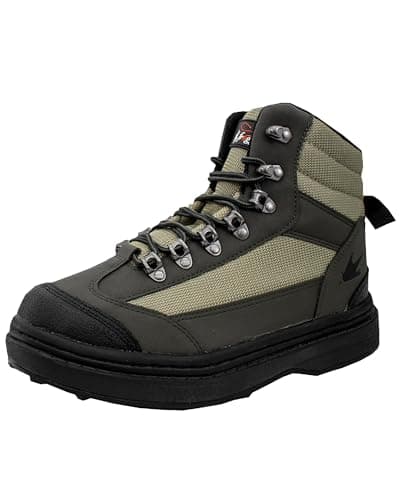
The default answer in this band and the pair most creek anglers should stop at. Cleated rubber is the sole that is wrong nowhere: it holds on rounded streambed stone, it does not carry water between watersheds the way felt does, and it is legal in every state in the country, which matters if you travel to fish. The lacing and the synthetic upper are hiking-boot construction rather than wader-boot construction, so the boot drains and dries instead of staying heavy all afternoon. Sizing runs to a men's 13, which is further than most budget boots reach.
Best for: Best overall under $100 — cleated rubber, legal everywhere - 2
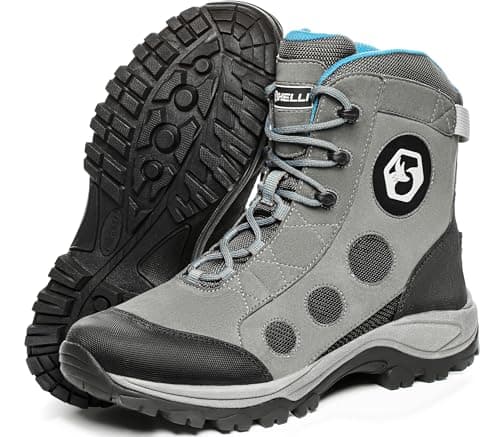
The pick if the fishing starts with a hike. A light synthetic upper with drainage ports is the cheapest way to take weight off your feet, and weight on your feet is what you notice after two miles of bank, not the last ten percent of grip. The rubber lug sole is a hiking tread pattern rather than a studded wading pattern, so it is confident on a bank and on dry rock and less confident on algae. It is cut to go over a stockingfoot wader bootie, which is the only sizing note that matters when you order.
Best for: Lightest pair here — the boot for walking in to the water - 3
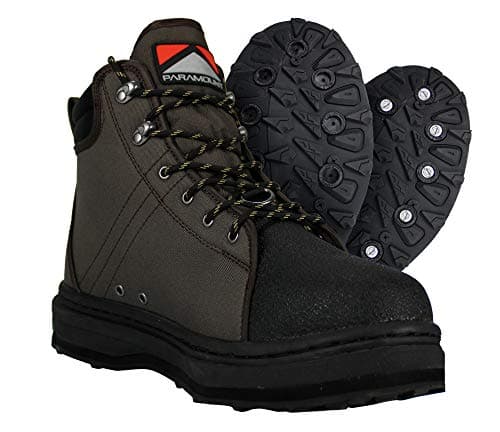
The pick for the creek that is all cobble. Paramount builds this one around the cleated rubber sole rather than around weight, so it is the pair to choose if your water is boulder-and-cobble rather than sand-and-gravel and you would rather have bite than lightness. Conventional lacing and a synthetic upper keep it serviceable; the trade is that a grip-first budget boot is heavier underfoot than the Foxelli and does not pretend otherwise.
Best for: Best grip on rocky streambeds at a budget price - 4
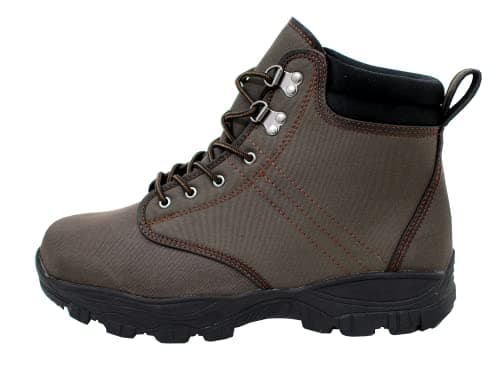
The pick for anyone who has been buying down a men's size and living with the heel slip. This is built on a women's-specific last, which changes the heel cup and the instep volume rather than just the length, and that is the difference between a boot that stays put on a wet rock and one that pistons. The rubber lug sole is legal in all fifty states, and the upper drains. If your water is slick with algae rather than clean cobble, the felt version below is the same boot with more bite and more paperwork.
Best for: Best women's boot in the band — a women's last, not a small men's - 5
The cheapest pair on this page by a wide margin and, on the right water, the one that grips best. Felt beats rubber on algae-covered stone and nothing in this price band competes with it there. Two honest caveats decide whether it is the right buy: felt is banned in several US states as an invasive-species vector, so check your state agency before you order, and this is the women's last, so it is not a general-fit recommendation. Where felt is legal and the last fits, it is the most grip per dollar on the page.
Best for: Budget pick — the cheapest boot here, and the grippiest on algae
| # | Product | Best for | Score | Price |
|---|---|---|---|---|
| 1 | Frogg Toggs Men's Hellbender Wading Boot, Cleated Sole The default answer in this band and the pair most creek anglers should stop at. Cleated rubber is the sole that is wrong nowhere: it holds on rounded streambed stone, it does not carry water between watersheds the way felt does, and it is legal in every state in the country, which matters if you travel to fish. The lacing and the synthetic upper are hiking-boot construction rather than wader-boot construction, so the boot drains and dries instead of staying heavy all afternoon. Sizing runs to a men's 13, which is further than most budget boots reach. | Best overall under $100 — cleated rubber, legal everywhere | — | $88.65View on Amazon#ad |
| 2 | Foxelli Wading Boots, Rubber Sole The pick if the fishing starts with a hike. A light synthetic upper with drainage ports is the cheapest way to take weight off your feet, and weight on your feet is what you notice after two miles of bank, not the last ten percent of grip. The rubber lug sole is a hiking tread pattern rather than a studded wading pattern, so it is confident on a bank and on dry rock and less confident on algae. It is cut to go over a stockingfoot wader bootie, which is the only sizing note that matters when you order. | Lightest pair here — the boot for walking in to the water | — | $89.97View on Amazon#ad |
| 3 | Paramount Outdoors Stonefly Cleated Sole Wading Boot The pick for the creek that is all cobble. Paramount builds this one around the cleated rubber sole rather than around weight, so it is the pair to choose if your water is boulder-and-cobble rather than sand-and-gravel and you would rather have bite than lightness. Conventional lacing and a synthetic upper keep it serviceable; the trade is that a grip-first budget boot is heavier underfoot than the Foxelli and does not pretend otherwise. | Best grip on rocky streambeds at a budget price | — | $89.99View on Amazon#ad |
| 4 | FROGG TOGGS Women's Rana Elite Wading Boot, Rubber Lug Sole The pick for anyone who has been buying down a men's size and living with the heel slip. This is built on a women's-specific last, which changes the heel cup and the instep volume rather than just the length, and that is the difference between a boot that stays put on a wet rock and one that pistons. The rubber lug sole is legal in all fifty states, and the upper drains. If your water is slick with algae rather than clean cobble, the felt version below is the same boot with more bite and more paperwork. | Best women's boot in the band — a women's last, not a small men's | — | $95.00View on Amazon#ad |
| 5 | FROGG TOGGS Women's Rana Elite Wading Boot, Felt Sole The cheapest pair on this page by a wide margin and, on the right water, the one that grips best. Felt beats rubber on algae-covered stone and nothing in this price band competes with it there. Two honest caveats decide whether it is the right buy: felt is banned in several US states as an invasive-species vector, so check your state agency before you order, and this is the women's last, so it is not a general-fit recommendation. Where felt is legal and the last fits, it is the most grip per dollar on the page. | Budget pick — the cheapest boot here, and the grippiest on algae | — | $62.45View on Amazon#ad |
The best wading boot under $100 is the Frogg Toggs Hellbender in the cleated sole— grip that works on rounded creek rock, legal in every US state, and sized up to a men's 13. It is for the angler who fishes a handful of local creeks and wants one pair that does not need a second thought. The budget pick is the Frogg Toggs Women's Rana Elite in felt, the cheapest boot here and the grippiest on algae, with the caveat that felt is banned in several states. Every price on this page comes from our live retailer feed and is date-stamped under the comparison table — none are typed into this copy.
One structural note before the list: three of these five are general-fit boots and two are built on a women's-specific last. That is not padding. Under $100 the women's field is small enough that it is worth naming both options rather than telling half the readers to buy down a men's size.
What $100 actually buys
The budget band buys grip, drainage and a last cut for a wader bootie. It does not buy a stiff chassis, a replaceable sole system or a boot that survives five seasons of heavy use. That is an honest trade for creek fishing, where you stand on rounded cobble for a few hundred yards rather than crossing a river against pushy current all day.
| What you get under $100 | What you do not | Does it matter on a creek? |
|---|---|---|
| Cleated or lug rubber, or felt | Interchangeable sole systems | No — unless you fish several water types |
| Synthetic upper with drain ports | Leather or armored toe caps | Rarely — brush, not rockfall, is the hazard |
| Conventional laces | BOA dials and speed lacing | No |
| A last cut for a stockingfoot bootie | Half sizes and width options | Sometimes — order a full size up |
| One or two seasons of regular use | Five seasons plus a resole | It is the real cost difference |
| Enough support to stand on cobble | A stiff chassis for heavy current | Only on bigger water |
Durability, not grip, is what you give up at this price — and on a creek it is the right thing to give up. A cleated rubber sole on an $89 boot grips about as well as a cleated rubber sole on a $190 boot; the stitching, the midsole and the lace hardware are where the extra money goes. If you fish forty days a season the expensive boot is cheaper per day. If you fish eight, it is not. The band immediately above this one is covered in the best wading boots under $200.
What we have not done
The sole decides the boot
In this band the sole is close to the whole decision, because everything else is similar. Three sole types appear across the five picks, they are good at different things, and one of them is illegal in several states.
| Sole | Best on | Weak on | Legal status |
|---|---|---|---|
| Felt | Algae-covered stone, slick bedrock | Mud banks, snow, dry rock | Banned in several US states |
| Cleated rubber | Rounded cobble, general stream rock | Polished bedrock under a film | Legal everywhere |
| Rubber lug (hiking tread) | Banks, dry rock, long walks | Algae — this is its real weakness | Legal everywhere |
| Rubber plus studs | Nearly everything | Hard floors and boat decks | Legal everywhere; studs sold separately |
Check your state wildlife agency before you buy felt — we do not publish fishing regulations here, because they change. Felt holds water, and water carries whirling-disease spores and didymo between watersheds, which is why the bans exist. If you fish one creek and felt is legal there, it is the best grip per dollar in this band. If you travel at all, buy rubber and add studs later. The full argument is in rubber vs felt wading boot soles, and the boots built specifically for slick stone are in the best wading boots for slippery rocks.
The five compared
| Boot | Sole | Last | Buy it if |
|---|---|---|---|
| Frogg Toggs Hellbender | Cleated rubber | General, to men's 13 | You want one pair and no decisions |
| Foxelli Wading Boots | Rubber lug | General | You walk in to your water |
| Paramount Stonefly | Cleated rubber | General | Your creek is all cobble and boulder |
| Rana Elite, rubber lug | Rubber lug | Women's-specific | You want a women's last, legal everywhere |
| Rana Elite, felt | Felt | Women's-specific | Felt is legal where you fish and price matters |
Two of the five are the same boot in two soles, and that is the most useful comparison on the page. The Rana Elite in felt and the Rana Elite in rubber lug differ by sole and by roughly a third of the price. If felt is legal where you fish, that pair is the clearest demonstration on this site that the sole, not the badge, is what you are paying for.
Sizing over a stockingfoot
Order a full size above your street shoe. A wading boot goes over a neoprene wader bootie and a wading sock, and that stack is thicker than it sounds. A boot that fits your bare foot will crush your toes on the first cold morning, when you add the extra sock that keeps your feet warm.
Then lace it with the boot wet, not dry. Synthetic uppers relax when they soak, so a boot laced snug on the bank is loose in the water, which is how heels lift and ankles roll. Step in, let the boot wet out for a minute, then re-lace. It takes thirty seconds and it is the difference between a budget boot that feels secure and one that feels cheap. Wader sizing itself — a separate and more error-prone problem — is in how to size waders, and the matching stockingfoot waders in this price range are in the best cheap waders.
When to spend more
Three situations genuinely justify leaving this band, and none of them is "I want a better boot". Days on the water, the weight you carry, and whether you need more than one sole.
| Situation | Why under $100 falls short | Where to look |
|---|---|---|
| 40+ days a season | Stitching and midsoles are the first to go | Boots under $200 |
| You fish felt water and rubber water | One sole cannot cover both | Interchangeable-sole boots |
| Long hikes with a pack | Light budget boots lack chassis support | Hiking-focused wading boots |
| Wide feet | No width options in this band | Wide-fit specific boots |
| Pushy, thigh-deep current | Soft ankle support becomes a safety issue | Guide-grade boots |
| Summer creek fishing only | You may not need a wading boot at all | Wet wading shoes |
The summer case is worth a second look before you spend anything. If you only fish creeks in July and August, a wading shoe and a guard sock can replace this purchase outright — that field is in the best wet wading shoes. If you have wide feet, the fit problem outranks the price problem and the shortlist is in the best wading boots for wide feet.
The rest of the setup
A boot is half a system. The other half is the wader it goes over, and spending the whole budget on boots is a common first mistake. A stockingfoot wader and a budget boot together will keep you dry and upright; a premium boot over a leaking wader will not. The main wader field is in the best waders, and the band above the cheap end is waders under $300.
Add a wading staff before you add studs. On a creek a third point of contact does more for your footing than any sole compound, and it costs less than the difference between two of the boots on this page — the options are in the best wading staffs. If you are assembling a first setup from nothing, the order to buy in is in the creek fishing gear guide.
The picks in detail
Frogg Toggs Men's Hellbender Wading Boot, Cleated Sole
Best for: Best overall under $100 — cleated rubber, legal everywhere
The default answer in this band and the pair most creek anglers should stop at. Cleated rubber is the sole that is wrong nowhere: it holds on rounded streambed stone, it does not carry water between watersheds the way felt does, and it is legal in every state in the country, which matters if you travel to fish. The lacing and the synthetic upper are hiking-boot construction rather than wader-boot construction, so the boot drains and dries instead of staying heavy all afternoon. Sizing runs to a men's 13, which is further than most budget boots reach.
- Sole
- Cleated rubber (felt option on the listing)
- Closure
- Laced
- Sizing
- Men's, up to 13
- Cleated rubber is legal in all US states
- Sizing reaches a men's 13
- Laces and drains like a hiking boot
- Cleats wear smooth on roads and gravel bars
- Nothing like the chassis stiffness of a $200 boot
Foxelli Wading Boots, Rubber Sole
Best for: Lightest pair here — the boot for walking in to the water
The pick if the fishing starts with a hike. A light synthetic upper with drainage ports is the cheapest way to take weight off your feet, and weight on your feet is what you notice after two miles of bank, not the last ten percent of grip. The rubber lug sole is a hiking tread pattern rather than a studded wading pattern, so it is confident on a bank and on dry rock and less confident on algae. It is cut to go over a stockingfoot wader bootie, which is the only sizing note that matters when you order.
- Sole
- Rubber lug
- Upper
- Light synthetic with drainage
- Fits
- Over stockingfoot waders
- Lightest boot in the band — a real difference on a long walk
- Drains fast and dries between trips
- Lug tread is good on banks and dry rock
- Lug rubber slips on algae-covered stone
- Light build means less ankle support
Paramount Outdoors Stonefly Cleated Sole Wading Boot
Best for: Best grip on rocky streambeds at a budget price
The pick for the creek that is all cobble. Paramount builds this one around the cleated rubber sole rather than around weight, so it is the pair to choose if your water is boulder-and-cobble rather than sand-and-gravel and you would rather have bite than lightness. Conventional lacing and a synthetic upper keep it serviceable; the trade is that a grip-first budget boot is heavier underfoot than the Foxelli and does not pretend otherwise.
- Sole
- Cleated rubber
- Closure
- Laced
- Best for
- Rocky streambeds
- Cleated grip on cobble and boulder
- Legal in every US state — no felt
- Simple laced build with little to fail
- Heavier than the lightweight picks here
- Less common brand, so fit reports are thinner
FROGG TOGGS Women's Rana Elite Wading Boot, Rubber Lug Sole
Best for: Best women's boot in the band — a women's last, not a small men's
The pick for anyone who has been buying down a men's size and living with the heel slip. This is built on a women's-specific last, which changes the heel cup and the instep volume rather than just the length, and that is the difference between a boot that stays put on a wet rock and one that pistons. The rubber lug sole is legal in all fifty states, and the upper drains. If your water is slick with algae rather than clean cobble, the felt version below is the same boot with more bite and more paperwork.
- Sole
- Rubber lug
- Last
- Women's-specific
- Upper
- Synthetic, drainable
- Genuine women's last — heel and instep, not just length
- Rubber lug is legal in all US states
- Drains and dries quickly
- Lug rubber is beaten by felt on algae
- Top of the band, so no money left for studs
FROGG TOGGS Women's Rana Elite Wading Boot, Felt Sole
Best for: Budget pick — the cheapest boot here, and the grippiest on algae
The cheapest pair on this page by a wide margin and, on the right water, the one that grips best. Felt beats rubber on algae-covered stone and nothing in this price band competes with it there. Two honest caveats decide whether it is the right buy: felt is banned in several US states as an invasive-species vector, so check your state agency before you order, and this is the women's last, so it is not a general-fit recommendation. Where felt is legal and the last fits, it is the most grip per dollar on the page.
- Sole
- Felt
- Last
- Women's-specific
- Legal
- Banned in several US states — check first
- Cheapest pick here by a clear margin
- Felt is the best grip in the band on algae
- Women's-specific last
- Felt is illegal in several states — check before buying
- Holds water, so it travels heavy and dries slowly
Prices shown are from Amazon as of November 21, 2026 and change often — the button always goes to the current listing. Some links may earn us a commission at no extra cost to you. How this works.
Frequently asked questions
Are wading boots under $100 any good?
Yes, for the way most people actually fish. At this price the sole compound and the drainage are close to what a $200 boot offers; what you give up is durability, chassis stiffness and sole-swapping. If you fish a handful of local creeks for eight or ten days a season, that trade is clearly worth it. If you fish forty days or cross heavy current, the more expensive boot is cheaper per day.
Felt or rubber soles for a budget wading boot?
Rubber, unless you fish one creek and felt is legal in your state. Felt grips algae-covered stone better than anything else in this price band, but it holds water and is banned in several US states as an invasive-species vector. Cleated rubber is legal everywhere and good enough on rounded creek cobble, which is what most small-stream wading involves.
What size wading boots should I buy?
A full size above your street shoe. The boot has to fit over a neoprene wader bootie and a wading sock, and in cold weather over a thicker sock than that. Buying your normal size is the single most common wading boot mistake. Lace the boot after it has been in the water for a minute, because synthetic uppers relax when they soak.
Can you wear hiking boots instead of wading boots?
You can, and people do, but two things make it a worse choice: hiking boots are not cut to fit over a stockingfoot wader bootie, so either they crush your foot or you size up until the heel slips, and hiking lug tread is specifically poor on algae-covered stone. A dedicated wading boot under $100 solves both for less than most hiking boots cost.
Do I need studs in a sub-$100 wading boot?
Not to start. Studs add grip on polished bedrock and in current, but they are an upgrade you can make later for a few dollars, and they are no substitute for a wading staff if footing is the problem. Check that the sole is stud-compatible before you buy if you think you will want them.
How long do cheap wading boots last?
Expect one to two seasons of regular use rather than five. The failure points are the stitching where the upper meets the sole, the lace hardware, and cleats worn smooth by walking on roads and gravel bars. Rinsing and drying them after every trip genuinely extends that, because trapped grit is what grinds the stitching apart.
Sources
Keep reading
Not sure where to start?
The beginner gear guide walks you through exactly what a new stream angler needs — the six essentials first, nice-to-haves later, with one safe-default pick per category.