Fly Rods & Reels · Roundup
The Best Fly Rod Under $200
Two hundred dollars buys a genuinely good trout rod — not a compromise, not a starter rod you replace. What it does not buy is the ability to skip the two decisions that matter more than price: what weight you need, and how long the rod should be for the water you actually fish.
Disclosure: Creek Cover is reader-supported. If you buy through our links we may earn a commission, at no extra cost to you. It never changes which pick we tell a new angler to start with. Full disclosure.
Quick picks at a glance
Tap a pick to read the full write-up, or the price button to check it on Amazon.
- 1
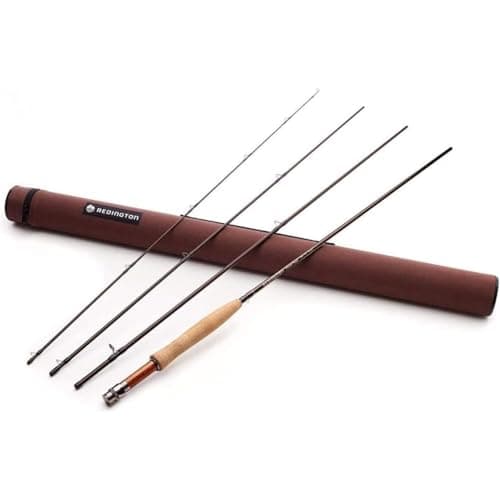
The best rod in this band and the one most people asking this question should buy. Redington builds it as a dedicated trout rod with a moderate action, which is the forgiving end of the scale — the rod loads with less line out and tells you where it is in the cast. That is precisely the behavior you want on a creek, where a long cast is thirty feet and the real skill is timing a short one between branches. It is a four-piece with a case, and Redington's warranty culture means a broken tip is a conversation rather than a replacement rod.
Best for: Best overall under $200 — the forgiving action a creek wants - 2

The rod to buy if the water you actually fish is narrow, overgrown and shallow. Seven feet six inches of 3-weight is a different tool from the nine-foot 5-weight everyone is told to start with: it casts in a tunnel of alders, it protects fine tippet against a surprise fish, and it makes a nine-inch brook trout feel like the point of the day. ECHO is a Pacific Northwest company run by a casting instructor, and the Lift is their entry series — the cheapest way into a brand that designs rods for people who already know what they want.
Best for: Best for tight creeks — a short 3-weight that fits under branches - 3
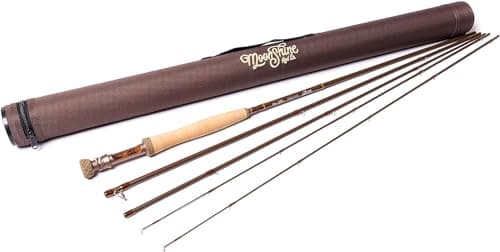
The pick for anyone who has ever closed a car door on a rod tip. Moonshine ships the Drifter II with a carrying case and a second tip section included, which is the single most useful thing a rod maker can do at this price — tips are what break, and a replacement tip from most brands costs a meaningful fraction of the rod. The configuration here is a medium-action 3-weight at seven feet six, so it competes directly with the ECHO above on water type and wins on what is in the tube.
Best for: Best insurance — a spare tip section in the tube from day one - 4
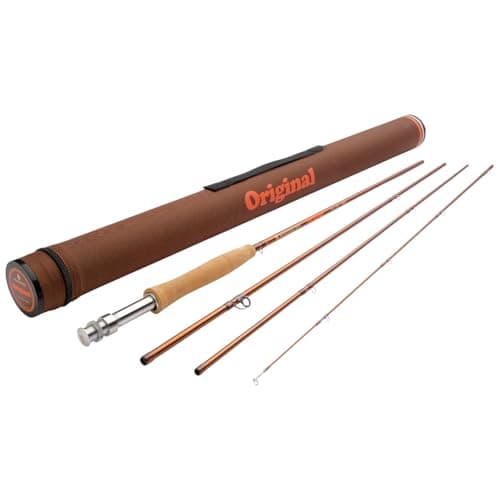
The rod that makes the honest argument against spending the whole $200. A nine-foot 5-weight with a medium-fast action is the most useful single trout rod configuration made: it throws a dry fly, it throws a weighted nymph, it handles a breeze, and it works on a creek and on a river. This one costs roughly half the band, which leaves real money for a reel and a line — and on a first setup, a decent line matters more to your casting than the last hundred dollars of rod.
Best for: Best value — the standard trout rod for about half the budget - 5
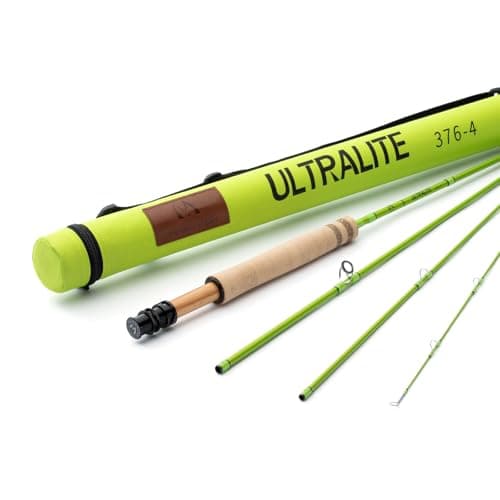
The cheapest rod on the page and the one to buy if the budget is really the waders, the boots and the flies, and the rod has to fit in what is left. Maxcatch sells direct and skips the distribution markup, which is why a light line-weight rod built for small streams lands at well under half this band. It is not the equal of the Redington or the ECHO in finish or in warranty, and it does not need to be — it casts a short line on a creek, which is the whole job.
Best for: Budget pick — the cheapest rod here that is still the right rod
| # | Product | Best for | Score | Price |
|---|---|---|---|---|
| 1 | Redington Classic Trout Fly Rod, Moderate Action 4-Piece The best rod in this band and the one most people asking this question should buy. Redington builds it as a dedicated trout rod with a moderate action, which is the forgiving end of the scale — the rod loads with less line out and tells you where it is in the cast. That is precisely the behavior you want on a creek, where a long cast is thirty feet and the real skill is timing a short one between branches. It is a four-piece with a case, and Redington's warranty culture means a broken tip is a conversation rather than a replacement rod. | Best overall under $200 — the forgiving action a creek wants | — | $199.99View on Amazon#ad |
| 2 | ECHO Lift Fly Rod, 7 ft 6 in #3, 4-Piece The rod to buy if the water you actually fish is narrow, overgrown and shallow. Seven feet six inches of 3-weight is a different tool from the nine-foot 5-weight everyone is told to start with: it casts in a tunnel of alders, it protects fine tippet against a surprise fish, and it makes a nine-inch brook trout feel like the point of the day. ECHO is a Pacific Northwest company run by a casting instructor, and the Lift is their entry series — the cheapest way into a brand that designs rods for people who already know what they want. | Best for tight creeks — a short 3-weight that fits under branches | — | $174.99View on Amazon#ad |
| 3 | Moonshine Rod Company The Drifter II, 3wt 7 ft 6 in, Medium Action The pick for anyone who has ever closed a car door on a rod tip. Moonshine ships the Drifter II with a carrying case and a second tip section included, which is the single most useful thing a rod maker can do at this price — tips are what break, and a replacement tip from most brands costs a meaningful fraction of the rod. The configuration here is a medium-action 3-weight at seven feet six, so it competes directly with the ECHO above on water type and wins on what is in the tube. | Best insurance — a spare tip section in the tube from day one | — | $122.99View on Amazon#ad |
| 4 | Redington Original Fly Rod, 5wt 9 ft, Medium-Fast Action The rod that makes the honest argument against spending the whole $200. A nine-foot 5-weight with a medium-fast action is the most useful single trout rod configuration made: it throws a dry fly, it throws a weighted nymph, it handles a breeze, and it works on a creek and on a river. This one costs roughly half the band, which leaves real money for a reel and a line — and on a first setup, a decent line matters more to your casting than the last hundred dollars of rod. | Best value — the standard trout rod for about half the budget | — | $99.99View on Amazon#ad |
| 5 | Maxcatch Ultralite-X Fly Fishing Rod for Small Streams, 1/2/3wt The cheapest rod on the page and the one to buy if the budget is really the waders, the boots and the flies, and the rod has to fit in what is left. Maxcatch sells direct and skips the distribution markup, which is why a light line-weight rod built for small streams lands at well under half this band. It is not the equal of the Redington or the ECHO in finish or in warranty, and it does not need to be — it casts a short line on a creek, which is the whole job. | Budget pick — the cheapest rod here that is still the right rod | — | $84.95View on Amazon#ad |
The best fly rod under $200 is the Redington Classic Trout — a moderate-action four-piece trout rod with a case, from a brand that replaces a broken tip rather than arguing about it. If your water is a narrow, brushy creek, buy length instead of brand and take the ECHO Lift at 7 feet 6 inches. The budget pick is the Maxcatch Ultralite-X, the cheapest rod here that is still the right kind of rod for small water. Every pick on this page carried a live price under $200 at the as-of date shown beneath the comparison table; prices come from our feed, never from this copy.
This band is the sweet spot in fly rods, and it is worth saying why before the list: the difference between a $200 rod and a $500 rod is real but small, and it is a difference in recovery speed and weight that an experienced caster feels at distance. The difference between the right rod and the wrong rod for your creek is enormous, and it has nothing to do with price.
What $200 actually buys
At this budget you get a graphite blank, decent guides, a cork grip, four sections and a real warranty. That is the complete specification of a trout fly rod. Nothing on that list is missing below $200, and nothing above $200 adds an item to it — what more money buys is a better version of each one.
| Spend | What you get | What you still do not get |
|---|---|---|
| Under $100 | Graphite blank, four sections, a usable cork grip, a tube | Brand service, refined taper, hardware that lasts a decade |
| $100 to $200 | Brand lasts and warranties, better guides and reel seats, real taper design | The lightest blanks, premium cork, fastest recovery |
| $200 to $500 | Lighter swing weight, faster recovery, better cork, lifetime service | Anything that changes whether you catch the fish |
Above $200 the gains are felt by the caster, not the fish. A premium blank recovers from the cast faster, which tightens loops at forty feet and beyond. On a creek you are rarely casting forty feet — you are casting twenty, often with a sidearm flick under a branch, and the rod that does that best is a forgiving one, not a fast one. The rods above this band are in high-end fly rods if you want to see what the money buys; the value argument across the whole range is in the best fly rods for the money.
Why we do not print the prices here
Pick the weight before the rod
Line weight is the first decision and it is not a budget question. A 4-weight and a 5-weight from the same series cost the same, and choosing wrong is the most common way a first fly rod disappoints. The number describes the mass of line the rod is built to carry, which in practice describes the size of fly it will throw and how delicately it lands.
| Weight | Best on | Fly size | The trade-off |
|---|---|---|---|
| 1-2wt | Tiny headwater creeks, small fish | Small dries | Useless in wind, no margin on a big fish |
| 3wt | Brushy creeks and small streams | Dries and light nymphs | Struggles with weighted rigs |
| 4wt | Small streams, some rivers | Most trout flies | Slightly less reach than a 5 |
| 5wt | Everything from creeks to rivers | Dries, nymphs, small streamers | More rod than a tiny creek needs |
| 6wt+ | Big water, bass, wind, streamers | Heavy and wind-resistant flies | Overkill and heavy-handed on trout |
For a first rod on small water, a 4-weight is the quiet right answer — it covers more situations than a 3-weight and lands more delicately than a 5-weight. If you expect to fish bigger rivers too, a 5-weight is the one-rod answer and the reasoning is laid out in the best 5wt fly rods, with the head-to-head in 4wt vs 5wt.
Length is the creek decision
The nine-foot standard exists because most fly fishing happens on open water, and most creek fishing does not. A nine-foot rod gives you line control at distance and keeps a long cast off the water. In a tunnel of alders it gives you a branch in the tip every fourth cast. Two of the five picks here are seven feet six for exactly that reason.
| Length | Where it wins | Where it loses |
|---|---|---|
| 6 ft 6 in to 7 ft 6 in | Overgrown creeks, tunnel casting, short roll casts | Reach, line control, mending at distance |
| 8 ft to 8 ft 6 in | Small streams with some casting room | Tight brush, big-river mending |
| 9 ft | Rivers, open meadow creeks, nymphing at range | Brushy small water |
| 10 ft | Tightline nymphing on open runs | Anything with a canopy |
Go and look at your water before you buy. If you can see sky above the stream for most of its length, nine feet is fine and you should take the versatility. If the stream disappears under a canopy, buy short and accept that you have bought a specialist. The full argument is in the best fly rod for small streams, and the action side of the same question is in fast vs moderate action fly rods.
The five compared
| Rod | Configuration | Position in band | Buy it if |
|---|---|---|---|
| Redington Classic Trout | Moderate action, 4-piece, case | Top of band | You want the best all-round rod the budget allows |
| ECHO Lift | 7 ft 6 in #3, 4-piece | Upper third | Your creek has a canopy |
| Moonshine Drifter II | 7 ft 6 in 3wt, medium, spare tip | Mid-band | You want a spare tip in the tube |
| Redington Original | 9 ft 5wt, medium-fast | About half the band | You want one rod for creeks and rivers |
| Maxcatch Ultralite-X | 1/2/3wt, small-stream build | Cheapest here | The rest of the kit is the real budget |
Two of these rods are nearly the same rod. The ECHO Lift and the Moonshine Drifter II are both seven-foot-six 3-weights in the upper half of the band, and if you are choosing between them the question is what you value: ECHO is a rod-design company with shop presence and resale value, and Moonshine puts a second tip section in the tube. Neither answer is wrong.
Rod only, or an outfit
A $200 rod needs a reel and a line, and that is another meaningful amount of money. This page ranks rods on their own. If the $200 is your whole budget rather than your rod budget, a matched outfit is the better buy — it is cheaper than the three pieces bought separately and it removes the risk of putting the wrong line weight on the rod.
The honest split at this budget is rod first, line second, reel last. On small trout water the reel is a line holder; a creek trout will almost never take line against a drag. A good weight-forward floating line changes how a rod casts far more than a machined reel does. Complete matched setups are ranked in the best fly fishing combo kits, and the genuinely cheap end of that field is in the best fly fishing combos under $100.
If you buy the rod alone, budget for the line properly. A cheap line on a good rod is the most common self-inflicted casting problem in the sport, and it is the cheapest one to fix. What to buy, and what the weight marking on the box means, is in the best fly line.
When to spend less
If you are not sure you will stick with it, spend less. Fly fishing has a real attrition rate in the first season, and a rod at half this band casts well enough that you will never blame the equipment. Buy the Redington Original or the Maxcatch, and put the difference into a casting lesson, which will improve your fishing more than any rod on this page.
If the rest of your kit does not exist yet, spend less. Waders, boots, a net, a pack, flies and tippet add up to more than the rod does, and a leaking wader ruins a day in a way a $90 rod does not. The line-by-line cost of a complete first setup is in how much fly fishing costs — and if your first season is a summer one, a draining shoe and a guard sock from the wet wading shoe roundup costs a fraction of waders and boots.
If you fish one tiny creek and nothing else, spend less and buy short. The specialist short rods in this band are cheap precisely because they are specialists. That is the correct purchase for someone with one stream, and the kit that goes around it is in the creek fishing gear guide.
When to spend more
If you already cast well, you will feel the next tier. A caster who can throw sixty feet on demand notices a lighter blank and faster recovery immediately. A caster who is still learning to time a short cast will not, and may actively find a fast rod harder. Spend more when your casting is the thing that has outgrown the rod.
If you fish a lot of days a year, buy the warranty. Rods break in car doors, tailgates and ceiling fans far more often than on fish. The brands that cost more mostly cost more because somebody answers the phone — which is the real subject of the best fly rod brands.
If you want one rod to cover creeks and bigger rivers, buy up rather than twice. A single better 4-weight or 5-weight is a more useful purchase than a cheap short rod plus a cheap long one. The field above this band starts in the best fly fishing rods.
The picks in detail
Redington Classic Trout Fly Rod, Moderate Action 4-Piece
Best for: Best overall under $200 — the forgiving action a creek wants
The best rod in this band and the one most people asking this question should buy. Redington builds it as a dedicated trout rod with a moderate action, which is the forgiving end of the scale — the rod loads with less line out and tells you where it is in the cast. That is precisely the behavior you want on a creek, where a long cast is thirty feet and the real skill is timing a short one between branches. It is a four-piece with a case, and Redington's warranty culture means a broken tip is a conversation rather than a replacement rod.
- Action
- Moderate
- Sections
- 4-piece
- Included
- Rod case
- Moderate action is the most forgiving thing you can hand a beginner
- Loads properly on short creek casts, not just long ones
- Case included and a brand that handles breakage
- Sits at the very top of the band, so there is no room left for a reel
- A moderate action fights a headwind more than a fast rod does
ECHO Lift Fly Rod, 7 ft 6 in #3, 4-Piece
Best for: Best for tight creeks — a short 3-weight that fits under branches
The rod to buy if the water you actually fish is narrow, overgrown and shallow. Seven feet six inches of 3-weight is a different tool from the nine-foot 5-weight everyone is told to start with: it casts in a tunnel of alders, it protects fine tippet against a surprise fish, and it makes a nine-inch brook trout feel like the point of the day. ECHO is a Pacific Northwest company run by a casting instructor, and the Lift is their entry series — the cheapest way into a brand that designs rods for people who already know what they want.
- Length / weight
- 7 ft 6 in, #3
- Sections
- 4-piece
- Range
- ECHO Lift (entry series)
- Short enough to cast where a 9-foot rod cannot
- A 3-weight protects light tippet on small fish
- Entry price into a serious rod-design brand
- Too little rod for a big river or wind
- A 3-weight line is harder to find in stores than a 5-weight
Moonshine Rod Company The Drifter II, 3wt 7 ft 6 in, Medium Action
Best for: Best insurance — a spare tip section in the tube from day one
The pick for anyone who has ever closed a car door on a rod tip. Moonshine ships the Drifter II with a carrying case and a second tip section included, which is the single most useful thing a rod maker can do at this price — tips are what break, and a replacement tip from most brands costs a meaningful fraction of the rod. The configuration here is a medium-action 3-weight at seven feet six, so it competes directly with the ECHO above on water type and wins on what is in the tube.
- Length / weight
- 7 ft 6 in, 3wt
- Action
- Medium
- Included
- Carrying case + extra tip section
- Spare tip included — the part that actually breaks
- Medium action, forgiving on short casts
- Case included at a mid-to-upper band price
- Smaller company, so resale and shop support are thinner
- Same small-water limitation as any short 3-weight
Redington Original Fly Rod, 5wt 9 ft, Medium-Fast Action
Best for: Best value — the standard trout rod for about half the budget
The rod that makes the honest argument against spending the whole $200. A nine-foot 5-weight with a medium-fast action is the most useful single trout rod configuration made: it throws a dry fly, it throws a weighted nymph, it handles a breeze, and it works on a creek and on a river. This one costs roughly half the band, which leaves real money for a reel and a line — and on a first setup, a decent line matters more to your casting than the last hundred dollars of rod.
- Length / weight
- 9 ft, 5wt
- Action
- Medium-fast
- Position
- About half the band
- The most versatile trout configuration there is
- Roughly half the budget — leaves money for line and reel
- Medium-fast handles wind and weighted flies better than a soft rod
- Nine feet is more rod than a brushy creek needs
- No spare tip, and the case is basic
Maxcatch Ultralite-X Fly Fishing Rod for Small Streams, 1/2/3wt
Best for: Budget pick — the cheapest rod here that is still the right rod
The cheapest rod on the page and the one to buy if the budget is really the waders, the boots and the flies, and the rod has to fit in what is left. Maxcatch sells direct and skips the distribution markup, which is why a light line-weight rod built for small streams lands at well under half this band. It is not the equal of the Redington or the ECHO in finish or in warranty, and it does not need to be — it casts a short line on a creek, which is the whole job.
- Line weights
- 1 / 2 / 3wt options
- Intended water
- Small streams
- Position
- Cheapest in band
- Lowest price here by a clear margin
- Light line weights, which is the correct spec for a creek
- Leaves most of a $200 budget for everything else
- Warranty and service are nothing like the established brands
- Finish and hardware are where the cost came out
Prices shown are from Amazon as of November 20, 2026 and change often — the button always goes to the current listing. Some links may earn us a commission at no extra cost to you. How this works.
Frequently asked questions
Is a fly rod under $200 good enough for trout?
Yes. At this budget you get a graphite blank, four sections, decent guides and a cork grip, which is the complete specification of a trout fly rod. What more money buys is a lighter blank and faster recovery, which an experienced caster feels at distance and a beginner on a creek does not.
What is the best fly rod under $200?
The Redington Classic Trout is the strongest all-round pick in that band: a moderate action, which is the most forgiving thing to hand a beginner, four sections, a case, and a brand that replaces a broken tip. If your water is a brushy creek, buy a shorter rod instead and take the ECHO Lift at 7 feet 6 inches.
What weight fly rod should I buy under $200?
A 4-weight is the quiet right answer for a first rod on small water, because it covers more situations than a 3-weight and lands more delicately than a 5-weight. Choose a 5-weight if you also expect to fish bigger rivers, and a 3-weight only if your water is genuinely small and overgrown. Weight costs nothing extra, so get it right.
Should I buy a rod on its own or a combo under $200?
If $200 is your entire budget rather than your rod budget, buy a matched outfit — it costs less than the three pieces separately and removes the risk of pairing the wrong line weight to the rod. If you are buying the rod alone, budget properly for the line, because a cheap line on a good rod is the most common self-inflicted casting problem in the sport.
Do more expensive fly rods catch more fish?
No. Above roughly $200 the improvements are lighter swing weight, faster recovery and better cork, all of which are felt by the caster rather than the fish. On a creek, where a long cast is thirty feet, a forgiving rod outperforms a fast expensive one for most anglers.
How long should a fly rod under $200 be?
Nine feet if you can see sky above your stream for most of its length, because you get reach and line control. Seven and a half to eight feet if the stream runs under a canopy, because a nine-foot rod collects branches. Length is the decision that most affects whether you enjoy a creek, and it costs nothing either way.
Sources
Keep reading
Not sure where to start?
The beginner gear guide walks you through exactly what a new stream angler needs — the six essentials first, nice-to-haves later, with one safe-default pick per category.