Waders & Boots · Roundup
The Best Wet Wading Shoes
There is a stretch of summer when waders are the wrong answer — the water is warm, the air is warmer, and a breathable wader is a sauna you are standing in. Wet wading is the fix, and it needs two things most beginners get wrong: a shoe that drains and a sock that keeps the gravel out.
Disclosure: Creek Cover is reader-supported. If you buy through our links we may earn a commission, at no extra cost to you. It never changes which pick we tell a new angler to start with. Full disclosure.
Quick picks at a glance
Tap a pick to read the full write-up, or the price button to check it on Amazon.
- 1
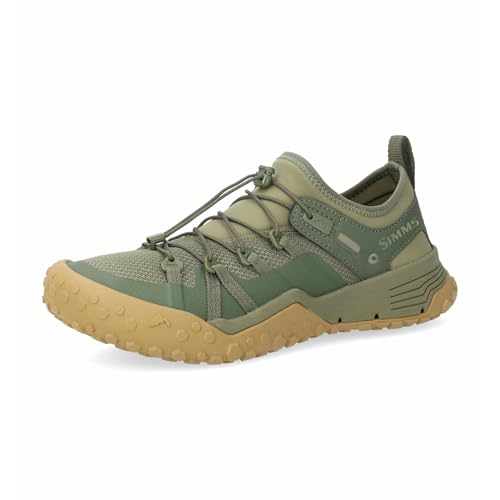
The only shoe here designed from the start for standing in a stream rather than walking on a beach. The upper is breathable mesh, which matters more than it sounds: a wet wading shoe has to let water leave as freely as it lets water in, or you spend the day carrying a pound of creek in each foot. The lacing is a quick-lace system, which is the right call for a shoe you will tighten with cold wet fingers, and the outsole is specified as slip-resistant. Simms is a Bozeman wading company and this is their answer to the summer problem.
Best for: Best overall — built for wet wading, not adapted to it - 2
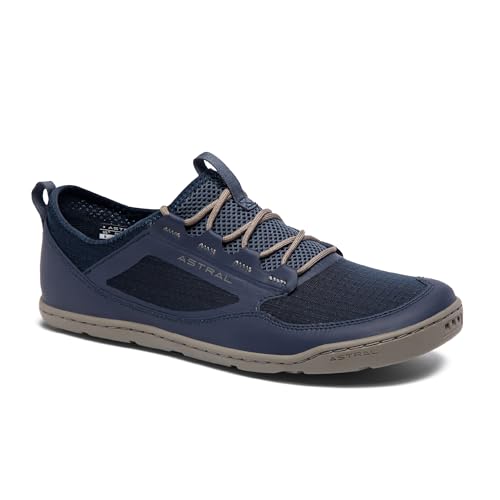
The pick if you want to feel the streambed. Astral comes out of paddlesports, where the shoe has to grip a wet boat deck and a wet rock with equal conviction, and the Loyak is their minimalist, quick-drying design — a thin sole, a flat last and no heel drop. On a creek that translates into genuinely useful feedback: you feel a loose cobble roll under your arch before it takes your ankle with it. The trade-off is honest and worth stating — a thin sole transmits every sharp rock you step on.
Best for: Best feel underfoot — a minimalist shoe you can read the bottom through - 3
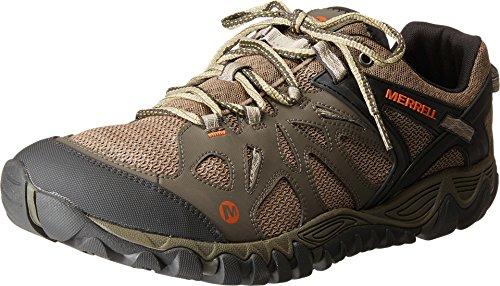
The pick when getting to the water is most of the effort. This is a hiking shoe first, built on Merrell's hiking platform and then specified to drain and dry, which is the opposite design direction from the Simms and exactly right if your creek is a mile down a trail. You get a stiffer, more supportive sole than a minimalist shoe gives you, and the same shoe walks you back out without a change of footwear. On genuinely slick bedrock it is the least certain of the three above it, because a hiking outsole is tuned for dirt and rock, not algae.
Best for: Best for a hike in — a real hiking shoe that tolerates being soaked - 4
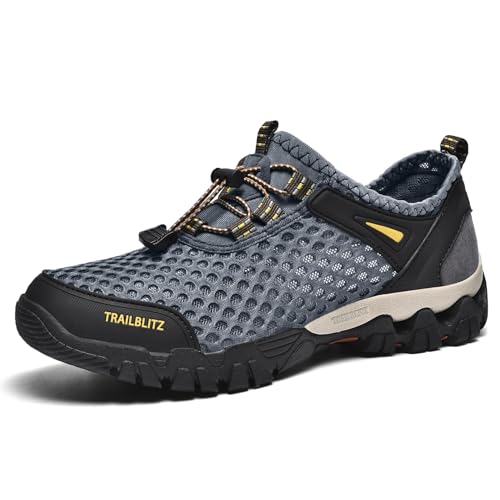
The cheapest shoe on the page that still gets the two important things right: the toe is closed, so a stubbed toe on a submerged rock stays a surprise rather than an injury, and the sole is drilled with drain ports so water leaves. The listing specifies arch support and a quick-dry, slip-on construction, and it is sold for river wading among other water uses. It is not a wading shoe and it will not last like one — but if you wet wade four days a summer, buying one of these and spending the difference on flies is a defensible decision.
Best for: Budget pick — drain ports and a closed toe for very little money - 5
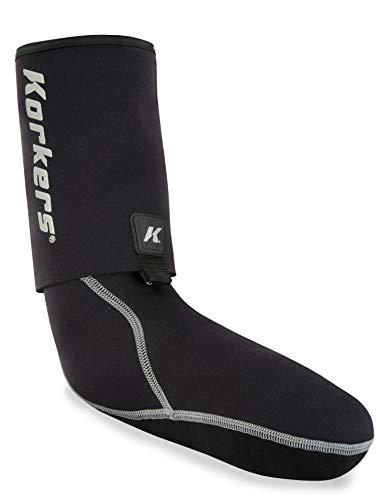
Buy a shoe and skip the sock and you will come home with a blister and a shoe full of gravel. This is a 3.5 mm neoprene guard sock: the neoprene takes the edge off cold water and gives the shoe something to grip other than your skin, and the guard cuff seals the gap at the ankle where sand and pea gravel get in. It is the cheapest thing on this page that changes how a day feels, and it is the pick regardless of which shoe you pair it with.
Best for: Best sock to wear with any of them — the part beginners skip - 6
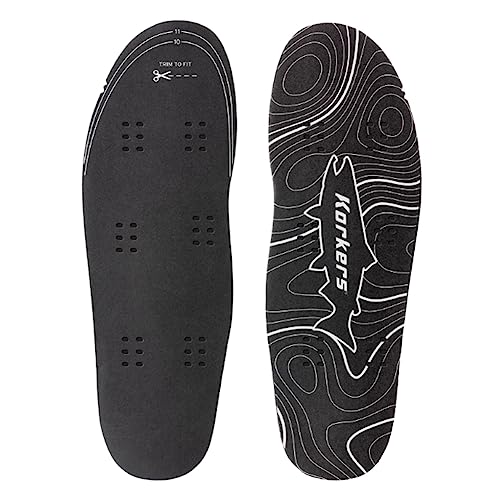
The pick that costs you the least overall, because you already own the shoe. A stockingfoot wader's neoprene foot takes up real volume inside a wading boot, so the moment you take the waders off, the boot is too big. This kit is a 10 mm EVA insole that fills that space, which turns the wading boot you already own into a wet wading boot for the summer. You keep the outsole you chose for your creek — felt, cleated or studded — which is the one thing no water shoe on this page can offer.
Best for: Best if you already own wading boots — no second pair of shoes
| # | Product | Best for | Score | Price |
|---|---|---|---|---|
| 1 | Simms Pursuit Shoe The only shoe here designed from the start for standing in a stream rather than walking on a beach. The upper is breathable mesh, which matters more than it sounds: a wet wading shoe has to let water leave as freely as it lets water in, or you spend the day carrying a pound of creek in each foot. The lacing is a quick-lace system, which is the right call for a shoe you will tighten with cold wet fingers, and the outsole is specified as slip-resistant. Simms is a Bozeman wading company and this is their answer to the summer problem. | Best overall — built for wet wading, not adapted to it | — | $104.95View on Amazon#ad |
| 2 | Astral Loyak AC Water Shoes The pick if you want to feel the streambed. Astral comes out of paddlesports, where the shoe has to grip a wet boat deck and a wet rock with equal conviction, and the Loyak is their minimalist, quick-drying design — a thin sole, a flat last and no heel drop. On a creek that translates into genuinely useful feedback: you feel a loose cobble roll under your arch before it takes your ankle with it. The trade-off is honest and worth stating — a thin sole transmits every sharp rock you step on. | Best feel underfoot — a minimalist shoe you can read the bottom through | — | $90.00View on Amazon#ad |
| 3 | Merrell All Out Blaze Aero Sport Hiking Water Shoe The pick when getting to the water is most of the effort. This is a hiking shoe first, built on Merrell's hiking platform and then specified to drain and dry, which is the opposite design direction from the Simms and exactly right if your creek is a mile down a trail. You get a stiffer, more supportive sole than a minimalist shoe gives you, and the same shoe walks you back out without a change of footwear. On genuinely slick bedrock it is the least certain of the three above it, because a hiking outsole is tuned for dirt and rock, not algae. | Best for a hike in — a real hiking shoe that tolerates being soaked | — | $109.00View on Amazon#ad |
| 4 | Trailblitz Water Shoes with Drain Ports The cheapest shoe on the page that still gets the two important things right: the toe is closed, so a stubbed toe on a submerged rock stays a surprise rather than an injury, and the sole is drilled with drain ports so water leaves. The listing specifies arch support and a quick-dry, slip-on construction, and it is sold for river wading among other water uses. It is not a wading shoe and it will not last like one — but if you wet wade four days a summer, buying one of these and spending the difference on flies is a defensible decision. | Budget pick — drain ports and a closed toe for very little money | — | $28.15View on Amazon#ad |
| 5 | Korkers I-Drain Neoprene Guard Sock, 3.5 mm Buy a shoe and skip the sock and you will come home with a blister and a shoe full of gravel. This is a 3.5 mm neoprene guard sock: the neoprene takes the edge off cold water and gives the shoe something to grip other than your skin, and the guard cuff seals the gap at the ankle where sand and pea gravel get in. It is the cheapest thing on this page that changes how a day feels, and it is the pick regardless of which shoe you pair it with. | Best sock to wear with any of them — the part beginners skip | — | $44.99View on Amazon#ad |
| 6 | Korkers Wet Wading Conversion Kit, 10 mm EVA Insole The pick that costs you the least overall, because you already own the shoe. A stockingfoot wader's neoprene foot takes up real volume inside a wading boot, so the moment you take the waders off, the boot is too big. This kit is a 10 mm EVA insole that fills that space, which turns the wading boot you already own into a wet wading boot for the summer. You keep the outsole you chose for your creek — felt, cleated or studded — which is the one thing no water shoe on this page can offer. | Best if you already own wading boots — no second pair of shoes | — | $29.99View on Amazon#ad |
The best wet wading shoe is the Simms Pursuit Shoe — a breathable mesh shoe that drains as fast as it fills, with a quick-lace closure and a slip-resistant outsole, from a company that makes nothing but wading gear. If you want to feel the streambed under your foot, the Astral Loyak AC is the minimalist answer; if the walk in is the hard part, the Merrell All Out Blaze Aero Sport is a hiking shoe that tolerates a soaking. The budget pick is the Trailblitz water shoe, which gets the closed toe and the drain ports right and little else. Whichever you buy, buy a neoprene guard sock with it. Prices on this page are pulled live from the retailer and date-stamped beneath the comparison table; none are typed into this copy.
If you already own wading boots, read the conversion kit first and you may not need a shoe at all.
What wet wading is, and when
Wet wading means fishing in shorts or quick-dry pants with no waterproof layer at all — you simply get wet. It is not a compromise or a budget route. For roughly the warmest two months of the year on most small trout water it is the better way to fish: nothing to sweat inside, nothing to tear on a bankside bramble, nothing to dry out overnight. It is also the season of low, clear water and small offerings, which is what the summer trout flies and the micro-lure alternatives are both about.
The case against waders in summer is the thing nobody tells beginners: a breathable wader is only breathable relative to rubber. Walk half a mile in eighty-degree air inside one and you arrive at the water soaked from the inside. On a creek where you spend as much time walking the bank as standing in the current, that is most of the day. The wader comparison across the whole year is in types of waders explained.
What wet wading is not good for is cold water or deep water. Moving water pulls heat out of a bare leg fast, and the threshold is a lot higher than people expect — the line is drawn in the temperature section below. Shoulder season on a spring creek is wader weather even when the air is warm.
What makes a wading shoe
Four things separate a wet wading shoe from the aqua shoes sold for a swimming pool. None of them are exotic and all of them are visible on the product page if you know to look.
| Feature | Why it matters on a creek | What happens without it |
|---|---|---|
| Drainage | Water has to leave as fast as it enters | Each foot carries a pound of water all day |
| Closed toe | Submerged rocks are invisible and unforgiving | A split toenail ends the day |
| Grip on wet rock | Algae-covered stone is the real hazard | You fall, in front of the fish |
| Lace or cinch closure | A loose shoe comes off in silt and mud | You go barefoot in a current |
Drainage is the one most often faked. A mesh upper drains. Drilled ports in the midsole drain. A neoprene bootie with a solid sole does not — it fills and stays filled, which is why a surf bootie is a poor wading shoe even though it looks like the right thing. Check for either a mesh panel you can see light through or visible holes in the sole.
Grip is the one you cannot verify from a listing.Nobody publishes a coefficient of friction on wet algae, and any site that claims to have measured one on a creek is inventing it. What you can do is read the outsole's intended use — a paddling or wading outsole is tuned for wet smooth surfaces, a hiking outsole for dirt and dry rock — and understand that no rubber grips slick bedrock the way felt does. That comparison is in felt vs rubber wading boot soles.
We have not tested these in a creek
The sock is half the purchase
A wet wading shoe without a sock is a gravel trap bolted to a blister machine. This is the single most common beginner mistake in wet wading, and it is also the cheapest one to avoid. Sand and pea gravel wash in at the ankle, settle under the arch, and grind for the rest of the day against skin that has been softened by hours of immersion.
| Sock type | Water temperature | What it does |
|---|---|---|
| Thin quick-dry wading sock | Warm water, hot days | Stops abrasion, offers no warmth |
| Neoprene sock, 2 to 3 mm | Cool-to-mild water | Some warmth, cushions the shoe |
| Neoprene guard sock, 3.5 mm | Cold-ish water, gravelly bottoms | Warmth plus a cuff that seals out gravel |
| No sock | Never | Blisters and gravel |
The word "guard" is the one to look for. A guard sock has a cuff that closes the gap between the top of the shoe and your leg — the same job a gravel guard does on a stockingfoot wader. The Korkers I-Drain guard sock on this page is the 3.5 mm version, which is more warmth than a genuinely hot August creek needs and exactly right for early summer and for the cold spring creeks that stay cold all year.
Buy the sock and the shoe together, and buy the shoe to fit the sock. This is the same principle as sizing a wading boot over a wader bootie, just at a smaller scale — the method is in how to size waders, which covers the boot step too.
The six compared
| Pick | What it is | Position | Buy it if |
|---|---|---|---|
| Simms Pursuit Shoe | Purpose-built wading shoe | Premium | You want the right tool and will pay for it |
| Astral Loyak AC | Minimalist water shoe | Upper third | You want to feel the streambed |
| Merrell Aero Sport | Hiking water shoe | Mid-field | The walk in is most of the day |
| Trailblitz water shoe | Drain-port aqua shoe | Cheapest shoe | You wet wade a handful of days a year |
| Korkers I-Drain guard sock | 3.5 mm neoprene guard sock | Inexpensive | Always — pair it with any shoe above |
| Korkers conversion kit | 10 mm EVA insole | Cheapest item | You already own wading boots |
Two of these are not shoes, and that is deliberate.The guard sock and the conversion kit are on the list because the honest answer to "what should I buy to wet wade" is frequently a sock plus something you already own, not a new pair of shoes. A roundup that only sells you shoes is selling, not advising.
Sizing without a wader bootie
Size a wet wading shoe to your foot plus the sock — not up a size the way you size a wading boot. This catches people who have bought wading boots before. A wading boot goes over a neoprene wader foot, which is why the advice there is to buy a size up, sometimes two. A wet wading shoe goes over a thin or medium sock, so your normal size usually fits, and a shoe that is too big is actively dangerous in current.
A loose shoe is how people lose footwear in silt, and losing a shoe mid-stream is the start of a bad day. Soft bottom grabs a heel, the foot lifts, the shoe stays. Cinch the closure properly, and re-tighten after ten minutes in the water, because wet laces stretch exactly like they do on a wading boot.
The conversion-kit route is the exception. If you are putting a 10 mm insole into a wading boot you already sized for waders, you are deliberately filling volume you no longer need — so the boot stays the size you own. The stockingfoot and bootfoot distinction behind all of this is in stockingfoot vs bootfoot waders.
The water temperature line
Air temperature is not the variable — water temperature is, and small trout water is colder than it looks. A spring creek that holds trout through an August heatwave does so precisely because its water is cold. Ninety-degree air does not warm your legs when they are in fifty-five-degree water.
| Water | Wet wading? | Why |
|---|---|---|
| Warm summer creek, sun on the water | Yes — this is what it is for | Comfortable for hours |
| Cold spring creek in high summer | Short sessions only | Legs cool fast even in hot air |
| Spring or fall runoff | No | Cold water plus air you cannot warm up in |
| Anything above knee depth for long | No | Heat loss scales with immersed area |
The practical test is how you feel after twenty minutes standing still. If your legs are numbing while you are fishing a single pool, the water is too cold for the day you planned, whatever the thermometer on the bank says. The year-round alternative is in the best fishing waders, and the lightest hot-weather wader option — wading pants rather than chest waders — is in the best wading pants.
What you give up
You give up ankle support, and that is the real trade. A wading boot holds the ankle on a loose cobble bottom; a water shoe mostly does not. If your creek has a bottom of rolling fist-sized rock, that is a genuine argument for the conversion kit and your existing boots rather than any shoe here. The supported options are in the best wading boots and, at a sane budget, wading boots under $200.
You give up shin and knee protection. Bare legs meet submerged branches, blackberry on the bank and the edge of every rock you misjudge. Quick-dry pants rather than shorts solve most of it and cost nothing in comfort once they are wet.
You give up a little margin in current, so add it back. A wading staff is the cheapest safety equipment in fishing and it matters more barefoot-adjacent than it does in boots — the options are in the best wading staffs. On small water, stay below the knee in anything pushy and you have removed most of the risk anyway.
And rinse everything. Neoprene socks and mesh shoes that dry in a car footwell develop a smell that does not come out, and felt or fabric that moves between streams is an invasive-species vector — which is the reason felt soles are restricted in several states. Rinse, dry, and check your own state wildlife agency for the current rule.
The picks in detail
Simms Pursuit Shoe
Best for: Best overall — built for wet wading, not adapted to it
The only shoe here designed from the start for standing in a stream rather than walking on a beach. The upper is breathable mesh, which matters more than it sounds: a wet wading shoe has to let water leave as freely as it lets water in, or you spend the day carrying a pound of creek in each foot. The lacing is a quick-lace system, which is the right call for a shoe you will tighten with cold wet fingers, and the outsole is specified as slip-resistant. Simms is a Bozeman wading company and this is their answer to the summer problem.
- Upper
- Breathable mesh
- Closure
- Quick-lace
- Outsole
- Slip-resistant
- Mesh upper drains rather than holding water
- Quick-lace works with wet hands
- From a company that makes nothing but wading gear
- The most expensive shoe on the page
- Mesh gives up abrasion resistance against a boot upper
Astral Loyak AC Water Shoes
Best for: Best feel underfoot — a minimalist shoe you can read the bottom through
The pick if you want to feel the streambed. Astral comes out of paddlesports, where the shoe has to grip a wet boat deck and a wet rock with equal conviction, and the Loyak is their minimalist, quick-drying design — a thin sole, a flat last and no heel drop. On a creek that translates into genuinely useful feedback: you feel a loose cobble roll under your arch before it takes your ankle with it. The trade-off is honest and worth stating — a thin sole transmits every sharp rock you step on.
- Style
- Barefoot / minimalist
- Drying
- Quick-drying construction
- Use
- Paddling, fishing, hiking
- Excellent feel for what is under your foot
- Quick-drying and light enough to pack as a spare
- Designed around grip on wet surfaces
- A thin sole punishes you on sharp rock and long walks
- Minimal ankle support compared with a wading boot
Merrell All Out Blaze Aero Sport Hiking Water Shoe
Best for: Best for a hike in — a real hiking shoe that tolerates being soaked
The pick when getting to the water is most of the effort. This is a hiking shoe first, built on Merrell's hiking platform and then specified to drain and dry, which is the opposite design direction from the Simms and exactly right if your creek is a mile down a trail. You get a stiffer, more supportive sole than a minimalist shoe gives you, and the same shoe walks you back out without a change of footwear. On genuinely slick bedrock it is the least certain of the three above it, because a hiking outsole is tuned for dirt and rock, not algae.
- Category
- Hiking water shoe
- Support
- Hiking-platform sole
- Use
- Trail and water
- One shoe for the walk in, the fishing and the walk out
- More support and protection than a minimalist shoe
- Established hiking brand with consistent sizing
- Hiking outsole is less sure on algae-slick bedrock
- Heavier and slower to dry than a mesh wading shoe
Trailblitz Water Shoes with Drain Ports
Best for: Budget pick — drain ports and a closed toe for very little money
The cheapest shoe on the page that still gets the two important things right: the toe is closed, so a stubbed toe on a submerged rock stays a surprise rather than an injury, and the sole is drilled with drain ports so water leaves. The listing specifies arch support and a quick-dry, slip-on construction, and it is sold for river wading among other water uses. It is not a wading shoe and it will not last like one — but if you wet wade four days a summer, buying one of these and spending the difference on flies is a defensible decision.
- Toe
- Closed
- Drainage
- Drain ports in the sole
- Construction
- Quick-dry, slip-on
- Lowest price here by a wide margin
- Closed toe and real drainage, which is the minimum spec
- Light enough to keep in the car permanently
- Generic outsole — no claim to grip on wet bedrock
- Build quality is where the price came out
Korkers I-Drain Neoprene Guard Sock, 3.5 mm
Best for: Best sock to wear with any of them — the part beginners skip
Buy a shoe and skip the sock and you will come home with a blister and a shoe full of gravel. This is a 3.5 mm neoprene guard sock: the neoprene takes the edge off cold water and gives the shoe something to grip other than your skin, and the guard cuff seals the gap at the ankle where sand and pea gravel get in. It is the cheapest thing on this page that changes how a day feels, and it is the pick regardless of which shoe you pair it with.
- Material
- Neoprene, 3.5 mm
- Function
- Guard sock — seals the ankle gap
- Pairs with
- Any wet wading shoe
- Keeps gravel and sand out of the shoe
- Thicker neoprene for colder water than a thin sock
- Protects skin from an abrasive shoe interior
- 3.5 mm is warm — in genuinely hot water a thinner sock is better
- Neoprene needs rinsing and drying or it smells
Korkers Wet Wading Conversion Kit, 10 mm EVA Insole
Best for: Best if you already own wading boots — no second pair of shoes
The pick that costs you the least overall, because you already own the shoe. A stockingfoot wader's neoprene foot takes up real volume inside a wading boot, so the moment you take the waders off, the boot is too big. This kit is a 10 mm EVA insole that fills that space, which turns the wading boot you already own into a wet wading boot for the summer. You keep the outsole you chose for your creek — felt, cleated or studded — which is the one thing no water shoe on this page can offer.
- What it is
- 10 mm EVA insole kit
- Problem solved
- Boot volume without a wader bootie
- Keeps
- Your existing wading boot outsole
- Cheapest route if you own wading boots already
- Keeps the sole you specifically chose for your water
- Nothing extra to carry or store
- A wading boot is heavier and hotter than a water shoe
- You still want a guard sock underneath it
Prices shown are from Amazon as of November 20, 2026 and change often — the button always goes to the current listing. Some links may earn us a commission at no extra cost to you. How this works.
Frequently asked questions
What shoes do you wear for wet wading?
A closed-toe shoe that drains — either a purpose-built wading shoe like the Simms Pursuit, a minimalist water shoe, or a hiking water shoe if you have a walk in. The non-negotiables are a closed toe, visible drainage through mesh or sole ports, and a closure you can cinch tight. Wear a neoprene guard sock with whichever you choose.
Can you wet wade in regular sneakers?
You can, and people do, but they are the wrong tool twice over: a foam midsole and fabric upper hold water instead of draining it, and a running outsole has no claim to grip on wet rock. If budget is the constraint, a cheap closed-toe water shoe with drain ports is a better buy than an old pair of trainers.
Do you need socks for wet wading?
Yes, and skipping them is the most common beginner mistake. Sand and pea gravel wash in at the ankle and grind against skin softened by hours in the water, which produces blisters fast. A neoprene guard sock has a cuff that seals the ankle gap and adds warmth; a thin quick-dry wading sock is the hot-water version.
When is it too cold to wet wade?
It depends on water temperature rather than air temperature, and small trout streams are colder than they look — a spring creek holds trout in August precisely because it stays cold. The practical test is standing still for twenty minutes: if your legs are numbing while you fish one pool, the day calls for waders.
Can I use my wading boots for wet wading?
Yes, with an insole kit. A stockingfoot wader's neoprene foot fills real volume inside the boot, so without it the boot is too loose. A wet wading conversion insole fills that space, which lets you keep the outsole you chose for your water — felt, cleated or studded — instead of buying a second pair of shoes.
Are wet wading shoes good on slippery rocks?
Better than a running shoe and not as good as felt. No rubber grips algae-covered bedrock the way felt does, which is why felt persists despite being restricted in several states. Read an outsole's intended use: a paddling or wading sole is designed for wet smooth surfaces, a hiking sole for dirt and dry rock.
Sources
Keep reading
Not sure where to start?
The beginner gear guide walks you through exactly what a new stream angler needs — the six essentials first, nice-to-haves later, with one safe-default pick per category.