Flies & Lures · Buying Guide
What Size Flies to Use for Trout
Size is the one thing a trout notices before pattern, color or how much you paid. Hook numbering runs backwards, every box is labeled differently, and almost every beginner buys flies two sizes too big. Here is the system, decoded, with the sizes worth owning for small water.
Disclosure: Creek Cover is reader-supported. If you buy through our links we may earn a commission, at no extra cost to you. It never changes which pick we tell a new angler to start with. Full disclosure.
Quick picks at a glance
Tap a pick to read the full write-up, or the price button to check it on Amazon.
- 1
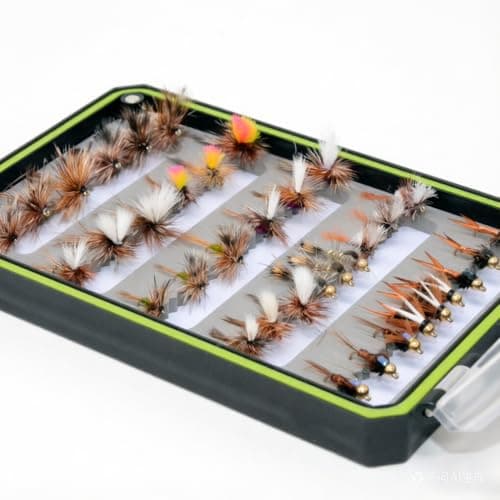
The box that teaches the system. Thirty-six hand-tied flies labeled across sizes 10 to 18 means you can lay a size 10 next to a size 18 and see immediately how far apart they are — which no chart conveys properly. The pattern mix leans on Adams variants and bead head nymphs, so it is a useful working box rather than a teaching aid you never fish, and the magnetic box keeps the small end from blowing away on a windy bank.
Best for: Best size spread — sizes 10 to 18 in one box - 2
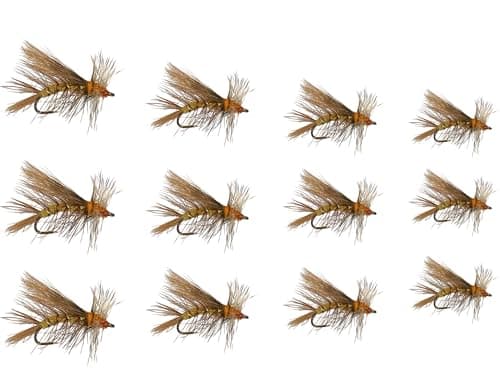
The most instructive twelve flies you can buy. One pattern in sizes 12, 14, 16 and 18 removes every variable except size, so when a fish refuses the 12 and eats the 16 you have learned something you can use for the rest of your fishing life. It is also a genuinely good attractor for broken creek water. The limitation is deliberate: this is not a varied box, it is a sizing experiment you can fish.
Best for: Best for learning size changes — one pattern, four sizes - 3
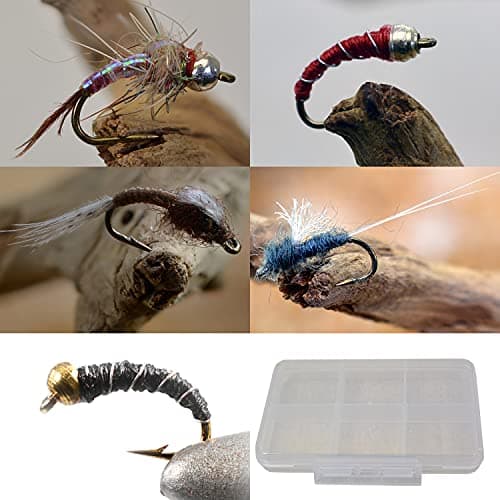
When a trout in flat, clear water refuses everything in your box, the answer is usually smaller rather than different, and most beginner boxes simply stop at 18. Forty-five flies in sizes 18, 20 and 22 on branded hooks fills that gap properly: midges and emergers are what trout eat on the hard days, in winter, and on tailwater-clear creeks all year. Be warned that fishing them demands fine tippet and good eyes.
Best for: Best small end — the sizes that work when nothing else does - 4
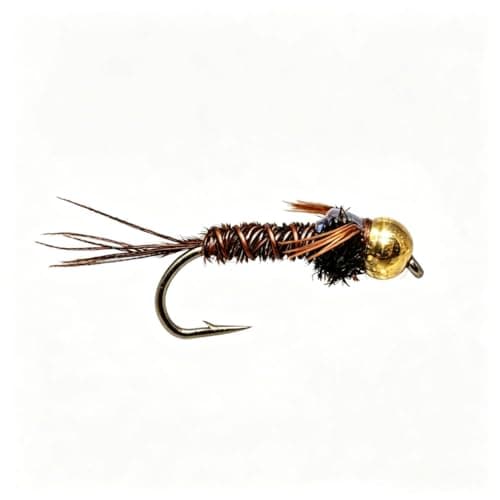
A Pheasant Tail is the most broadly useful nymph there is, and buying it across sizes 12 to 18 gives you the subsurface version of the same lesson the Stimulator set teaches on the surface. In practice the 16 does most of the work, the 18 saves hard days in clear water, and the 12 is the one you hang below a foam dry because it sinks faster. Twelve flies is a small count for a pattern you will lose on the bottom, so expect to restock.
Best for: Best nymph ladder — the same fly in the sizes that matter - 5
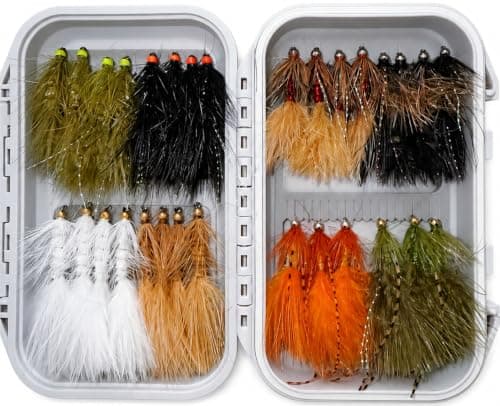
The other end of the ruler. Sizes 4 to 10 are streamer sizes, and on a creek they are not a bigger version of your dry fly strategy but a different one: a Woolly Bugger imitates a baitfish, a leech or a crayfish and is fished with movement rather than drift. Carrying a few is how you fish high, colored water after rain, and how you target the largest fish in a pool. On genuinely tiny creeks the size 10 is usually the sensible top end.
Best for: Best big end — what sizes 4 to 10 are actually for
| # | Product | Best for | Score | Price |
|---|---|---|---|---|
| 1 | 36-Piece Hand-Tied Adams Dry Fly and Bead Head Nymph Assortment, Sizes 10-18, with Magnetic Fly Box The box that teaches the system. Thirty-six hand-tied flies labeled across sizes 10 to 18 means you can lay a size 10 next to a size 18 and see immediately how far apart they are — which no chart conveys properly. The pattern mix leans on Adams variants and bead head nymphs, so it is a useful working box rather than a teaching aid you never fish, and the magnetic box keeps the small end from blowing away on a windy bank. | Best size spread — sizes 10 to 18 in one box | — | $26.99View on Amazon#ad |
| 2 | Feeder Creek Yellow Stimulator Dry Attractors, 12 Flies in Sizes 12, 14, 16 and 18 The most instructive twelve flies you can buy. One pattern in sizes 12, 14, 16 and 18 removes every variable except size, so when a fish refuses the 12 and eats the 16 you have learned something you can use for the rest of your fishing life. It is also a genuinely good attractor for broken creek water. The limitation is deliberate: this is not a varied box, it is a sizing experiment you can fish. | Best for learning size changes — one pattern, four sizes | — | $19.99View on Amazon#ad |
| 3 | 45-Piece Midge Assortment on Mustad Signature Hooks: Rainbow Warriors, Zebra Midges, WD-40s and RS2 Emergers, Sizes 18, 20 and 22 When a trout in flat, clear water refuses everything in your box, the answer is usually smaller rather than different, and most beginner boxes simply stop at 18. Forty-five flies in sizes 18, 20 and 22 on branded hooks fills that gap properly: midges and emergers are what trout eat on the hard days, in winter, and on tailwater-clear creeks all year. Be warned that fishing them demands fine tippet and good eyes. | Best small end — the sizes that work when nothing else does | — | $34.99View on Amazon#ad |
| 4 | Outdoor Planet Flashback Pheasant Tail Gold Bead Nymph Assortment, 12 Pack, Sizes 12-18 A Pheasant Tail is the most broadly useful nymph there is, and buying it across sizes 12 to 18 gives you the subsurface version of the same lesson the Stimulator set teaches on the surface. In practice the 16 does most of the work, the 18 saves hard days in clear water, and the 12 is the one you hang below a foam dry because it sinks faster. Twelve flies is a small count for a pattern you will lose on the bottom, so expect to restock. | Best nymph ladder — the same fly in the sizes that matter | — | $10.99View on Amazon#ad |
| 5 | Woolly Bugger Flies for Trout, Bass and Panfish, Sizes 4-10 The other end of the ruler. Sizes 4 to 10 are streamer sizes, and on a creek they are not a bigger version of your dry fly strategy but a different one: a Woolly Bugger imitates a baitfish, a leech or a crayfish and is fished with movement rather than drift. Carrying a few is how you fish high, colored water after rain, and how you target the largest fish in a pool. On genuinely tiny creeks the size 10 is usually the sensible top end. | Best big end — what sizes 4 to 10 are actually for | — | $26.99View on Amazon#ad |
Size 14 and 16 cover most trout fishing on small water. Go to 18 and smaller in low, clear conditions, and up to 10 or 12 for terrestrials and anything you want to float a dropper. If you want to own the whole range in one purchase, the sizes 10 to 18 assortment is the cleanest way to do it; if you want to learn how much size matters, buy one pattern in four sizes and fish them against each other.
Fly size is the most under-discussed decision in fly fishing and probably the most important. An angler with the wrong pattern in the right size catches fish. An angler with the perfect pattern two sizes too large gets refusals and concludes the fish are not feeding. On small creeks the mistake runs one direction almost every time: the flies are too big, because big flies look impressive in the box and small ones look like a mistake.
The short answer
| If you are fishing... | Buy these sizes | Why |
|---|---|---|
| General small-stream trout | 14 and 16 | The two sizes that cover most insects trout eat |
| Low, clear summer water | 16 and 18 | Fish get a long look; smaller gets eaten |
| High, colored water after rain | 10 and 12 | Visibility beats subtlety when the water is stained |
| Terrestrials: hoppers and foam | 8 to 12 | The real insects are that big, and foam floats a dropper |
| Midges and the hard days | 18 to 22 | What trout are eating when they refuse everything else |
| Streamers | 4 to 10 | Imitating a baitfish, not an insect |
If you buy one size, buy 16. It is small enough to get eaten in clear water and big enough to see and to tie on without reading glasses. A size 16 Parachute Adams is probably the single most useful trout fly in existence — the full case for it is in the dry fly roundup.
How hook sizes actually work
The number runs backwards: bigger number means smaller fly. A size 22 is tiny — smaller than a grain of rice. A size 4 is a substantial streamer. Everything useful for trout sits between those two, and the step from one size to the next is roughly a 20 to 25 percent change in hook length, so two sizes is a visibly different fly.
Trout sizes are even numbers only. You will see 4, 6, 8, 10, 12, 14, 16, 18, 20, 22. Odd sizes exist in some hook ranges but are not part of the normal trout fly world, so a box advertising sizes 12 to 18 is giving you four sizes, not seven.
Above size 1 the numbering flips to aughts. Hooks larger than size 1 are written 1/0, 2/0, 3/0 and so on, and there the bigger number means a bigger hook again. You will never need this for creek trout; it matters only if you wander into bass or saltwater patterns. For reference, the bass fly rod guide deals with that end of the scale.
Size is not standardized between manufacturers. One company's size 14 can sit visibly next to another's size 12, because the number describes the hook the fly was tied on, not the finished fly, and shank length and gape vary by hook model. This is a real annoyance and the reason to buy a spread of sizes once and compare them in your own box rather than trusting labels across brands.
The hook-gape reality check
Sizes by fly type
| Fly type | Creek sizes | Workhorse size | Notes |
|---|---|---|---|
| Dry flies — mayfly imitations | 14 to 18 | 16 | Parachute Adams, Blue-Winged Olive |
| Dry flies — caddis and attractors | 12 to 16 | 14 | Elk Hair Caddis, Stimulator; float a dropper |
| Terrestrials | 8 to 16 | 14 | Hoppers large, ants and beetles small |
| Bead head nymphs | 12 to 18 | 16 | Pheasant Tail, Hare's Ear, Prince |
| Midges and emergers | 18 to 22 | 20 | Zebra midge, WD-40, RS2 |
| Eggs and worm patterns | 10 to 14 | 12 | Stocked fish and high water |
| Streamers | 4 to 10 | 8 | Woolly Bugger, Clouser, sculpin |
Nymphs run one size smaller than people expect. The real insects living in a creek bed are mostly small — a size 16 or 18 Pheasant Tail is a realistic mayfly nymph, while a size 10 is a stonefly. If your nymph box is all 12s and 14s, adding 16s and 18s will catch you more fish than adding more patterns will. The nymph roundup covers which patterns to buy in those sizes.
Streamers are a separate decision, not a bigger fly. Sizes 4 to 10 are not there because the trout are bigger; they are there because a streamer imitates a fish or a crayfish rather than an insect, and it is fished with movement instead of drift. On a narrow creek a size 8 or 10 is usually the practical top end — the streamer roundup goes into which ones work in tight water.
What the water tells you
Clear and low: go smaller. Clear water gives a trout time and light to inspect the fly, and the easiest thing to get wrong at that range is bulk. In the low flows of late summer, dropping from a 14 to a 16 or 18 converts refusals into takes more reliably than any pattern change — the summer fly roundup builds a whole box around that constraint.
High and stained: go bigger. After rain the fish cannot see far, so the fly has to be findable. A size 10 bead head, a size 12 worm pattern or a size 8 Woolly Bugger moves enough water to be noticed. This is the one situation where a big fly genuinely out-fishes a small one on a creek.
Cold water: go smaller again. In winter and early spring the insects that are active are mostly midges, which is why size 18 to 22 patterns dominate cold-weather fishing. Trout metabolism is slow, they will not chase, and a tiny fly drifted right past them is the only realistic offer.
Wind and broken water: go bigger, within reason. You cannot fish what you cannot see, and a size 20 midge on riffled water in a breeze is invisible to you even if the fish would eat it. Size up to something you can track, or fish the small fly as a dropper under a visible dry so the dry does the watching for you.
Matching tippet to fly size
Divide the hook size by four to get the tippet X. A size 16 fly wants about 4X, a size 20 wants 5X, and a size 12 is happy on 3X. It is a rule of thumb rather than physics, but it keeps you out of the two failure modes: tippet so thick the small fly will not drift naturally, and tippet so fine that a decent fish breaks you off.
| Fly size | Tippet | Typical use |
|---|---|---|
| 4 to 8 | 0X to 2X | Streamers and big foam |
| 10 to 12 | 3X | Terrestrials, worm and egg patterns, heavy nymphs |
| 14 to 16 | 4X | The general small-stream default |
| 18 | 5X | Low clear water, small dries and nymphs |
| 20 to 22 | 6X | Midges and emergers |
The symptom of a mismatch is a fly that will not sit right. A size 20 midge on 3X tippet hangs stiffly and drifts unnaturally, because the leader is too heavy to let the fly move with the current. Going the other way, a size 8 streamer on 6X tears off on the first good fish. If the X system is new to you, it is decoded in fly line, leader and tippet explained, and the knot to join them is in how to tie tippet to leader.
Change size before you change pattern
This is the single most useful habit on this page. When a trout rises to your fly and does not take it, the fish has told you it is feeding and has looked at your offering closely enough to decline. Nine times in ten the first correction worth making is the same fly one or two sizes smaller, not a different insect. Pattern changes are the second move, not the first.
Why smaller works. Size is the easiest thing for a trout to judge and the hardest for a fly to disguise. Color and silhouette are seen through a distorted surface and in motion; relative size is read instantly against the real insects drifting alongside yours. A fly that is too large reads as wrong even when the pattern is right.
Carry fewer patterns in more sizes. Three patterns in four sizes each is a far more useful box than twelve patterns in one size, and it costs the same. That is the argument for buying single-pattern multi-size sets like the four-size Stimulator pack or the Pheasant Tail ladder rather than another broad assortment once you own one.
And write down what worked. Size, pattern, time of day, water height. Four entries in a phone note across a season will teach you more about your own creek than any chart can, because fly size is ultimately local: the insects in your water have their own sizes, and those are the ones that matter.
What to buy first
One mixed box spanning 10 to 18, then a midge set when you hit the wall. The sizes 10 to 18 assortment covers every normal creek situation, and when you meet the fish that refuse all of it — a flat clear pool on a bright afternoon — the sizes 18 to 22 midge box is the next purchase rather than a wider pattern selection.
Buy doubles of your workhorse sizes. You will lose 16s in trees and leave 18s in fish. Nothing is more frustrating than finding the size that works and having one of it. The cheapest way to stock up on the sizes you actually fish is covered in the cheap flies roundup.
Then sort the box by size, not by pattern. Rows of ascending size make the decision on the water a physical one — you reach one row left to go smaller. Fly boxes with slit foam and clear lids make that practical, and the fly box roundup covers which ones hold small flies without losing them. If you are assembling a first kit from scratch, start with the beginner fly roundup instead and come back to sizing once you have fished a few trips.
The picks in detail
36-Piece Hand-Tied Adams Dry Fly and Bead Head Nymph Assortment, Sizes 10-18, with Magnetic Fly Box
Best for: Best size spread — sizes 10 to 18 in one box
The box that teaches the system. Thirty-six hand-tied flies labeled across sizes 10 to 18 means you can lay a size 10 next to a size 18 and see immediately how far apart they are — which no chart conveys properly. The pattern mix leans on Adams variants and bead head nymphs, so it is a useful working box rather than a teaching aid you never fish, and the magnetic box keeps the small end from blowing away on a windy bank.
- Count
- 36 flies
- Sizes
- 10 to 18
- Mix
- Adams dries, parachutes, bead head nymphs
- Spans the full practical trout size range in one purchase
- Hand-tied, so hackle holds its shape after fish
- Magnetic box — small flies stay put
- A size spread means only a few of each size
- No midges below 18 and no streamers above 10
Feeder Creek Yellow Stimulator Dry Attractors, 12 Flies in Sizes 12, 14, 16 and 18
Best for: Best for learning size changes — one pattern, four sizes
The most instructive twelve flies you can buy. One pattern in sizes 12, 14, 16 and 18 removes every variable except size, so when a fish refuses the 12 and eats the 16 you have learned something you can use for the rest of your fishing life. It is also a genuinely good attractor for broken creek water. The limitation is deliberate: this is not a varied box, it is a sizing experiment you can fish.
- Count
- 12 flies
- Sizes
- 12, 14, 16, 18
- Pattern
- Yellow Stimulator attractor dry
- Isolates size as the only variable — the fastest way to learn it
- Stimulators float high in pocket water
- Small outlay
- One pattern only, in one color
- No box included
45-Piece Midge Assortment on Mustad Signature Hooks: Rainbow Warriors, Zebra Midges, WD-40s and RS2 Emergers, Sizes 18, 20 and 22
Best for: Best small end — the sizes that work when nothing else does
When a trout in flat, clear water refuses everything in your box, the answer is usually smaller rather than different, and most beginner boxes simply stop at 18. Forty-five flies in sizes 18, 20 and 22 on branded hooks fills that gap properly: midges and emergers are what trout eat on the hard days, in winter, and on tailwater-clear creeks all year. Be warned that fishing them demands fine tippet and good eyes.
- Count
- 45 flies
- Sizes
- 18, 20, 22
- Patterns
- Rainbow Warrior, zebra midge, WD-40, RS2
- Covers the small sizes most assortments omit
- Branded hooks at a sensible count
- The correct answer to repeated refusals in clear water
- Needs 5X to 6X tippet and patience to tie on
- Hard to see on the water, so takes get missed
Outdoor Planet Flashback Pheasant Tail Gold Bead Nymph Assortment, 12 Pack, Sizes 12-18
Best for: Best nymph ladder — the same fly in the sizes that matter
A Pheasant Tail is the most broadly useful nymph there is, and buying it across sizes 12 to 18 gives you the subsurface version of the same lesson the Stimulator set teaches on the surface. In practice the 16 does most of the work, the 18 saves hard days in clear water, and the 12 is the one you hang below a foam dry because it sinks faster. Twelve flies is a small count for a pattern you will lose on the bottom, so expect to restock.
- Count
- 12 flies
- Sizes
- 12 to 18
- Pattern
- Flashback Pheasant Tail, gold bead
- The most universally useful nymph pattern, across four sizes
- Bead head sinks without added weight
- Small enough selection to stay organized
- Nymphs are consumables — 12 does not last long
- No box included
Woolly Bugger Flies for Trout, Bass and Panfish, Sizes 4-10
Best for: Best big end — what sizes 4 to 10 are actually for
The other end of the ruler. Sizes 4 to 10 are streamer sizes, and on a creek they are not a bigger version of your dry fly strategy but a different one: a Woolly Bugger imitates a baitfish, a leech or a crayfish and is fished with movement rather than drift. Carrying a few is how you fish high, colored water after rain, and how you target the largest fish in a pool. On genuinely tiny creeks the size 10 is usually the sensible top end.
- Sizes
- 4 to 10
- Type
- Weighted streamer
- Imitates
- Baitfish, leeches, crayfish
- Covers the large sizes a trout box otherwise lacks
- The most forgiving streamer to fish for a beginner
- Works in stained, high water when nothing else does
- Too large for low clear water on a small creek
- Needs a heavier tippet and a rod with some backbone
Prices shown are from Amazon as of October 20, 2026 and change often — the button always goes to the current listing. Some links may earn us a commission at no extra cost to you. How this works.
Frequently asked questions
What size flies should I use for trout?
Size 14 and 16 for most small-stream trout fishing. Drop to 18 in low, clear water, go up to 10 or 12 for terrestrials and after rain when the water is colored, and carry 18 to 22 midges for cold weather and hard days. If you only buy one size, buy 16.
Is a size 16 fly bigger or smaller than a size 12?
Smaller. Fly hook numbering runs backwards: the bigger the number, the smaller the hook. A size 16 is noticeably smaller than a size 12, and a size 22 is smaller again. Trout flies use even numbers only, so the useful range for a creek runs 4, 6, 8, 10, 12, 14, 16, 18, 20 and 22.
What size nymphs for trout?
Sizes 12 to 18, with 16 doing most of the work. The mayfly nymphs living in a typical creek bed are small, so a size 16 or 18 Pheasant Tail is a realistic imitation while a size 10 represents a stonefly. Larger bead heads are useful mainly as the sinking fly below a buoyant dry.
Should I change fly size or fly pattern after a refusal?
Size first. A trout that rose and refused has shown you it is feeding and has inspected your fly closely, and the most common reason for a refusal is that the fly is too large. Try the same pattern one or two sizes smaller before switching to a different insect.
What tippet size for a size 16 fly?
About 4X. The working rule is to divide the hook size by four to get the tippet X, so a 12 wants 3X, a 16 wants 4X, an 18 wants 5X and a 20 to 22 wants 6X. Tippet that is too heavy stops a small fly drifting naturally; tippet that is too fine breaks on a good fish.
Sources
Keep reading
Not sure where to start?
The beginner gear guide walks you through exactly what a new stream angler needs — the six essentials first, nice-to-haves later, with one safe-default pick per category.