Fly Rods & Reels · Roundup
The Best 4 Weight Fly Rods
A 4-weight is the small-stream angler's rod. It lands a dry fly softly enough for a wild trout in low clear water, protects 6X tippet on the strike, and still has enough backbone for a beadhead nymph — which is more than a 3-weight can say.
Disclosure: Creek Cover is reader-supported. If you buy through our links we may earn a commission, at no extra cost to you. It never changes which pick we tell a new angler to start with. Full disclosure.
Quick picks at a glance
Tap a pick to read the full write-up, or the price button to check it on Amazon.
- 1
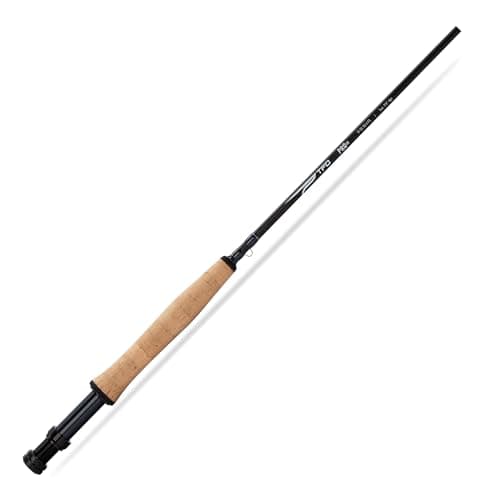
The best 4-weight on this page and arguably the most sensible trout rod TFO makes for anyone who fishes creeks. Eight feet is the length that matters: a foot shorter than the industry default, which is the difference between clearing a low branch and hooking it, and short enough to load properly on the fifteen-foot casts that make up most small-stream fishing. The Pro III taper is medium-fast, so it is forgiving of a developing stroke while still lifting a beadhead nymph off the water. TFO's lifetime warranty and in-house repair pipeline is what you are paying for beyond the blank.
Best for: Best overall 4-weight — eight feet, which is the small-water length - 2
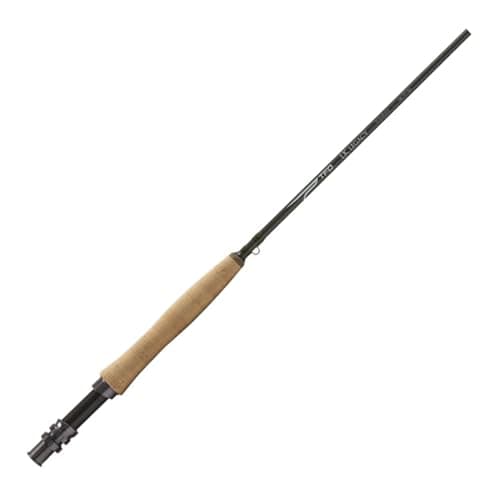
The pick if you fish dry flies to visible fish and want the rod to do the delicate work. LK Legacy is TFO's more traditional range, and at 8 foot 6 in a 4-weight it sits in what a lot of experienced small-stream anglers consider the sweet spot — six inches more reach than the Pro III for line control across a current seam, with a softer tip that lands a fly without a slap and protects 6X on the take. A case is included. It costs noticeably more than the Pro III and the extra buys feel rather than capability.
Best for: Best for dry flies — a softer taper and six more inches of reach - 3
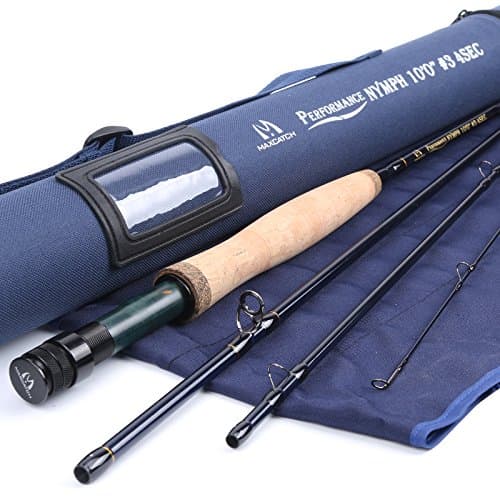
The cheapest way onto a 4-weight line by a wide margin, and a genuinely different tool from the other three. At ten feet this is a nymphing rod: the length is there to hold line off the water and control a drift at range, which is the whole technique behind euro-style nymphing. Choose the 4-weight option on the listing and you have a rod that fishes a tight-line rig better than any 8-footer on this page. The honest caveat for creek fishing is that ten feet in brush is awkward, and this is a specialist rather than a one-rod answer.
Best for: Budget pick — the cheapest 4-weight here, in a long nymphing taper - 4
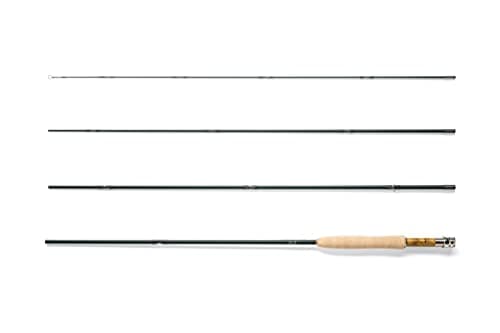
The rod at the end of this road, included because people search for the best 4-weight and sometimes mean it literally. Winston builds the Air 2 in Twin Bridges, Montana, in an 8-foot-6 4-weight that is widely regarded as one of the finest small-water dry-fly rods made, with a lifetime warranty to the original owner. It will not catch more trout out of a plunge pool than the TFO Pro III. It will feel different doing it, it will hold its value, and for some anglers that is the purchase. We are not going to pretend it is good value.
Best for: Buy-it-for-life pick — the premium 4-weight, built in Montana
| # | Product | Best for | Score | Price |
|---|---|---|---|---|
| 1 | Temple Fork Outfitters Pro III Fly Rod, 8 ft 4wt 4-Piece The best 4-weight on this page and arguably the most sensible trout rod TFO makes for anyone who fishes creeks. Eight feet is the length that matters: a foot shorter than the industry default, which is the difference between clearing a low branch and hooking it, and short enough to load properly on the fifteen-foot casts that make up most small-stream fishing. The Pro III taper is medium-fast, so it is forgiving of a developing stroke while still lifting a beadhead nymph off the water. TFO's lifetime warranty and in-house repair pipeline is what you are paying for beyond the blank. | Best overall 4-weight — eight feet, which is the small-water length | — | $229.95View on Amazon#ad |
| 2 | Temple Fork Outfitters LK Legacy Fly Rod, 8 ft 6 in 4wt 4-Piece with Case The pick if you fish dry flies to visible fish and want the rod to do the delicate work. LK Legacy is TFO's more traditional range, and at 8 foot 6 in a 4-weight it sits in what a lot of experienced small-stream anglers consider the sweet spot — six inches more reach than the Pro III for line control across a current seam, with a softer tip that lands a fly without a slap and protects 6X on the take. A case is included. It costs noticeably more than the Pro III and the extra buys feel rather than capability. | Best for dry flies — a softer taper and six more inches of reach | — | $329.95View on Amazon#ad |
| 3 | Maxcatch Performance Nymph Fly Rod, 10 ft 2/3/4wt The cheapest way onto a 4-weight line by a wide margin, and a genuinely different tool from the other three. At ten feet this is a nymphing rod: the length is there to hold line off the water and control a drift at range, which is the whole technique behind euro-style nymphing. Choose the 4-weight option on the listing and you have a rod that fishes a tight-line rig better than any 8-footer on this page. The honest caveat for creek fishing is that ten feet in brush is awkward, and this is a specialist rather than a one-rod answer. | Budget pick — the cheapest 4-weight here, in a long nymphing taper | — | $89.95View on Amazon#ad |
| 4 | Winston Air 2 Fly Rod, 4wt 8 ft 6 in, 4-Piece The rod at the end of this road, included because people search for the best 4-weight and sometimes mean it literally. Winston builds the Air 2 in Twin Bridges, Montana, in an 8-foot-6 4-weight that is widely regarded as one of the finest small-water dry-fly rods made, with a lifetime warranty to the original owner. It will not catch more trout out of a plunge pool than the TFO Pro III. It will feel different doing it, it will hold its value, and for some anglers that is the purchase. We are not going to pretend it is good value. | Buy-it-for-life pick — the premium 4-weight, built in Montana | — | $1,195.00View on Amazon#ad |
The best 4 weight fly rod is the Temple Fork Outfitters Pro III in 8 feet — the length that actually fits a brushy creek, with a medium-fast taper that handles dry flies and light nymphs and a lifetime warranty behind it. It is for the angler who fishes small water and keeps being sold 9-foot 5-weights. The budget pick is the Maxcatch Performance Nymph in the 4-weight, the cheapest route onto a 4-weight line, though at ten feet it is a nymphing specialist rather than an all-rounder. Prices come from our live retailer feed and are date-stamped under the comparison table.
Four picks rather than five or six, and that is deliberate — the explanation is in its own section below, because the shape of the 4-weight market is itself useful information.
Why a 4-weight, not a 5
A 5-weight is the most versatile trout rod made. A 4-weight is the better small-stream rod. Those statements are not in conflict, and the difference between them is what this page is about. The 5-weight wins when you need one rod for everything. The 4-weight wins when you know your water is small.
| 3-weight | 4-weight | 5-weight | |
|---|---|---|---|
| Dry fly presentation | Softest landing | Soft enough for wild fish | Lands harder on flat water |
| Protecting 6X tippet | Best | Good | Breaks off more fish |
| A beadhead nymph | Struggles | Handles it | Comfortable |
| A small streamer | No | At a push | Yes |
| Wind | Poor | Workable | Better |
| Fish over 16 inches | Underpowered | Enough rod | Comfortable |
| One rod for creeks and rivers | No | Mostly | Yes |
The 4-weight is the compromise that does not feel like one on water under thirty feet wide. It gives up very little dry-fly delicacy to a 3-weight and gains the ability to fish a weighted nymph and handle a gust, which is what makes a 3-weight frustrating as an only rod. The straight comparison with the industry default is in 4wt vs 5wt fly rod, and the general line-weight reasoning is in how to choose a fly rod.
What we have not done
Length matters more than weight
Once you have chosen a 4-weight, the length decision has a bigger effect on your fishing than the brand does. The four rods here span eight feet to ten feet, and that is a wider functional spread than the price difference suggests.
| Length | Best water | What it does well | What it does badly |
|---|---|---|---|
| 7 ft 6 in | Tunnels of alder, tiny brooks | Casts under branches | No reach, no line control |
| 8 ft | Brushy creeks, small streams | Clears branches, loads short | Limited reach across seams |
| 8 ft 6 in | Small streams with some room | Best balance of reach and clearance | Slightly long in heavy brush |
| 9 ft | Rivers, open streams | Reach, line control, wind | Catches branches constantly |
| 10 ft | Tight-line nymphing at range | Holds line off the water | Awkward everywhere else |
If you cannot decide, 8 foot 6 is the safest 4-weight length and 8 feet is the better one for genuinely overgrown water. Ten feet is a specialist choice — it exists on this page because it is the cheapest 4-weight available and because tight-line nymphing is a real and effective technique, not because a 10-footer belongs in a creek. That technique has its own page in the best euro nymphing rods.
The four compared
| Rod | Length | Action | Buy it if |
|---|---|---|---|
| TFO Pro III 8 ft 4wt | 8 ft | Medium-fast | You want one 4-weight for a creek |
| TFO LK Legacy 8 ft 6 in 4wt | 8 ft 6 in | Softer, traditional | You fish dry flies to visible fish |
| Maxcatch Performance Nymph | 10 ft | Nymphing taper | You tight-line nymph, and price matters |
| Winston Air 2 4wt | 8 ft 6 in | Premium dry-fly | You want the best and know what it costs |
Two of the four are TFO, and that reflects the market rather than a preference. Temple Fork is the maker that actually stocks 4-weights in short lengths at sensible prices, where most brands jump straight from a 9-foot 5-weight to a premium small-stream rod. The two TFOs differ in a way that matters: eight feet and medium-fast for general creek work, 8 foot 6 and softer for dry flies.
Why there are four picks, not six
There are four rods here because four is how many 4-weights we can recommend from real listings with a live price, not because we stopped looking. Most of the rods sold to small-stream anglers are either 3-weights, where makers compete hard, or 5-weights, where volume is. The 4-weight sits between two better-stocked categories.
That gap is worth knowing before you shop. If you find a 4-weight you like at a price that seems too good, check the length — a cheap 4-weight is often a 9-footer, which is the configuration this page exists to steer you away from on small water. And several of the best small-stream blanks are sold as 1/2/3-weight or 2/3/4-weight listings where you choose the weight at checkout, so a rod may be a 4-weight without saying so in the title. The broader field, including those multi-weight listings, is in the best fly rods for small streams, and the price bands are in under $200 and under $500.
Matching line and reel to a 4-weight
Put a 4-weight line on a 4-weight rod unless all your casts are under twenty feet, in which case a 5-weight line loads a fast blank better at close range. That is the one legitimate reason to overline a rod, and on a creek it applies more often than it does anywhere else.
The reel on a 4-weight is a line holder, and you should spend accordingly. A creek trout does not run into your backing, so what you need is a reel light enough to balance a short rod and a drag smooth enough not to jerk 6X tippet. A 3/4-weight reel is the correct size — the field is in the best fly reels for trout, the cheap end is in the best fly reel for the money, and the mid band is in the best fly reels under $200.
Then match your tippet to the rod, not to the fish. A 4-weight protects 5X and 6X well, which is what small clear water needs; going heavier to feel safe defeats the reason you bought a light rod. The sizing logic is in the best tippet for trout.
The picks in detail
Temple Fork Outfitters Pro III Fly Rod, 8 ft 4wt 4-Piece
Best for: Best overall 4-weight — eight feet, which is the small-water length
The best 4-weight on this page and arguably the most sensible trout rod TFO makes for anyone who fishes creeks. Eight feet is the length that matters: a foot shorter than the industry default, which is the difference between clearing a low branch and hooking it, and short enough to load properly on the fifteen-foot casts that make up most small-stream fishing. The Pro III taper is medium-fast, so it is forgiving of a developing stroke while still lifting a beadhead nymph off the water. TFO's lifetime warranty and in-house repair pipeline is what you are paying for beyond the blank.
- Length / weight
- 8 ft, 4wt
- Sections
- 4-piece
- Range
- Pro III
- Eight feet — the right length for brushy creeks
- Lifetime warranty with a real repair desk behind it
- Medium-fast taper handles dries and light nymphs
- Not enough rod for streamers or heavy indicator rigs
- Eight feet gives up some reach on open water
Temple Fork Outfitters LK Legacy Fly Rod, 8 ft 6 in 4wt 4-Piece with Case
Best for: Best for dry flies — a softer taper and six more inches of reach
The pick if you fish dry flies to visible fish and want the rod to do the delicate work. LK Legacy is TFO's more traditional range, and at 8 foot 6 in a 4-weight it sits in what a lot of experienced small-stream anglers consider the sweet spot — six inches more reach than the Pro III for line control across a current seam, with a softer tip that lands a fly without a slap and protects 6X on the take. A case is included. It costs noticeably more than the Pro III and the extra buys feel rather than capability.
- Length / weight
- 8 ft 6 in, 4wt
- Sections
- 4-piece
- Included
- Case
- Softer tip lands dry flies without spooking wild fish
- Six extra inches help control the drift across a seam
- Same lifetime TFO warranty, case included
- Costs clearly more than the Pro III for feel, not function
- Softer taper is less confident with weighted nymphs
Maxcatch Performance Nymph Fly Rod, 10 ft 2/3/4wt
Best for: Budget pick — the cheapest 4-weight here, in a long nymphing taper
The cheapest way onto a 4-weight line by a wide margin, and a genuinely different tool from the other three. At ten feet this is a nymphing rod: the length is there to hold line off the water and control a drift at range, which is the whole technique behind euro-style nymphing. Choose the 4-weight option on the listing and you have a rod that fishes a tight-line rig better than any 8-footer on this page. The honest caveat for creek fishing is that ten feet in brush is awkward, and this is a specialist rather than a one-rod answer.
- Line weight
- 2wt / 3wt / 4wt options
- Length
- 10 ft / 11 ft
- Blank
- IM10 carbon
- Cheapest 4-weight on the page by a clear margin
- Ten feet is the correct length for tight-line nymphing
- AAA cork and IM10 blank for the money
- Ten feet is awkward in brushy creeks
- A specialist nymphing taper, not a dry-fly rod
Winston Air 2 Fly Rod, 4wt 8 ft 6 in, 4-Piece
Best for: Buy-it-for-life pick — the premium 4-weight, built in Montana
The rod at the end of this road, included because people search for the best 4-weight and sometimes mean it literally. Winston builds the Air 2 in Twin Bridges, Montana, in an 8-foot-6 4-weight that is widely regarded as one of the finest small-water dry-fly rods made, with a lifetime warranty to the original owner. It will not catch more trout out of a plunge pool than the TFO Pro III. It will feel different doing it, it will hold its value, and for some anglers that is the purchase. We are not going to pretend it is good value.
- Length / weight
- 8 ft 6 in, 4wt
- Sections
- 4
- Built
- Twin Bridges, Montana
- One of the most admired small-water dry-fly rods made
- Built in the USA, lifetime warranty to the original owner
- Holds resale value in a way no budget rod does
- Many times the price of the TFO for no extra fish
- A rod this expensive is a rod you worry about in brush
Prices shown are from Amazon as of November 21, 2026 and change often — the button always goes to the current listing. Some links may earn us a commission at no extra cost to you. How this works.
Frequently asked questions
Is a 4 weight fly rod good for trout?
It is the best trout rod for small water. A 4-weight lands a dry fly softly enough for wild fish in low clear water, protects 5X and 6X tippet on the strike, and still has enough backbone to fish a beadhead nymph and handle a gust of wind — which is where a 3-weight becomes frustrating as an only rod.
4 weight or 5 weight fly rod?
A 5-weight if you want one rod for creeks and rivers and occasional streamers. A 4-weight if you know your water is small. The 5-weight is the more versatile rod in the abstract; the 4-weight presents a dry fly better, breaks off fewer fish on fine tippet, and is more pleasant to fish all day on water under thirty feet wide.
What length 4 weight fly rod should I buy?
Eight feet for genuinely brushy creeks, 8 foot 6 if there is some casting room. Those two lengths cover nearly all small-stream fishing. A 9-foot 4-weight exists and is common because it is cheap to tool, but it catches branches constantly on the water a 4-weight is otherwise ideal for. Ten-footers are tight-line nymphing specialists.
Can you fish streamers with a 4 weight?
Small ones, at a push. A weighted size 10 wooly bugger is within a 4-weight's range; a heavy articulated streamer is not, and trying will collapse the cast and beat up the rod. If streamers are a regular part of your fishing, a 5-weight or 6-weight is the honest choice and a 4-weight becomes your second rod.
Why are there so few 4 weight fly rods?
Because the market clusters at 3-weight, where small-stream specialists compete, and at 5-weight, where the volume is. The 4-weight sits between them. It also hides inside multi-weight listings — several of the best small-water blanks are sold as 2/3/4-weight or 1/2/3-weight options where you choose the weight at checkout, so a rod can be a 4-weight without saying so in its title.
What line and reel go on a 4 weight rod?
A 4-weight weight-forward floating line and a 3/4-weight reel. Go one line weight heavier only if nearly all of your casts are under twenty feet, which loads a fast blank better at close range. The reel is a line holder on a creek, so prioritize low weight to balance a short rod and a drag smooth enough not to shock fine tippet.
Sources
Keep reading
Not sure where to start?
The beginner gear guide walks you through exactly what a new stream angler needs — the six essentials first, nice-to-haves later, with one safe-default pick per category.