Fly Rods & Reels · Roundup
The Best Tippet for Trout
Tippet is the last two feet of your rig and the only part a trout looks at closely. It is also the cheapest thing in fly fishing and the piece most beginners get wrong — usually by owning one spool when they need three.
Disclosure: Creek Cover is reader-supported. If you buy through our links we may earn a commission, at no extra cost to you. It never changes which pick we tell a new angler to start with. Full disclosure.
Quick picks at a glance
Tap a pick to read the full write-up, or the price button to check it on Amazon.
- 1
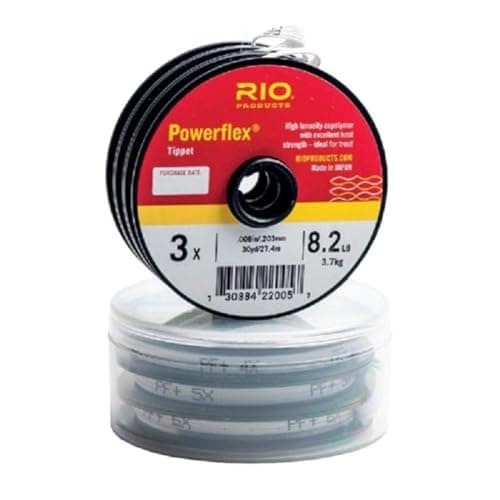
The right first tippet purchase, because it is three purchases. 3X for streamers and bigger dries, 4X as the all-day default on a creek, 5X when the water goes low and clear and fish start refusing. One spool of the wrong size is worse than no spool at all, since the fix on the water is to fish the wrong diameter or stop. Thirty yards per spool is a year or two of a creek season each.
Best for: Best overall — the three sizes a trout season needs, in one buy - 2
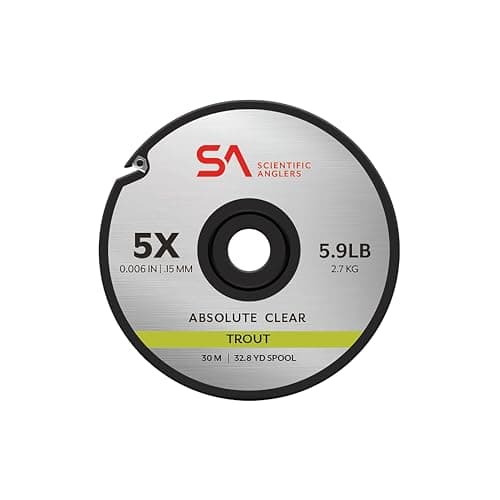
If you already own tippet and need one more size, this is the size and this is the spool. 5X is what you tie on when the water drops clear in July and fish inspect a fly instead of eating it — a finer diameter is less visible and lets a small dry drift naturally instead of being dragged by a thick leader. Scientific Anglers is a line company first, and their tippet knots cleanly, which is the only quality test that matters.
Best for: Best single spool — the fine end, for clear low water - 3
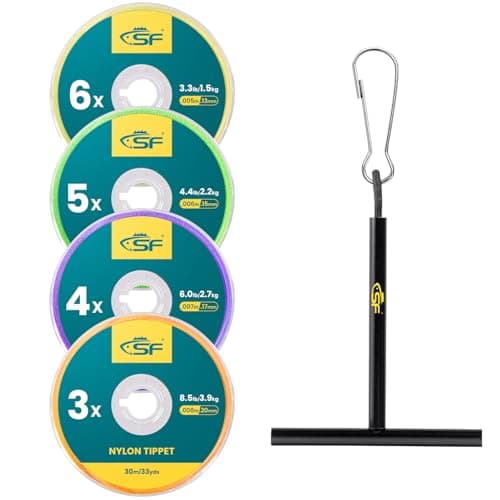
The cheapest product on this page that covers the full working range, and the honest answer for a first season. Tippet is a consumable: you lose a foot to every fly change and a few feet to every tree. Paying premium prices for material you will cut off and throw away is a poor use of money until you know which size you actually fish. Buy this, find out, then upgrade the one spool you empty.
Best for: Budget pick — the cheapest way to own every size - 4
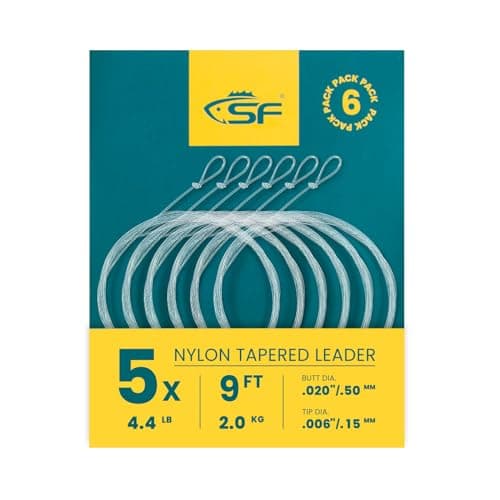
Tippet is useless on its own. It attaches to a tapered leader, which is the nine-foot length of monofilament that transmits the cast from a thick fly line down to a fine point, so the fly lands away from the line instead of in a heap on top of it. A 9 ft 5X leader is the standard trout starting point. Carry two or three, because a leader eventually gets too short to rebuild and a replacement is the cheapest fix in the sport.
Best for: The thing you tie tippet to — buy these alongside - 5
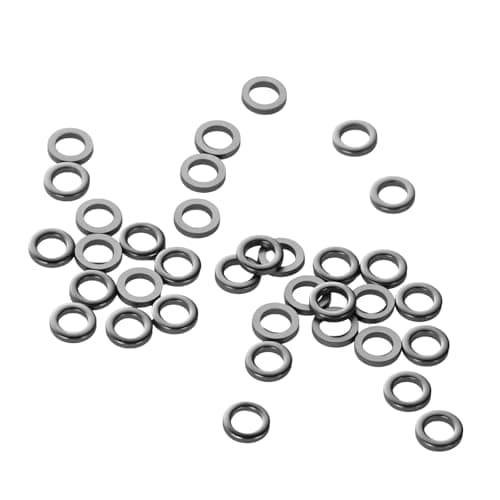
The cheapest genuinely useful object on this page. Without a ring, every fly change shortens your tippet, and every tippet change shortens the leader itself — a $7 leader gets consumed a few inches at a time. Tie a 2mm ring to the end of the leader once, then tie and retie tippet to the ring forever. Fifty rings is a lifetime supply and it changes the economics of leaders completely.
Best for: The upgrade that stops you eating your leader
| # | Product | Best for | Score | Price |
|---|---|---|---|---|
| 1 | RIO Powerflex Trout Tippet, 3-Pack of 30 yd Spools, 3X to 5X The right first tippet purchase, because it is three purchases. 3X for streamers and bigger dries, 4X as the all-day default on a creek, 5X when the water goes low and clear and fish start refusing. One spool of the wrong size is worse than no spool at all, since the fix on the water is to fish the wrong diameter or stop. Thirty yards per spool is a year or two of a creek season each. | Best overall — the three sizes a trout season needs, in one buy | — | $15.49View on Amazon#ad |
| 2 | Scientific Anglers Absolute Trout Tippet, 30 m Spool, 5X If you already own tippet and need one more size, this is the size and this is the spool. 5X is what you tie on when the water drops clear in July and fish inspect a fly instead of eating it — a finer diameter is less visible and lets a small dry drift naturally instead of being dragged by a thick leader. Scientific Anglers is a line company first, and their tippet knots cleanly, which is the only quality test that matters. | Best single spool — the fine end, for clear low water | — | $8.40View on Amazon#ad |
| 3 | SF Nylon Fly Fishing Tippet, 3X-6X 30m Spools The cheapest product on this page that covers the full working range, and the honest answer for a first season. Tippet is a consumable: you lose a foot to every fly change and a few feet to every tree. Paying premium prices for material you will cut off and throw away is a poor use of money until you know which size you actually fish. Buy this, find out, then upgrade the one spool you empty. | Budget pick — the cheapest way to own every size | — | $7.99View on Amazon#ad |
| 4 | SF Fly Fishing Tapered Leader, 9 ft 5X Tippet is useless on its own. It attaches to a tapered leader, which is the nine-foot length of monofilament that transmits the cast from a thick fly line down to a fine point, so the fly lands away from the line instead of in a heap on top of it. A 9 ft 5X leader is the standard trout starting point. Carry two or three, because a leader eventually gets too short to rebuild and a replacement is the cheapest fix in the sport. | The thing you tie tippet to — buy these alongside | — | $5.59View on Amazon#ad |
| 5 | 50-Pack Fly Fishing Tippet Rings, 2mm Stainless Steel The cheapest genuinely useful object on this page. Without a ring, every fly change shortens your tippet, and every tippet change shortens the leader itself — a $7 leader gets consumed a few inches at a time. Tie a 2mm ring to the end of the leader once, then tie and retie tippet to the ring forever. Fifty rings is a lifetime supply and it changes the economics of leaders completely. | The upgrade that stops you eating your leader | — | $6.99View on Amazon#ad |
The best tippet for trout is a three-spool set covering 3X, 4X and 5X — because the real beginner mistake is owning one size, not owning a cheap brand. If you only want one spool, make it 5X. The budget pick is the SF set that runs 3X to 6X, which covers an even wider range for less money and is the sensible choice for a first season of a consumable you will mostly throw away. Prices on this page come from our live feed, with the as-of date under the comparison table.
Tippet is the final length of clear monofilament between your leader and your fly. It is the part a trout sees next to the fly, the part that breaks when a fish runs, and the part you shorten every time you change patterns. It costs a few dollars and it decides more takes than your fly choice does.
What 4X and 5X actually mean
The X number is a diameter, and bigger X means thinner.That is the one thing to internalise, because it reads backwards. 3X is thicker and stronger than 5X. The scale comes from an old system of drawing gut through dies — each pass was another “X” — and it survived because it gives you a single number instead of a decimal.
| Size | Roughly suits fly sizes | When you reach for it |
|---|---|---|
| 2X - 3X | 4 to 10 | Streamers, big foam terrestrials, high stained water |
| 4X | 12 to 16 | The all-day creek default for dries and nymphs |
| 5X | 14 to 18 | Low clear water, cautious fish, small dries |
| 6X | 18 to 22 | Midges and tiny olives on flat, clear, bright water |
| 7X and finer | 22 and smaller | Specialist spring-creek fishing, rarely needed on a brook |
The rule of thumb that actually works: divide the fly size by three. A size 14 fly divided by three is about 4.6, so 4X or 5X. A size 18 gives 6, so 6X. It is not physics, but it keeps you within one size of right, and being within one size is good enough almost always. The fly-size scale itself is decoded in what size flies to use for trout.
Thinner is not automatically better. Fine tippet is less visible and drifts more naturally, which is why it catches more fish in clear water. It also breaks, and a trout you break off is a trout with a fly in its mouth. On a brushy creek where you will be pulling flies out of alders all day, 4X saves more flies than 6X catches fish.
Which sizes to own
Three spools: 4X, 5X and one of 3X or 6X. That is the whole answer for creek and small-stream trout. 4X is on the rod most days. 5X comes out when the water drops and clears. Then pick your third by the water you actually fish — 3X if you throw streamers and hoppers, 6X if your creek runs flat and clear in summer.
Thirty yards per spool is more than it sounds. A typical tippet section is eighteen to twenty-four inches, so a 30-yard spool is dozens of rebuilds. Most anglers replace tippet because it has aged in the sun, not because they ran out. Keep spools out of a hot car and out of direct light, and replace nylon every couple of seasons.
Buy the leader at the same time. People buy tippet and arrive at the water without anything to tie it to. A tapered leader is the structural piece — see the 9 ft 5X leader above — and the explanation of how line, leader and tippet relate is in fly line vs leader vs tippet explained.
Nylon or fluorocarbon
Nylon for dry flies, fluorocarbon for nymphs, and nylon if you only buy one. Nylon floats or sits in the surface film, which is what you want when the fly is on top. It is also cheaper, knots more forgivingly and is kinder to lose in a stream. Every tippet pick on this page is nylon, which is the right default for creek fishing.
Fluorocarbon sinks and is harder for fish to see underwater. That makes it the better choice on a nymph rig, where you want the tippet to drop with the fly rather than hang in the film. It costs more, it is stiffer, and it takes centuries to break down if you leave it in a stream — so pick up your offcuts. The same argument on the spinning side is in the best line for trout fishing.
The one tippet rule worth memorising
The five compared
| Product | What it is | Buy it if |
|---|---|---|
| RIO Powerflex 3-pack | 3X, 4X, 5X spools | You are solving tippet once and properly |
| SA Absolute Trout 5X | Single spool | You already own tippet and want the fine size |
| SF Nylon 3X-6X | Full-range set | You want every size for the least money |
| SF Tapered Leader 9 ft 5X | The leader itself | You need something to tie tippet to |
| Tippet rings, 50-pack | 2mm steel rings | You are tired of leaders getting shorter |
How it all connects
Fly line, then leader, then tippet, then fly. The fly line is thick and heavy and carries the cast. The tapered leader steps the diameter down over nine feet so the energy keeps travelling and the fly lands softly. The tippet is a level section at the thin end that you can replace without replacing the leader. The fly goes on the end.
Two knots do all of it.A double surgeon’s knot or a blood knot joins leader to tippet; a clinch or improved clinch ties tippet to fly. Both are covered step by step in how to tie tippet to leader, and the wider set is in fly fishing knots for beginners. If you add a tippet ring, the leader-to-tippet knot becomes two clinches to a ring, which is easier to tie cold and wet.
On a tight creek, shorten the whole thing. A nine-foot leader plus two feet of tippet is eleven feet of nearly invisible line to control under alder branches. Many small-stream anglers cut the butt of the leader back to seven or seven and a half feet. You lose a little delicacy and gain a lot of accuracy — the same logic that favours a shorter rod in the small-stream rod guide.
Four tippet mistakes
One: fishing the leader down to nothing. Change flies six times without adding tippet and your nine-foot leader is a seven-foot leader with a thick tip. Casts stop turning over, presentations get clumsy, and nobody connects the two. Add tippet before it gets short, or fit a ring.
Two: tightening a knot dry. Nylon generates heat under friction, and a knot pulled tight dry can lose a third of its strength. Wet it first — saliva or stream water, either is fine — then pull steadily. This single habit prevents most mystery break-offs.
Three: blaming the tippet for a drag problem. If a fish rises to the fly, looks at it and turns away, the usual cause is that the fly was moving unnaturally, not that it saw your tippet. Fix the drift first and go finer second.
Four: leaving spools in the sun. UV degrades nylon. A spool that lived on a dashboard for two summers will break at knots that should hold. Spools are cheap; replace them on a schedule rather than after losing a good fish. A tippet holder on your vest or pack keeps them shaded and to hand, and the rest of the small-kit short list is in the fly fishing accessories guide.
The picks in detail
RIO Powerflex Trout Tippet, 3-Pack of 30 yd Spools, 3X to 5X
Best for: Best overall — the three sizes a trout season needs, in one buy
The right first tippet purchase, because it is three purchases. 3X for streamers and bigger dries, 4X as the all-day default on a creek, 5X when the water goes low and clear and fish start refusing. One spool of the wrong size is worse than no spool at all, since the fix on the water is to fish the wrong diameter or stop. Thirty yards per spool is a year or two of a creek season each.
- Sizes
- 3X, 4X and 5X
- Spools
- 3 x 30 yd
- Material
- Nylon monofilament
- Covers the whole practical trout range in one box
- Thirty yards a spool, so it lasts seasons
- RIO's spools stack and clip into a tippet holder
- No 6X in the set, which low summer water sometimes wants
- Costs more than a single spool, obviously
Scientific Anglers Absolute Trout Tippet, 30 m Spool, 5X
Best for: Best single spool — the fine end, for clear low water
If you already own tippet and need one more size, this is the size and this is the spool. 5X is what you tie on when the water drops clear in July and fish inspect a fly instead of eating it — a finer diameter is less visible and lets a small dry drift naturally instead of being dragged by a thick leader. Scientific Anglers is a line company first, and their tippet knots cleanly, which is the only quality test that matters.
- Size
- 5X
- Spool
- 30 m
- Material
- Nylon monofilament
- The most useful single size to add
- Knots reliably, which is the whole job
- 30 m is plenty for a season
- One size only
- Finer tippet means more broken fish if you set hard
SF Nylon Fly Fishing Tippet, 3X-6X 30m Spools
Best for: Budget pick — the cheapest way to own every size
The cheapest product on this page that covers the full working range, and the honest answer for a first season. Tippet is a consumable: you lose a foot to every fly change and a few feet to every tree. Paying premium prices for material you will cut off and throw away is a poor use of money until you know which size you actually fish. Buy this, find out, then upgrade the one spool you empty.
- Sizes
- 3X to 6X
- Spool
- 30 m each
- Material
- Nylon
- Covers 3X through 6X — a wider range than the RIO set
- Lowest cost per yard here
- Includes 6X for genuinely clear summer water
- Not a premium-brand material
- Spool shape is less tidy in a tippet holder
SF Fly Fishing Tapered Leader, 9 ft 5X
Best for: The thing you tie tippet to — buy these alongside
Tippet is useless on its own. It attaches to a tapered leader, which is the nine-foot length of monofilament that transmits the cast from a thick fly line down to a fine point, so the fly lands away from the line instead of in a heap on top of it. A 9 ft 5X leader is the standard trout starting point. Carry two or three, because a leader eventually gets too short to rebuild and a replacement is the cheapest fix in the sport.
- Length
- 9 ft
- Tip
- 5X
- Taper
- Knotless tapered
- The standard trout leader spec, nothing exotic
- Cheap enough to carry spares
- Knotless, so it picks up less weed and debris
- A consumable, not a purchase you make once
- 9 ft is long for very tight brushy creeks
50-Pack Fly Fishing Tippet Rings, 2mm Stainless Steel
Best for: The upgrade that stops you eating your leader
The cheapest genuinely useful object on this page. Without a ring, every fly change shortens your tippet, and every tippet change shortens the leader itself — a $7 leader gets consumed a few inches at a time. Tie a 2mm ring to the end of the leader once, then tie and retie tippet to the ring forever. Fifty rings is a lifetime supply and it changes the economics of leaders completely.
- Size
- 2mm
- Material
- Stainless steel
- Count
- 50
- Stops the leader being shortened by tippet changes
- Makes retying on the water far quicker
- Fifty of them will outlast the rod
- One more knot in the system to tie correctly
- A small metal point some anglers dislike on a dry-fly rig
Prices shown are from Amazon as of November 20, 2026 and change often — the button always goes to the current listing. Some links may earn us a commission at no extra cost to you. How this works.
Frequently asked questions
What size tippet is best for trout?
4X for most creek and small-stream fishing, 5X when the water is low and clear, and 3X if you are fishing streamers or large foam terrestrials. A useful rule of thumb is to divide the fly's hook size by three: a size 14 fly suits roughly 4X or 5X, a size 18 suits 6X.
Does bigger X mean thicker or thinner tippet?
Thinner. The scale reads backwards from what most people expect: 6X is finer than 5X, which is finer than 4X. Higher X means smaller diameter, lower breaking strength and less visibility to the fish.
Do I need both a leader and tippet?
Yes. The tapered leader steps the diameter down from a thick fly line so the cast keeps travelling and the fly lands softly; the tippet is a level section at the fine end that you replace as flies are changed. Tippet alone will not turn a cast over, and fishing without tippet means cutting into the leader itself.
Is fluorocarbon tippet better than nylon for trout?
Only for subsurface fishing. Fluorocarbon sinks and is less visible underwater, which suits nymphs; nylon sits in the surface film, which suits dry flies, costs less and knots more forgivingly. If you buy one material for creek fishing, buy nylon.
What is a tippet ring for?
It is a small steel ring tied once to the end of your tapered leader so that every tippet change is tied to the ring instead of to the leader. Without one, each tippet change shortens the leader permanently. Rings cost almost nothing and make a leader last many times longer.
Sources
Keep reading
Not sure where to start?
The beginner gear guide walks you through exactly what a new stream angler needs — the six essentials first, nice-to-haves later, with one safe-default pick per category.