Waders & Boots · Roundup
The Best Wading Belts
A wading belt is the cheapest piece of safety equipment you will ever buy for a trout stream, and it is the one almost every new angler leaves in the bag. Cinched at the waist, it stops a fall from filling your waders — and on a long day it carries the load your shoulders have been taking.
Disclosure: Creek Cover is reader-supported. If you buy through our links we may earn a commission, at no extra cost to you. It never changes which pick we tell a new angler to start with. Full disclosure.
Quick picks at a glance
Tap a pick to read the full write-up, or the price button to check it on Amazon.
- 1
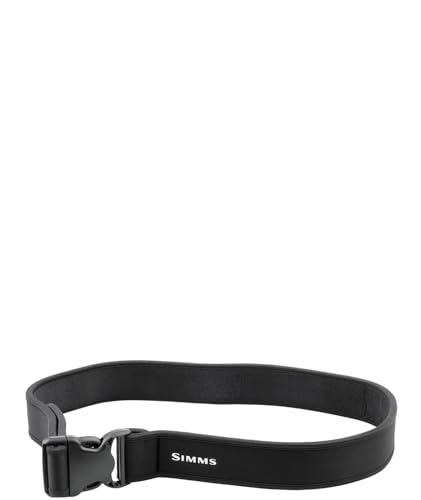
The best wading belt for most creek anglers, and the reason is the material rather than the brand. A flat nylon strap sits on one narrow line of wader fabric and migrates upward over the course of a morning until it is around your ribs doing nothing. Neoprene has friction and a little stretch, so it stays at the waist, and it gives when you bend to net a fish or kneel on a gravel bar instead of digging in. Simms lists it as neoprene construction with a heavy-duty buckle, and the buckle is the part worth paying for: you will be opening and closing it with wet hands in cold air, often while wearing the wader suspenders over the top.
Best for: Best overall — the belt that stays where you put it - 2
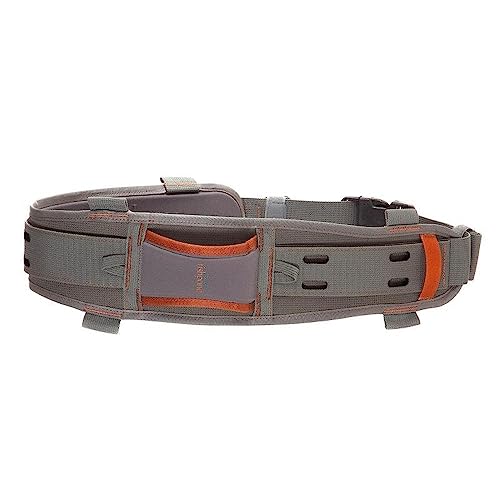
The pick if your back is the thing that ends your fishing day. fishpond sells the South Fork as a wading belt with back support, and the practical difference from a plain strap is a wider, structured panel across the lumbar area that spreads the load instead of concentrating it on one strip. That matters more than it sounds: a chest pack, a net, nippers, forceps and a water bottle add up, and on a creek you are climbing in and out of the channel all day rather than standing in one run. It is the most expensive belt-only pick here, and the money buys width and structure, not features.
Best for: Best for long days and lower-back fatigue - 3
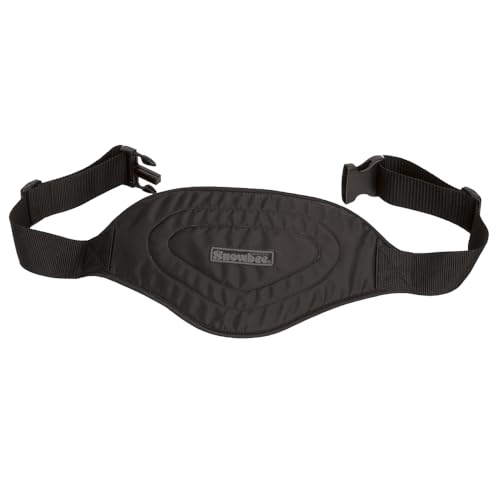
The cheaper route to the same idea as the fishpond. SNOWBEE lists this as an adjustable padded belt offering comfort back support over waders, and if lower-back fatigue is your problem but the premium price is not something you want to pay, this is the honest middle option. The compromise, as usual at this price, is in the hardware and the finish rather than the concept — padding and width are cheap to build, a buckle that still works after three seasons of grit is not. Buy it knowing that, and it is a lot of comfort for the money.
Best for: Best padded support belt for less money - 4
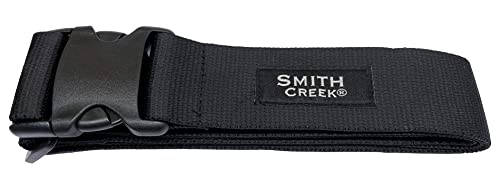
The pick if you own two pairs of waders, or if the belt that came with yours has vanished. A universal-size strap avoids the single most annoying problem with branded wading belts, which is that they are sold in size bands and the band that fits you over a fleece layer in April is not the band that fits in July. There is nothing clever here — a strap and a buckle, cut long enough to go around a chest wader with layers underneath — and for a lot of creek anglers that is the whole requirement. It is also the belt to keep in the truck as a spare.
Best for: Best simple belt that fits any pair of waders - 5
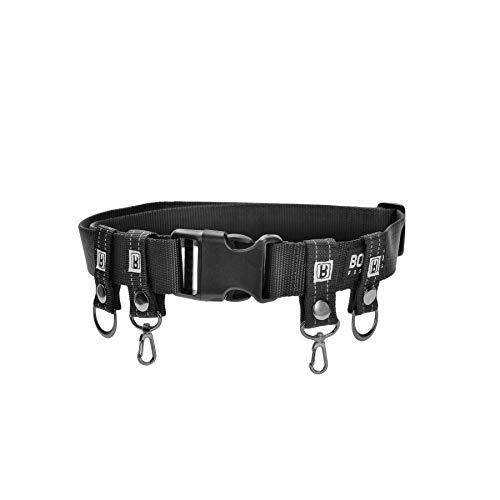
The budget pick, and the answer to the only truly bad option, which is fishing without a belt at all. Booms lists the FB2 as an adjustable nylon wade belt with a 45-inch maximum length, which covers most waists over chest waders. What you are buying is the safety function on its own: cinch it at the waist and a fall puts a lot less water inside your waders than it otherwise would. You are not buying comfort for a ten-hour day, and you are not buying a belt to hang a loaded pack from. For a beginner setting up a first pair of waders on a budget, it is the right amount of belt.
Best for: Best budget pick — the cheapest belt worth owning - 6
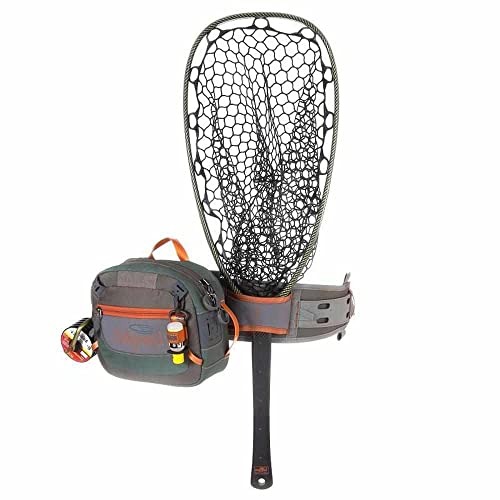
Not really a competitor to the other five, and that is why it is last rather than because it is worst. The Switchback is a belt system: a wading belt with a waist pack built onto it, so the belt that keeps water out of your waders is also the thing carrying your fly boxes. For a creek angler who hates a sling across the chest while casting in tight cover, that is a genuinely different approach, and it is the most expensive item here by a wide margin. Buy it as a pack that replaces your chest pack, not as a belt upgrade — if all you want is the belt, one of the five above does that job for a fraction of the money.
Best for: Best belt-and-pack system — if you want to carry gear on the belt itself
| # | Product | Best for | Score | Price |
|---|---|---|---|---|
| 1 | Simms Neoprene Wading Belt, Black, L/XL The best wading belt for most creek anglers, and the reason is the material rather than the brand. A flat nylon strap sits on one narrow line of wader fabric and migrates upward over the course of a morning until it is around your ribs doing nothing. Neoprene has friction and a little stretch, so it stays at the waist, and it gives when you bend to net a fish or kneel on a gravel bar instead of digging in. Simms lists it as neoprene construction with a heavy-duty buckle, and the buckle is the part worth paying for: you will be opening and closing it with wet hands in cold air, often while wearing the wader suspenders over the top. | Best overall — the belt that stays where you put it | — | $32.00View on Amazon#ad |
| 2 | fishpond South Fork Fly Fishing Wading Belt The pick if your back is the thing that ends your fishing day. fishpond sells the South Fork as a wading belt with back support, and the practical difference from a plain strap is a wider, structured panel across the lumbar area that spreads the load instead of concentrating it on one strip. That matters more than it sounds: a chest pack, a net, nippers, forceps and a water bottle add up, and on a creek you are climbing in and out of the channel all day rather than standing in one run. It is the most expensive belt-only pick here, and the money buys width and structure, not features. | Best for long days and lower-back fatigue | — | $49.95View on Amazon#ad |
| 3 | SNOWBEE Lumbar Support Wading Belt, Adjustable and Padded The cheaper route to the same idea as the fishpond. SNOWBEE lists this as an adjustable padded belt offering comfort back support over waders, and if lower-back fatigue is your problem but the premium price is not something you want to pay, this is the honest middle option. The compromise, as usual at this price, is in the hardware and the finish rather than the concept — padding and width are cheap to build, a buckle that still works after three seasons of grit is not. Buy it knowing that, and it is a lot of comfort for the money. | Best padded support belt for less money | — | $27.75View on Amazon#ad |
| 4 | Smith Creek Wading Belt, Universal Size The pick if you own two pairs of waders, or if the belt that came with yours has vanished. A universal-size strap avoids the single most annoying problem with branded wading belts, which is that they are sold in size bands and the band that fits you over a fleece layer in April is not the band that fits in July. There is nothing clever here — a strap and a buckle, cut long enough to go around a chest wader with layers underneath — and for a lot of creek anglers that is the whole requirement. It is also the belt to keep in the truck as a spare. | Best simple belt that fits any pair of waders | — | $15.99View on Amazon#ad |
| 5 | Booms Fishing FB2 Adjustable Nylon Wading Belt, 45 in Max The budget pick, and the answer to the only truly bad option, which is fishing without a belt at all. Booms lists the FB2 as an adjustable nylon wade belt with a 45-inch maximum length, which covers most waists over chest waders. What you are buying is the safety function on its own: cinch it at the waist and a fall puts a lot less water inside your waders than it otherwise would. You are not buying comfort for a ten-hour day, and you are not buying a belt to hang a loaded pack from. For a beginner setting up a first pair of waders on a budget, it is the right amount of belt. | Best budget pick — the cheapest belt worth owning | — | $12.79View on Amazon#ad |
| 6 | fishpond Switchback Belt System 2.0 Not really a competitor to the other five, and that is why it is last rather than because it is worst. The Switchback is a belt system: a wading belt with a waist pack built onto it, so the belt that keeps water out of your waders is also the thing carrying your fly boxes. For a creek angler who hates a sling across the chest while casting in tight cover, that is a genuinely different approach, and it is the most expensive item here by a wide margin. Buy it as a pack that replaces your chest pack, not as a belt upgrade — if all you want is the belt, one of the five above does that job for a fraction of the money. | Best belt-and-pack system — if you want to carry gear on the belt itself | — | $129.95View on Amazon#ad |
The best wading belt for most creek and stream anglers is the Simms Neoprene Wading Belt — neoprene grips the wader fabric and stays at your waist instead of migrating up to your ribs, which is the failure mode of every cheap flat strap. If your lower back is what ends your day, the fishpond South Fork spreads the load across a wider lumbar panel, and the Booms Fishing FB2 is the budget pick that gets the safety function right for pocket change. Prices come from our live retailer feed and are date-stamped under the comparison table — none are typed into this copy.
This is the least glamorous page on this site and probably the most useful one per dollar. A wading belt costs less than two dozen flies, it is the item manufacturers assume you are wearing when they write their safety instructions, and in our experience reading the forums it is the item new anglers most often discover they skipped — usually while standing in a creek with cold water running down the inside of their waders.
Why a wading belt is not optional
Chest waders are a closed bag you are standing inside. A belt cinched at the waist divides that bag in two, so a slip fills the bottom half and not the whole thing. That is the entire argument, and it is the reason every wader manufacturer's own instructions tell you to wear one.
The myth worth clearing up is the one about waders dragging you under. Water inside your waders is roughly neutrally buoyant, so filled waders do not work like an anchor. What actually happens is worse in a quieter way: a wader full of water is enormously heavy the moment you try to stand up or climb a bank, it drags your legs downstream in current, and it drops your core temperature fast. A belt limits how much water gets in, which limits all three of those problems at once.
| Situation on a small stream | No belt | Belt cinched at the waist |
|---|---|---|
| Step into an unseen hole | Water fills to the chest | Water stops around the waist |
| Slip on a rounded cobble | Full flush, both legs loaded | Legs stay mostly dry above the knee |
| Climbing out onto an undercut bank | Carrying the weight of the fill | Carrying far less |
| Cold water in early spring | Core gets wet, heat loss is fast | Core layers stay dry |
| Carrying a loaded chest pack | Shoulders take all of it | Belt can take part of the load |
The second function is the one people actually feel every trip. A belt is a load-bearing platform. A chest pack with fly boxes, a net on a magnet, forceps, nippers, tippet spools and a bottle of water is a few pounds hanging off your shoulders and neck, and a wide belt lets some of that weight transfer to your hips instead. If you have ever wondered why your neck aches after a day on the water and not after a day walking, that is the reason. The pack side of that equation is in the best fishing chest packs and fly fishing vest vs pack.
What we have not done
Neoprene, webbing or padded
There are only three kinds of wading belt, and the difference between them decides whether the belt is still at your waist two hours into the morning. That migration problem is the single most common complaint about wading belts, and it is almost entirely a material question rather than a tightness question.
| Neoprene | Flat nylon webbing | Padded support belt | |
|---|---|---|---|
| Example here | Simms Neoprene | Smith Creek, Booms FB2 | fishpond South Fork, SNOWBEE |
| Grip on wader fabric | High — friction holds it | Low — slides upward | Medium to high |
| Give when you crouch | Stretches | None, so it digs in | Some, plus padding |
| Load carrying | Fair | Poor | Good |
| Bulk under a jacket | Moderate | Minimal | Most |
| Dries | Fast | Fastest | Slowest |
| Price band | Mid | Lowest | Mid to highest |
For a creek angler the ranking is usually neoprene first, padded second, flat webbing third — and flat webbing still beats no belt by an enormous margin. Neoprene wins because the practical requirement is that the belt stays at the narrowest part of your torso while you climb banks and kneel on gravel, and friction is what delivers that. Padded belts win when the load is the problem rather than the migration. Flat webbing wins on price and on packability, and there is a real case for keeping one in a travel bag — see the best fly fishing travel bags.
Width, and the back-support question
Width is the spec that decides comfort, and almost nobody checks it. A 1-inch strap and a 3-inch lumbar panel are doing completely different jobs.
| Width | What it is good for | Where it falls down |
|---|---|---|
| 1 to 1.5 in | Pure safety function, minimum bulk, travel | Digs in under a loaded pack; rides up |
| 2 in | The sweet spot for most creek fishing | Slightly more bulk under a wading jacket |
| 3 in and up, padded | All-day load carrying, lower-back support | Bulk, slower drying, higher price |
| Belt-and-pack systems | Replacing a chest pack entirely | Cost, and gear sits lower to the water |
The back-support claim is real but narrower than the marketing suggests. A wide padded belt does not strengthen your back; what it does is move some of the weight of your gear from your shoulders to your hips and spread the contact area so the load is not concentrated on one line. If you fish an hour after work carrying a box of flies in a shirt pocket, you will never notice the difference. If you walk two miles of creek with a full pack, a net and a water bottle, you will notice it by lunchtime. Be honest about which angler you are before paying for the panel.
One more consequence of width worth knowing: a wide belt and a wading jacket can fight each other. Wading jackets are cut short specifically so the hem sits above the waterline, and a 3-inch padded belt with a pack on it pushes the jacket hem up further. If you fish in rain often, try the combination before you commit to the widest option.
Sizing and how tight to cinch it
Size a wading belt to your waist measured over the waders, with the layers you actually fish in underneath — not to your trouser size. This is the mistake that generates most wading belt returns. Chest waders are cut loose, and a fleece layer in April adds real inches. A belt that fits in July over a base layer can be at full extension in March.
| Question | The answer | Why |
|---|---|---|
| Measure where? | Over the waders, at the natural waist | The belt sits on wader fabric, not skin |
| With what underneath? | Your coldest-day layers | Sizing for summer leaves you short in spring |
| Universal or size band? | Universal if you own two pairs of waders | Size bands are per-pair guesses |
| How tight? | Snug enough to stop a hand sliding under easily | Loose defeats the point; tight restricts breathing |
| Over or under suspenders? | Over the waders, under the jacket | It has to seal the wader, not your coat |
Snug, not cranked. The test is whether you can slide a flat hand under the belt without effort — if you can, it is too loose to do its job; if you cannot get a finger in, it is tight enough to be uncomfortable after an hour. And wear it on the outside of the waders and the inside of your jacket. A belt cinched over a wading jacket seals nothing. The full sizing logic for the waders themselves is in how to size waders, and the layering underneath is in the best base layers to wear under waders.
The six compared
| Belt | Material | Back support | Buy it if |
|---|---|---|---|
| Simms Neoprene | Neoprene | No | You want one belt that stays put |
| fishpond South Fork | Structured, with lumbar panel | Yes | Your back ends your fishing day |
| SNOWBEE Lumbar Support | Padded, adjustable | Yes | You want the padding for less |
| Smith Creek Universal | Flat strap, universal size | No | You own two pairs of waders |
| Booms Fishing FB2 | Nylon webbing, 45 in max | No | You need a belt today, cheaply |
| fishpond Switchback 2.0 | Belt with integrated pack | Belt system | You want to carry gear on the belt |
Five belts and one belt system, which is how the category actually divides. If you are buying your first wading belt, the honest advice is to start at the cheap end and upgrade only if you find a specific complaint — migration, or a sore lower back. Those are the two problems the more expensive picks solve, and if you do not have either of them, the extra money buys nothing you will feel.
Four mistakes worth avoiding
Owning a belt and not wearing it is the most common one, and it is usually caused by one of the other three.
| Mistake | What goes wrong | The fix |
|---|---|---|
| Using the thin belt in the wader box | Rides up within an hour, so you stop bothering | Buy neoprene or a 2-inch belt |
| Sizing to trouser waist | Too short over layers in cold weather | Measure over the waders in spring kit |
| Wearing it over the jacket | Seals the coat, not the wader | Waders, belt, then jacket |
| Hanging everything off a 1-inch strap | Webbing digs in, pack still pulls on the neck | Wider belt, or move load to a sling |
There is a fifth, which is leaving the belt on the rod rack because you are only fishing ankle-deep water. Small streams are where undercut banks, plunge pools below falls and knee-deep channels with a surprise hole live. The water being generally shallow is exactly why people wade casually on a creek, and casual wading on slick, rounded rock is how most dunkings happen. If slick rock is your regular problem, the sole choice matters as much as the belt does — the best wading boots for slippery rocks covers that, and the best wading staffs covers the third leg that keeps you upright.
What a belt will not do
A wading belt is not a flotation device, it does not make deep or fast water safe, and it does not stop you going in. It limits the consequences of going in. That distinction matters because a belt can create false confidence, and false confidence in moving water is the actual hazard.
The things that keep you out of trouble on a small stream are reading the water, not wading above the knee in current you cannot see the bottom of, and having a hand free. A belt sits underneath all of that as cheap insurance. If you fish water where a swim is a realistic outcome, an inflatable PFD belongs in the conversation too, and the fishing-specific versions are covered in the best fishing vests with a life jacket.
The other honest limit: a belt does not fix badly fitting waders. If your waders are too big in the waist, a belt gathers the excess fabric into a band of bulk that chafes; if they are too small, the belt is the point where the seams take the strain. A belt is a safety item and a load-carrying item, not a sizing adjustment. The same logic applies at the other end of the wader: a belt does nothing about cold feet, which is a sock and boot-room question covered in the best wading socks. If a bad fit is the problem you are actually solving, start with the best fishing waders and types of waders explained instead, and come back for the belt once the waders fit.
The picks in detail
Simms Neoprene Wading Belt, Black, L/XL
Best for: Best overall — the belt that stays where you put it
The best wading belt for most creek anglers, and the reason is the material rather than the brand. A flat nylon strap sits on one narrow line of wader fabric and migrates upward over the course of a morning until it is around your ribs doing nothing. Neoprene has friction and a little stretch, so it stays at the waist, and it gives when you bend to net a fish or kneel on a gravel bar instead of digging in. Simms lists it as neoprene construction with a heavy-duty buckle, and the buckle is the part worth paying for: you will be opening and closing it with wet hands in cold air, often while wearing the wader suspenders over the top.
- Material
- Neoprene
- Closure
- Heavy-duty buckle
- Size
- L/XL (single size band)
- Neoprene grips wader fabric and stays at the waist
- Stretches rather than digging in when you crouch
- Buckle is easy to work with cold, wet hands
- Sold in size bands, so check your waist against the band before ordering
- No padding, so it is not the pick for all-day load carrying
- Costs roughly twice what a plain nylon strap does
fishpond South Fork Fly Fishing Wading Belt
Best for: Best for long days and lower-back fatigue
The pick if your back is the thing that ends your fishing day. fishpond sells the South Fork as a wading belt with back support, and the practical difference from a plain strap is a wider, structured panel across the lumbar area that spreads the load instead of concentrating it on one strip. That matters more than it sounds: a chest pack, a net, nippers, forceps and a water bottle add up, and on a creek you are climbing in and out of the channel all day rather than standing in one run. It is the most expensive belt-only pick here, and the money buys width and structure, not features.
- Type
- Wading belt with back support panel
- Use
- Wader belt and load-carrying waist belt
- Brand focus
- Fly fishing packs and luggage
- Wider lumbar panel spreads load across the lower back
- Built as a carrying belt, so pack attachments sit on it properly
- The pick for anglers who fish a full day rather than an evening
- Most expensive belt-only pick on the page
- More bulk than you need if you carry nothing but a box of flies
- Structure makes it stiffer to pack down in a travel bag
SNOWBEE Lumbar Support Wading Belt, Adjustable and Padded
Best for: Best padded support belt for less money
The cheaper route to the same idea as the fishpond. SNOWBEE lists this as an adjustable padded belt offering comfort back support over waders, and if lower-back fatigue is your problem but the premium price is not something you want to pay, this is the honest middle option. The compromise, as usual at this price, is in the hardware and the finish rather than the concept — padding and width are cheap to build, a buckle that still works after three seasons of grit is not. Buy it knowing that, and it is a lot of comfort for the money.
- Type
- Padded lumbar support wading belt
- Fit
- Adjustable
- Padding
- Yes — across the lower back
- Padded back support at well under the premium price
- Adjustable rather than sold in fixed size bands
- Wide enough to carry a loaded chest pack comfortably
- Hardware is the obvious place the price was saved
- Padding holds water and takes longer to dry than neoprene
- Bulkier under a jacket than a plain strap
Smith Creek Wading Belt, Universal Size
Best for: Best simple belt that fits any pair of waders
The pick if you own two pairs of waders, or if the belt that came with yours has vanished. A universal-size strap avoids the single most annoying problem with branded wading belts, which is that they are sold in size bands and the band that fits you over a fleece layer in April is not the band that fits in July. There is nothing clever here — a strap and a buckle, cut long enough to go around a chest wader with layers underneath — and for a lot of creek anglers that is the whole requirement. It is also the belt to keep in the truck as a spare.
- Size
- Universal
- Type
- Flat strap wading belt
- Role
- Primary belt or spare
- One size avoids the size-band guessing game
- Long enough for chest waders with layers underneath
- Cheap enough to own two and keep one in the truck
- Flat webbing migrates upward more than neoprene does
- No padding and no back support
- Excess strap tail needs tucking or it flaps
Booms Fishing FB2 Adjustable Nylon Wading Belt, 45 in Max
Best for: Best budget pick — the cheapest belt worth owning
The budget pick, and the answer to the only truly bad option, which is fishing without a belt at all. Booms lists the FB2 as an adjustable nylon wade belt with a 45-inch maximum length, which covers most waists over chest waders. What you are buying is the safety function on its own: cinch it at the waist and a fall puts a lot less water inside your waders than it otherwise would. You are not buying comfort for a ten-hour day, and you are not buying a belt to hang a loaded pack from. For a beginner setting up a first pair of waders on a budget, it is the right amount of belt.
- Material
- Nylon webbing
- Max length
- 45 in
- Fit
- Adjustable
- Cheapest pick on the page by a clear margin
- 45-inch maximum covers most waists over chest waders
- Light and flat — packs into a wader pocket
- Thin webbing digs in under any real load
- Rides upward over a long day
- Buckle is the first thing that will fail on it
fishpond Switchback Belt System 2.0
Best for: Best belt-and-pack system — if you want to carry gear on the belt itself
Not really a competitor to the other five, and that is why it is last rather than because it is worst. The Switchback is a belt system: a wading belt with a waist pack built onto it, so the belt that keeps water out of your waders is also the thing carrying your fly boxes. For a creek angler who hates a sling across the chest while casting in tight cover, that is a genuinely different approach, and it is the most expensive item here by a wide margin. Buy it as a pack that replaces your chest pack, not as a belt upgrade — if all you want is the belt, one of the five above does that job for a fraction of the money.
- Type
- Wading belt with integrated waist pack
- Replaces
- Belt plus chest or sling pack
- Position
- Waist
- Belt and pack in one, so nothing crosses your casting shoulder
- Keeps weight at the waist where a belt can actually support it
- fishpond's pack hardware rather than an afterthought pouch
- By far the most expensive item on this page
- Overkill if you only need the safety function
- Waist-mounted gear sits closer to the water on a deep wade
Prices shown are from Amazon as of November 24, 2026 and change often — the button always goes to the current listing. Some links may earn us a commission at no extra cost to you. How this works.
Frequently asked questions
Do I really need a wading belt?
Yes, if you wear chest or waist waders in moving water. Every wader manufacturer's own instructions say to wear one, because a belt cinched at the waist limits how much water gets inside the waders when you slip. Filled waders are not an anchor that drags you under, but they are enormously heavy to stand up in, they pull your legs downstream in current, and they soak your core layers in cold water. A belt limits all three.
What is the best wading belt?
A neoprene belt for most creek anglers, because neoprene grips the wader fabric and stays at the waist instead of migrating up to the ribs the way flat nylon webbing does. If lower-back fatigue from carrying a loaded pack is your real problem, a wider padded belt with a lumbar panel is the better buy. If you simply need a belt today, the cheapest adjustable nylon strap still does the safety job.
How tight should a wading belt be?
Snug enough that you cannot easily slide a flat hand underneath it, and no tighter. Loose defeats the purpose, since water will simply pass the belt, and cranked down hard becomes uncomfortable within an hour and restricts your breathing when you climb a bank. Wear it over the waders and under your wading jacket, at the natural waist.
What size wading belt do I need?
Measure over the waders, at the natural waist, wearing the layers you fish in on your coldest day. Chest waders are cut loose and a fleece layer adds real inches, so a belt sized to your trouser waist is frequently too short in early spring. If you own more than one pair of waders, a universal-size strap avoids the size-band guessing entirely.
Can I use a regular belt as a wading belt?
It is better than nothing in an emergency, but a trouser belt is the wrong tool. Leather stiffens and cracks after repeated soaking, a narrow dress belt digs into wader fabric and into you, and the buckle is usually designed to be worked with dry fingers. A purpose-made wading belt costs about the same as a box of flies and is built to be soaked, cinched over bulky fabric, and opened with cold wet hands.
Does a wading belt help with back pain?
Indirectly, and only the wide padded kind. A wide belt moves part of the weight of a loaded chest pack from your shoulders to your hips and spreads the contact area, which reduces the fatigue that builds over a long day of walking and climbing banks. It does not support your spine the way a weightlifting belt claims to, and it will not help at all if you carry almost nothing.
Where does the wading belt go — over or under the jacket?
Over the waders, under the jacket. The belt's job is to close off the top of the waders, so it has to be in direct contact with the wader fabric. A belt cinched over the outside of a wading jacket seals the jacket and leaves the waders open, which is the opposite of the intended effect.
Sources
Keep reading
Not sure where to start?
The beginner gear guide walks you through exactly what a new stream angler needs — the six essentials first, nice-to-haves later, with one safe-default pick per category.