Waders & Boots · Roundup
The Best Wading Socks
Your feet are the first part of you to get cold in a creek and the last part anyone spends money on. There are two completely different socks sold under this name — a wool sock worn inside stockingfoot waders, and a neoprene sock worn when you have left the waders at home — and buying the wrong one is why people end up with cold, blistered feet in expensive boots.
Disclosure: Creek Cover is reader-supported. If you buy through our links we may earn a commission, at no extra cost to you. It never changes which pick we tell a new angler to start with. Full disclosure.
Quick picks at a glance
Tap a pick to read the full write-up, or the price button to check it on Amazon.
- 1
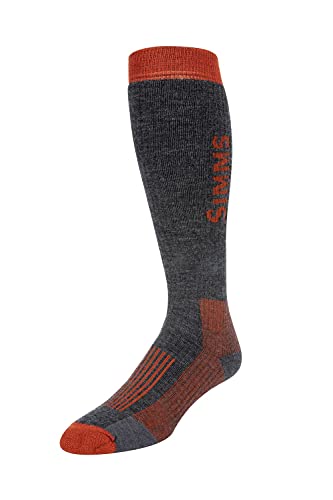
The best wading sock for most creek anglers, and the choice is about three specs rather than the badge. Merino wool rather than cotton, because wool keeps insulating when damp and the inside of a stockingfoot wader is damp by lunchtime from your own sweat whether or not the wader leaks. Over-the-calf height rather than crew, because a short sock creeps down inside the neoprene bootie during a day of walking and you cannot reach it without taking the boot off on a gravel bar. And midweight rather than heavyweight, because the extra bulk of a thick sock inside a boot sized for a normal one compresses the air that was doing the insulating. It is the sock we would buy first and the one most creek anglers never need to upgrade from.
Best for: Best overall — the merino sock for inside stockingfoot waders - 2
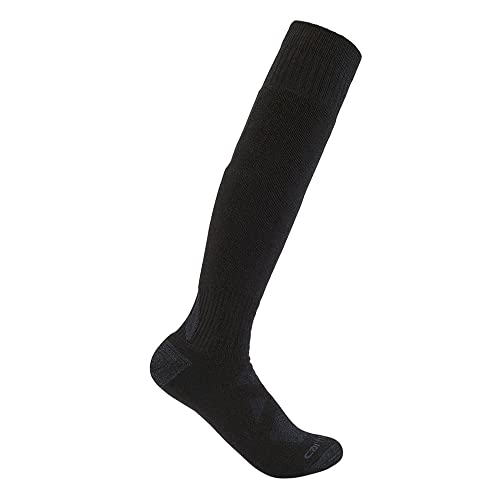
The budget pick, and an honest one rather than a compromise you will regret. This is a heavyweight merino wool blend over-the-calf sock built for work boots, and everything a wading sock needs is present: wool content so it works when damp, the height that keeps it from rolling into the bootie, and a cushioned foot. It is the cheapest sock on this page. The two real differences from the Simms are that a blend has less wool in it than a merino-dominant sock, so the warm-when-wet behavior is slightly less reliable, and heavyweight needs a boot with room to spare. If your boots are already snug, size up the boot rather than down the sock.
Best for: Best budget pick — merino blend warmth for the least money - 3
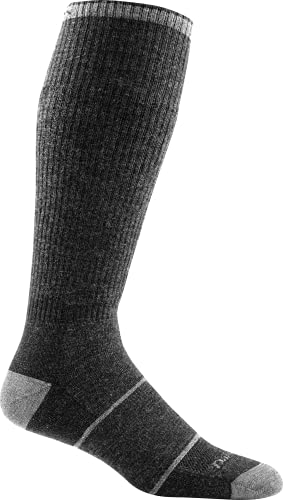
The pick for early spring, late autumn and anyone who hikes a mile of creek before the first cast. A full-cushion merino sock in over-the-calf height is the warmest wool option here and the most comfortable under a loaded pack, and Darn Tough's reputation rests on socks that survive being worn and washed constantly rather than on any single spec. The catch is the one that applies to every thick sock: full cushion plus a wader bootie plus a boot is a lot of material, and if your wading boots were sized over a midweight sock these will make them too tight. Buy these first, then size your boots, or accept that they are your cold-weather sock and not your summer one.
Best for: Best for cold water and long walks — full cushion, hard to wear out - 4
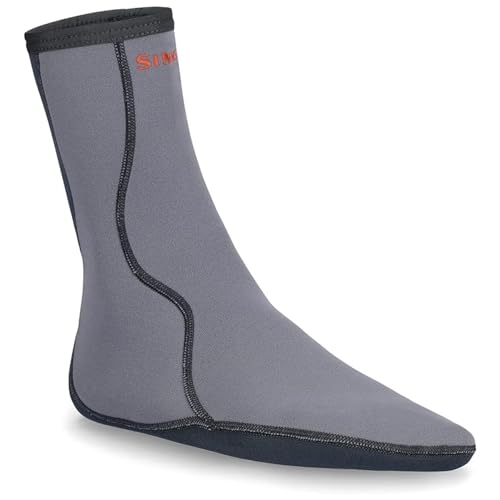
A different product for a different trip. When the water is warm enough to leave the waders at home, you still need something between your foot and a wading boot or a pair of draining shoes, and a cotton sock in that role is a blister in about two miles. Neoprene gives you a thin wetsuit layer that holds a film of warm water against the skin, takes the abrasion that would otherwise be against your skin, and does not care about being soaked all day. Simms lists it as neoprene construction with abrasion resistance, and abrasion is the honest reason to buy the branded version — a cheap neoprene sock wears through at the heel where the boot works against it.
Best for: Best neoprene sock for wet wading in summer - 5
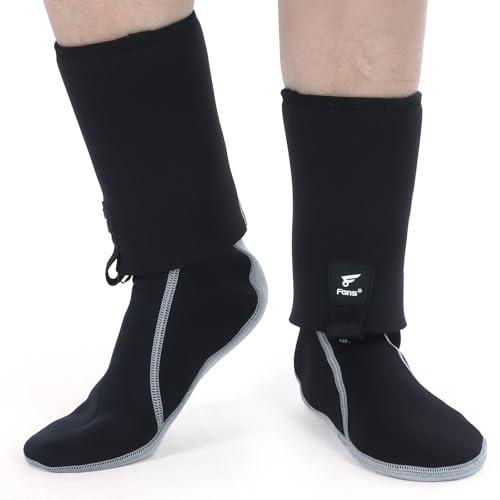
The pick if the gravel is your actual complaint and you do not want to pay guide prices to fix it. 8 Fans lists these as 3 mm neoprene wading socks with a gravel guard, a boot hook and quick-drainage construction, which is the full feature set of a much more expensive sock at a fraction of the price. On a small stream, grit over the top of the boot is a genuine problem rather than a nuisance — fine gravel works its way under the foot and grinds, and on a wet-wading day there is nothing between it and your skin. The honest caveat for any unbranded neoprene is wear life at the heel and the durability of the stitched guard, so treat it as a season-or-two item rather than a decade one.
Best for: Best value neoprene with a gravel guard built in - 6
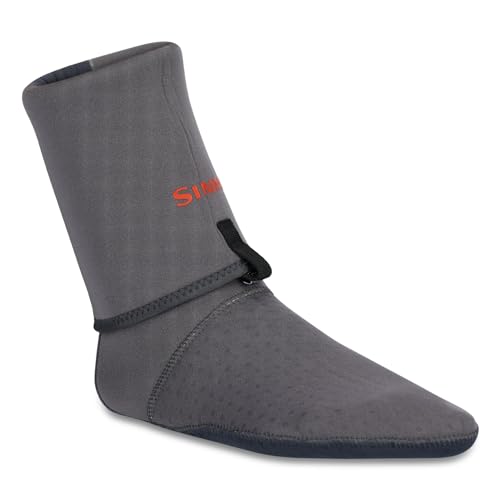
The most expensive sock on this page by a clear margin, and the only one we would describe as a tool rather than a sock. Simms lists it as neoprene with an integrated gravel guard and abrasion-resistant construction, which is the same concept as the 8 Fans pick executed to a guide standard — the kind of thing bought by people who are in the water five days a week and have already replaced a pair of boots that grit destroyed from the inside. For an angler who fishes a creek on weekends, this is more sock than the problem requires. For anyone wet wading a gravelly stream regularly, it is the item that stops the grinding.
Best for: Best guard sock — the one to buy if grit has already cost you a boot
| # | Product | Best for | Score | Price |
|---|---|---|---|---|
| 1 | Simms Merino Midweight Over-the-Calf Sock The best wading sock for most creek anglers, and the choice is about three specs rather than the badge. Merino wool rather than cotton, because wool keeps insulating when damp and the inside of a stockingfoot wader is damp by lunchtime from your own sweat whether or not the wader leaks. Over-the-calf height rather than crew, because a short sock creeps down inside the neoprene bootie during a day of walking and you cannot reach it without taking the boot off on a gravel bar. And midweight rather than heavyweight, because the extra bulk of a thick sock inside a boot sized for a normal one compresses the air that was doing the insulating. It is the sock we would buy first and the one most creek anglers never need to upgrade from. | Best overall — the merino sock for inside stockingfoot waders | — | $28.00View on Amazon#ad |
| 2 | Carhartt Men's Heavyweight Merino Wool Blend Over-the-Calf Sock The budget pick, and an honest one rather than a compromise you will regret. This is a heavyweight merino wool blend over-the-calf sock built for work boots, and everything a wading sock needs is present: wool content so it works when damp, the height that keeps it from rolling into the bootie, and a cushioned foot. It is the cheapest sock on this page. The two real differences from the Simms are that a blend has less wool in it than a merino-dominant sock, so the warm-when-wet behavior is slightly less reliable, and heavyweight needs a boot with room to spare. If your boots are already snug, size up the boot rather than down the sock. | Best budget pick — merino blend warmth for the least money | — | $22.49View on Amazon#ad |
| 3 | Darn Tough Vermont Men's Merino Wool Paul Bunyan Over-the-Calf Full Cushion Sock The pick for early spring, late autumn and anyone who hikes a mile of creek before the first cast. A full-cushion merino sock in over-the-calf height is the warmest wool option here and the most comfortable under a loaded pack, and Darn Tough's reputation rests on socks that survive being worn and washed constantly rather than on any single spec. The catch is the one that applies to every thick sock: full cushion plus a wader bootie plus a boot is a lot of material, and if your wading boots were sized over a midweight sock these will make them too tight. Buy these first, then size your boots, or accept that they are your cold-weather sock and not your summer one. | Best for cold water and long walks — full cushion, hard to wear out | — | $29.95View on Amazon#ad |
| 4 | Simms Neoprene Wading Socks A different product for a different trip. When the water is warm enough to leave the waders at home, you still need something between your foot and a wading boot or a pair of draining shoes, and a cotton sock in that role is a blister in about two miles. Neoprene gives you a thin wetsuit layer that holds a film of warm water against the skin, takes the abrasion that would otherwise be against your skin, and does not care about being soaked all day. Simms lists it as neoprene construction with abrasion resistance, and abrasion is the honest reason to buy the branded version — a cheap neoprene sock wears through at the heel where the boot works against it. | Best neoprene sock for wet wading in summer | — | $36.00View on Amazon#ad |
| 5 | 8 Fans Neoprene Wading Socks, 3 mm, with Gravel Guard The pick if the gravel is your actual complaint and you do not want to pay guide prices to fix it. 8 Fans lists these as 3 mm neoprene wading socks with a gravel guard, a boot hook and quick-drainage construction, which is the full feature set of a much more expensive sock at a fraction of the price. On a small stream, grit over the top of the boot is a genuine problem rather than a nuisance — fine gravel works its way under the foot and grinds, and on a wet-wading day there is nothing between it and your skin. The honest caveat for any unbranded neoprene is wear life at the heel and the durability of the stitched guard, so treat it as a season-or-two item rather than a decade one. | Best value neoprene with a gravel guard built in | — | $31.99View on Amazon#ad |
| 6 | Simms Guide Guard Socks The most expensive sock on this page by a clear margin, and the only one we would describe as a tool rather than a sock. Simms lists it as neoprene with an integrated gravel guard and abrasion-resistant construction, which is the same concept as the 8 Fans pick executed to a guide standard — the kind of thing bought by people who are in the water five days a week and have already replaced a pair of boots that grit destroyed from the inside. For an angler who fishes a creek on weekends, this is more sock than the problem requires. For anyone wet wading a gravelly stream regularly, it is the item that stops the grinding. | Best guard sock — the one to buy if grit has already cost you a boot | — | $55.20View on Amazon#ad |
If you fish stockingfoot waders, the best wading sock is the Simms Merino Midweight over-the-calf sock — merino that still insulates when damp, in the height that stops a sock creeping down inside the wader bootie, at the thickness that does not crowd your boot. The Carhartt heavyweight merino blend is the budget pick and the cheapest sock here. If you are wet wading in summer instead, you want neoprene, and the 8 Fans 3 mm sock with a gravel guard is the value answer. Prices come from our live retailer feed and are date-stamped under the comparison table — none are typed into this copy.
This is a cheap page to act on and it fixes a complaint almost every creek angler has. Cold feet and blisters are the two most common reasons a day on the water ends early, and both of them are usually a sock problem rather than a boot problem.
Two different socks, one name
"Wading socks" describes two products that have almost nothing in common. One is a wool sock you wear inside stockingfoot waders. The other is a neoprene sock you wear instead of waders. Searching for the term gets you both mixed together, which is why people end up with neoprene socks they cannot use inside their waders, or wool socks that turn into cold sponges on a wet-wading day.
| Wool sock, inside waders | Neoprene sock, wet wading | |
|---|---|---|
| What it goes inside | A stockingfoot wader bootie, then a boot | A wading boot or draining shoe, no wader |
| Material | Merino wool or a wool blend | 2.5 to 5 mm neoprene |
| Stays dry? | Yes in theory, damp from sweat in practice | No — it is designed to be soaked |
| Season | Spring, autumn, winter | Summer, warm water |
| Main job | Insulate and wick | Insulate wet, and stop abrasion |
| Gravel guard | No — the wader has one | Often built in, and you want it |
| Examples here | Simms Merino, Carhartt, Darn Tough | Simms Neoprene, 8 Fans, Simms Guide Guard |
Most creek anglers eventually own both, because the water temperature decides which trip you are on. If you are not sure which side of that line your fishing falls on, the best wet wading shoes covers the water-temperature threshold where waders stop being necessary, and types of waders explained covers what a stockingfoot bootie actually is.
What we have not done
Why cotton fails and wool does not
Cotton holds roughly its own weight in water, stops insulating completely when it is wet, and takes all day to dry. Wool holds heat when damp. That is the whole material argument.
The part that surprises people is that this matters even when the waders do not leak. A breathable wader moves some sweat vapor out, but a boot and a neoprene bootie over the top of it are not breathable, so your foot spends the day in the most humid part of the system. By afternoon a cotton sock inside a perfectly dry wader is damp and cold. That is not a leak — it is the sock.
| Material | When damp | Dries | Smell | Verdict for wading |
|---|---|---|---|---|
| Merino wool | Still insulates | Slowly | Resists odor well | The right answer |
| Wool blend | Mostly insulates | Moderately | Good | The budget answer |
| Synthetic (polyester, nylon) | Insulates poorly, wicks well | Fast | Holds odor | Acceptable as a liner |
| Cotton | Stops insulating | Very slowly | Poor | Never — the classic mistake |
| Neoprene | Designed for it | Slowly | Needs rinsing | The wet-wading answer |
For inside waders, buy wool, and buy over-the-calf height rather than crew. The height is not a style question. A crew sock inside a stockingfoot bootie creeps down as you walk until the cuff is bunched under your arch, and there is no fixing it without sitting down and taking a laced boot off. Over-the-calf socks stay where you put them. The rest of the under-wader layering system is in the best base layers to wear under waders.
Why a thicker sock can make feet colder
The intuitive fix for cold feet is a thicker sock, and inside a wading boot it frequently makes things worse. Insulation is trapped air, and a thick sock stuffed into a boot with no spare room compresses that air out.
There is a second mechanism too, and it matters more in cold water: a tight boot restricts blood flow to the foot, and blood is what is actually keeping your toes warm. Crush a foot inside a boot and the sock thickness becomes irrelevant. This is why guides tell people to buy wading boots a size up over a stockingfoot wader — the boot has to swallow a bootie and a sock and still leave your toes room to move.
| Symptom | Likely cause | What to change |
|---|---|---|
| Cold toes, boots feel snug | Boot too small for bootie plus sock | Size the boot up, not the sock down |
| Cold toes, boots feel roomy | Sock too thin or not wool | Midweight or full-cushion merino |
| Damp feet, dry waders | Cotton sock, or sweat with no wicking | Merino — it works when damp |
| Blisters at the heel | Sock creeping down, or seams in the wrong place | Over-the-calf cushioned sock |
| Grinding underfoot wet wading | Grit inside the boot | Neoprene sock with a gravel guard |
The practical rule: pick your sock first, then size your boots over that sock. If you already own boots that fit over a midweight sock, a full-cushion sock is a winter-only option rather than an upgrade. Boot sizing over stockingfoot waders is covered in the best wading boots, and the wide-fit version of the problem in the best wading boots for wide feet.
Gravel guards: what they actually fix
A gravel guard is a cuff that seals the gap between your sock or wader leg and the top of your boot, and on a small stream it solves a real problem rather than a theoretical one. Creek beds are gravel. Every step you take in and out of the channel scoops a little of it, and fine grit that gets inside the boot ends up under your foot, where it grinds against the sock, the bootie and the boot lining for the rest of the day.
Stockingfoot waders generally have a gravel guard built into the leg, so if you are wearing waders this is already handled. It is the wet-wading case where it matters, because then there is nothing between the grit and your skin. That is the reason two of the three neoprene picks here have a guard integrated, and it is the feature worth paying for in that category.
| Setup | Gravel guard source | Grit risk |
|---|---|---|
| Stockingfoot waders plus boots | Built into the wader leg | Low |
| Wet wading, plain neoprene sock | None | High — grit gets in over the top |
| Wet wading, guard sock | The sock itself | Low |
| Wet wading, draining shoes, bare feet | None, and nothing protecting skin | Worst case |
| Bootfoot waders | Not applicable — sealed boot | None |
If you are wet wading a gravel creek, buy the sock with the guard. If you are in waders, do not pay extra for it. The relevant footwear choices are in the best wet wading shoes, and if you walk a lot of bank between pools, the best wading boots for hiking covers the boots built for that.
The six compared
| Sock | Type | Gravel guard | Buy it if |
|---|---|---|---|
| Simms Merino Midweight OTC | Merino wool, midweight | No | You fish stockingfoot waders |
| Carhartt Heavyweight Merino Blend OTC | Wool blend, heavyweight | No | You want wool for the least money |
| Darn Tough Paul Bunyan OTC | Merino wool, full cushion | No | Cold water, or a long walk in |
| Simms Neoprene Wading Socks | Neoprene | No | Summer wet wading, no grit problem |
| 8 Fans Neoprene, 3 mm | Neoprene, 3 mm | Yes | Wet wading a gravel creek, on a budget |
| Simms Guide Guard Socks | Neoprene | Yes | Grit has already cost you a pair of boots |
Three wool socks and three neoprene socks, which is the honest shape of this category rather than a ranked list of six interchangeable items. Nobody should buy all six. Pick the material from the trip you take most often, pick the thickness from how much room your boots have, and only pay for a gravel guard if you wet wade.
How many pairs, and how to look after them
Two pairs of wool socks is the number that works, because merino dries slowly and a back-to-back weekend with one pair means fishing in a damp sock. One pair of neoprene socks is enough — they are a summer item and you will rinse them after every trip anyway.
| Item | Care | Why |
|---|---|---|
| Merino socks | Wash cool, dry flat, no fabric softener | Softener coats the fibers and kills wicking |
| Merino socks | Do not tumble dry hot | Heat shrinks wool and ruins the fit |
| Neoprene socks | Rinse in fresh water after every trip | Grit inside the sock is what wears it out |
| Neoprene socks | Dry inside out, out of direct sun | UV degrades neoprene over a season |
| Both | Never store damp in a sealed bag | This is where the smell comes from |
The one care instruction people break is fabric softener on merino. It coats the fiber, which is exactly the surface that was moving moisture away from your skin, and a softened wool sock behaves more like a cotton one. Wash cool, skip the softener, dry flat. The same logic applies to the waders themselves, which have a durable water repellent finish that detergent strips — see how to repair waders for the maintenance side of that.
What a sock will not fix
A sock will not warm up a boot that is too small, it will not stop a wader leaking, and it will not make a felt sole grip a slick rock. Those are three different purchases, and spending sock money on them is a way of not solving any of the three.
If your feet are cold in roomy boots and good wool socks, the next thing to look at is water temperature and time standing still. Standing in 45-degree water for an hour will get through any breathable system, which is the case neoprene waders exist for — breathable vs neoprene waders covers where that line sits. If your feet are wet rather than cold, you have a leak, not a sock problem.
And the honest limit on the premium picks: the difference between a good sock and a great sock is smaller than the difference between cotton and wool. If you are currently fishing in cotton socks, the cheapest wool sock on this page will change your day more than any upgrade above it will. Start there, and spend the rest on a wading belt — which, unlike a sock, is a safety item.
The picks in detail
Simms Merino Midweight Over-the-Calf Sock
Best for: Best overall — the merino sock for inside stockingfoot waders
The best wading sock for most creek anglers, and the choice is about three specs rather than the badge. Merino wool rather than cotton, because wool keeps insulating when damp and the inside of a stockingfoot wader is damp by lunchtime from your own sweat whether or not the wader leaks. Over-the-calf height rather than crew, because a short sock creeps down inside the neoprene bootie during a day of walking and you cannot reach it without taking the boot off on a gravel bar. And midweight rather than heavyweight, because the extra bulk of a thick sock inside a boot sized for a normal one compresses the air that was doing the insulating. It is the sock we would buy first and the one most creek anglers never need to upgrade from.
- Material
- Merino wool
- Weight
- Midweight
- Height
- Over the calf
- Merino keeps insulating when damp with sweat
- Over-the-calf height stays put inside a wader bootie
- Midweight suits three seasons without crowding the boot
- Costs more than a general-purpose wool sock
- Midweight is not enough on its own in genuinely freezing water
- Single pair per pack, so a full rotation gets expensive
Carhartt Men's Heavyweight Merino Wool Blend Over-the-Calf Sock
Best for: Best budget pick — merino blend warmth for the least money
The budget pick, and an honest one rather than a compromise you will regret. This is a heavyweight merino wool blend over-the-calf sock built for work boots, and everything a wading sock needs is present: wool content so it works when damp, the height that keeps it from rolling into the bootie, and a cushioned foot. It is the cheapest sock on this page. The two real differences from the Simms are that a blend has less wool in it than a merino-dominant sock, so the warm-when-wet behavior is slightly less reliable, and heavyweight needs a boot with room to spare. If your boots are already snug, size up the boot rather than down the sock.
- Material
- Merino wool blend
- Weight
- Heavyweight
- Height
- Over the calf
- Cheapest sock on the page
- Wool blend still works damp, unlike cotton
- Heavyweight cushion is kind to feet on a long walk in
- Blend has less wool than a merino-dominant sock
- Heavyweight crowds a snug wading boot
- Built for work boots, so not cut around a wader bootie
Darn Tough Vermont Men's Merino Wool Paul Bunyan Over-the-Calf Full Cushion Sock
Best for: Best for cold water and long walks — full cushion, hard to wear out
The pick for early spring, late autumn and anyone who hikes a mile of creek before the first cast. A full-cushion merino sock in over-the-calf height is the warmest wool option here and the most comfortable under a loaded pack, and Darn Tough's reputation rests on socks that survive being worn and washed constantly rather than on any single spec. The catch is the one that applies to every thick sock: full cushion plus a wader bootie plus a boot is a lot of material, and if your wading boots were sized over a midweight sock these will make them too tight. Buy these first, then size your boots, or accept that they are your cold-weather sock and not your summer one.
- Material
- Merino wool
- Cushion
- Full cushion
- Height
- Over the calf
- Warmest wool sock on this page
- Full cushion is noticeably better on a long walk in
- Built to survive heavy repeated washing
- Too thick for boots sized over a midweight sock
- Overkill in summer — your feet will sweat
- Most expensive wool pick here
Simms Neoprene Wading Socks
Best for: Best neoprene sock for wet wading in summer
A different product for a different trip. When the water is warm enough to leave the waders at home, you still need something between your foot and a wading boot or a pair of draining shoes, and a cotton sock in that role is a blister in about two miles. Neoprene gives you a thin wetsuit layer that holds a film of warm water against the skin, takes the abrasion that would otherwise be against your skin, and does not care about being soaked all day. Simms lists it as neoprene construction with abrasion resistance, and abrasion is the honest reason to buy the branded version — a cheap neoprene sock wears through at the heel where the boot works against it.
- Material
- Neoprene
- Use
- Wet wading, inside boots or shoes
- Feature
- Abrasion-resistant construction
- Holds a warm water film instead of chilling your foot
- Takes the abrasion a bare foot would take in a boot
- Designed for being wet all day, unlike any wool sock
- No gravel guard, so grit still gets in over the top
- Useless inside waders — wrong tool entirely
- Needs rinsing and drying or it smells quickly
8 Fans Neoprene Wading Socks, 3 mm, with Gravel Guard
Best for: Best value neoprene with a gravel guard built in
The pick if the gravel is your actual complaint and you do not want to pay guide prices to fix it. 8 Fans lists these as 3 mm neoprene wading socks with a gravel guard, a boot hook and quick-drainage construction, which is the full feature set of a much more expensive sock at a fraction of the price. On a small stream, grit over the top of the boot is a genuine problem rather than a nuisance — fine gravel works its way under the foot and grinds, and on a wet-wading day there is nothing between it and your skin. The honest caveat for any unbranded neoprene is wear life at the heel and the durability of the stitched guard, so treat it as a season-or-two item rather than a decade one.
- Material
- 3 mm neoprene
- Gravel guard
- Yes — integrated, with boot hook
- Drainage
- Quick-drainage construction
- Integrated gravel guard and boot hook at a low price
- 3 mm is the right thickness for summer wet wading
- Drains rather than holding a reservoir of water
- Unbranded neoprene wear life at the heel is the open question
- Stitched guard is the likely first failure point
- Sizing runs to a general range rather than shoe size
Simms Guide Guard Socks
Best for: Best guard sock — the one to buy if grit has already cost you a boot
The most expensive sock on this page by a clear margin, and the only one we would describe as a tool rather than a sock. Simms lists it as neoprene with an integrated gravel guard and abrasion-resistant construction, which is the same concept as the 8 Fans pick executed to a guide standard — the kind of thing bought by people who are in the water five days a week and have already replaced a pair of boots that grit destroyed from the inside. For an angler who fishes a creek on weekends, this is more sock than the problem requires. For anyone wet wading a gravelly stream regularly, it is the item that stops the grinding.
- Material
- Neoprene
- Gravel guard
- Yes — integrated
- Build
- Abrasion-resistant construction
- Integrated guard built to a professional-use standard
- The pick if grit has already worn out a pair of boots
- Abrasion resistance where cheap neoprene fails first
- Most expensive pick on this page
- More sock than a weekend creek angler needs
- Neoprene bulk means checking your boot size again
Prices shown are from Amazon as of November 24, 2026 and change often — the button always goes to the current listing. Some links may earn us a commission at no extra cost to you. How this works.
Frequently asked questions
What socks should you wear under waders?
Merino wool or a wool blend, in over-the-calf height, in a midweight for most of the year. Wool keeps insulating when it is damp, and the inside of a wading boot gets damp from sweat even when the waders are perfectly dry. Over-the-calf height stops the sock creeping down inside the stockingfoot bootie where you cannot reach it without taking a laced boot off.
Can you wear cotton socks with waders?
You can, but it is the single most common reason for cold feet in waders. Cotton holds roughly its own weight in water, stops insulating almost entirely once damp, and dries very slowly. Since your foot sits in the least breathable part of the system, a cotton sock is damp by afternoon even inside a dry wader.
Will thicker socks keep my feet warmer in waders?
Only if your boots have room for them. Insulation is trapped air, and a thick sock crammed into a boot that already contains a wader bootie compresses that air out. Worse, a tight boot restricts blood flow to your foot, and blood is what keeps your toes warm. Pick the sock first, then size your wading boots over it — usually a size up from your street shoe.
What is the difference between wading socks and neoprene wading socks?
They are two different products for two different trips. A wool wading sock goes inside stockingfoot waders and insulates while wicking sweat. A neoprene wading sock replaces the wader entirely on a warm-water wet-wading day: it holds a thin film of warm water against the skin and takes the abrasion the inside of a boot would otherwise put on your bare foot.
Do I need a gravel guard on my wading socks?
Only if you wet wade. Stockingfoot waders already have a gravel guard built into the leg, so the gap above the boot is sealed. Wet wading in a plain neoprene sock leaves that gap open, and on a gravel creek bed grit gets in over the top and grinds under your foot all day with nothing between it and your skin.
How thick should neoprene wading socks be?
Around 3 mm for summer wet wading on a creek, which is the thickness that holds some warmth without filling the space your boot needs. Thicker neoprene, in the 5 mm range, is a cold-water item and will usually make a wading boot too tight. Check your boot fit over whatever thickness you buy before the first trip.
How many pairs of wading socks do I need?
Two pairs of wool socks and one pair of neoprene, for most creek anglers. Merino dries slowly, so a single pair means fishing back-to-back days in a damp sock. Neoprene is a warm-weather item you rinse after every trip, so one pair is normally enough unless you wet wade several days a week.
Sources
Keep reading
Not sure where to start?
The beginner gear guide walks you through exactly what a new stream angler needs — the six essentials first, nice-to-haves later, with one safe-default pick per category.