Flies & Lures · Roundup
The Best Panfish Lures
Bluegill, crappie and sunfish share almost every creek a trout lives in, and they will eat a lure a trout refuses. These are the five that catch them on light tackle, including the one that costs less than a sandwich.
Disclosure: Creek Cover is reader-supported. If you buy through our links we may earn a commission, at no extra cost to you. It never changes which pick we tell a new angler to start with. Full disclosure.
Quick picks at a glance
Tap a pick to read the full write-up, or the price button to check it on Amazon.
- 1
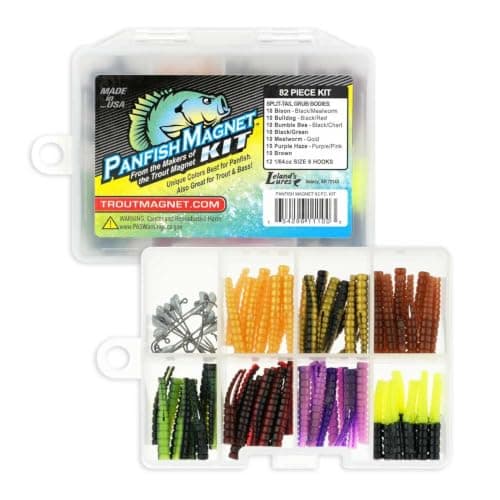
Panfish have small mouths, and that fact beats every other consideration. A bluegill cannot engulf a two-inch lure, so it pecks at it and you miss the bite; it can inhale a one-inch soft plastic body on a small jig head whole. This kit is eighty-two of those bodies with the heads to rig them, which is a full season of fishing for the price of two coffee shop visits. The technique is also the simplest in fishing: cast, count it down, twitch it once, wait.
Best for: Best overall — tiny soft plastic on a tiny jig head - 2
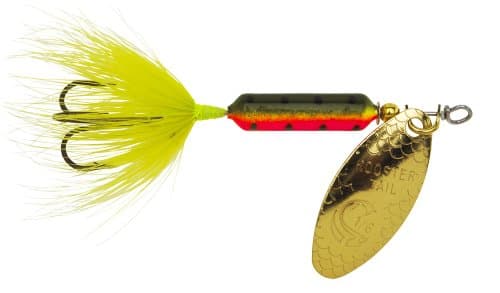
A soft plastic fished slowly is the better lure once you know where the fish are. A small inline spinner is how you find out. At 1/16 oz this casts on an ultralight rod, runs shallow, and the hackle tail plus spinning blade gives panfish both flash and a target. Fan-cast a backwater, a weed edge or a deep creek bend, and when one hits, slow down and work that spot properly. It is also one of the best creek trout lures ever made, which makes it the most versatile thing here.
Best for: Best search lure — covers water and finds the school - 3
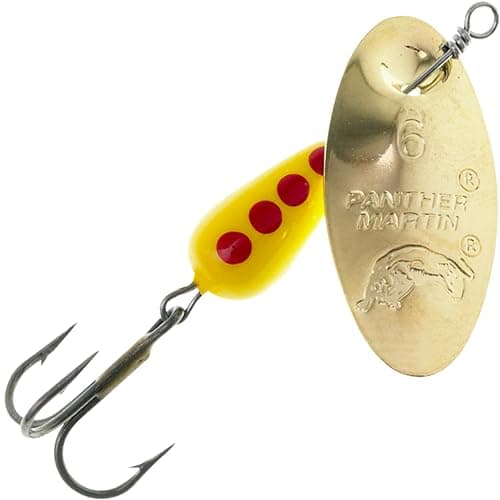
The cheapest single item on this page and a lure that has been catching panfish and trout since long before anyone wrote a listing for it. Panther Martin's blade is mounted directly on the shaft, so it starts turning at a slower retrieve than most spinners, which matters in the near-still water where bluegill and crappie hold. At 1/8 oz it is a touch heavier than the Rooster Tail, so it casts further and gets deeper in a current seam.
Best for: Budget pick — the cheapest lure here that catches on its own - 4
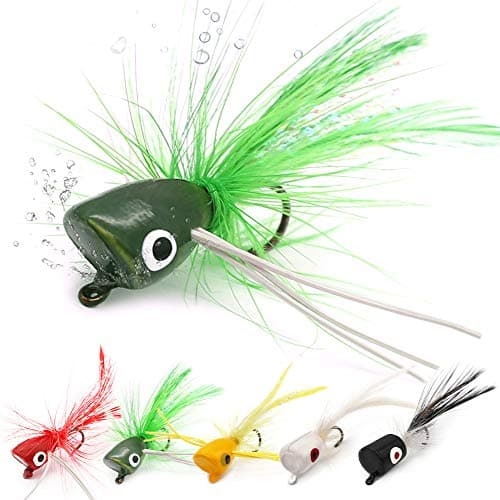
From June to September, panfish feed up. A foam popper twitched across a flat is the most entertaining fishing available anywhere, because the strike is visible, violent and constant — a bluegill will hit the same popper four times in a row. These are tied on small hooks for fly rods, but they also fish beautifully on a light spinning rod with a small float a few feet above them, which is how most people will use them.
Best for: Best summer evening lure — surface takes you can watch - 5
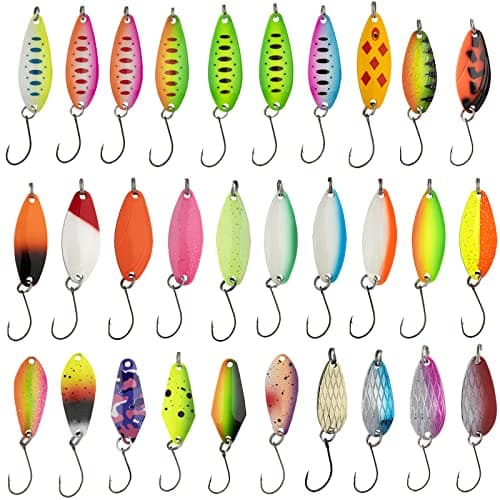
Crappie behave differently from bluegill: they sit deeper, suspend off structure and chase a falling lure. A small spoon flutters as it drops, which is exactly the trigger, and thirty of them means you can lose a dozen in a brush pile and keep fishing. Spoons also cast heavier than their size suggests, so they get you down to the fish in a deep creek bend or a pond channel without added weight.
Best for: Best for crappie in deeper water — flutter and fall
| # | Product | Best for | Score | Price |
|---|---|---|---|---|
| 1 | Trout Magnet Panfish Magnet Kit, 82-Piece Panfish have small mouths, and that fact beats every other consideration. A bluegill cannot engulf a two-inch lure, so it pecks at it and you miss the bite; it can inhale a one-inch soft plastic body on a small jig head whole. This kit is eighty-two of those bodies with the heads to rig them, which is a full season of fishing for the price of two coffee shop visits. The technique is also the simplest in fishing: cast, count it down, twitch it once, wait. | Best overall — tiny soft plastic on a tiny jig head | — | $14.99View on Amazon#ad |
| 2 | Wordens Original Rooster Tail Spinner, 1/16 oz A soft plastic fished slowly is the better lure once you know where the fish are. A small inline spinner is how you find out. At 1/16 oz this casts on an ultralight rod, runs shallow, and the hackle tail plus spinning blade gives panfish both flash and a target. Fan-cast a backwater, a weed edge or a deep creek bend, and when one hits, slow down and work that spot properly. It is also one of the best creek trout lures ever made, which makes it the most versatile thing here. | Best search lure — covers water and finds the school | — | $9.99View on Amazon#ad |
| 3 | Panther Martin Classic Regular Gold/Yellow Inline Spinner, 1/8 oz The cheapest single item on this page and a lure that has been catching panfish and trout since long before anyone wrote a listing for it. Panther Martin's blade is mounted directly on the shaft, so it starts turning at a slower retrieve than most spinners, which matters in the near-still water where bluegill and crappie hold. At 1/8 oz it is a touch heavier than the Rooster Tail, so it casts further and gets deeper in a current seam. | Budget pick — the cheapest lure here that catches on its own | — | $5.89View on Amazon#ad |
| 4 | Fly Fishing Poppers Kit for Crappie, Bluegill and Panfish From June to September, panfish feed up. A foam popper twitched across a flat is the most entertaining fishing available anywhere, because the strike is visible, violent and constant — a bluegill will hit the same popper four times in a row. These are tied on small hooks for fly rods, but they also fish beautifully on a light spinning rod with a small float a few feet above them, which is how most people will use them. | Best summer evening lure — surface takes you can watch | — | $10.39View on Amazon#ad |
| 5 | QualyQualy Fishing Spoon Assortment, 30-Piece Trout Lure Set Crappie behave differently from bluegill: they sit deeper, suspend off structure and chase a falling lure. A small spoon flutters as it drops, which is exactly the trigger, and thirty of them means you can lose a dozen in a brush pile and keep fishing. Spoons also cast heavier than their size suggests, so they get you down to the fish in a deep creek bend or a pond channel without added weight. | Best for crappie in deeper water — flutter and fall | — | $23.74View on Amazon#ad |
The best panfish lure is a one-inch soft plastic body on a small jig head — the Panfish Magnet kit is eighty-two of them with the heads included, and it out-fishes everything else here because it is the only lure small enough for a panfish to swallow whole. To find fish across unfamiliar water first, tie on a 1/16 oz inline spinner. The budget pick is the Panther Martin classic spinner, the cheapest single lure on the page and one that catches on its own merits rather than as a compromise. Prices come from our live feed, with the as-of date under the comparison table.
Panfish is a catch-all for bluegill, pumpkinseed, redear, green sunfish and crappie — the small, abundant, willing fish that live in almost every creek, backwater, farm pond and millpond in the country. They are the species most American anglers actually caught first, and on a brushy creek they are often more numerous than the trout.
Size is the whole game
A bluegill’s mouth is about the diameter of a dime.It cannot engulf a two-inch crankbait, so it attacks the tail, misses the hook and you register a tap you cannot convert. Shrink the lure to an inch and the same fish inhales it. Nearly every complaint about panfish “biting but not hooking up” is a lure-size problem, not a hook-set problem.
| Lure size | What it catches | The problem it has |
|---|---|---|
| Under 1 in / 1/64 to 1/32 oz | Everything, including small sunfish | Barely castable without ultralight tackle |
| 1 to 1.5 in / 1/16 oz | The sweet spot for bluegill and crappie | None, really — this is the target |
| 2 in / 1/8 oz | Bigger crappie, bass, trout | Too much for hand-sized bluegill to take properly |
| Over 2 in | Bass and pickerel | Panfish peck at it and you miss every bite |
Small lures need light tackle, and that is the real cost of this page. You cannot cast a 1/32 oz jig on a medium rod — there is not enough mass to load the blank. An ultralight rod rated for 1/32 to 1/4 oz is the enabling piece of equipment, which is why we rank it separately in the best panfish rods.
Bluegill, crappie and sunfish want different things
Bluegill: shallow, structure-hugging, and they eat on the drop. Find a weed edge, a submerged log or a shaded undercut bank in two to five feet of water. Cast past it, let a small jig sink on a slack line, and most takes happen while it falls. Bluegill hold tight to cover and will not move far, so accuracy matters more than distance.
Crappie: deeper, suspended, and they chase. Crappie sit off structure in open water, often several feet down over much deeper water, and they feed upward. A spoon that flutters down past them or a jig retrieved slowly above them is the presentation. They also school hard — catch one and there are forty more at the same depth, so count your lure down the same number of seconds every cast.
Sunfish on a creek: anywhere there is slack water and shade. In the creeks this site is about, panfish occupy exactly the water trout will not: the slow pool below a gravel bar, the backwater behind a deadfall, the warm shallow flat. That is useful, because it means a creek trip rarely blanks — if the trout are off, the sunfish in the slack water are not.
One rig, both species, zero thought
The five compared
| Lure | Type | Buy it if |
|---|---|---|
| Panfish Magnet kit, 82-piece | Micro soft plastic + jig heads | You want the single most effective option |
| Rooster Tail 1/16 oz | Inline spinner | You need to find fish on unfamiliar water |
| Panther Martin 1/8 oz | Inline spinner | You want the cheapest lure that works alone |
| Panfish popper kit | Foam surface bugs | It is summer and you want visible strikes |
| QualyQualy spoon set, 30-piece | Casting spoons | You are after crappie in deeper water |
Trout share the same jigs, at a lighter head weight. If the creek you fish for panfish also holds trout, the same soft plastics and marabou jigs work on both — the difference is dropping the head weight so the jig drifts rather than swims. The weight ladder and the trout-specific picks are in the best trout jigs.
The rod and line that make it work
An ultralight rod, a small reel and 4 lb line. That is the whole system, and it costs less than most single fly rods. The rod needs to be rated down to about 1/32 oz so it can actually throw these lures; the reel needs to be a 500 or 1000 size so it balances the rod rather than fighting it. Our picks for each are in the best ultralight spinning rods and the best ultralight spinning reels, and a matched pair is cheaper than buying separately — the combo roundup covers that.
Add a small float if you want the easy version. A fixed float two to four feet above a jig turns this into the most forgiving fishing there is: you cast, the float sits, the jig hangs in the strike zone without you doing anything, and the float goes under when a fish takes. It is also how to fish the poppers on spinning gear.
Pinch the barbs if you are releasing fish. Panfish are easy to catch in numbers and a barbless hook comes out in a second, which matters when you are unhooking thirty fish an afternoon. A pair of forceps makes it faster still — the small-tools short list is in the fly fishing tool kits roundup.
Where panfish sit in a creek
Slack water next to current, always. A panfish will not hold in a fast chute the way a trout does. Look for the inside of a bend where the current slows, the pool below a riffle, the eddy behind a rock or root wad, and the still margin along an undercut bank. If the surface is smooth and shaded, fish it.
Woody cover beats everything else. A fallen tree in a creek pool holds more panfish than a hundred yards of featureless bank. Cast along the trunk rather than over it, work the shaded side, and expect to lose lures — which is precisely why the assortments on this page are better value than single premium lures.
Warm water is a feature here, not a problem. The stretches of creek that get too warm for trout in August are full of panfish, and they feed hardest in exactly that water. If your trout fishing has gone quiet in high summer, walk downstream to the slower warmer water instead of going home — the same logic that drives the summer fly selection, applied to a different species.
Through the year
Spring: shallow and aggressive. As water warms into the sixties, bluegill move onto shallow flats to spawn and become almost comically easy to catch. Crappie move shallow slightly earlier. This is the best six weeks of the panfish year and a jig or small spinner is all you need.
Summer: early, late, and on top. Midday sun pushes fish into shade and depth. Fish the first and last two hours, work poppers on the surface in the evening, and look under overhanging brush rather than in open water.
Autumn and winter: deeper, slower, smaller. Fish drop into the deepest water available and feeding windows shorten. The answer is the smallest jig you can cast, fished as slowly as you can stand, with long pauses. Crappie stay catchable all winter; bluegill get harder. A spoon that flutters on the fall, like the assortment above, comes into its own here. If you are fishing the same creek for trout at the same time, the lure overlap is almost total — the best trout lures and the creek lure roundup share four of these five families.
The picks in detail
Trout Magnet Panfish Magnet Kit, 82-Piece
Best for: Best overall — tiny soft plastic on a tiny jig head
Panfish have small mouths, and that fact beats every other consideration. A bluegill cannot engulf a two-inch lure, so it pecks at it and you miss the bite; it can inhale a one-inch soft plastic body on a small jig head whole. This kit is eighty-two of those bodies with the heads to rig them, which is a full season of fishing for the price of two coffee shop visits. The technique is also the simplest in fishing: cast, count it down, twitch it once, wait.
- Count
- 82 pieces
- Type
- Micro soft plastic + jig heads
- Species
- Bluegill, crappie, sunfish, trout
- Sized for a panfish mouth, which is the whole problem solved
- Includes the jig heads, so it is a complete rig
- Works on creek trout too — nothing is wasted
- Soft plastic tears and needs replacing after fish
- Needs a light rod to cast — too small for a medium spinning setup
Wordens Original Rooster Tail Spinner, 1/16 oz
Best for: Best search lure — covers water and finds the school
A soft plastic fished slowly is the better lure once you know where the fish are. A small inline spinner is how you find out. At 1/16 oz this casts on an ultralight rod, runs shallow, and the hackle tail plus spinning blade gives panfish both flash and a target. Fan-cast a backwater, a weed edge or a deep creek bend, and when one hits, slow down and work that spot properly. It is also one of the best creek trout lures ever made, which makes it the most versatile thing here.
- Weight
- 1/16 oz
- Type
- Inline spinner
- Action
- Blade flash plus hackle tail
- Finds fish fast across unfamiliar water
- Castable on genuinely light tackle
- Catches trout and panfish equally
- Treble hook is harder on small fish you intend to release
- Spins line up without a swivel
Panther Martin Classic Regular Gold/Yellow Inline Spinner, 1/8 oz
Best for: Budget pick — the cheapest lure here that catches on its own
The cheapest single item on this page and a lure that has been catching panfish and trout since long before anyone wrote a listing for it. Panther Martin's blade is mounted directly on the shaft, so it starts turning at a slower retrieve than most spinners, which matters in the near-still water where bluegill and crappie hold. At 1/8 oz it is a touch heavier than the Rooster Tail, so it casts further and gets deeper in a current seam.
- Weight
- 1/8 oz
- Type
- Inline spinner
- Finish
- Gold / yellow
- Lowest price on the page
- Blade turns at very slow retrieves
- Heavy enough to cast into wind and reach depth
- 1/8 oz is at the top of what an ultralight rod wants
- Single color, so no spread in one purchase
Fly Fishing Poppers Kit for Crappie, Bluegill and Panfish
Best for: Best summer evening lure — surface takes you can watch
From June to September, panfish feed up. A foam popper twitched across a flat is the most entertaining fishing available anywhere, because the strike is visible, violent and constant — a bluegill will hit the same popper four times in a row. These are tied on small hooks for fly rods, but they also fish beautifully on a light spinning rod with a small float a few feet above them, which is how most people will use them.
- Type
- Foam popping bugs
- Fish on
- Fly rod, or spinning rod with a float
- Season
- Late spring through summer
- Surface strikes you see rather than feel
- Almost unmissable fishing for a beginner or a child
- Cheap enough to lose in brush without caring
- Seasonal — dead water in cold months
- Needs a float or a fly rod to cast on spinning gear
QualyQualy Fishing Spoon Assortment, 30-Piece Trout Lure Set
Best for: Best for crappie in deeper water — flutter and fall
Crappie behave differently from bluegill: they sit deeper, suspend off structure and chase a falling lure. A small spoon flutters as it drops, which is exactly the trigger, and thirty of them means you can lose a dozen in a brush pile and keep fishing. Spoons also cast heavier than their size suggests, so they get you down to the fish in a deep creek bend or a pond channel without added weight.
- Count
- 30 pieces
- Type
- Casting spoons
- Best for
- Crappie and deeper panfish
- Fluttering fall is the main crappie trigger
- Thirty lures, so brush piles stop being expensive
- Casts well for its size, reaching depth without weight
- Assortment-grade hooks and split rings
- Less effective than soft plastic on hand-sized bluegill
Prices shown are from Amazon as of November 20, 2026 and change often — the button always goes to the current listing. Some links may earn us a commission at no extra cost to you. How this works.
Frequently asked questions
What is the best lure for panfish?
A one-inch soft plastic body on a 1/32 or 1/16 oz jig head. Panfish have very small mouths, so a lure they can swallow whole converts bites into hooked fish, where a bigger lure gets pecked at and missed. Cast it, let it sink on a slack line, and twitch it slowly — most takes happen on the drop.
What size lures do bluegill like?
About one to one and a half inches, or 1/32 to 1/16 oz in jig weight. A bluegill's mouth is roughly the diameter of a dime, so anything over two inches is too big to take properly. Size matters far more than color or pattern with panfish.
Do crappie and bluegill take the same lures?
Largely yes, but at different depths. Bluegill hold shallow and tight to cover such as weed edges and sunken logs, and eat on the drop. Crappie suspend deeper in open water off structure and feed upward, which is why a fluttering spoon or a counted-down jig works better for them.
Can I catch panfish on trout gear?
Yes, and it is the same gear. An ultralight spinning rod rated for 1/32 to 1/4 oz lures with a 500 or 1000 size reel and 4 lb line handles creek trout and panfish identically. Several lures here, including the inline spinners and the soft plastic jigs, catch both species.
When is the best time to fish for panfish?
Late spring, when water warms into the sixties and bluegill move onto shallow flats to spawn. In summer, fish the first and last two hours of daylight and work surface poppers in the evening. Crappie stay catchable through winter in the deepest water available, fished slowly.
Sources
Keep reading
Not sure where to start?
The beginner gear guide walks you through exactly what a new stream angler needs — the six essentials first, nice-to-haves later, with one safe-default pick per category.