Flies & Lures · Roundup
The Best Trout Jigs
A jig is the one lure that fishes at the speed of the current instead of across it, which is why it catches stream trout on days when a spinner gets refused. The whole decision is weight — and almost every angler who says jigs do not work for them is fishing one four times too heavy.
Disclosure: Creek Cover is reader-supported. If you buy through our links we may earn a commission, at no extra cost to you. It never changes which pick we tell a new angler to start with. Full disclosure.
Quick picks at a glance
Tap a pick to read the full write-up, or the price button to check it on Amazon.
- 1
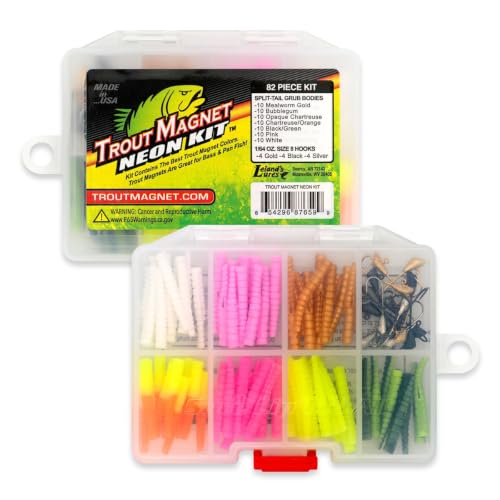
The best jig purchase on the page and the only one that arrives as a finished system. Seventy split-tail grub bodies and twelve jig heads, and the heads are the part that matters: at 1/64 ounce they are lighter than most anglers have ever tied on, which is exactly why the presentation works. A jig that light drifts with the current rather than swinging across it, which is how a stream trout expects food to arrive. The neon colors are the stained-water set rather than the clear-water set, which is worth knowing before you buy.
Best for: Best overall — the complete 1/64 oz system in one box - 2
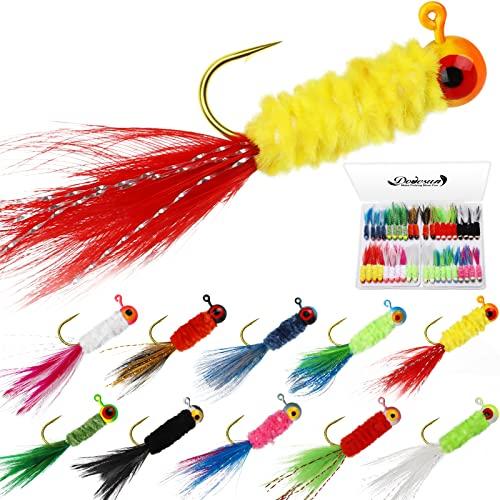
The pick for the other half of jig fishing, which is hair rather than plastic. Marabou does something no soft plastic can: it pulses and opens on a dead stop, so a hair jig suspended under a float is still moving while a plastic grub is inert. Forty jigs across ten colors at 1/16 ounce is a lot of fishing for the money, and ten colors is genuinely useful here because jig color matters more in clear water than most lure categories. The 1/16 ounce weight is a step up from the Trout Magnet heads, which suits deeper pools and a bit of current.
Best for: Best hair jigs — marabou breathes when the jig is sitting still - 3
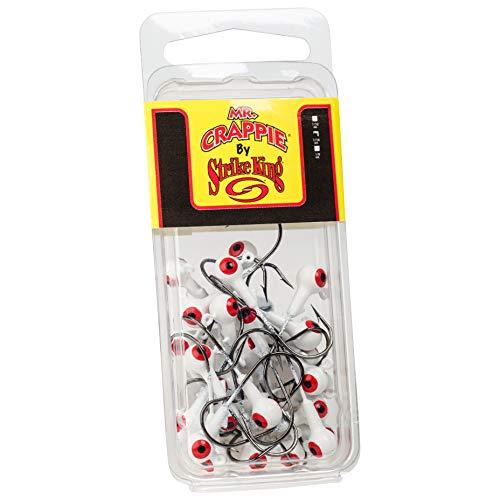
The pick if you already own soft plastics and what you are short of is decent heads. Bare jig heads are the unglamorous half of jig fishing and the half people cheap out on, which is a mistake: the hook is the only component between you and the fish, and a soft wire hook on a 1/16 ounce head will flex open on a good trout. Strike King is a mainstream lure brand rather than an assortment seller, and a 25-pack of one weight in one color is what a creek angler actually burns through across a season.
Best for: Best bare jig heads — the hook you actually want under a soft plastic - 4
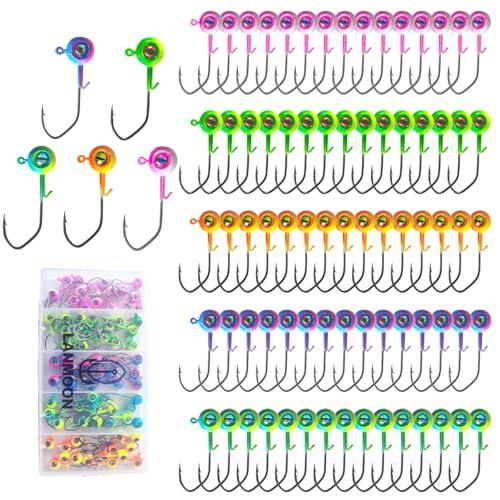
The pick that teaches the thing this whole page is about. Seventy-five heads across 1/32, 1/16 and 1/8 ounce means you can fish the same body in a shallow pocket, a waist-deep pool and a pushy run without changing anything else — and the moment you do that for a day, the weight-is-everything argument stops being theory. Per head it is the cheapest way to cover the range. The honest caveat is that unbranded assortment hooks are inconsistent: check the point and the gap on each one before you tie it on.
Best for: Best weight range — three weights in one box, which is the real lesson - 5
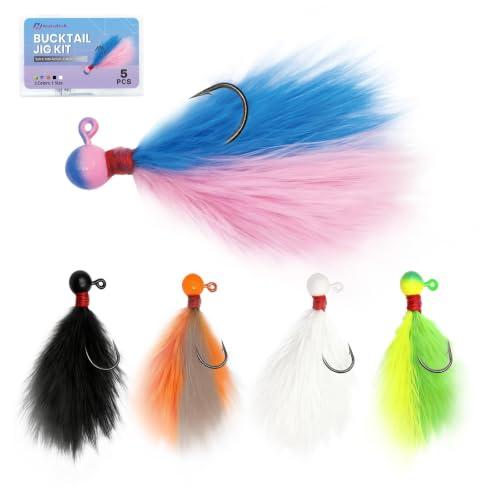
The cheapest pick on the page and a surprisingly sensible first hair-jig purchase. Five hand-tied marabou jigs in mixed colors spanning 1/64 to 1/8 ounce, which means it covers the whole useful creek range in one small packet — including the 1/64 ounce weight that almost nothing else here offers in hair. Five jigs is not many and they will not last if your creek has brush, but as a way to find out whether you prefer hair to plastic before committing to a 40-piece box, it is the right size of experiment.
Best for: Budget pick — hand-tied hair across the full creek weight range
| # | Product | Best for | Score | Price |
|---|---|---|---|---|
| 1 | Trout Magnet 82pc Neon Kit The best jig purchase on the page and the only one that arrives as a finished system. Seventy split-tail grub bodies and twelve jig heads, and the heads are the part that matters: at 1/64 ounce they are lighter than most anglers have ever tied on, which is exactly why the presentation works. A jig that light drifts with the current rather than swinging across it, which is how a stream trout expects food to arrive. The neon colors are the stained-water set rather than the clear-water set, which is worth knowing before you buy. | Best overall — the complete 1/64 oz system in one box | — | $14.99View on Amazon#ad |
| 2 | Dovesun Crappie Jigs with Feather Marabou, 40 Pieces, 1/16 oz, 10 Colors The pick for the other half of jig fishing, which is hair rather than plastic. Marabou does something no soft plastic can: it pulses and opens on a dead stop, so a hair jig suspended under a float is still moving while a plastic grub is inert. Forty jigs across ten colors at 1/16 ounce is a lot of fishing for the money, and ten colors is genuinely useful here because jig color matters more in clear water than most lure categories. The 1/16 ounce weight is a step up from the Trout Magnet heads, which suits deeper pools and a bit of current. | Best hair jigs — marabou breathes when the jig is sitting still | — | $17.99View on Amazon#ad |
| 3 | Strike King Mr. Crappie Jig Head, 1/16 oz, 25-Pack The pick if you already own soft plastics and what you are short of is decent heads. Bare jig heads are the unglamorous half of jig fishing and the half people cheap out on, which is a mistake: the hook is the only component between you and the fish, and a soft wire hook on a 1/16 ounce head will flex open on a good trout. Strike King is a mainstream lure brand rather than an assortment seller, and a 25-pack of one weight in one color is what a creek angler actually burns through across a season. | Best bare jig heads — the hook you actually want under a soft plastic | — | $12.50View on Amazon#ad |
| 4 | Crappie Jig Heads, 75-Pack, 1/32 / 1/16 / 1/8 oz The pick that teaches the thing this whole page is about. Seventy-five heads across 1/32, 1/16 and 1/8 ounce means you can fish the same body in a shallow pocket, a waist-deep pool and a pushy run without changing anything else — and the moment you do that for a day, the weight-is-everything argument stops being theory. Per head it is the cheapest way to cover the range. The honest caveat is that unbranded assortment hooks are inconsistent: check the point and the gap on each one before you tie it on. | Best weight range — three weights in one box, which is the real lesson | — | $16.99View on Amazon#ad |
| 5 | Natufish Hand-Tied Marabou Jigs, 5 Pieces, 1/64 to 1/8 oz The cheapest pick on the page and a surprisingly sensible first hair-jig purchase. Five hand-tied marabou jigs in mixed colors spanning 1/64 to 1/8 ounce, which means it covers the whole useful creek range in one small packet — including the 1/64 ounce weight that almost nothing else here offers in hair. Five jigs is not many and they will not last if your creek has brush, but as a way to find out whether you prefer hair to plastic before committing to a 40-piece box, it is the right size of experiment. | Budget pick — hand-tied hair across the full creek weight range | — | $5.91View on Amazon#ad |
The best trout jig for creeks and small streams is the Trout Magnet 82pc Neon Kit — grub bodies and 1/64 ounce heads in one box, which is the weight that drifts at current speed instead of dragging across the bottom. If you want hair rather than plastic, the Dovesun 40-piece marabou assortment keeps moving when the jig is sitting still. The budget pick is the Natufish 5-piece hand-tied set, which spans the whole useful weight range in one packet. Prices on this page come from our live feed and are date-stamped beneath the comparison table — none are typed into this copy.
One thing to get straight before the list: "trout jig" covers two different products. Some are finished jigs — a weighted head with hair or plastic already on it. Some are bare heads you dress yourself. Three of the five picks here are one, two are the other, and which you want depends entirely on whether you already own soft plastics.
Weight is the whole decision
A jig is a lure that fishes vertically in moving water, and its weight decides whether that works. Too heavy and it plows the bottom, snags, and swings unnaturally across the current. Too light and it never reaches the fish. Every other variable on this page — color, hair, hook brand — is a rounding error next to this one.
| Weight | Water it suits | What it does | Problem if misapplied |
|---|---|---|---|
| 1/64 oz | Shallow pockets, slow clear pools, spooky fish | Drifts at close to current speed | Will not reach bottom in any real current |
| 1/32 oz | Knee-deep runs, moderate current | Ticks bottom on a controlled drift | Still light for a deep pool |
| 1/16 oz | Waist-deep pools, pushy runs, wind | Gets down fast, casts properly | Plows and snags in shallow water |
| 1/8 oz | Deep holes, high water, bigger streams | Holds depth in heavy flow | Far too much weight for a small creek |
| 1/4 oz and up | Lakes and rivers, not creeks | Distance and depth | Wrong tool for small water entirely |
If you fish one creek and buy one weight, buy 1/32 ounce. If you buy two, add 1/64. That covers most small-stream situations in the country. The reason anglers conclude jigs do not work is almost always a 1/8 ounce head bought because it was on the peg, fished in water where it drags. Weight is also why a jig and a spinner are not interchangeable — that comparison is in the best trout spinners.
What we have not done
Hair or soft plastic
The real split in trout jigs is what is tied or threaded on the head, and the two behave differently when the jig stops moving. That matters more than it sounds, because a lot of jig fishing on a creek is the jig NOT moving — suspended in a pool, hanging in a current seam, sitting under a float.
| Marabou / hair | Soft plastic | |
|---|---|---|
| On a dead stop | Still pulsing and breathing | Inert |
| Durability | Survives many fish, gets matted | Tears, needs replacing |
| Cost per fish | Lower over time | Higher, but each piece is pennies |
| Scent options | None | Scented versions available |
| Clear water | Subtler, usually better | Fine in the right color |
| Replacing it streamside | Tie on a new jig | Thread a new body on the same head |
Own some of each and the decision makes itself on the water. Hair for clear, low, pressured water and for suspending under a float; plastic for stained water, for scented presentations and for when you want a cheap body you do not mind losing. The scented soft-plastic end of this overlaps with trout bait, and the substitutes for one well-known grub system specifically are in Trout Magnet alternatives.
The head is the hook
A jig head is a hook with lead on it, and the hook is the only part of your tackle that has to not fail. This is where assortment boxes earn their reputation. A soft-wire hook on a cheap head will flex open under pressure from a decent fish, and on light line you cannot compensate by pulling harder.
Check three things on any head before you tie it on. Is the point sharp against a thumbnail — it should catch, not slide. Is the gap between point and shank wide enough to clear the body you are threading on. And is the eye closed, because an open eye on light line is a lost fish rather than an inconvenience. Thirty seconds of sorting a new packet saves a season of unexplained lost fish.
Brand-name heads cost more per piece and are more consistent; assortment boxes cost less and are not. Both are on this page deliberately — the Strike King 25-pack for consistency in one weight, the 75-piece box for the weight range. If you only buy one, buy the weight range and sort the hooks.
The five compared
| Pick | What it is | Weights | Buy it if |
|---|---|---|---|
| Trout Magnet 82pc Neon Kit | Bodies + heads, complete system | 1/64 oz | You want to start fishing jigs today |
| Dovesun 40pc marabou | Finished hair jigs | 1/16 oz | You want hair, and variety in color |
| Strike King Mr. Crappie heads | Bare heads, brand-name hooks | 1/16 oz | You own plastics and want decent hooks |
| 75-piece head assortment | Bare heads, three weights | 1/32, 1/16, 1/8 oz | You want to learn the weight lesson cheaply |
| Natufish 5pc hand-tied | Finished hair jigs | 1/64 to 1/8 oz | You want to try hair before committing |
Two finished-jig picks, two bare-head picks, one complete system. That is deliberate: a roundup that only ranked finished jigs would be useless to the many anglers whose actual shortage is heads, and one that only ranked heads would be useless to someone starting from nothing.
How to fish a trout jig
Cast upstream, let it sink, and do almost nothing — that is the technique, and the doing almost nothing is the hard part. A jig works because it behaves like drifting food. Every crank of the reel handle makes it behave less like food. Keep a slight tension on the line so you can feel a take, and let the current do the work.
| Water | Cast | What to do | Weight |
|---|---|---|---|
| Shallow pocket | Up and across | Dead drift, rod tip high, no retrieve | 1/64 oz |
| Knee-deep run | Straight upstream | Let it tick bottom, lift over rocks | 1/32 oz |
| Deep pool | Upstream, count it down | Hop it twice, then let it hang | 1/16 oz |
| Undercut bank | Tight to the bank | Swing it along the seam, no retrieve | 1/32 to 1/16 oz |
| Fast chute | Above the chute | Short drift, expect a fast take | 1/16 oz |
The take is subtle and often just a stop. A trout taking a drifting jig rarely hits it — the line simply pauses, or ticks differently. If you set the hook every time the drift changes you will hit rocks a lot and fish occasionally, which is the correct ratio to start with. The broader approach to reading small water is in the creek fishing gear guide.
The float rig that makes it easy
Put a small float two to four feet above the jig and the whole technique gets easier. The float does three jobs at once: it holds the jig at a fixed depth instead of letting it sink into rocks, it shows you a take you would never feel on a near-weightless rig, and it lets a very light jig fish water that would otherwise need a heavier one.
This is the same idea a fly angler uses with a nymph and an indicator, done on spinning gear. Set the depth so the jig rides just above the bottom, cast upstream of the fish, and watch the float. When it stops, hesitates or dips, lift the rod — do not strike hard, because 4-pound line and a small hook do not need it. The fly-rod version of the same presentation is covered in the best nymphs for trout, and the straight comparison between the two approaches is in flies vs lures for creek trout.
In stocked creeks the float rig is close to unfair. Hatchery trout are conditioned to small, slow, suspended food, which is exactly what a jig under a float is. That is also the honest reason it works less well on wild fish in clear low water, where a drifting unweighted presentation and a careful approach matter more than the lure.
The gear this assumes
Nothing on this page casts on a medium-power rod, and that is the most common reason jigs get abandoned. A 1/32 ounce jig weighs almost nothing. It will not load a rod built for 1/4 ounce lures, which means it will not cast, which means the fish never see it. An ultralight rod in the six to seven foot range is the tool — the field is in the best ultralight spinning rods, and what the power rating actually means is in ultralight vs light power.
Four-pound line, and that is not a stunt. Heavy line has diameter, diameter catches current, and current drags a light jig out of the seam you placed it in. This is the single easiest thing to fix if your jigs are not working — the pound test, material and color decisions are in the best line for trout fishing.
The reel is a line holder, so buy cheaply and spend the difference on jigs. A 500 or 1000 size that holds light line without twisting it is the whole requirement, and that is available well under fifty dollars — the band page is the best ultralight spinning reels under $50. If you are fishing cold water while you learn the drift, the wader band pages are waders under $300 and the best cheap waders.
The picks in detail
Trout Magnet 82pc Neon Kit
Best for: Best overall — the complete 1/64 oz system in one box
The best jig purchase on the page and the only one that arrives as a finished system. Seventy split-tail grub bodies and twelve jig heads, and the heads are the part that matters: at 1/64 ounce they are lighter than most anglers have ever tied on, which is exactly why the presentation works. A jig that light drifts with the current rather than swinging across it, which is how a stream trout expects food to arrive. The neon colors are the stained-water set rather than the clear-water set, which is worth knowing before you buy.
- Contents
- 70 grub bodies + 12 jig heads
- Head weight
- 1/64 oz
- Colors
- Neon / high-visibility set
- Complete system — nothing else to buy or match up
- 1/64 oz is the correct weight for creek trout and rarely stocked elsewhere
- Soft bodies are cheap to replace after a fish chews one
- Neon colors are a stained-water choice, not a clear-water one
- Soft plastic tears and needs replacing more often than hair
Dovesun Crappie Jigs with Feather Marabou, 40 Pieces, 1/16 oz, 10 Colors
Best for: Best hair jigs — marabou breathes when the jig is sitting still
The pick for the other half of jig fishing, which is hair rather than plastic. Marabou does something no soft plastic can: it pulses and opens on a dead stop, so a hair jig suspended under a float is still moving while a plastic grub is inert. Forty jigs across ten colors at 1/16 ounce is a lot of fishing for the money, and ten colors is genuinely useful here because jig color matters more in clear water than most lure categories. The 1/16 ounce weight is a step up from the Trout Magnet heads, which suits deeper pools and a bit of current.
- Type
- Hand-tied marabou feather jigs
- Weight
- 1/16 oz
- Contents
- 40 jigs, 10 colors
- Marabou keeps moving when the jig is motionless
- Ten colors covers clear water and stained water
- Forty jigs means you can afford to lose them in brush
- 1/16 oz is too heavy for very shallow, slow pools
- Hooks on budget assortments vary — check the point on each one
Strike King Mr. Crappie Jig Head, 1/16 oz, 25-Pack
Best for: Best bare jig heads — the hook you actually want under a soft plastic
The pick if you already own soft plastics and what you are short of is decent heads. Bare jig heads are the unglamorous half of jig fishing and the half people cheap out on, which is a mistake: the hook is the only component between you and the fish, and a soft wire hook on a 1/16 ounce head will flex open on a good trout. Strike King is a mainstream lure brand rather than an assortment seller, and a 25-pack of one weight in one color is what a creek angler actually burns through across a season.
- Type
- Bare jig heads
- Weight
- 1/16 oz
- Contents
- 25-pack, single color
- Brand-name hooks rather than unbranded assortment wire
- One weight, 25 of them — the way you actually use heads
- Pairs with any soft plastic you already own
- Heads only — you supply the bodies
- Single weight, so no flexibility as depth changes
Crappie Jig Heads, 75-Pack, 1/32 / 1/16 / 1/8 oz
Best for: Best weight range — three weights in one box, which is the real lesson
The pick that teaches the thing this whole page is about. Seventy-five heads across 1/32, 1/16 and 1/8 ounce means you can fish the same body in a shallow pocket, a waist-deep pool and a pushy run without changing anything else — and the moment you do that for a day, the weight-is-everything argument stops being theory. Per head it is the cheapest way to cover the range. The honest caveat is that unbranded assortment hooks are inconsistent: check the point and the gap on each one before you tie it on.
- Type
- Bare jig heads, assortment
- Weights
- 1/32, 1/16 and 1/8 oz
- Contents
- 75 heads
- Three weights, which is how you match depth and current
- Cheapest cost per head on the page
- Enough quantity to last several seasons on a creek
- Unbranded hooks — quality varies piece to piece
- No bodies included, and no 1/64 oz option
Natufish Hand-Tied Marabou Jigs, 5 Pieces, 1/64 to 1/8 oz
Best for: Budget pick — hand-tied hair across the full creek weight range
The cheapest pick on the page and a surprisingly sensible first hair-jig purchase. Five hand-tied marabou jigs in mixed colors spanning 1/64 to 1/8 ounce, which means it covers the whole useful creek range in one small packet — including the 1/64 ounce weight that almost nothing else here offers in hair. Five jigs is not many and they will not last if your creek has brush, but as a way to find out whether you prefer hair to plastic before committing to a 40-piece box, it is the right size of experiment.
- Type
- Hand-tied marabou jigs
- Weights
- 1/64 to 1/8 oz, mixed
- Contents
- 5 jigs, mixed colors
- Lowest price here by a clear margin
- Spans the full creek weight range, including 1/64 oz in hair
- A cheap way to test hair against plastic
- Only five jigs — one brushy afternoon can end them
- Mixed colors means you do not choose what arrives
Prices shown are from Amazon as of November 20, 2026 and change often — the button always goes to the current listing. Some links may earn us a commission at no extra cost to you. How this works.
Frequently asked questions
What size jig is best for trout?
1/32 ounce if you buy one weight, with 1/64 ounce added if you buy two. Those cover most small-stream situations. A 1/16 ounce head suits waist-deep pools and pushy runs, and 1/8 ounce is for high water or bigger streams. Most people who conclude jigs do not work for trout are fishing a head four times heavier than the water calls for.
Are hair jigs or plastic jigs better for trout?
They do different things. Marabou keeps pulsing when the jig is motionless, which makes it the better choice suspended under a float or hanging in a current seam, and it survives more fish. Soft plastic is cheaper per piece, comes in scented versions and is easy to replace on the same head. Owning some of each settles the question on the water.
How do you fish a jig for trout in a creek?
Cast upstream or up-and-across, let it sink, and do almost nothing — keep slight tension so you can feel a take and let the current carry it like drifting food. Every turn of the reel handle makes it look less like food. The take is usually just a stop or a change in the drift rather than a hit.
Do you need a float to fish a trout jig?
No, but it makes the technique much easier. A small float two to four feet above the jig holds it at a fixed depth instead of letting it sink into rocks, shows a take you would not feel on a near-weightless rig, and lets a very light jig fish water that would otherwise need a heavier one. It is the spinning-gear version of a nymph under an indicator.
What rod do you need to cast a 1/32 oz jig?
An ultralight spinning rod, typically six to seven feet, rated for roughly 1/32 to 1/4 ounce lures with 2 to 6 pound line. A medium-power rod will not load at these weights, so the jig will not cast properly — which is the most common reason anglers give up on jigs rather than any fault in the lure.
Are cheap jig head assortments any good?
They are good value and inconsistent, which is a fair trade if you sort them. Check each head before tying it on: the point should catch on a thumbnail rather than slide, the gap should clear whatever body you are threading on, and the eye should be fully closed. Brand-name heads cost more per piece and need less sorting.
Sources
Keep reading
Not sure where to start?
The beginner gear guide walks you through exactly what a new stream angler needs — the six essentials first, nice-to-haves later, with one safe-default pick per category.