Flies & Creek Lures · Alternatives
Trout Magnet Alternatives
The Trout Magnet earned its following honestly — a tiny split-tail grub on a 1/64 ounce jig head catches stream trout that ignore everything else. This page is for the people searching for something else: what that lure actually does, and which other small-water lures do the same job a different way.
Disclosure: Creek Cover is reader-supported. If you buy through our links we may earn a commission, at no extra cost to you. It never changes which pick we tell a new angler to start with. Full disclosure.
Quick picks at a glance
Tap a pick to read the full write-up, or the price button to check it on Amazon.
- 1
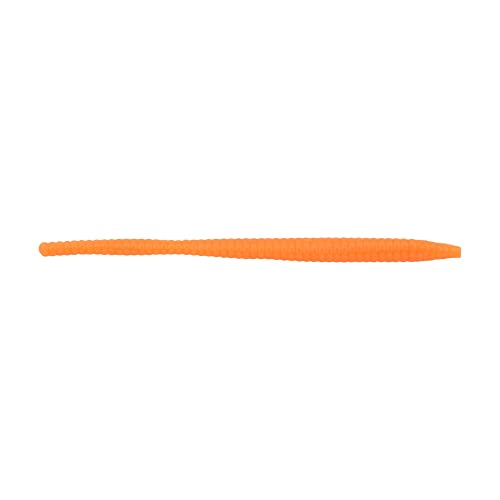
The direct answer to the question. Like the Trout Magnet this is a small soft plastic with scent built into the material, fished slowly on light line, and it occupies the same place in a tackle box — the thing you tie on when the fish are there and nothing is happening. The real difference is buoyancy: the Power Floating worm is designed to float, so rigged on a split shot it hovers at the depth your shot sets rather than lying on gravel. On a creek with a silty or weedy bottom that is a genuine advantage, and on clean gravel it is simply a different presentation to offer fish that have seen everything.
Best for: Closest match — small, soft, scented, and it floats - 2
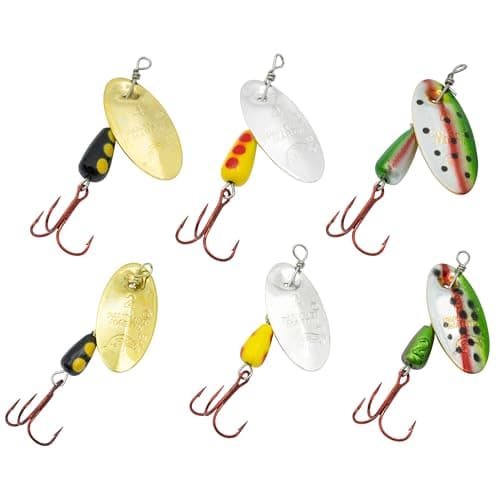
The alternative that changes your approach rather than your lure. A Trout Magnet is a slow, subtle, fish-the-spot presentation; an inline spinner is a fast, loud, find-the-fish presentation. On a creek you can walk a quarter mile of pocket water in an hour with a spinner and know where the trout are, which is information the slow approach takes a morning to buy. This kit covers both useful creek sizes — 1/16 ounce for shallow pockets and 1/8 ounce when there is current to cut through — in six finishes, which removes the guesswork about color.
Best for: Best for covering water — the opposite strategy, and often the right one - 3
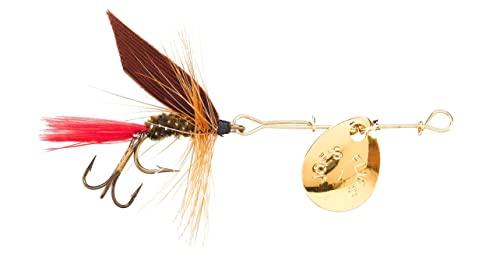
The cheapest lure on the page and the most interesting one for small water. A Short Striker is an inline spinner built on a size 10 hook with a dressed fly body, which means it gives you a flash-and-vibration attractor and a small insect silhouette in the same cast — close to what a Trout Magnet under a float does, but moving. The size is the point: a #10 is tiny by spinner standards, which is what a brushy headwater creek with eight-inch trout actually calls for. At this price you can afford to leave a couple in trees, which you will.
Best for: Budget pick — a tiny spinner with a fly tied on the hook - 4
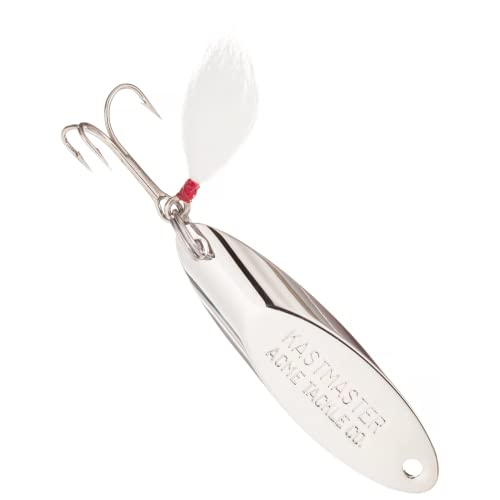
The pick for the problem a 1/64 ounce jig head genuinely has: it will not cast into a breeze, and it will not reach the far bank of a wide pool. A Kastmaster is a dense, compact spoon that casts far out of proportion to its size, and the buck tail teaser on the rear hook softens the all-metal look with something soft and moving. On the bigger end of small water — a stocked creek, a tailout you cannot wade to, a windy afternoon — this is the lure that gets a presentation to the fish at all.
Best for: Best for distance and wind — the cast a light jig cannot make - 5
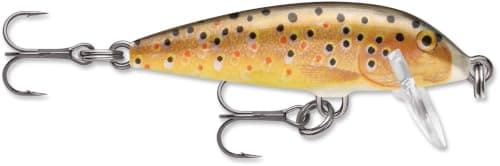
The alternative for when the fish you are after is not eating insects. The biggest trout in a creek is usually the one eating the smaller fish in it, and a two-inch sinking minnow is a far better imitation of that meal than a grub is. The Countdown's whole design is a predictable sink rate, so you can cast, count, and fish the same depth repeatedly — which on a creek means getting the lure in front of the undercut bank rather than over it. Smaller fish will leave it alone, and that is the trade you are making.
Best for: Best for bigger fish — the minnow a large trout is eating
| # | Product | Best for | Score | Price |
|---|---|---|---|---|
| 1 | Berkley PowerBait Power Floating Trout Worm, 3 in The direct answer to the question. Like the Trout Magnet this is a small soft plastic with scent built into the material, fished slowly on light line, and it occupies the same place in a tackle box — the thing you tie on when the fish are there and nothing is happening. The real difference is buoyancy: the Power Floating worm is designed to float, so rigged on a split shot it hovers at the depth your shot sets rather than lying on gravel. On a creek with a silty or weedy bottom that is a genuine advantage, and on clean gravel it is simply a different presentation to offer fish that have seen everything. | Closest match — small, soft, scented, and it floats | — | $5.67View on Amazon#ad |
| 2 | Panther Martin Best of the Best Spinner Kit, 1/16 oz & 1/8 oz, 6 Pack The alternative that changes your approach rather than your lure. A Trout Magnet is a slow, subtle, fish-the-spot presentation; an inline spinner is a fast, loud, find-the-fish presentation. On a creek you can walk a quarter mile of pocket water in an hour with a spinner and know where the trout are, which is information the slow approach takes a morning to buy. This kit covers both useful creek sizes — 1/16 ounce for shallow pockets and 1/8 ounce when there is current to cut through — in six finishes, which removes the guesswork about color. | Best for covering water — the opposite strategy, and often the right one | — | $29.99View on Amazon#ad |
| 3 | Joe's Flies Short Striker #10 Inline Spinner, Trout Special Gold The cheapest lure on the page and the most interesting one for small water. A Short Striker is an inline spinner built on a size 10 hook with a dressed fly body, which means it gives you a flash-and-vibration attractor and a small insect silhouette in the same cast — close to what a Trout Magnet under a float does, but moving. The size is the point: a #10 is tiny by spinner standards, which is what a brushy headwater creek with eight-inch trout actually calls for. At this price you can afford to leave a couple in trees, which you will. | Budget pick — a tiny spinner with a fly tied on the hook | — | $3.98View on Amazon#ad |
| 4 | Acme Kastmaster Lure with Buck Tail Teaser, 1/8 oz The pick for the problem a 1/64 ounce jig head genuinely has: it will not cast into a breeze, and it will not reach the far bank of a wide pool. A Kastmaster is a dense, compact spoon that casts far out of proportion to its size, and the buck tail teaser on the rear hook softens the all-metal look with something soft and moving. On the bigger end of small water — a stocked creek, a tailout you cannot wade to, a windy afternoon — this is the lure that gets a presentation to the fish at all. | Best for distance and wind — the cast a light jig cannot make | — | $8.99View on Amazon#ad |
| 5 | Rapala Countdown Minnow, 2 in, Brown Trout The alternative for when the fish you are after is not eating insects. The biggest trout in a creek is usually the one eating the smaller fish in it, and a two-inch sinking minnow is a far better imitation of that meal than a grub is. The Countdown's whole design is a predictable sink rate, so you can cast, count, and fish the same depth repeatedly — which on a creek means getting the lure in front of the undercut bank rather than over it. Smaller fish will leave it alone, and that is the trade you are making. | Best for bigger fish — the minnow a large trout is eating | — | $7.48View on Amazon#ad |
The closest alternative to a Trout Magnet is the Berkley PowerBait Power Floating Trout Worm — the same small, soft, scented, slow presentation, with the useful difference that it floats off a soft bottom. If what you actually want is to find fish faster, the Panther Martin spinner kit covers both creek-relevant weights and changes your whole approach. The budget pick is the Joe's Flies Short Striker, a size 10 spinner with a fly tied on it. Prices come from our live retailer feed and are date-stamped beneath the comparison table — none are typed into this copy.
This is not an argument against the Trout Magnet. It is an answer to a question a lot of people type: that lure works, I want something else — either because the shop is out, or because the fish in my creek have seen four hundred of them this season.
What the Trout Magnet is known for
It is a small split-tail soft-plastic grub, fished on a very light jig head, usually on ultralight spinning gear and light line. The company sells the jig heads at 1/64 ounce, which is lighter than most anglers have ever tied on, and the kits pair bodies with hooks and small floats. That is the whole system: tiny, soft, slow, and fished either on a straight retrieve or suspended under a float.
The reputation rests on three things, and all three are real. First, size — a creek trout eating nymphs and small minnows is used to prey measured in fractions of an inch, and most lures are too big for it. Second, the weight, because 1/64 ounce drifts at something close to the speed of the current instead of dragging across it. Third, the float option, which lets you suspend a near-weightless lure at a fixed depth over a pool — which is exactly what a fly angler does with a nymph and an indicator.
It is also cheap, widely stocked, and sold as a complete kit, which is why it is so often a beginner's first successful trout lure. We carry a Trout Magnet kit in our own registry with a live price, on the best creek fishing lures, so you can compare the original against every pick on this page from the same feed. The company's 4 lb copolymer line is ranked in the best line for trout fishing.
What we are not claiming
Which of it another lure can match
Not every advantage transfers, and it is worth being clear about which ones do. Three of the four things the original is known for are available elsewhere; one of them is genuinely hard to replace.
| What the Trout Magnet gives you | Available elsewhere? | Where, on this page |
|---|---|---|
| A tiny soft, scented profile | Yes — directly | The PowerBait Trout Worm, in the same size class |
| A near-weightless drift at current speed | Partly | Nothing here is as light; the floating worm on minimal shot is closest |
| A complete kit — bodies, hooks, floats | Yes, but differently | The Panther Martin six-pack is a kit of finished lures instead |
| A presentation fish have not seen | Yes — that is the whole point | Any of the five, because they are not what everyone else is throwing |
The weight is the one that does not really transfer. A 1/64 ounce jig head is an unusual product and there is no 1/64 ounce spinner or spoon — physics will not allow it, because a blade needs mass to turn and a spoon needs mass to cast. If drifting a near-weightless lure is specifically what you want, the honest answer is that the closest substitutes are a soft plastic on minimal split shot, or a fly rod. The flies-against-lures version of that decision is in flies vs lures for creek trout.
The five compared
| Lure | Type | What it is for | Buy it if |
|---|---|---|---|
| Berkley Power Floating Trout Worm | Scented soft plastic | Same slow, small presentation | You want the nearest thing to the original |
| Panther Martin kit, 1/16 & 1/8 oz | Inline spinners | Covering water, finding fish | You would rather walk than wait |
| Joe's Flies Short Striker #10 | Spinner with fly body | Tiny attractor for brushy creeks | You want the cheapest way to try something new |
| Acme Kastmaster 1/8 oz + teaser | Casting spoon | Distance, wind, fast current | Your water is wider or windier than a jig can handle |
| Rapala Countdown 2 in | Sinking minnow | The bigger, fish-eating trout | You want fewer bites from better fish |
Those five are deliberately not five versions of the same thing.If you only want a like-for-like swap, the list is one item long. The reason the other four are here is that "something other than a Trout Magnet" is usually a chance to solve a different problem — reach, speed of search, or fish size — rather than to buy the same lure in a different wrapper.
The rig matters more than the lure
The original works partly because of how it is rigged, and you can keep that part with any of these. Light line, a long rod tip held high, and as little weight as the water allows. Swap the lure and keep the rig and you have kept most of what was working.
| Rig | What it suits | What it does |
|---|---|---|
| Soft plastic on a micro jig head | Pools, slow runs | Drifts near the bottom at current speed |
| Soft plastic under a small float | Deeper pools, stocked creeks | Holds a fixed depth, shows the bite |
| Soft plastic on a single split shot | Shallow pocket water | Bottom contact with the least weight |
| Spinner or spoon on a straight retrieve | Runs, riffles, pocket water | Searches a lot of water fast |
| Sinking minnow, counted down | Undercut banks, tailouts | Repeats one depth on purpose |
Light line is the part people get wrong. Four-pound test is not a stunt on a creek, it is the reason a tiny lure moves correctly — heavy line drags a light lure out of the current seam and makes it swim unnaturally. The pound test, material and color question is worked through in the best line for trout fishing.
And pinch the barbs if you are releasing fish. Every spinner and spoon here comes with trebles, which hold well and are harder on a six-inch trout than a single hook is. A set of pliers handles it in seconds — the ones worth owning are in the best fly fishing tool kits.
When the original is still the right buy
If you have never caught a trout on a lure, buy the original kit rather than anything on this page. A kit that arrives with bodies, hooks and floats in one box removes four decisions from a first trip, and the decisions are exactly where beginners stall. The alternatives here all assume you already own jig heads, split shot or a decent idea of what you want.
If your water is a small, clear, lightly fished headwater creek, the subtle approach is the right one and the original is as good at it as anything made. The reason to switch is pressure — a stocked creek where every angler is drifting the same grub — or a specific problem like wind, depth or distance.
And if the shop is simply out of stock, the swap list above is the answer, which is the most common reason this question gets typed in the first place. Our full ranked field of small-water lures is in the best creek fishing lures, with the trout-specific list in the best trout lures and the panfish version in the best panfish lures.
The gear this all assumes
Everything on this page is a light-line, light-rod proposition, and the rod is the limiting factor. A 1/16 ounce spinner will not load a medium-power rod, which means it will not cast, which means none of the above matters. An ultralight or light-power rod in the six to seven foot range is the tool — the ranked field is in the best ultralight spinning rods, and the power-rating question behind it is in ultralight vs light power.
The reel is a line holder, so spend accordingly. What it has to do is hold light line without twisting it and let a small fish take a little line without a jerky drag. That is available cheaply, and the band page for it is the best ultralight spinning reels under $50.
If reading this has made the fly-rod version sound appealing, that is a reasonable reaction — suspending a tiny offering at a set depth is what nymphing is, and a rod for it need not be expensive. Our band page for that is the best fly rod under $200, and in summer you can fish any of it in shorts with wet wading shoes instead of waders.
The picks in detail
Berkley PowerBait Power Floating Trout Worm, 3 in
Best for: Closest match — small, soft, scented, and it floats
The direct answer to the question. Like the Trout Magnet this is a small soft plastic with scent built into the material, fished slowly on light line, and it occupies the same place in a tackle box — the thing you tie on when the fish are there and nothing is happening. The real difference is buoyancy: the Power Floating worm is designed to float, so rigged on a split shot it hovers at the depth your shot sets rather than lying on gravel. On a creek with a silty or weedy bottom that is a genuine advantage, and on clean gravel it is simply a different presentation to offer fish that have seen everything.
- Type
- Scented soft plastic, 3 in
- Buoyancy
- Floating
- Rig
- Split shot, small jig head, or under a float
- Same soft, scented, slow presentation
- Floats, so it stays off a soft bottom
- Stocked almost everywhere, in several colors
- Soft plastic tears and needs replacing after fish
- No jig heads or hooks included — you buy those separately
Panther Martin Best of the Best Spinner Kit, 1/16 oz & 1/8 oz, 6 Pack
Best for: Best for covering water — the opposite strategy, and often the right one
The alternative that changes your approach rather than your lure. A Trout Magnet is a slow, subtle, fish-the-spot presentation; an inline spinner is a fast, loud, find-the-fish presentation. On a creek you can walk a quarter mile of pocket water in an hour with a spinner and know where the trout are, which is information the slow approach takes a morning to buy. This kit covers both useful creek sizes — 1/16 ounce for shallow pockets and 1/8 ounce when there is current to cut through — in six finishes, which removes the guesswork about color.
- Type
- Inline spinners, 6 pack
- Weights
- 1/16 oz and 1/8 oz
- Strategy
- Cover water, locate fish
- Both creek-relevant weights in one purchase
- Finds fish far faster than a slow soft plastic
- Panther Martin's blade spins at very low speed
- The most expensive pick on the page
- Treble hooks are harder on fish you intend to release
Joe's Flies Short Striker #10 Inline Spinner, Trout Special Gold
Best for: Budget pick — a tiny spinner with a fly tied on the hook
The cheapest lure on the page and the most interesting one for small water. A Short Striker is an inline spinner built on a size 10 hook with a dressed fly body, which means it gives you a flash-and-vibration attractor and a small insect silhouette in the same cast — close to what a Trout Magnet under a float does, but moving. The size is the point: a #10 is tiny by spinner standards, which is what a brushy headwater creek with eight-inch trout actually calls for. At this price you can afford to leave a couple in trees, which you will.
- Type
- Inline spinner with dressed fly body
- Hook
- Size 10
- Finish
- Trout Special gold
- Lowest price here, so losses do not hurt
- Fly body plus blade — attraction and imitation together
- Genuinely small, which most spinners are not
- Single lure, single color — no kit to fall back on
- Dressed body wears out faster than a bare blade
Rapala Countdown Minnow, 2 in, Brown Trout
Best for: Best for bigger fish — the minnow a large trout is eating
The alternative for when the fish you are after is not eating insects. The biggest trout in a creek is usually the one eating the smaller fish in it, and a two-inch sinking minnow is a far better imitation of that meal than a grub is. The Countdown's whole design is a predictable sink rate, so you can cast, count, and fish the same depth repeatedly — which on a creek means getting the lure in front of the undercut bank rather than over it. Smaller fish will leave it alone, and that is the trade you are making.
- Type
- Sinking hard minnow, 2 in
- Finish
- Brown trout pattern
- Feature
- Countable sink rate
- Targets the larger, fish-eating trout specifically
- Countable sink rate lets you fish one depth on purpose
- Works on smallmouth and other creek residents too
- Fewer bites than any of the small lures above
- Two sets of trebles on a small fish is a handful
Prices shown are from Amazon as of November 20, 2026 and change often — the button always goes to the current listing. Some links may earn us a commission at no extra cost to you. How this works.
Frequently asked questions
What is a good alternative to the Trout Magnet?
The Berkley PowerBait Power Floating Trout Worm is the closest like-for-like: a small, soft, scented plastic fished slowly on light line, with the difference that it floats off a soft bottom. If you would rather find fish than wait for them, a 1/16 ounce inline spinner is the opposite strategy and often the more productive one on a creek.
What makes the Trout Magnet work on creek trout?
Three things: it is very small, which matches what stream trout actually eat; the 1/64 ounce jig head is light enough to drift at close to current speed rather than dragging across the bottom; and the float option suspends a near-weightless lure at a fixed depth, which is the same idea as a fly angler's nymph under an indicator.
Is there a spinner as small as a Trout Magnet?
Not at the same weight — a blade needs mass to rotate, so there is no 1/64 ounce spinner. The smallest practical creek spinners are 1/16 ounce, and the closest thing in profile is a size 10 spinner with a dressed fly body, which gives you a small insect silhouette along with the flash.
Can you fish a Trout Magnet alternative on a fly rod?
A soft plastic on a micro jig head can be cast with a fly rod, but it is not what the rod is for, and heavier lures will overload it. If the appeal is suspending something tiny at a set depth, that is nymphing, and a fly setup does it better. A light spinning rod is the right tool for everything on this page.
What line should I use with these lures?
Four to six pound test on an ultralight reel. Light line is not a stunt on small water — heavy line drags a light lure out of the current seam and makes it swim unnaturally, which is the main reason tiny lures stop working. Copolymer or monofilament is fine; fluorocarbon leader material helps in very clear water.
Do I need a float to fish these?
Not for the spinners, the spoon or the minnow, which are all cast-and-retrieve lures. For a soft plastic in a deeper pool a small float earns its place twice over: it holds the lure at a fixed depth and it shows you a bite you would otherwise never feel on a near-weightless rig.
Sources
Keep reading
Not sure where to start?
The beginner gear guide walks you through exactly what a new stream angler needs — the six essentials first, nice-to-haves later, with one safe-default pick per category.